Hart
also Harte, Hartt
At the sign of the hart.
- Origin
- South East, England
- Famous bearer
- Miranda Hart (b. 1972), comedian and writer
- Register
- English family
The Hart arms and country

Coat of armsHart of Chilton EscutcheonBorne by the Chilton Escutcheon line, one branch of the name rather than all of it.Robin S. Taylor · CC BY-SA 4.0 
Coat of armsEscutcheon of the Hart baronets of Kilmoriarty (1893)Borne by the Kilmoriarty line, one branch of the name rather than all of it.Charles Matthews · CC BY-SA 4.0

.svg)
- Coat of arms: Granted to an individual and inherited down that one documented line. These are the arms of particular families of the name, not of everyone who shares the surname.
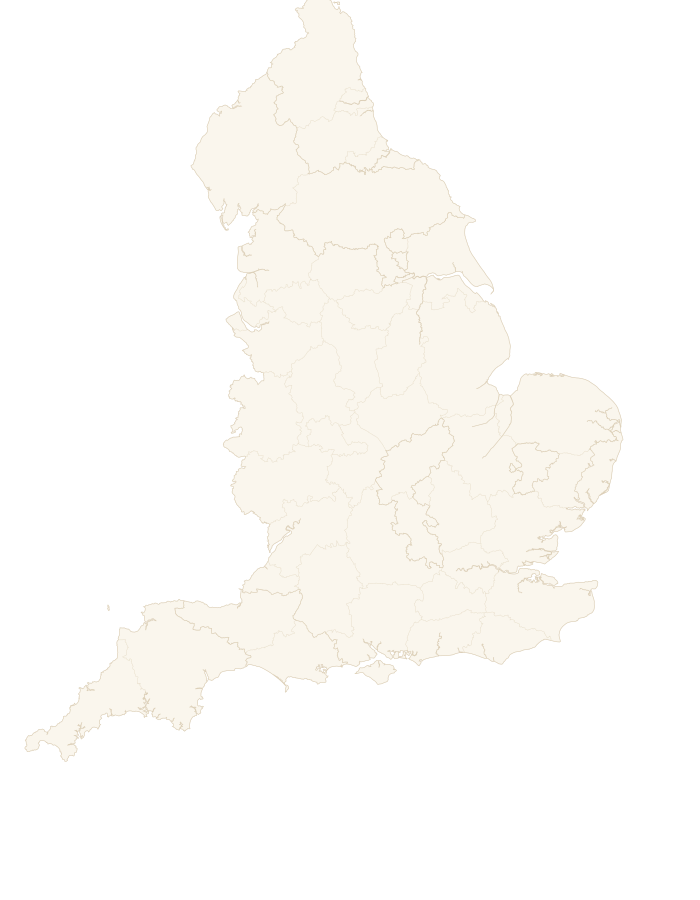
CoreHistoric reach
The seat of Hart
Seat vacantChief
No one leads the Hart community yet. When the movement opens, you can stand for its leadership, or help elect whoever does.
Current mission
No shared goal set yet. Once Hart has leadership, it sets the public focus: a restoration, a gathering, a real-world project that helps its own.
The Hart clan is being rebuilt. Join the waiting list for the movement today, and you help decide who leads it and what it does.
Help rebuild the Hart clan →What does the Hart name mean?
From Old English heorot, a hart or adult male deer, used as a sign-name (a family at the sign of the Hart, a near-universal inn and house sign) and as a locational name from places like Hart in County Durham, the 'hart's pool' that named Hartlepool. A wholly separate Irish strand anglicises Ó hAirt, a Sligo sept, to Hart or Harte, and the name is also a common European-Jewish surname carried by families anglicising Hertz.
The history of Hart
Heorot, the sign-board and the hart's pool
The root is Old English heorot, a hart, the adult male deer, and two quite different doors led from the animal to the surname. One was the sign-board: a household living at the sign of the Hart, which was a near-universal inn and house sign, took its name from the painted beast over the door rather than from any ancestor. The other was the map, the vill of Hart in County Durham, the hart's pool that gave Hartlepool its name. A sign could be hung in any street and a place-name travelled with anyone who left the place, so the name surfaced in several unconnected households at once and owes nothing to a single founder.
England was still learning to use fixed surnames while that was happening. Examples are documented among the barons in the eleventh century, and the introduction of family names in England is generally attributed to the preparation of the Domesday Book in 1086; Christopher Daniell dates the first recorded use of a modern surname inherited by more than one generation to 1140. Names were taken up first among the feudal nobility and gentry and spread downward slowly, and in the late Middle Ages compulsory surnames were resisted because ordinary people associated them with taxation. By 1400 most English families, and most in Lowland Scotland, carried hereditary names.
In the modern English record the name lies heaviest in Kent, in London and in Surrey, and again in Wearside and County Durham where the vill of Hart itself stands; older concentrations sit in Hampshire and the Isle of Wight, in Essex and in East Sussex. Two further streams share the spelling without sharing the deer. The Ó hAirt, a sept of Sligo, were anglicised to Hart and Harte in the plantation centuries, and European-Jewish families carrying Hertz turned it into Hart. Harte and Hartt remain the standing variants of the name.
A bishop at Norwich, a Hart returned to the Commons
The first bearers who can be dated are men of office. William Hart sat as an English member of parliament and is recorded in public life between 1388 and 1417, which means the name was already fixed enough to be entered in a return and recognised again decades later: exactly the point at which English surnames were hardening into inheritance. Walter Hart was Bishop of Norwich in the fifteenth century.
The name then recurs in the political classes of the Tudor and Stuart centuries. Richard Hart, who died in 1578, and Henry Hart, who lived from 1531 to 1578, were both English politicians of the Elizabethan generation. Percival Hart, a sixteenth-century member of parliament, was born in 1568 and lived until 1642; a second Percival Hart, 1666 to 1738, carried the same unusual given name through the following century.
Office ran on into the eighteenth century and out of England. John Hart, who died in 1740, served as a British colonial administrator. William Neville Hart, 1741 to 1804, was a banker, politician and diplomat. Anthony Hart, 1754 to 1831, made his career as a British lawyer, and Heber Hart, 1865 to 1948, as an English judge and jurist. None of them founded a dynasty in the Highland sense; what they show is a name distributed across the administrative machinery of the English state for more than five centuries.
Setting the language down, and dying for a creed
John Hart, who died in 1574, was an English educator and spelling reformer, arguing over how the language ought to be written at a moment when nobody agreed on the answer. Andro Hart, who died in 1621, was a Scottish printer. Two and a half centuries later Horace Hart, 1840 to 1916, was an English printer and biographer, and George Hart, 1839 to 1891, an English musicologist and luthier. From the reform of spelling to the setting of type, the name kept turning up wherever English was being fixed on a page.
Faith divided the name as it divided everyone else. William Hart, 1558 to 1583, was an English Roman Catholic priest and a martyr; John Hart, who died in 1586, was an English Jesuit in the same dangerous decade. Against them stand James Hart, 1663 to 1729, a Scottish minister, and Joseph Hart, 1712 to 1768, a British Calvinist minister. William Hart, 1904 to 1992, was a Scottish Roman Catholic clergyman, closing a four-hundred-year circle that began with a priest who died for the old religion.
The playhouse and the organ loft took others. William Hart, who died in 1650, and Charles Hart, 1625 to 1683, were both English actors of the seventeenth century. Philip Hart, born in 1674 or 1676 and dead in 1749, and Joseph Binns Hart, 1794 to 1844, were English organists and composers. Solomon Hart, 1806 to 1881, and William Matthew Hart, 1830 to 1908, were English painters, and Elizabeth Anna Hart, 1822 to 1890, a British poet and novelist.
Doe Castle, bought out of the Plantation and held until 1843
The one fortress the name holds in this atlas sits in Donegal. Doe Castle, Caisleán na dTuath, was most likely built around 1420 by the Quinn family, but by the 1440s it had passed to the gallowglass MacSweeneys and became the stronghold of the branch known as Mac Suibhne na dTuath, the Mac Sweeney Doe. It stands on a small peninsula surrounded on three sides by water, with a moat cut into the rock on the landward side, high outer walls enclosing a bawn, and a four-storey tower-house within them.
The MacSweeneys held it for almost two hundred years, until King James VI and I seized the castle after the clan rebelled against him. On 7 March 1613, in the course of the Plantation of Ulster, the king granted Doe to Sir John Davies, the poet and Attorney-General for Ireland, who sold it on 31 December 1614 to Captain John Sandford, an English settler from Shropshire. That is the title that was eventually on the market: a gallowglass sea-fortress wrapped in a plantation grant, twice conveyed within two years.
Sir George Vaughan Hart bought the castle, and his family inhabited it until 1843. Two centuries of Mac Sweeney lordship, a royal seizure, a plantation grant and a quick sale to Sandford had all happened before a Hart held the keys. After the Harts left, the castle passed to the Land Commission in 1932, was declared a national monument in 1934 and was acquired by the Office of Public Works; the tower-house was restored in the late twentieth century and the grounds are open to the public.
Ó hAirt of Sligo, and the Harts of Trinity College
Ireland carries the name twice over, and the two carriers are unrelated. The Ó hAirt were a sept of Sligo whose name was anglicised into Hart and Harte during the plantation centuries: Gaelic in origin, with no deer and no signboard behind it. The Harts who bought Doe Castle came at the question from the opposite direction, through a plantation title in Donegal. Two peoples, one spelling, in one island, and no genealogy connects them; the surname is a coincidence of anglicisation rather than a kinship.
The Anglo-Irish line produced soldiers and lawyers. Henry Hart, 1566 to 1637, was an Anglo-Irish soldier and landowner. George Vaughan Hart, 1752 to 1832, served as a British soldier and sat as a politician, and a later George Vaughan Hart, 1841 to 1912, was an Irish lawyer and Regius Professor: the same full name recurring across the best part of two centuries.
The name then turned scholarly. Andrew Searle Hart, 1811 to 1890, was an Anglo-Irish mathematician and Vice-Provost of Trinity College Dublin. Henry Chichester Hart, 1847 to 1908, was an Anglo-Irish botanist, explorer and editor. In the modern republic the name belongs to Josephine Hart, 1942 to 2011, the Irish writer, to the rugby union player James Hart, born in 1991, and to the racing driver Max Hart, born in 2001.
Duke's Place, the first chief rabbi, and Hertz turned into Hart
The third stream reached the spelling from German. European-Jewish families carrying Hertz anglicised it to Hart, part of a much larger movement in which fixed surnames were imposed and then adjusted. Prussia's Hoym Ordinance, enacted at Breslau in 1790, mandated the adoption of Jewish surnames, and Napoleon insisted on fixed names by decree in 1808; European Jews who later moved to the United States sometimes anglicised what they had been given, in some cases to avoid discrimination.
In London the name reached the head of the community. Moses Hart, 1675 to 1756, was an English businessman and the founder of the Duke's Place Synagogue in London. Aaron Hart, 1670 to 1756, was the first chief rabbi of Great Britain. Between the man who built the synagogue and the country's first chief rabbi, the name stands at the institutional foundation of Anglo-Jewry in the first half of the eighteenth century, a role no Hart of the deer or the Donegal tower ever came near.
From that base the name spread into Victorian public life. Israel Hart, 1835 to 1911, was a British merchant and Liberal Party politician. Ernest Hart, 1835 to 1898, was an English medical journalist, and Alice Hart, 1848 to 1931, a British philanthropist, artist and businesswoman. Solomon Hart, the English painter who died in 1881, worked in the same generation, and the epidemiologist Philip D'Arcy Hart, 1900 to 2006, carried the name almost the whole length of the twentieth century.
Aaron Hart's Canada and the Calgary wrestling dynasty
Canada took the name up early. Aaron Hart, 1724 to 1800, established himself as a Canadian businessman; Samuel Hart, 1747 to 1810, was a merchant who entered politics; Moses Hart, 1768 to 1852, and Benjamin Hart, 1779 to 1855, were both businessmen of the following generation. Ezekiel Hart, 1770 to 1843, was a Canadian Jewish entrepreneur and politician. Adolphus Hart, 1814 to 1879, practised as a lawyer and wrote; Theodore Hart, 1816 to 1887, was another businessman of the name.
The Canadian Harts of the next century took public office and the ice. John Hart, 1879 to 1957, was a Canadian politician. Cecil Hart, 1883 to 1940, coached ice hockey. Sarah Hart, 1880 to 1981, was an artist and educator, and Pearl Hart, 1871 to 1928, went the other way entirely as a Canadian-American outlaw.
In the twentieth century the name became a wrestling dynasty in Calgary. Stu Hart, 1915 to 2003, began promoting in 1948 and ran Stampede Wrestling until he sold it to Vince McMahon in 1984, revived it in 1985 and kept it going to December 1989; his sons Bret, born 1957, and Owen, 1965 to 1999, carried the name into the World Wrestling Federation. Bret and his brother-in-law Jim Neidhart won the WWF Tag Team Championship as the Hart Foundation on 26 January 1987, and a reformed, deliberately anti-American Hart Foundation won a five-on-five match at Canadian Stampede in Calgary on 6 July 1997.
Owen died in 1999 after a failed stunt during his ring entrance at the Over the Edge pay-per-view; Bruce and Ross Hart brought Stampede Wrestling back the same year. Stu's granddaughter Natalie Neidhart, wrestling as Natalya, became the first woman of the family to take a championship when she won the Divas Championship at Survivor Series 2010. Whatever else the name has done, it has been carried by twelve children born to one Calgary household between 1948 and 1965, eight of whom wrestled.
Hart's Army List, and the name across the southern colonies
One Hart put his name on the British Army itself. Henry George Hart, 1808 to 1878, was a British Army officer and the author of Hart's Army List. Henry Hart, 1781 to 1856, served as a British naval officer and diplomat. Reginald Hart, 1848 to 1931, received the Victoria Cross. Raymund Hart, 1899 to 1960, rose to Air Marshal in the RAF, and Raymond Hart, 1913 to 1999, served as a seaman and then an officer of the Royal Navy.
The name also produced a theorist of war. B. H. Liddell Hart, 1895 to 1970, was a British historian and military theorist; Adrian Liddell Hart, 1922 to 1991, was a British Royal Navy officer and politician. Franklin A. Hart, 1894 to 1967, reached general in the United States Marine Corps, and Herbert Hart, 1882 to 1968, was an officer in the New Zealand Military Forces.
In the southern colonies the name settled early. John Hart, 1809 to 1873, was a South Australian colonist and politician; John Hart Jr., 1848 to 1881, and John Shadrach Hart, 1838 to 1912, followed him into Australian politics, and William Hart, 1825 to 1904, and Frank Hart, 1860 to 1945, into Tasmanian politics. Steve Hart, 1859 to 1880, took the other road as a bushranger. William Ewart Hart, 1885 to 1943, was an Australian aviator and dentist. In New Zealand Robert Hart, 1814 to 1894, and Michael Hart, 1814 to 1878, both entered politics. Helen Hart, 1839 to 1908, worked as a British Australian suffragist, lecturer and preacher.
Jurisprudence, the forest again, and the modern name
The twentieth century gave the name its most cited thinker. H. L. A. Hart, 1907 to 1992, was a British legal philosopher. In medicine, Bernard Hart, 1879 to 1966, was an English physician and psychiatrist, and David Berry Hart, 1851 to 1920, a Scottish gynaecological surgeon and academic. Jenifer Hart, 1914 to 2005, was a British civil servant and historian; Graham Hart, born 1940, another civil servant; and Jennifer Marianne Hart, 1916 to 1997, a Scottish women's rights activist.
One bearer went back to the animal. Cyril Hart, 1913 to 2009, was an English forester and historian, the trade practised in a landscape the Normans had begun closing off as royal forest under their new forest laws after 1066, which is where the heorot behind the surname had lived. Eva Hart, 1905 to 1996, carried the name through the century's most public disaster as a British survivor of RMS Titanic, and Francis Dudley Hart, 1909 to 2004, was a British rheumatologist of the same generation.
In modern British public life the name sits on both front benches and the pitch. Judith Hart, 1924 to 1991, and Edwina Hart, born 1957, were British politicians, as are Simon Hart, born 1963, and Sally-Ann Hart, born 1968. Joe Hart, born 1987, is an English footballer. Tao Geoghegan Hart, born 1995, races on the road, and Brian Hart, 1936 to 2014, built engines as a British racing driver and engineer. Charles Hart, born 1961, writes lyrics and libretti for the stage: the playhouse Harts of the 1650s again, three centuries on.
Also found in
The Hart name has substantial historical presence beyond England. See it on Ireland.
Historic Places, Rebuilt
Explore the streets and seats the Hart name knew, rebuilt with AI as they stood in history.
Castles the Hart held
Strongholds this name held for a decade or more, look one up, or rebuild it to explore.
- Doe Castle
Bought by Sir George Vaughan Hart and inhabited by his family until 1843.
The castles of the homeland
The great strongholds of the homeland, look one up, see what it looked like in its prime, and recreate it to explore.
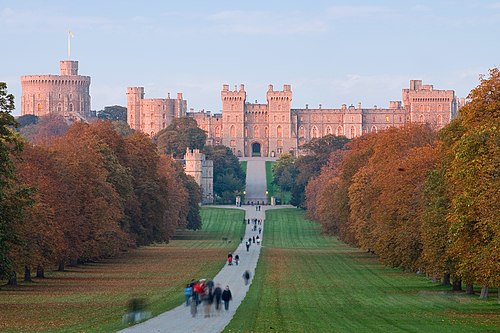 Windsor CastleRestored · prime 1820
 Tower of LondonRestored · prime 1285
 Bamburgh CastleRestored · prime 1904
All castles in England → · Strongest castles in England → · Castles of Europe
Play As Your Clan
Hold a real castle against whatever you choose to send at it, take a ship out in her own service years, or stand at the shoulder of someone the record remembers. The chronicler sets the scene; the deeds are yours.
Notable bearers of the Hart name
- Miranda Hart (b. 1972), comedian and writer
- Tony Hart (1925–2009), artist and television presenter
- Ian Hart (b. 1964), actor
Frequently asked
What does the surname Hart mean?
Where does the Hart family come from?
Where did the Hart family historically hold territory?
Is Hart English or Irish?
How old is the Hart surname?
What is the Hart family known for?
Is there a Hart family crest or coat of arms?
Who is the most famous Hart?
Who are some famous Harts?
Is Harte the same family as Hart?
Is Hartt the same family as Hart?
Where is the Hart surname found today?
What does the Clan Rising page for the Hart family cover?
Who is the head of the Hart family today?
Neighbouring clans
- KingWhen the village crowned someone 'king' for a day, and the jest lasted six centuries.
- RobinsonSon of Robin, the Danelaw's favourite -son, and the first woman President of Ireland.
- ThompsonThe northern Thomases.
- MooreBy the moor, or sons of Mórdha; English heath and Irish sept under one Anglicisation.