Knight
Servant of the knight, not the knight himself.
- Origin
- South East, England
- Famous bearer
- Phil Knight (b. 1938), co-founder of Nike
- Register
- English family
The Knight arms and country

Coat of armsArmorial Bearings of the KNIGHT family of Downton Castle, HerefordshireBorne by the Downton Castle line, one branch of the name rather than all of it.Rs-nourse · CC BY-SA 4.0

- Coat of arms: Granted to an individual and inherited down that one documented line. These are the arms of particular families of the name, not of everyone who shares the surname.
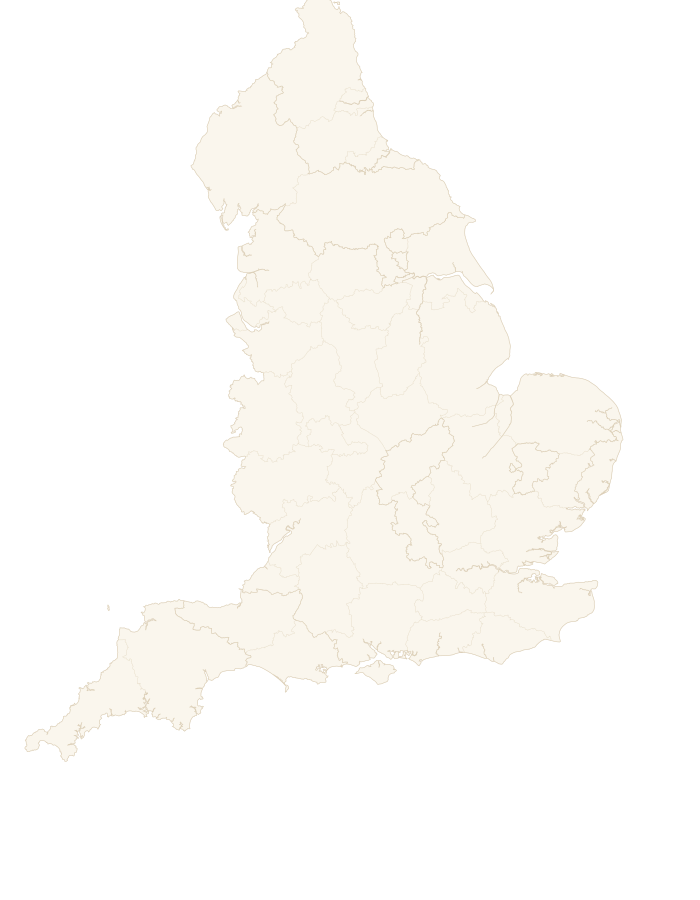
CoreHistoric reach
The seat of Knight
Seat vacantChief
No one leads the Knight community yet. When the movement opens, you can stand for its leadership, or help elect whoever does.
Current mission
No shared goal set yet. Once Knight has leadership, it sets the public focus: a restoration, a gathering, a real-world project that helps its own.
The Knight clan is being rebuilt. Join the waiting list for the movement today, and you help decide who leads it and what it does.
Help rebuild the Knight clan →What does the Knight name mean?
From Old English cniht, originally a youth or servant, evolving in late Old English to a military servant and by the 12th century to the technical term for a mounted feudal warrior. As a surname it usually denotes service in a knight's household rather than knighthood itself, the Knight of the surname is a household servant, not a belted knight. The base sense of cniht as 'youth' survives in modern German Knecht ('servant').
The history of Knight
Cniht meant the boy who carried the armour
In late Old English a cniht was a boy or a household servant, a word shared with Old Frisian kniucht, Dutch knecht, Danish knægt and Middle High German kneht, and still alive in modern German Knecht. Ælfric's homily on St Swithun uses cniht of a mounted retainer, and Anglo-Saxon wills treat cnihtas as household members worth providing for: in his will King Æthelstan left his cniht Aelfmar eight hides of land. A servant who rode was a rādcniht, a riding-servant. The narrowing of the word to mean a military follower of a king or other superior is visible by about 1100, and the verb to knight is not recorded before about 1300.
That timing is why the surname is common and the title is not. After 1066 all English land was held from the king in feudal tenure in return for military service, usually forty days a year, and every fee in the country needed a household to run it: a page taken on at seven, a squire at fourteen, and the grooms and armourers behind them. The household men vastly outnumbered the fee-holders, and it was they who ended up called Knight. In England servants routinely took their master's style as a by-name, which is how Vickers arose from service to a vicar. A second door existed too: A Dictionary of English Surnames notes that names of office such as Abbot, Bishop, Cardinal and King are frequently nicknames, and Bernard Deacon's suggestion that a first bearer merely behaved like one applies to Knight as readily as to the rest.
The name was fixed early enough to outlive the job. Christopher Daniell dates the first recorded modern English surname inherited across generations to 1140, and by 1400 most English families, and most in Lowland Scotland, carried one. Everything the name has done since has been done by people, not by the office.
William Knight at court, William Knight a martyr
By the Tudor century a man could be called Knight with no connection to any knight's household at all. William Knight appears in the record as a member of the court of Henry VIII, a royal servant whose ancient job title was by then simply his name. Later in the same century the same name surfaced on the other side of the religious settlement: William Knight, born in 1572, died a Catholic martyr in 1596.
The Stuart century put a Knight in front of the biggest planning question England had faced. Valentine Knight, a British army officer, proposed a grid-based street layout for the rebuilding of London after the fire. By then the name had also crossed the Atlantic: Sarah Kemble Knight, born in 1666 and dead in 1727, preached and travelled in colonial America, and left the record of a woman carrying the name through a country that had no knights in it at all.
Croft Castle, bought with Bringewood iron in 1746
Croft, in the Welsh Marches, had been the home of the Croft family since about 1085, when Bernard de Croft, named in Domesday Book, established the estate. The Crofts stayed close to their neighbours the Mortimers of Wigmore and Ludlow, and Sir John de Croft married Janet, one of Owain Glyndŵr's daughters; in the fifteenth century the family adopted the Welsh wyvern, a wounded black dragon, as their crest in allusion to that Glyndŵr descent. The house standing today is a quadrangular stone block around a central courtyard with round corner towers, put up in the 1660s while Herbert Croft was Bishop of Hereford, and it counts as one of the first examples of medieval revival, with affinities to Ruperra and Lulworth castles.
The South Sea Bubble finished them. Suffering financially, the Crofts sold the estate in 1746 to Richard Knight, heir to the wealthy ironmaster of the Bringewood Ironworks. Nothing about that transaction was feudal. A knight's fee had been granted for service; Croft was bought outright with iron money, by a man whose surname recorded the servant in the household rather than the master in the hall. The Rococo-Gothic remodelling of the 1760s falls inside the Knight tenure.
The Knights did not keep it. Croft was later bought by Somerset Davies, MP for Ludlow, and his descendants, the Kevill-Davies, sold the castle back to Katherine, Lady Croft, in 1923, returning it to the family that had lost it. Members of that family then had to raise an endowment before the National Trust would agree to take the house on at all, and Croft was bequeathed to the Trust in 1957. The Knight years are one chapter in a very long tenancy, and the chapter in which an ironmaster's heir carrying a servant's surname walked into a marcher castle as its owner.
The lace-designer's daughter in the Nottingham life class
Laura Johnson was born at Long Eaton, on the Nottinghamshire and Derbyshire border, on 4 August 1877, the daughter of a Nottinghamshire lace-pattern designer. She was schooled in Nottingham, and at thirteen won a Nottingham Borough Council art scholarship to the Nottingham School of Art on a portfolio submitted at her mother's recommendation. At fourteen she was admitted to the senior life-drawing class, and there she met Harold Knight, a fellow student two years older than she was. They married in 1903, and she carried the surname for the rest of her life.
The Knights took the North Yorkshire fishing village of Staithes as their working base, and the fishing-village and coastal scenes produced through the Staithes and Whitby years established her at the Royal Academy summer exhibitions of the early 1900s. In 1907 the pair moved to Cornwall, to the artists' colony at Newlyn and Lamorna, and stayed twelve years. That Cornish period is the productive register of her career: the cliff-and-cove landscape, the women of the Newlyn fishing community, and the circus and ballet rehearsal scenes that became her trademark subject.
Her Self-Portrait with Nude of 1913 put the relationship between a woman painter and the female nude at the centre of the canvas, a subject no senior Royal Academician had attempted. The Academy rejected it in its day; it now hangs as a landmark of the period. She and Harold moved to London in 1919, and the institution that had turned the picture down began to take her in: she was elected an Associate of the Royal Academy in 1927 and created DBE in 1929.
The press box at Nuremberg, winter 1945
On 28 April 1936 Laura Knight became the first woman ever elected a full Royal Academician, in an institution then a hundred and sixty-eight years old. Through the 1920s and 1930s she painted the Bertram Mills Circus and the rehearsal rooms of the Russian Ballet, and the gypsy-encampment pictures the public knew her by, a body of work made among fishermen, circus riders, dancers and travellers rather than among the sitters an Academician was expected to paint.
She was made an Official War Artist from 1939. The commission sent her to the women's auxiliary services, to the air-raid-shelter scenes in the London Underground, and to the women working the munitions production lines: the same instinct for people at work that had taken her to the Newlyn quays and the circus ring, turned by the war onto a national subject.
In November 1945, at sixty-eight, the Ministry of Information sent her to Nuremberg to record the International Military Tribunal. She sketched the proceedings from the press box across the winter and produced The Nuremberg Trial of 1946, now held by the Imperial War Museum and standing as the English-art record of the trial. She went on working into her eighties and died at her Chelsea studio on 7 July 1970, ninety-two years old. A surname that started as the Old English word for a household boy finished, in her hands, at the top of the Royal Academy and in the press seats at Nuremberg.
Two Anne Knights, a Lassie and a tattooist
The English Knights turn up thickest in print. Cornelia Knight (1757–1837) and Richard Payne Knight (1750–1824), the archaeologist and philologist, were writing before the century turned; Charles Knight (1791–1873) built a career as a publisher and author while a namesake worked as an engraver. Anne Knight (1786–1862) was an author, social reformer and pioneer of feminism, and a second Anne Knight (1792–1860) wrote for children and worked as an educationalist: a name this common produces doubles, and it produced two Anne Knights writing in overlapping decades. Mary Ann Knight (c. 1835–1915) argued for vegetarianism in print, William Angus Knight (1836–1916) wrote, and Alanna Knight (1923–2020) wrote after them.
The painters ran alongside: William Henry Knight (1823–1863) in portrait and genre, Charles Parsons Knight (1829–1897), and Madge Knight (1895–1974). Gerald H. Knight (1908–1979) was organist of Canterbury Cathedral from 1937 to 1953, and a composer and editor besides; Gillian Knight sang opera. Esmond Knight (1906–1987) worked as a character actor and Rosalind Knight (1933–2020) as an actress, Elliot Knight and Jules Knight acted after them, and Vicky Knight went into film. Eric Knight (1897–1943) was the English author who created the collie Lassie, while G. Wilson Knight (1897–1985) held the other end of the literary trade as a critic and academic. Jessie Knight (1904–1992) became the first prominent woman tattoo artist in Britain.
The twentieth century put the name in harder places. Marguerite Knight (1920–2004) served as a British Special Operations Executive agent during the Second World War. Margaret K. Knight (1903–1983) worked as a psychologist and humanist, and Vivien Knight (1953–2009) as an art historian and gallerist. Albert Knight (1872–1946) played professional cricket and another Albert Knight (1900–1964) dived for Britain; Barry Knight and Roger Knight played cricket, Roger combining it with administration and schoolmastering, Billy Knight (1935–2026) played tennis, Jessie Knight (b. 1994) runs the 400-metre hurdles, and Barry Knight (b. 1960) referees football. In politics the name runs from Westminster to the town hall: Jill Knight and Greg Knight sat as British MPs, Julian Knight as Conservative member for Solihull, Jim Knight held office alongside them, and Ted Knight (1933–2020) led Lambeth Council in London. Andrew Knight (b. 1939) edited newspapers and sat on the board of News Corporation; R. J. B. Knight writes naval history; Gary Knight photographs; Florence Knight cooks and writes a column.
Providence, Quebec and colonial Victoria
In America the name went into public office and into workshops. Jabez C. Knight (1815–1900) served as eighth mayor of Providence, Rhode Island. Margaret E. Knight (1838–1914) invented the paper-bag-making machine. Newton Knight took the Union side against the Confederacy as an outright rebel. Charles Landon Knight (1867–1933) practised law and published newspapers; Ora Willis Knight (1874–1913) worked as a chemist and naturalist; Charles Yale Knight invented the Knight engine and Charles R. Knight painted dinosaurs. By 2014 the surname stood 206th in the United States.
The American twentieth century kept it busy. Goodwin Knight became the thirty-first governor of California; Albion Knight, Jr. combined politics with an Anglican bishopric; Howard Knight sat as a politician in Ohio; Kelly Knight Craft (b. 1962) served as United States ambassador to Canada and to the United Nations. Duerson Knight (1893–1983) flew, and so did William J. Knight, who piloted the X-15 before going into politics. Leonard Knight (1931–2014) built Salvation Mountain, and Les U. Knight founded the Voluntary Human Extinction Movement. Amy Knight (b. 1946) and George R. Knight (b. 1941) write history, Hilary Knight (b. 1926) writes and illustrates, Shirley Knight (1936–2020) acted, Charles F. Knight chaired Emerson Electric, and Douglas Knight (1921–2005) worked as a businessman and educator.
Elsewhere the pattern repeats. Albert Knight (1817 – after 1881) was a merchant and political figure in Quebec, and Mel Knight (b. 1944) went into Canadian politics. Andrew Knight (1813–1904) sat as a politician in colonial Victoria; Julius Knight (1863–1941) built his stage career in Australia, where the New Zealand actress Maggie Knight (c. 1857–1917) also worked; Andrew Knight (b. 1953) writes and produces Australian television; Gary Knight (b. 1950) played Australian cricket and Gary Knight (b. 1951) played New Zealand rugby union; Elise Kellond-Knight (b. 1990) played football for Australia. Reginald Knight, who died in 1969, was a Rhodesian politician and judge, and Glenn Knight (1944–2025) practised law in Singapore.
At home the name never left the south. It sits thickest today across Kent and Surrey, and historically across Hampshire and the Isle of Wight and across Berkshire and Oxfordshire, arable country, not the castle-holding march. The last word belongs to Wyndham Charles Knight (1863–1942), a British general made a Knight Commander of the Order of the Indian Empire: a Knight knighted, which is the one thing the household servants who first carried the name were never going to be.
Champions of the Knight name
The bearers whose lives are inseparable from this surname. Each has their own page, biography, achievements, geography, connection to the family.
Castles the Knight held
Strongholds this name held for a decade or more, look one up, or rebuild it to explore.
- Croft Castle
Bought in 1746 by Richard Knight, heir to the Bringewood ironmaster fortune.
The castles of the homeland
The great strongholds of the homeland, look one up, see what it looked like in its prime, and recreate it to explore.
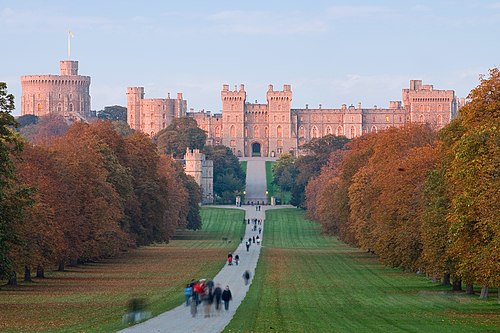 Windsor CastleRestored · prime 1820
 Tower of LondonRestored · prime 1285
 Bamburgh CastleRestored · prime 1904
All castles in England → · Strongest castles in England → · Castles of Europe
Play As Your Clan
Hold a real castle against whatever you choose to send at it, take a ship out in her own service years, or stand at the shoulder of someone the record remembers. The chronicler sets the scene; the deeds are yours.
Notable bearers of the Knight name
- Phil Knight (b. 1938), co-founder of Nike
- Gladys Knight (b. 1944), singer
- Wayne Knight (b. 1955), actor (Seinfeld)