Palmer
The palm-bearer, pilgrimage turned patronymic.
- Origin
- East Midlands, England
- Register
- English family
The Palmer arms and country

Coat of armsArms of Palmer of Castle Lackin (main)Borne by the Castle Lackin line, one branch of the name rather than all of it.Aergia · CC BY-SA 4.0 
Coat of armsCoat of arms of Palmer, Earl of SelborneBorne by the Earl of Selborne: the ennobled line of the name, not the name at large.CC BY-SA 4.0
.png)

- Coat of arms: Granted to an individual and inherited down that one documented line. These are the arms of particular families of the name, not of everyone who shares the surname.
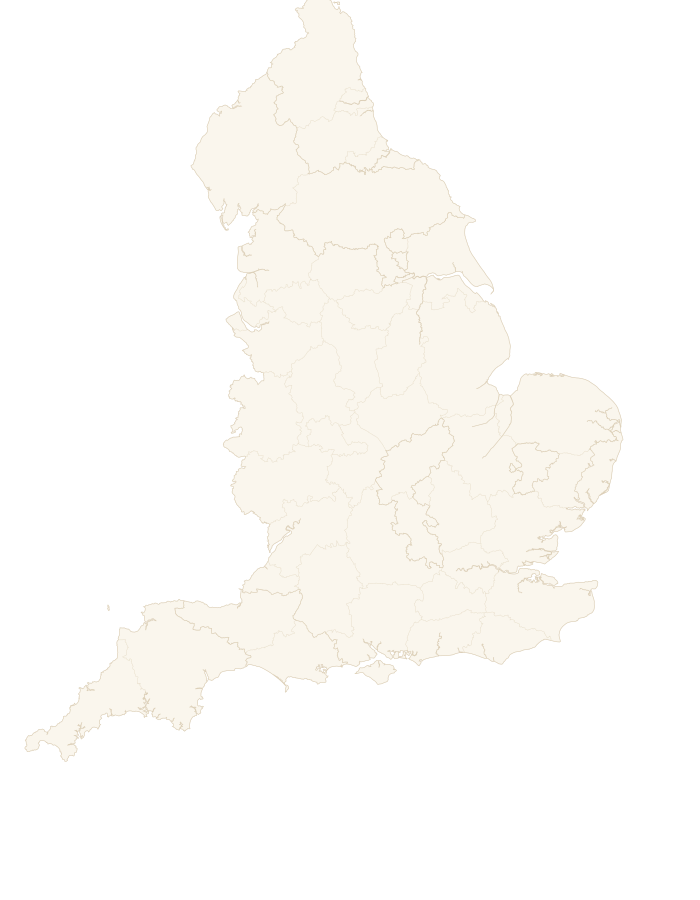
CoreHistoric reach
The seat of Palmer
Seat vacantChief
No one leads the Palmer community yet. When the movement opens, you can stand for its leadership, or help elect whoever does.
Current mission
No shared goal set yet. Once Palmer has leadership, it sets the public focus: a restoration, a gathering, a real-world project that helps its own.
The Palmer clan is being rebuilt. Join the waiting list for the movement today, and you help decide who leads it and what it does.
Help rebuild the Palmer clan →What does the Palmer name mean?
Pilgrim returned from Palestine with palm token, Crusade-era nickname became surname.
The history of Palmer
The palm leaf folded into a cross
The Latin was palmarius, sometimes palmerius, and it described one particular man: a Christian, normally out of western Europe, who had reached the holy places in Palestine and carried home a palm leaf, often folded into the shape of a cross, as the token of where he had been. The badge was the whole point of it. Anyone could claim the road to Jerusalem and be believed or not; the palm was evidence, portable and perishable, that the claim was good. The word travelled back with the man, fixed to him in his own parish, and in England it fixed hard enough to descend to his children and become Palmer.
The token is what separated the palmer from the wider run of pilgrims, even though medieval usage treated the two words as near synonyms. Peregrinus, the older and broader term, meant simply one who had come from afar, and covered any holy journey at all: to Rome, city of the martyrdom of Peter and Paul; to Santiago de Compostela in Galicia, where the shrine of the apostle James drew walkers from across Christendom; to the seven-yearly showing of relics shared between Maastricht, Aachen and Kornelimünster. The palm belonged to Palestine and to nowhere else.
That precision is why the name arrived already meaning something flattering. Palmers were held to be well-natured holy men, their devotion measured in the distance they had covered and survived, and the surname carried none of the sting that nickname-derived names so often do. A man called Short might be tall and mocked for it. A man called Palmer had walked to Jerusalem and back, or his father or grandfather had, and the parish knew the difference.
The roads that made the badge legible
The traffic the palm certified was old before any Palmer inherited the word. Surviving accounts of Christian pilgrimage to the Holy Land run from the fourth century, when the practice was pressed by church fathers including Jerome and established in earnest by Helena, mother of Constantine the Great; a stray earlier instance attaches to Origen in the third. By the time bynames were hardening in England, the journey had eight hundred years of precedent behind it and a fixed vocabulary to describe the people who made it.
By the central Middle Ages that traffic had become an economic sector in its own right. It began with facilities at the popular destinations (the beds, the guides, the trade in tokens) and grew into organised group travel run the length of the Mediterranean. A returning palmer was therefore not an eccentric but a participant in one of the largest movements of ordinary people that medieval Europe produced, and the man who came back through an English shire with a palm leaf was recognisable at sight because thousands of others had done the same.
What the palm certified was also the most contested destination on earth, which sharpened its value. The Holy Land is the focal point of pilgrimage for all three Abrahamic faiths at once. While Solomon's Temple stood, Jerusalem was the centre of Jewish religious life and the site of the Three Pilgrimage Festivals (Passover, Shavuot and Sukkot) with every able adult man required to come and offer sacrifice; the obligation lapsed with the Temple's destruction in 70 CE, and the western retaining wall of the Temple Mount remains the most visited Jewish site in the world. The medieval palmer walked to a city that had been the end of somebody's road for well over a thousand years before he set out.
The word was also a genuine measure of hardship, and that fed the name's weight. The Catholic priest Frank Fahey's line that a pilgrim is always in danger of becoming a tourist, and the reverse, states the medieval anxiety exactly: a road that could be walked for indulgence, for healing, for the welfare of dead kin, or simply because it was there. The palm settled the question. It said the far end had been reached.
How a description hardened into a surname
English surnames began as descriptions that need not outlive the man they described. They were formed with reference to a trade, a father's name, a birthplace or a bodily feature, and for a long stretch they were not inherited at all: a Palmer's son was as likely to be named for his own work or his own father as for his father's journey. The naming habit is generally traced to the administrative pressure that followed the Norman Conquest and the Great Survey completed in 1086, in a kingdom where the language of official record had shifted from Old English to Latin and where roughly ninety-five per cent of land south of the Tees had passed out of English hands.
Christopher Daniell places the first recorded use of a modern surname inherited across generations at around 1140, in the irregularly formed FitzGerald taken by the sons of a Frenchman named Robert in honour of an earlier kinsman named Gerald. From that model the practice spread downward from the feudal nobility and gentry, slowly, into the rest of society. By 1400 most English families, and most in Lowland Scotland, were carrying hereditary surnames, which places the freezing of Palmer squarely inside the period when the palm was still a thing a living neighbour might have carried.
The spread was not universally welcome. In the late medieval centuries mandatory surnames were resisted in England precisely because they were associated with taxation: a fixed name made a household findable, assessable and hard to lose in a roll. The names that survived that resistance survived as working identifiers, and Palmer is one of them: a word originally about a private act of devotion, preserved because it was administratively useful.
Half the parish was already called John
The reason a byname was needed at all is best shown in numbers. Of the boys born in London in 1510, 24.4 per cent were christened John, 13.3 per cent Thomas and 11.7 per cent William: very nearly half the male children of a great city carrying three names between them. Through the whole early modern period the top three male given names accounted for close to half the male population, and Mary for girls with John or William for boys still led through most of the nineteenth century. Only from the middle of that century did the stock widen, and by 1900 the top three took 22.9 per cent of boys and 16.2 per cent of girls.
In a parish stocked like that, a second name was not decoration but the working machinery of identification, and the clerk reached for whatever was most distinguishing: the man's trade, his father, the field or village he came from, something about his body. The Norman Conquest had narrowed the given-name stock in the first place, pushing William, Robert and Richard into common use in place of the Anglo-Saxon names and leaving the surname to do all the separating.
Palmer was an unusually powerful distinguishing mark, because the supply was so small. A parish might hold six Johns, three of them smiths' sons, and it might hold precisely one household in which somebody had gone to Palestine and returned with the leaf to show for it. The name did its administrative job perfectly, and that efficiency is part of why it survived into heredity rather than dying with the man who earned it.
Palmer among the Kings, Bishops and Abbots
Onomastics sorts surnames into rough classes (patronymic, occupational, toponymic, cognominal) and Palmer sits awkwardly across the seams, which is part of what makes it interesting. It is not an occupation: nobody was employed as a palmer, nobody was apprenticed to it, and no guild licensed the work. It is not a place. It is closest to the cognominal class, the broad group grown out of nicknames, where a word describing what a man had done or how he seemed became the way people addressed him.
That class contains a whole set of names that look occupational and are not. King, Bishop, Abbot, Sheriff and Knight belong there; a Dictionary of English Surnames states plainly that surnames of office are often nicknames, and Bernard Deacon has suggested that the first bearer may have carried himself like a king, or been as corpulent as a bishop. Palmer differs from those in one decisive respect. King was almost never a king. A Palmer really had gone to Jerusalem: the palm was not a joke about bearing or bulk but a physical object somebody had held.
The neighbouring classes throw the difference into relief. Vickers is thought to have begun as the name of a vicar's servant, the possessive -s marking whose household a man belonged to, and Roberts could be either the son or the servant of a Robert. Ornamental names went further still and described nothing at all: when Frederik I of Denmark-Norway ordered his nobles in 1526 to take fixed surnames, families such as Rosenkrantz and Gyldenstierne simply lifted a rose wreath and a seven-pointed gold star off their own arms. Palmer names neither a master nor a device. It names an act.
The Palmers' Guild at Ludlow
The clearest institutional trace the word left in England is at Ludlow in Shropshire, where the major religious guild took its name from the pilgrims themselves: the Palmers' Guild. A guild of that standing was not a devotional club at the edge of parish life. It held property, it maintained priests, it buried its members and prayed for their souls, and its name announced whose example the whole body was organised around: the men who had gone the distance and returned.
Ludlow matters to the surname because it shows the word functioning as a category of respect rather than a private memory. A guild does not name itself after an embarrassment. Where the palm was carried, it was displayed, and the community built the returned pilgrim into its formal religious architecture: the same instinct that let a byname born on the road survive into the parish register as a family name.
It also marks the point where the word's two lives overlap. In one register palmer names a status a living man held. In the other it names a household who had held it once and kept the label. The guild sat between the two, an institution founded on the first meaning at the moment the second was setting hard.
What the road was actually for
People did not set out for a single reason, and the medieval palmer is badly served by treating him as purely devout. Ian Reader's account of pilgrim motive makes the point that the reasons are always both spiritual and pragmatic at once: some travelled for transformation, others for a benefit sought in this life or on behalf of dead kin, and the recognised motives run through welfare, healing, prosperity and purification. A palm leaf brought back to an English parish could be a thanksgiving, a penance, a bargain kept, or the discharge of a promise made by somebody now in the ground.
Against that, Christian spiritual writing kept a second and entirely interior meaning of the word. The pilgrim there is not a man on a road at all but the figure of life in the world understood as a period of exile, and the pilgrimage is the inner path from wretchedness to beatitude. Benedict XVI put the outward version of it as stepping out of oneself in order to encounter God where he has revealed himself, a definition that makes the destination matter and the journey a stripping rather than a sightseeing.
Both meanings sat inside the surname at once, and neither has ever quite left it. A family called Palmer was named for a literal walk to a literal city, and simultaneously for the oldest metaphor Christianity has for a human life. Very few English surnames carry that much freight in six letters.
The white martyrs who never came home
There is a shape of pilgrimage that never produced a surname, and setting it beside the palmer explains why the name exists at all. In early Celtic Christianity the Peregrinari Pro Christ, the Pilgrims for Christ, went out as what were called white martyrs: they left home and kin for no fixed destination, trusting entirely to Divine Providence, and wandered. Their journeys founded abbeys and spread Christianity through Britain and the Continent, and they are among the most consequential travellers of the early medieval church.
They left no surname behind them because a surname is a thing a community fastens to a man it can see. The white martyr's whole practice was to become unfindable: to abandon the security of home and clan for an unknown end. Palmer is the opposite case in every particular: a man who went to the single most specific destination in Christendom, obtained proof of it, and came back to the exact place that had watched him leave. The name is a record of return.
Ivanhoe, Spenser, and a word that stayed readable
English literature kept the meaning alive long after the last palm had crumbled. Edmund Spenser gave a palmer the role of Reason through Book II of The Faerie Queene: a guide made of judgement, walking beside the knight who needs restraining. Placing the figure there says a great deal about the reputation of the returned pilgrim, and the choice would have been unreadable had the word meant nothing more than traveller by the time Spenser wrote.
Sir Walter Scott made the association popular rather than learned. His Wilfred of Ivanhoe is introduced as a palmer, a Christian of western Europe who has made the pilgrimage to Jerusalem, and the disguise works as a plot device only because the palm is at once conspicuous and anonymous. A palmer could go anywhere, be given hospitality anywhere, and be asked no questions about his past. Ivanhoe fixed the word in the nineteenth-century imagination at precisely the period English families were becoming curious about the origins of their own names.
The wider company is Chaucer's, whose Canterbury Tales are told by pilgrims riding to the shrine of Thomas Becket; Dante, who casts himself as the pilgrim moving through Hell, Purgatory and Paradise; and Bunyan, whose Pilgrim's Progress of 1678 ranges Christian and Faithful against the false pilgrims Formalist, Hypocrisy and Mr By-Ends. Against that background, a family carrying Palmer never had to explain itself. The word was in the schoolbooks.
Fen, wold and the road counties
The modern weight of the name sits in a broad band across the east midlands and East Anglia: Lincolnshire, Nottinghamshire, the Derbyshire Peak, Leicestershire and Rutland, Northamptonshire, Norfolk, Suffolk, the Cambridgeshire fens, Essex, and the Hertfordshire and Bedfordshire ground between them. That is arable, parish-dense, market-town England: country of many small churches and many small landholders, which is exactly the sort of place a hereditary byname takes root and multiplies rather than being absorbed into a single dominant house.
The older ground is different and points south. Kent, Surrey, both Sussexes, Hampshire and the Isle of Wight, Berkshire, Oxfordshire and Buckinghamshire all carry historic bearers, as do Cornwall, Devon, Somerset, Dorset, Wiltshire and Gloucestershire, along with London, Cumbria, Lancashire, Cheshire and the Mersey and Manchester country.
The four-year University of the West of England study led by Richard Coates, concluded in 2016 and published as the Oxford English Dictionary of Family Names in Britain and Ireland, examined 45,602 surnames from eleventh-century to nineteenth-century sources and found that more than ninety per cent are native to Britain and Ireland. Palmer belongs to that native stock: a name made in England out of a Latin word for a journey to Palestine, and never imported as a family.
The bookseller's son who knocked at Blake's door
Samuel Palmer was born at Newington, on the south London side of the river, on 27 January 1805, the eldest son of a bookseller who later preached as a Baptist. He was schooled at home on the King James Bible, which shaped everything he afterwards painted, took the Merchant Taylors' prize for Latin verse at fourteen, sold his first painting at sixteen, and was hung at the Royal Academy summer exhibition at seventeen. The precocity is worth stating plainly: he was a working exhibited artist before he was of age.
In October 1824, when Palmer was nineteen, the painter John Linnell took him to William Blake's rooms off the Strand. Blake was sixty-seven, three years from his death, and at work on the Illustrations of the Book of Job. The meeting settled Palmer's course. What Blake gave him was not a manner but a permission, proof that an English painter could take the visionary register as a vocation rather than a lapse, and Palmer returned to those rooms repeatedly over the next three years and was near Blake at the end.
The young painters who came to Blake with him gave themselves a name: the Ancients. Edward Calvert and George Richmond were among them, and the group's deliberately backward-looking title declared where they thought English art had gone wrong. For a surname meaning a man who walked to Jerusalem for the sake of an older faith, it is a fitting circle to find a Palmer at the middle of.
Seven years in the Darent valley
At twenty-one Palmer moved to Shoreham, a village in the Darent valley of west Kent, and the Ancients came down at weekends. The seven years he spent there, 1826 to 1834, produced the small visionary landscapes and ink-and-wash studies that the modern English critical tradition treats as the foundation of English visionary art: In a Shoreham Garden, Early Morning, The Magic Apple Tree, Coming from Evening Church. The valley in them is not topography. It is a harvest country of moon, corn-shock and parish church: an English Christian rural Eden.
The Kentish setting is not incidental to the name. Kent heads the older ground of the name, the historic counties its bearers held before the modern weight of the surname settled in the east midlands, and what Palmer painted at Shoreham is the devotional landscape of exactly that parish England: the church at evening, the fields worked and blessed, the moon standing over a valley small enough to walk in an afternoon.
He left Shoreham in 1834 and married Hannah Linnell, his old guide's daughter, in 1837. An Italian honeymoon followed, and then decades of the accomplished topographical watercolour that the market actually wanted. He exhibited with the Society of Painters in Water-Colours and became a member of it in 1854: a respectable, saleable career built on top of the seven Kentish years, which for most of his lifetime nobody thought to ask about.
The Lonely Tower, Redhill, and Grigson's rescue
The visionary register came back late, and it came back in print. Palmer's etchings of his last years (The Lonely Tower, Opening the Fold, The Bellman) rank among the finest English etching of the nineteenth century, and they recover in bitten line the moonlit, sheltering, harvest-lit world he had made at Shoreham forty years earlier. Working the plate suited him: small, dark, deliberate, exact.
He spent his final twenty years at a house near Redhill in Surrey, gardening and translating Virgil's Eclogues, a poet of shepherds, fields and lost country, which is the same subject he had painted in the Darent valley as a young man. He died there on 24 May 1881, seventy-six years old, respected as a watercolourist and largely unread as anything more.
The rescue came in 1947, when Geoffrey Grigson published Samuel Palmer: The Visionary Years and restored the Shoreham pictures to the canonical position in English art they have occupied ever since. It is an unusual afterlife for a painter: sixty-six years dead before the work he is now known for was properly seen. The surname carries him on the strength of those seven years, and the fit between the name and the man is close: a word for a journey undertaken on faith, attached to a painter whose reputation rests entirely on the seven years he spent doing the same.
Champions of the Palmer name
The bearers whose lives are inseparable from this surname. Each has their own page, biography, achievements, geography, connection to the family.
Historic Places, Rebuilt
Explore the streets and seats the Palmer name knew, rebuilt with AI as they stood in history.
The castles of the homeland
The great strongholds of the homeland, look one up, see what it looked like in its prime, and recreate it to explore.
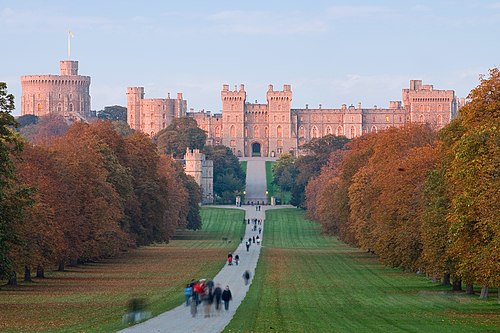 Windsor CastleRestored · prime 1820
 Tower of LondonRestored · prime 1285
 Bamburgh CastleRestored · prime 1904
All castles in England → · Strongest castles in England → · Castles of Europe
Play As Your Clan
Hold a real castle against whatever you choose to send at it, take a ship out in her own service years, or stand at the shoulder of someone the record remembers. The chronicler sets the scene; the deeds are yours.