Thatcher
The roof thatcher's craft, straw and laths long before politics borrowed the name.
- Origin
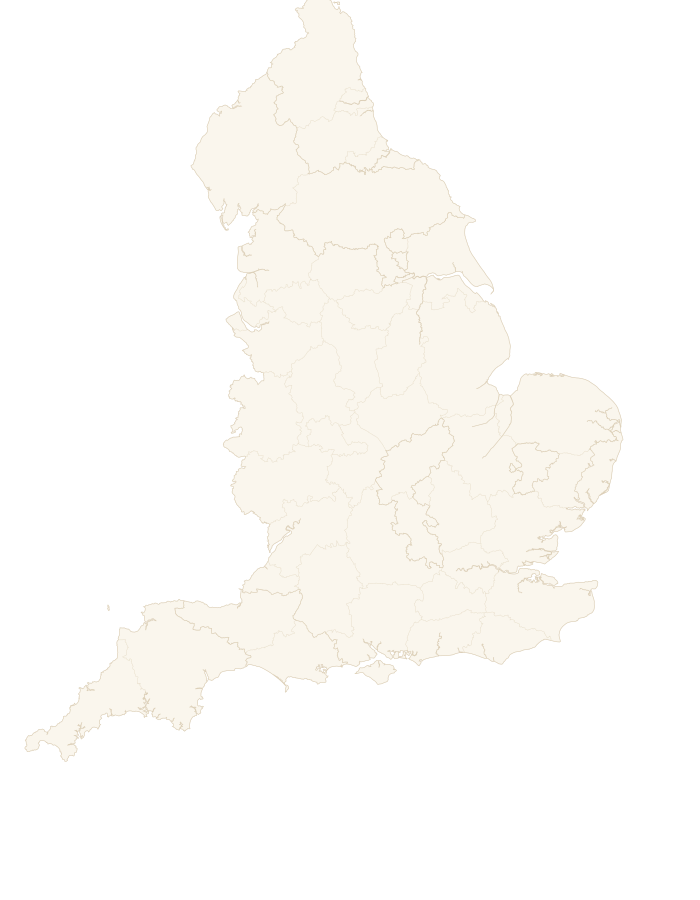
- East Midlands, England
- Famous bearer
- Margaret Thatcher (1925–2013), Prime Minister 1979–1990, the first woman to hold the office
- Register
- English family
Where the Thatcher name comes from
CoreHistoric reach
The seat of Thatcher
Seat vacantChief
No one leads the Thatcher community yet. When the movement opens, you can stand for its leadership, or help elect whoever does.
Current mission
No shared goal set yet. Once Thatcher has leadership, it sets the public focus: a restoration, a gathering, a real-world project that helps its own.
The Thatcher clan is being rebuilt. Join the waiting list for the movement today, and you help decide who leads it and what it does.
Help rebuild the Thatcher clan →What does the Thatcher name mean?
Occupational surname from Middle English thacker, a roof-thatcher: the tradesman who layered reed, straw or heather over laths so a cottage could weather the rain. Every parish with barley fields and river reeds needed one; the name belongs to the same world as Miller, Smith and Wright, skill measured in dry hearths, not titles.
The history of Thatcher
The man on the ladder with a yelm of straw
Thatcher is Middle English thacker, the roof-thatcher: the tradesman who layered reed, straw or heather over laths so that a house could shed rain. In most of England thatch remained the only roofing material available to the bulk of the population in the countryside, and in many towns and villages too, until the late 1800s. Every parish that grew corn or held a reed bed needed a man who knew how to lay it, and the byname fixed itself to whoever had the knack.
That is also why there are so many unrelated Thatchers. The job existed everywhere at once, so the name was made independently in county after county by men who never met. Parish registers tie it most densely to the southern and western counties where long straw roofing stayed common into the Victorian era, Wiltshire, Dorset, Hampshire and Somerset, and to pockets of the Thames valley where London demand pulled country hands towards the suburbs.
A hereditary Thatcher line was never a house in the feudal sense. It meant that grandfather, father and son had all kept the rain off the same neighbours' rafters, on streets short enough that a leaking roof was known about by the following winter. The name reached the record early enough to sit in Parliament: James Thatcher is documented as an English member of parliament between 1536 and 1565.
Spars, sways, and the fixings that decide a roof
The material is dry vegetation laid so that water runs off the outside while the bulk of it stays dry: straw, water reed, sedge, rushes, heather. Packed densely it traps air, so a thatched roof insulates as well as it covers, keeping a house cool in summer and warm in winter. It is pitched between 45 and 55 degrees, so rain travels off the slope faster than it can work into the structure, and at around 34 kg per square metre it lets the timber beneath it be lighter than a tiled roof demands.
The work has its own vocabulary. Straw is bundled into yelms before it goes up the ladder, then fixed with spars, hair-pin staples twisted from hazel and also called gads, driven over horizontal wooden sways. What decides the life of the roof is not how thick the coat is but how much correctly laid thatch covers those fixings; when the sways and spars show near the surface, the roof needs replacing. The ridge alone comes round every twelve to fifteen years.
Good quality straw thatch, laid by a skilled hand, lasts more than fifty years, which puts a thatcher's reputation on a timescale longer than his working life. The methods were handed down rather than schooled, though descriptions of European materials and techniques survive in archives and early publications running back four centuries, and The Thatcher's Craft of 1960 is still the trade's standard reference.
Wheat that grew six feet, reed that only grew in East Anglia
The oldest thatch in England is still on the roofs. Traditionally a new layer was simply laid over the weathered surface, a practice called spar coating, and on very old buildings that has built up accumulations more than seven feet, 2.1 m, thick. Over 250 roofs in southern England carry base coats applied more than five hundred years ago, which makes them direct physical evidence of what medieval thatchers actually used. Almost all of them are wheat, rye, or maslin, a mixture of both.
That base coat records the medieval field as much as the medieval roof. Wheat then grew almost six feet tall even in very poor soils and produced straw durable enough for a roof alongside grain for bread, so one harvest fed the household and covered it. The thatcher's raw material was a by-product of the corn crop, which is exactly why the trade concentrated where the corn did.
Water reed was the other tradition and it barely left East Anglia. It is a one-coat material, stripped off and replaced when it weathers rather than layered over, and it is expensive in land: four to five acres of well managed reed bed produce enough to thatch one average house. Large reed beds have been uncommon in most of England since the Anglo-Saxon period, which settled the argument in favour of straw everywhere inland. More than 80 per cent of the water reed now used in Britain is imported, and modern imported reed on an average English roof is likely to last around forty years.
Further north the palette widens, and much of it survives only because something else was nailed over it. In northern Britain old thatch is frequently preserved beneath corrugated sheeting and comes to light when a small rural property is redeveloped. Research funded by Historic Scotland has turned up broom, heather, rushes, cereals, bracken, turf and clay in these roofs, with sharp regional variation between them: the Moirlanich Longhouse at Killin is rye, bracken and turf, Sunnybrae Cottage at Pitlochry rye, broom and turf.
The 1212 ban, and the fire that took the Globe
The thatcher's trouble was always the town. After a major fire in 1212, London forbade new thatched roofs outright and required existing ones to have their surfaces plastered. From the twelfth century clay, slate and stone roofing tiles spread through northern Europe, appearing first on abbeys and royal palaces and then being encouraged in medieval towns for the same reason: a tiled street did not carry flame the way a thatched one did. Thatch stayed the roof of the countryside; tile became the roof of the regulated town.
The most famous thatch fire in England was theatrical. The original Globe burned on a dry June night in 1613 when a burning wad of cloth thrown out by a special effects cannon during a performance set light to the surface of the roof. The neighbouring Rose was thatched with cereal straw, a sample of which Museum of London archaeologists recovered when the site was excavated in the 1980s. The modern Globe, opened in 1997, is one of the very few thatched buildings in London, and its water reed is decoration laid over a fully waterproofed modern roof.
The reputation always ran ahead of the risk. Thatch burns slowly, in the trade's phrase like a closed book, and most fires start not in the roof but in wood burners and faulty chimneys, sparks working through a failing stack into the semi-charred thatch around it. Between 50 and 80 thatched roofs are destroyed by fire in Britain in a year. In the colonies the objection was different: a Massachusetts law of 1640 outlawed thatched roofs there because a lightly built one could collapse under accumulated snow.
Welsh slate, the railway, and a trade down to a thousand hands
What finally undercut the trade was transport. Commercial distribution of Welsh slate began in 1820, and the canals and then the railways put slate and tile within reach of villages that had never had a choice about what covered them. The decline was not immediate: the number of thatched properties in Britain actually rose through the middle of the century as agriculture expanded, and only fell away at the end of the 1800s with agricultural recession and rural depopulation.
Then the straw itself failed. Good thatching straw grew scarce in England after the combine harvester arrived in the late 1930s and 1940s and short-stemmed wheat varieties were released, and heavier use of nitrogen fertiliser through the 1960s and 1970s weakened what was left. Since the 1980s specialist growers have gone back to tall-stemmed heritage wheats under low input conditions: April Bearded from the early 1800s, Squareheads Master of 1880, Victor of 1910. The law has not kept up: under the Plant Variety and Seeds Act 1964 it is an offence to give, trade or sell the seed of an older variety for growing, so British thatchers cannot legally obtain the best straw their own craft knows how to use.
Thatch had become a mark of poverty, and professional thatchers fell away with the roofs. That has reversed inside living memory, carried by interest in preserving historic buildings and in sustainable materials. A 2013 estimate put 60,000 thatched properties in the United Kingdom, roofed in long straw, combed wheat reed or water reed, with around a thousand full-time thatchers still working. The surname now outnumbers the trade by an enormous margin, which is its own kind of monument.
The Hastings architect who built Bishop Selwyn's churches
Frederick Thatcher was born at Hastings in Sussex on 5 September 1814, to a landed mother and a father who was a riding officer. At sixteen he was articled to the London architect Alfred Bartholomew, and six years later set up his own architectural and surveying practice; in 1836 he became an associate of the Institute of British Architects of London. He married Elizabeth Watt on 30 June 1840, and she and an infant son died in 1842. He bought rural land near New Plymouth from the New Zealand Company and left England in 1843 aboard the barque Himalaya, reaching New Plymouth on 23 December that year.
In New Plymouth he fell in with George Selwyn, Bishop of New Zealand, and the association shaped the rest of his life. He moved to Auckland in 1845 as superintendent of public works and a lieutenant in the Auckland Militia, served as Sir George Grey's secretary from 1846 to 1848, then enrolled at St John's College. He married Caroline Wright at St Mary's, Taranaki, on 6 November 1849, was ordained priest in 1853 and made vicar of St Matthew's parish in Auckland, retiring in 1856 on failing health. He came back to New Zealand on 14 August 1861, and Selwyn made him vicar of St Paul's, Thorndon, where he was also the architect of the church he served in.
His buildings were Gothic Revival and mostly ecclesiastical, and he assisted Selwyn in designing the Selwyn churches. Besides St Paul's he designed St John's at Trentham and six other churches during his Thorndon years, along with St Mary's at New Plymouth, Christ Church at Nelson, St Mary's at Parnell, The Gables, Kinder House and Selwyn Court. He returned to Grey's service as secretary on 25 October 1864, went back to England when Grey's term ended in 1868, and became secretary to the Bishop of Lichfield, an office Selwyn then held. After Selwyn's death he helped Charles Abraham found Selwyn College, Cambridge; from 1883 he was prebendary of Lichfield Cathedral. He died at Bakewell in Derbyshire on 19 October 1890 and was buried at Lichfield Cathedral near Selwyn's grave.
The Congressman from the District of Maine
George Thatcher, whose name is also written Thacher, was born at Yarmouth in the Province of Massachusetts Bay on 12 April 1754, graduated from Harvard in 1776, was admitted to the bar in 1778 and moved to York in the District of Maine to practise, settling at Biddeford by 1782. Massachusetts sent him to the Continental Congress in 1787 and 1788; he wrote under the pen name Scribble Scrabble. He was elected to Congress from the Maine district, sitting as a Pro-administration member from 1789 to 1792 and as a Federalist from 1794 to 1801, and when he left he was the last of the original Congressmen still in office.
The vote he is remembered for came in 1793, when he was one of only seven representatives to vote against the Fugitive Slave Act. On 30 January 1797 Representative John Swanwick of Pennsylvania presented a petition drafted by the Reverend Absalom Jones on behalf of four freed men, the first group of African Americans to petition the United States Congress, asking for some remedy for an evil of such magnitude. Thatcher argued that the House should accept it and refer it to the Committee on the Fugitive Law. The House declined to receive it by 50 votes to 33, and in March 1798 he reopened the debate on the rights of man.
He spent the rest of his life on the bench and on institutions. He took a Massachusetts state court appointment in 1792 and sat on the state's Supreme Judicial Court from 1801 until he resigned in January 1824. An ardent Unitarian, he helped sponsor the founding of Bowdoin College so that Maine would have a university of its own, serving as a regent for its first dozen years, and he sat in the convention that framed Maine's constitution in 1819.
Samuel Thatcher, born at Cambridge in the same province on 1 July 1776 and no documented relation, followed a near-identical path: Harvard in 1793, the bar in 1797, practice at New Gloucester, the Massachusetts house of representatives from 1801 to 1811, then election as a Federalist to fill the vacancy left by Silas Lee's resignation, serving in Congress from 6 December 1802 to 3 March 1805. He was sheriff of Lincoln County from 1814 to 1821, sat in the Maine house in 1824 and died at Bangor in 1872, aged ninety-six.
Mobile Bay, a chief justice by lot, and an apostle who would not sign
Henry Knox Thatcher was born at Thomaston, Massachusetts, on 26 May 1806, son of Ebenezer Thatcher and of Lucy, daughter of Major General Henry Knox. He went to West Point in 1822, lost most of his first year to sick leave and resigned in April 1823, taking a midshipman's appointment in the Navy instead. Four decades of sea time followed: the frigate United States in the Pacific, the West Indies, the Mediterranean in the Delaware and the Brandywine, the Africa Squadron in the Jamestown, and the executive officer's post at Boston Navy Yard from 1859 to 1861, which put him at the centre of the Navy's expansion when war came.
He made commodore on 3 July 1862 and commanded the screw frigate Colorado in the North Atlantic Blockading Squadron, leading a division of Admiral Porter's squadron at both battles of Fort Fisher in December 1864 and January 1865. Given the Western Gulf Squadron, he worked with General Canby against Mobile; Spanish Fort and Fort Blakeley fell on 9 April 1865, the Confederates evacuated the city on 12 April, and Thatcher joined General Granger in demanding its formal surrender. On 10 May the Confederate naval forces in the Gulf surrendered to him, and Sabine Pass and Galveston, the last rebel-held points on the coast, capitulated on 25 May and 2 June. He was promoted rear admiral on 25 July 1866 and commanded the North Pacific Squadron, where King Kamehameha V made him a Knight of the Order of Kamehameha I, an honour he needed a special Act of Congress to accept. Two US Navy destroyers have carried his name.
Henry Calvin Thatcher, born at New Buffalo, Pennsylvania on 21 April 1842, took a degree at Franklin and Marshall College in 1864 and a law degree at Albany Law School in 1866, went straight to Colorado and set up a practice at Pueblo at twenty-four; President Grant made him United States Attorney for Colorado Territory in 1869. Elected to the new state's Supreme Court as a Republican in 1876, he became Colorado's first chief justice by drawing the short lot: the law gave the office to whichever justice drew the three-year term.
Moses Thatcher, born in Sangamon County, Illinois on 2 February 1842, crossed to the Salt Lake Valley with his family in 1847, studied at the University of Deseret, served missions to the United Kingdom and France and later presided over his church's mission in Mexico. He was called as an apostle in April 1879 and led the Young Men's Mutual Improvement Association alongside Wilford Woodruff from 1880. In 1896 he alone among the apostles declined to sign the political Manifesto, on grounds of conscience and citing the church's long-standing position on political neutrality; he was dropped from the Quorum of the Twelve but kept in good standing, and retained the priesthood office of apostle for the rest of his life.
Champions of the Thatcher name
The bearers whose lives are inseparable from this surname. Each has their own page, biography, achievements, geography, connection to the family.
Historic Places, Rebuilt
Explore the streets and seats the Thatcher name knew, rebuilt with AI as they stood in history.
The castles of the homeland
The great strongholds of the homeland, look one up, see what it looked like in its prime, and recreate it to explore.
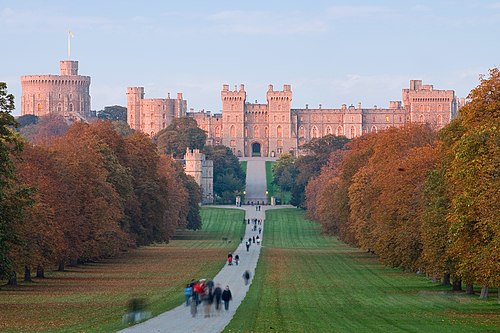 Windsor CastleRestored · prime 1820
 Tower of LondonRestored · prime 1285
 Bamburgh CastleRestored · prime 1904
All castles in England → · Strongest castles in England → · Castles of Europe
Play As Your Clan
Hold a real castle against whatever you choose to send at it, take a ship out in her own service years, or stand at the shoulder of someone the record remembers. The chronicler sets the scene; the deeds are yours.
Notable bearers of the Thatcher name
- Margaret Thatcher (1925–2013), Prime Minister 1979–1990, the first woman to hold the office
- Denis Thatcher (1915–2003), businessman and consort to the Prime Minister, caricatured and respected in equal measure
- Carol Thatcher (b. 1953), journalist and broadcaster
- Sir Mark Thatcher (b. 1953), businessman, controversial public figure in the 1980s tabloid years
Stories of Thatcher
The grocer's daughter who beat Heath
1925Margaret Hilda Roberts grew up above her father's grocery on North Parade in Grantham, in a household with no indoor lavatory and no hot water until she was a teenager. She read chemistry at Somerville under Dorothy Hodgkin, the future Nobel laureate, then read for the Bar in the evenings while looking for a Conservative seat. She entered the Commons for Finchley in 1959. By the autumn of 1974 the Conservative Party had lost two general elections under Edward Heath in eight months, and Heath refused to resign. The leadership challenge of February 1975 was thought to be unwinnable by the candidate the right of the party put up. The candidate the right of the party put up withdrew. Margaret Thatcher decided to stand in his place.
Read the story →
The Falklands dispatch
1982On the second of April 1982, Argentine forces invaded the British Falkland Islands in the South Atlantic. The British Foreign Office had judged the islands not retakable. The First Sea Lord, Sir Henry Leach, judged differently and walked across Whitehall in his uniform to tell Margaret Thatcher so directly. She had her decision before midnight. The British task force sailed within seventy-two hours. The campaign that followed ran for ten weeks at a final cost of two hundred and fifty-five British and approximately six hundred and forty-nine Argentine lives. The hardest single decision of the war, taken on the morning of the second of May at Chequers, was the order that allowed HMS Conqueror to torpedo the Argentine cruiser General Belgrano outside the declared exclusion zone. Three hundred and twenty-three Argentine sailors died.
Read the story →