Coleman
Columban saint-name or Nicholas' man.
- Origin
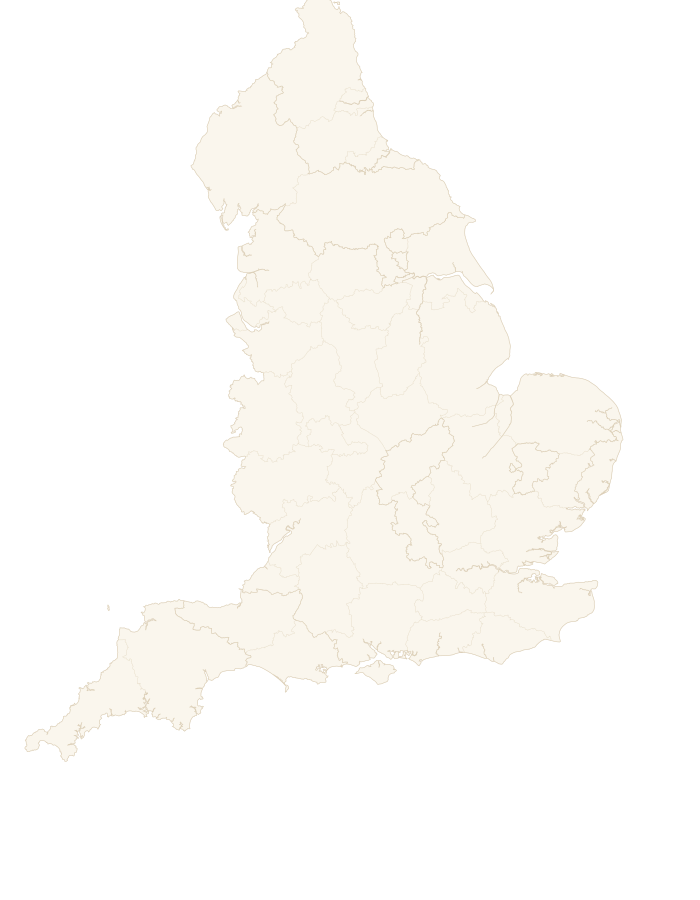
- East of England, England
- Register
- English family
Where the Coleman name comes from
CoreHistoric reach
The seat of Coleman
Seat vacantChief
No one leads the Coleman community yet. When the movement opens, you can stand for its leadership, or help elect whoever does.
Current mission
No shared goal set yet. Once Coleman has leadership, it sets the public focus: a restoration, a gathering, a real-world project that helps its own.
The Coleman clan is being rebuilt. Join the waiting list for the movement today, and you help decide who leads it and what it does.
Help rebuild the Coleman clan →What does the Coleman name mean?
Irish Ó Colmáin or English 'servant of Nicholas' (Colin), spelling alone cannot sort; both landed in English towns.
The history of Coleman
Three unrelated men, one spelling, before 1400
By 1400 most English families, and those of Lowland Scotland with them, had settled into hereditary surnames, and Coleman was already a name that at least three unrelated kinds of man could be handed. One burned charcoal for a living. One was the servant of a master called Cole. One was Irish, an Ó Colmáin, Ó Clumhain or Mac Colmáin whose name a clerk would later flatten into English letters. None of them was related to the others, and after four hundred years of parish registers no spelling on earth can separate them.
The habit of a name that outlived its first bearer began at the top and took two and a half centuries to reach the bottom. Christopher Daniell points to 1140 for what may be the first recorded modern surname inherited by more than one generation, and even that was irregular: the sons of a Frenchman named Robert called themselves FitzGerald, after an earlier relative. Gentry adopted the habit first. Below them, in late medieval England, fixed surnames were actively resisted, because a man who could be named the same way twice could be taxed twice.
The freezing came from the state, not the family. Henry VIII, reigning from 1509 to 1547, ordered that marital births be recorded under the father's surname, and from that point the clerk's choice of letters became the family's inheritance. A Coleman whose grandfather the clerks had spelled some other way simply became whatever the register said he was.
The burner of charcoal, not the coal miner
The English occupational Coleman is not a coal miner. He is the collier in the older sense, the burner of charcoal. He also worked inside a legal cage. The forest laws arrived with the Normans and set aside great tracts of England as royal forest, meaning the timber a collier needed belonged to the Crown and the right to cut it was a grant, not a freedom. The name still holds wooded midland country (the Derbyshire Peak, Nottinghamshire, Leicestershire, the Northamptonshire uplands), though its heaviest ground is East Anglian, running from Norfolk and Suffolk through the Cambridgeshire fens into Essex, where the English and the Irish line came into the same registers.
The trade also explains why the surname is common rather than rare. Charcoal was the fuel that let a smith weld and a limekiln burn, so every district needed its own collier, and every district named him independently. It is the mechanism that made Smith the commonest surname in the United Kingdom, ahead of Jones, Williams, Brown, Taylor, Davies and Wilson, and Richard Coates named exactly this class of origin as the obvious one: Smith and Baker, the trades a village could not do without.
Cole's man, the vicar's man, Hick's man
The second English road to the name has nothing to do with fire. In England a servant commonly took his employer's name, sometimes with an s bolted on: Vickers is read as the byname of a vicar's servant, and Roberts could be the son of a Robert or equally the man who worked for one. Where the master's name kept its own shape, the servant took the whole word and the suffix man, exactly as Hickman is Hick's man, Hick being a pet form of Richard. Coleman on this road is Cole's man, and nothing more.
Which Cole is unrecoverable. Nicholas came into England as one of a small stock of Greek-derived given names, alongside George, Dorothy and Helen, and it threw off the pet forms Cole and Colin; the same syllable also carried the fuel word. So the servant's Coleman and the collier's Coleman were spelled identically from the first written instance, and the household that produced one of them left no record distinguishing it from the woodland that produced the other.
There is a warning buried in that. A Dictionary of English Surnames notes that surnames of office are often nicknames rather than job descriptions, which is why almost nobody surnamed King descended from one; Bernard Deacon suggests the first bearer merely behaved like a king, or was as corpulent as a bishop. The same caution applies here. A fourteenth-century Coleman may have burned charcoal, may have served a man called Cole, or may simply have been dark enough that his neighbours thought the word fitted him.
Ó Colmáin, Ó Clumhain, Mac Colmáin
The Irish Coleman is not one name but three, Ó Colmáin, Ó Clumhain and Mac Colmáin, and the anglicising desk collapsed all of them into a single English spelling. Behind Ó Colmáin stands Colmán, a name from the Columban saint-stock that Irish parents used for centuries, which is why the Irish line is dense in a way a trade name never is: it descends from a given name that was fashionable, not from a job that was necessary. Its modern bearers keep to Irish ground. Séamus Coleman, born in 1988, is an Irish footballer; the hurler Martin Coleman, born in 1950, was followed into the game by his son Martin Coleman Jnr, two generations of the name in the same county sport.
The name survived because its bearers held nothing
Coleman began in England as a medieval Anglo-Norse personal name, and by rights 1066 should have killed it. William systematically dispossessed English landowners; the Domesday Book, completed by 1086, records the result, with only about five per cent of the land south of the Tees still in English hands, and that residue shrinking in the decades after. Official documents changed language from Old English to Latin, and the ruling class spoke Anglo-Norman.
The name-stock changed with the landholding. William, Robert and Richard spread quickly as male given names, displacing Anglo-Saxon ones; female names shifted more slowly. An older name like Coleman had no future among men who wanted their sons to sound like the new order. It survived precisely where the surveys counted heads rather than manors, among colliers and servants who had nothing to gain by renaming themselves.
The four-year study led by the University of the West of England, published in 2016 as the Oxford English Dictionary of Family Names in Britain and Ireland, worked through sources from the eleventh century to the nineteenth and found that more than ninety per cent of its 45,602 surnames are native to Britain and Ireland. Coleman sits inside that ninety per cent twice over, by its English trade road and by its Irish one.
Kit, Helena, Ada and two women called Jean
The name's public record turns unusually female in the second half of the nineteenth century, and on both sides of the Atlantic at once. Kit Coleman, 1856 to 1915, wrote a newspaper column in Canada. Helena Coleman, 1860 to 1953, was a Canadian poet, music teacher and writer who lived ninety-three years. Ada Coleman, 1875 to 1966, spent her working life behind an English bar, in a trade that in her lifetime was not supposed to make a woman's name known at all.
The next generation of Colemans went to war and to the track. Jean Coleman, 1908 to 1982, served as an S.O.E. officer in occupied France. A second Jean Coleman, 1918 to 2008, ran as an Australian sprinter: the same first name and surname, born ten years apart, on opposite sides of the world. The pattern held into the acting profession with Charlotte Coleman, 1968 to 2001, and Jenna Coleman, born in 1986.
Grandstand, the Canadian Pacific and a seat in the Commons
In the twentieth century the name climbed out of the woods it started in. D'Alton Corry Coleman, 1879 to 1956, ran the Canadian Pacific Railway as its president. Percy Coleman, 1892 to 1934, sat as an Australian politician. Donald Coleman, 1925 to 1991, and Iain Coleman, 1958 to 2025, both took seats in the British House of Commons, and D. C. Coleman, 1920 to 1995, spent his career writing the economic history of the country the earlier Colemans had fuelled.
The best known of them started where the name always had, at the bottom of a working household. David Coleman, born at Alderley Edge in Cheshire in 1926, was the only son of a railway clerk at the Crewe goods yard, left school at sixteen for the Stockport Express, and took the anchor's chair of Grandstand on 11 October 1958. He held it for twenty seasons, presented eleven consecutive Olympic Games from Rome 1960 to Sydney 2000, and stayed on air for nineteen hours at Munich in 1972 while the Israeli team was held hostage two hundred metres from his booth.
Champions of the Coleman name
The bearers whose lives are inseparable from this surname. Each has their own page, biography, achievements, geography, connection to the family.
Historic Places, Rebuilt
Explore the streets and seats the Coleman name knew, rebuilt with AI as they stood in history.
The castles of the homeland
The great strongholds of the homeland, look one up, see what it looked like in its prime, and recreate it to explore.
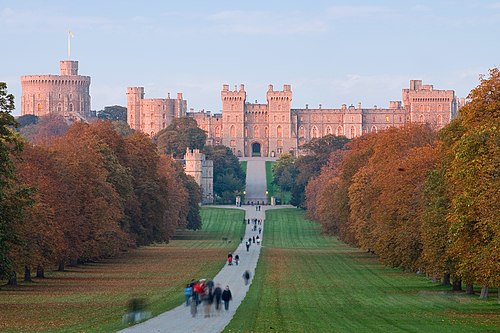 Windsor CastleRestored · prime 1820
 Tower of LondonRestored · prime 1285
 Bamburgh CastleRestored · prime 1904
All castles in England → · Strongest castles in England → · Castles of Europe
Play As Your Clan
Hold a real castle against whatever you choose to send at it, take a ship out in her own service years, or stand at the shoulder of someone the record remembers. The chronicler sets the scene; the deeds are yours.