Ward
The watchman.
- Origin
- East Midlands, England
- Famous bearer
- Mary Ward (1585–1645), Yorkshire Catholic religious reformer; founded the Institute of the Blessed Virgin Mary
- Register
- English family
The Ward arms and country

Coat of armsArms of Ward familyWikimandia · CC BY-SA 4.0 
Coat of armsArms of Ward family (flory)Wikimandia · CC BY-SA 4.0

.svg)
- Coat of arms: Granted to an individual and inherited down that one documented line. These are the arms of particular families of the name, not of everyone who shares the surname.
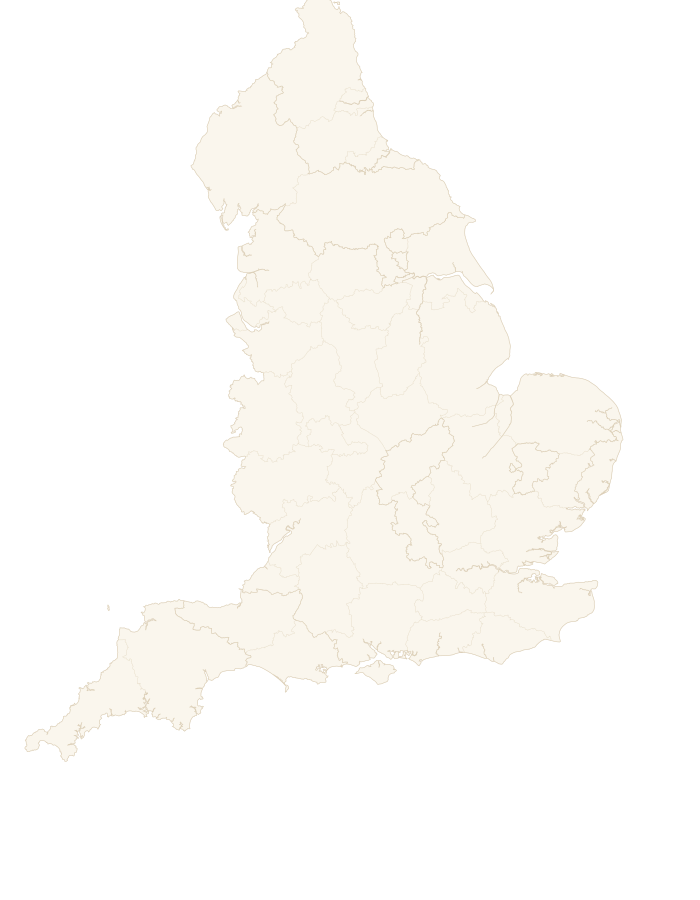
CoreHistoric reach
The seat of Ward
Seat vacantChief
No one leads the Ward community yet. When the movement opens, you can stand for its leadership, or help elect whoever does.
Current mission
No shared goal set yet. Once Ward has leadership, it sets the public focus: a restoration, a gathering, a real-world project that helps its own.
The Ward clan is being rebuilt. Join the waiting list for the movement today, and you help decide who leads it and what it does.
Help rebuild the Ward clan →What does the Ward name mean?
Middle English, watchman, guard.
The history of Ward
Two names that ended up spelled the same way
Ward is not one surname. It is two, from two languages that never borrowed a syllable from each other, and they collided in the English alphabet. The English name comes from Old English weard, a civil guard or keeper of the watch, with a rarer topographical strand from werd, a marsh. The Irish name is Mac an Bháird, 'son of the bard', and has no connection to the English word at all. The oldest public record of the surname in either line dates to 1176.
Both lines travelled well. Ward was the 79th most common surname in the United States at the 2010 census, the 78th in Ireland, and 31st in the 1991 UK census; in 2007 it was the most common surname of all in Lutterworth, Leicestershire. Most diaspora Wards with an Irish crossing behind them belong to the Gaelic line, and geography is the clue: a family out of Donegal, Galway, Sligo or Monaghan is almost certainly Mac an Bháird under an English coat of paint, while an unbroken English parish record points to the watchman.
The man at the gate who said halt
Before ward meant a hospital room it meant sleepless duty: the sergeant at the gate, the watchman crying the hours, the tenant who owed ward service to his lord as a condition of his land. The name maps a medieval obsession with boundaries, and with the men trusted to challenge torches bobbing out of the dark. English bynames of this kind were not at first inherited; by 1400 most English families had settled theirs for good, and Ward had fixed as a surname across the late thirteenth and fourteenth centuries.
It fixed hardest where the watch mattered most, in the Midlands and the Welsh-border counties where ward-and-watch obligations weighed most heavily. The modern distribution still tracks the fortified boroughs: Coventry, Worcester, Hereford, Shrewsbury, Lichfield. London is its own case. The medieval City was run as twenty-five wards, each with its Ward Beadle and Ward Constable, and a London cluster of the name carried on through the rebuilding after the fire of 1666.
Son of the bard: what a Mac an Bháird actually did
The Irish Ward is an office turned into a bloodline. The bard was a professional poet-singer in the service of a lord, a calling old enough that Greek and Roman writers on Gaul counted the bards with the druids among the learned orders; the word descends from Proto-Celtic bardos, 'praise-maker'.
In Gaelic Ireland the work was not inspiration but professional literature. The bard memorised the genealogies and the deeds of his lord's ancestors, composed in strict syllabic forms such as dán díreach, and belonged to a hereditary caste holding official position at court. Praise and satire were both weapons: a lord's standing rose or fell on what the poet said of him, and a great story was the only immortality on offer. The bardic schools set students to compose overnight in the dark, so that nothing could be written down until morning.
Ballymacward, and the Book of Uí Maine
The parent sept of every Mac an Bháird was in what is now County Galway, based at Muine Casáin in the modern parish of Ballymacward (Baile Mhic an Bháird) inside the territory of Uí Maine. They were a leading clan of the Soghain, employed as bards by the O'Kellys and the O'Conors, a service that became a hereditary right as it did for Ireland's other learned families in law and medicine.
Twenty-four generations are set down in Leabhar Ua Maine, the Book of the O'Kellys, a great vellum book in Irish compiled about 1380 for Muircertach ua Ceallaigh, Bishop of Clonfert from 1378 to 1394. Its quatrains hail the family as Chiefs of Cinél Rechta, 'the race of the bard'. How far back that pedigree can be trusted is another matter, and the family's own sources say so: counting back from Seán Mac an Bháird, chief about 1370, it is documentary to roughly the year 900 and mythological before that. The first written notice of the name is the death in 1173 of Maol Íosa Mac an Bháird, bishop of Uí Maine.
The O'Donnells' poets, and the end of the order
By the fifteenth century the family had branched out of Galway. New septs formed in Tír Conaill near Lettermacaward in County Donegal (the most prolific of them all) and in neighbouring Tír Aodh, with further branches near Ballymote in County Sligo and in Oriel, County Monaghan. The Tirconnell sept gave the O'Donnells some of the greatest bardic poets Ireland produced; others of the name served the O'Neills and the Maguires.
The order died with the Gaelic lordships that kept it. Eoghan Ruadh Mac an Bháird left Ireland in 1607 with his patron Rory O'Donnell in the Flight of the Earls, and wrote in exile what many consider the finest elegy in the Irish language, A bhean fuair faill ar an bhfeart, rendered into English by Mangan as Lament for the Earls of Tyrone and Tyrconnell. In Galway, Aedh Mac an Bháird, who died in 1592, was the last chief of the name the English would recognise, though the family went on choosing chiefs until at least 1668. Pádraig Óg Mac an Bháird, composing late in that century, was the last of their great bardic poets.
Louvain, Paris and the name in exile
Dispossessed at home, the learned Wards rebuilt abroad. Father Hugh Ward, Aedh Mac an Bháird, was rector and guardian of the Irish College of St Anthony at Louvain, for nearly fifty years the most important Irish publishing centre in Europe, and Bishop William Reeves reckoned him the founder of Irish archaeology. He supervised the work Micheál Ó Cléirigh and his scholars carried out in Donegal in the 1630s: the Annals of the Kingdom of Ireland, the Four Masters, which carries nearly forty entries for the name across five hundred and twenty years.
Others took harder roads. Tomás Mac an Bháird, born in Dublin in 1749 and educated at the Collège des Irlandais in Paris, rose to general in the Irish Brigade in the service of Louis XVI, and was arrested on 10 October 1793 and guillotined in 1794. In Scotland during the famine emigration of the 1800s the name did quieter work: facing employers who would not hire Catholics, the McWards found it easier to be taken on if they shortened themselves to Ward.
Castle Ward on Strangford Lough
The other Ward line in Ireland is the English one, planted in County Down. In 1570 Bernard Ward bought the north end of Strangford Manor from the Earls of Kildare (Carrick na Sheannagh, the rock of the foxes) and renamed it Castle Ward; his son Sir Robert Ward became Surveyor-General of Ireland. Nicholas Ward raised a tower house on the estate in 1610, and in 1646 the family bought Audley's Castle, which still stands on their ground. That 1570 purchase sits before the Ulster Plantation of 1610 often credited with bringing Cumbrian and Lancashire Wards into Down, and the two accounts are worth holding apart.
The house that made them famous is a domestic argument in stone. Built in the early 1760s for Bernard Ward, 1st Baron Bangor from May 1770 and 1st Viscount Bangor from January 1781, it is Palladian on the entrance front and Georgian Gothic on the other, the divide running down the middle of the interior because Lord Bangor and his wife Lady Anne Bligh could not agree. On the death of the 6th Viscount in 1950 it passed to the National Trust.
What the Wards did once they carried the name
The English line put its people into institutions. Mary Ward (1585-1645), a Yorkshire Catholic, founded the Institute of the Blessed Virgin Mary as the first uncloistered Catholic women's religious order; it has run the Bar Convent in York since 1686, the oldest active Catholic religious house in England. Mary Augusta Ward, who published as Mrs Humphry Ward (1851-1920), was the most-read English novelist of her generation: Robert Elsmere sold three hundred thousand copies in six months and became the founding novel of Victorian religious doubt. Sir Joshua Ward (1685-1761), physician and politician, pioneered antimony-and-mercury medicine, and the osteopath Stephen Ward (1912-1963) set the Profumo affair in motion by introducing Christine Keeler to John Profumo at Cliveden in July 1961.
The emigrant Wards are wider and stranger. The name went to Massachusetts Bay with the Puritan emigration of the 1630s, into Salem, Plymouth and Cambridge, while a 'William Ward of Ireland' is inscribed among the Alamo dead of 1836 at San Antonio. In August 1872 a dry-goods clerk from Chatham, New Jersey named Aaron Montgomery Ward mailed a single-sheet wholesale price list to the Grange farmers of Illinois, founding the first mail-order house in the world and breaking the county-store credit system that had held rural America in the pocket of the middlemen.
Champions of the Ward name
The bearers whose lives are inseparable from this surname. Each has their own page, biography, achievements, geography, connection to the family.
Historic Places, Rebuilt
Explore the streets and seats the Ward name knew, rebuilt with AI as they stood in history.
Castles the Ward held
Strongholds this name held for a decade or more, look one up, or rebuild it to explore.
- Audley's Castle
Bought by the Ward family in 1646; the castle stands on their Castle Ward estate.
The castles of the homeland
The great strongholds of the homeland, look one up, see what it looked like in its prime, and recreate it to explore.
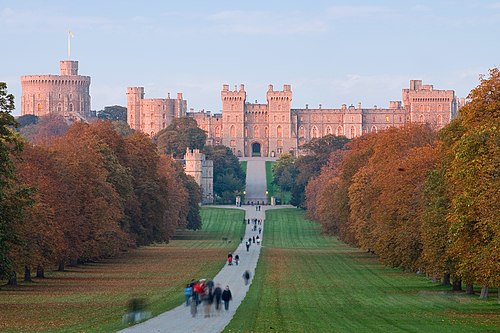 Windsor CastleRestored · prime 1820
 Tower of LondonRestored · prime 1285
 Bamburgh CastleRestored · prime 1904
All castles in England → · Strongest castles in England → · Castles of Europe
Play As Your Clan
Hold a real castle against whatever you choose to send at it, take a ship out in her own service years, or stand at the shoulder of someone the record remembers. The chronicler sets the scene; the deeds are yours.
Notable bearers of the Ward name
- Mary Ward (1585–1645), Yorkshire Catholic religious reformer; founded the Institute of the Blessed Virgin Mary
- Sir Joshua Ward (1685–1761), English physician and politician; pioneered antimony-and-mercury medicine
- Mrs Humphry Ward (1851–1920), novelist of Robert Elsmere and anti-suffragist campaigner
- Stephen Ward (1912–1963), osteopath at the centre of the 1963 Profumo affair
- Lalla Ward (b. 1951), actress; second Romana in Doctor Who