Spencer
The steward, from pantry to peerage.
- Origin
- South East, England
- Motto
- Dieu défend le droit
- Famous bearer
- Diana, Princess of Wales (1961–1997), née Spencer
- Register
- English family
Ranked of all time
The 15 Most Powerful English Houses of All Time
The Spencer arms and country

Coat of armsSpencer ArmsIpankonin · CC BY-SA 3.0 
Coat of armsCoat of arms of Spencer, Baron ChurchillBorne by Baron Churchill: the ennobled line of the name, not the name at large.Vexald · CC BY-SA 4.0


- Coat of arms: Granted to an individual and inherited down that one documented line. These are the arms of particular families of the name, not of everyone who shares the surname.
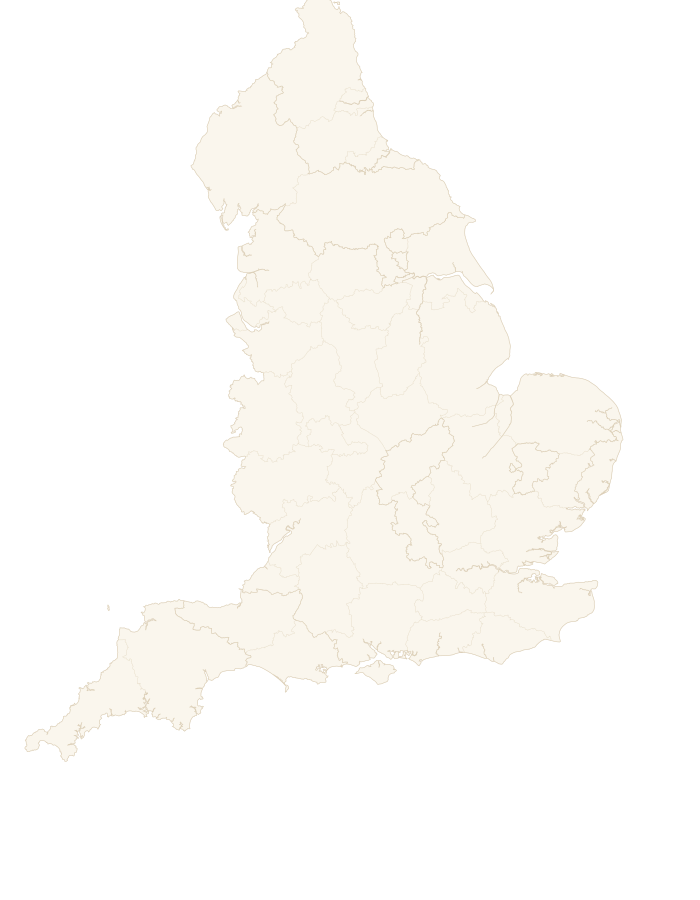
CoreHistoric reach
The seat of Spencer
Seat vacantChief
No one leads the Spencer community yet. When the movement opens, you can stand for its leadership, or help elect whoever does.
Current mission
No shared goal set yet. Once Spencer has leadership, it sets the public focus: a restoration, a gathering, a real-world project that helps its own.
The Spencer clan is being rebuilt. Join the waiting list for the movement today, and you help decide who leads it and what it does.
Help rebuild the Spencer clan →Motto
Dieu défend le droit
“God defends the right”
What does the Spencer name mean?
Occupational, dispenser, household steward. Middle English spenser.
The history of Spencer
The spence, and the man who held its key
Old French despense meant the larder, and espensier the man who worked at it: dispenser of money, bread and provisions, keeper of the buttery. Behind him stood medieval Latin dispensa, dispensator and dispensarius, and after him Anglo-French despenser and Middle English dispensour. The English word that survives in the record is spence, the locked cupboard in which a household's bread, money and provisions were kept and out of which they were portioned. In a manor where a lord's standing was read off what came out of the buttery door, the man holding that key held something close to power.
The same office grew a different name elsewhere in the household. Old English stigweard, from stig meaning hall or household and weard meaning warden, is attested from the eleventh century and gave the surnames Stewart and Stuart; Greek oikonomos, literally the house's manager, hardened into an estate steward's title in the medieval Eastern Roman world, and reaches English as the surname Economos. German and Yiddish Speiser, from Middle High German spise, food or supplies, runs back to Late Latin expensa pecunia, money expended.
So the same job left four unrelated surnames across Europe, and in England the despense stem alone threw off Spence, Spens and the clipped Spender beside Spencer. That is the first thing to understand about the name: it is not a lineage but an office that hardened into inheritance. Two men called Spencer in fifteenth-century Warwickshire and fifteenth-century Kent had in common a cupboard, a set of keys and a tally, and nothing else.
Dispensator Regis, and the article that fell off
The Domesday Book of 1086 lists Robert d'Abbetot not by the patronymic Robert fitzThurstin but by his job: Robert le Dispenser, tenant-in-chief in Gloucestershire, Leicestershire, Lincolnshire, Oxfordshire and Warwickshire, with further land in Worcestershire taken from the Bishop of Worcester. He held the royal stewardship from about 1088 to 1098 and died leaving no legitimate son. His heir was his brother Urse d'Abetot, part of his land went to the Marmion family, and his office appears to have passed to Urse's heirs. No later bearer of the surname descends from him.
The king's dispensership then ran in one household for six reigns. Thurstan was Dispensator Regis to William II; his son Hugh held it in 1105 under Henry I; Simon served Henry I and Stephen; a second Thurstan followed, then Walter, then Aymer under King John, then Aymer's son Thurstan le Despenser under Henry III, who died in 1249. Adam le Despenser was summoned by Edward I to perform military service and, in 1283, to attend the king at what proved a precursor of the first royally convened Parliament. His heir Aymer alienated the lands and the title away under Edward II. A separate line, stewards to the Earls of Chester, produced Hugh le Despenser, Justiciar of England, summoned to Simon de Montfort's Parliament of 1264 as Lord Despencer, and after him an Earl of Winchester and an Earl of Gloucester.
Through the same stretch the written name shed its parts. In Domesday, and still in the Scottish Ragman Rolls of 1291 and 1296, it carries its French article and its full first syllable: le Despenser, Dispensator, de la Despense, del Spens, le Espencer. By about 1400, when hereditary surnames had settled on most English and Lowland Scots families, the article had gone and the unstressed opening syllable with it, leaving Spencer. Different Despenser households in different jurisdictions arrived at that spelling independently, which is precisely why sharing it demonstrates no kinship whatsoever.
Keys, tallies and the manorial court
The manor the dispenser served was divided in three: demesne, worked directly for the lord's household and dependants and typically about a third of the arable; dependent villein holdings owing labour service, produce or cash in lieu; and free peasant land paying money rent fixed at the lease. Around that the lord drew charges for the use of his mill, his bakery and his wine-press, for the right to hunt or to let pigs feed in his woodland, court revenues, and a payment on every change of tenant. The dispenser stood where that ledger met the kitchen door.
The steward's post split as households grew. He began as a single servant supervising both the estate and the domestic side, but by the thirteenth century a substantial house commonly kept two: one over the lands, and a majordomo over the daily routine indoors. Stewards earned up to three or four pounds a year, minded their lord's castles while he was away, and checked the taxes of the serfs on his manors. It was a post of trust held by a servant, which is exactly the tension the surname carries.
Beneath him worked the bailiff, the Norman word for what the Saxons had called a reeve. He executed the decisions of the manorial and hundred courts within his bailiwick, served summonses and warrants, oversaw the manor's lands and buildings, collected its rents, kept its accounts and ran its farms. Bailiffs were free men and deliberately outsiders, brought in from beyond the bailiwick they policed; reeve meanwhile climbed to shire level and contracted into sheriff. English servants also took modified forms of an employer's name, as Vickers did from a vicar's man, so a single great household could seed a shelf of surnames at once, with Spencer the officer's own.
Wormleighton, Althorp and the sheep money
The house that made the name famous was founded in the fifteenth century by Henry Spencer, dead about 1478, from whom every later member descends. A close relative, John Spencer, became feoffee, that is trustee, of Wormleighton manor in Warwickshire in 1469, and a tenant at Althorp in Northamptonshire in 1486. Nothing about that is grand. These were working graziers in sheep country, holding other men's land and running stock on it.
John's nephew, Sir John Spencer, made a living trading in livestock and other commodities and turned the profit into freehold. He bought Wormleighton from Sir William Cope in 1506 and had the manor house finished by 1512. In 1508 he bought Althorp, its moated house and several hundred acres of farmland, where he had already been grazing sheep since the 1480s, and rebuilt the house that year. Wormleighton was then the larger seat by far, four times the size of the Althorp house. In 1511 he added the villages of Little Brington and Great Brington and their parish church of St Mary the Virgin, bought from Thomas Grey, 2nd Marquess of Dorset.
He was knighted by Henry VIII in 1519, died three years later, and was buried in the new family chapel at Great Brington, which has been the burial place of his descendants ever since. By putting down roots at Althorp he provided a home that has now held nineteen generations, an estate today running to some fourteen thousand acres across Northamptonshire, Warwickshire and Norfolk, including the village of North Creake. His grandson Sir John Spencer, dead in 1586, sat as Knight of the Shire for Northamptonshire.
The Spencers' management of those Northamptonshire and Warwickshire pastures was admired and copied by gentlemen across England, and their sheep were bought for breeding by other flock-masters. As gentleman farmers producing for a market, the family's material success in the sixteenth century was rarely equalled.
The marriages that carried a larder-name into the peerage
Daughters moved the family faster than sons did. Jane Spencer of Hodnell married Sir William Cope, whose family later sold Wormleighton to her kin. Two younger sons of Sir John Spencer and Katherine Kitson founded baronetcies that have since died out: William, a landowner at Yarnton in Oxfordshire, whose son Thomas was created Baronet of Yarnton in 1611, and Richard, ambassador of James I to the Dutch Republic, whose son John held Great Offley in Hertfordshire and was created Baronet of Offley in 1627.
The most consequential match was Alice Spencer, 1559 to 1637, another of Sir John's daughters, who married Ferdinando Stanley, 5th Earl of Derby. Their daughter Anne, 1580 to 1647, stood as heiress presumptive to the English throne on the death of Elizabeth I under the will of Henry VIII and the Third Succession Act. That is the distance travelled in three generations from a Warwickshire feoffee: a grazier's great-granddaughter next in line to the crown of England.
Alice was also a serious patron of writers. Edmund Spenser, no relation despite the shared spelling, dedicated The Teares of the Muses to her in 1591 and drew her as the character Amaryllis in his eclogue Colin Clouts Come Home Againe in 1595. Later generations kept the pattern: Lady Diana Spencer, daughter of the 3rd Earl of Sunderland, married John Russell, 4th Duke of Bedford, in 1731, and Lady Georgiana Spencer, 1757 to 1806, daughter of the 1st Earl Spencer, married William Cavendish, 5th Duke of Devonshire.
"Your ancestors were keeping sheep"
In 1504 John Spencer was granted arms for himself and his brother: azure, a fess ermine between six sea-mews' heads erased argent. Neither satisfied the family once the money was made. About 1595 the sea-mews were abandoned for a modified version of the arms of the Lords le Despencer, differenced with three escallops, advertising a kinship with that older house which did not exist.
The claim was that the Spencers were a cadet branch of the Despencers. The historian J. Horace Round took it apart in his essay The Rise of the Spencers, arguing that the descent had been fabricated by Richard Leigh, a corrupt Clarenceux King of Arms. Citing Round, The Complete Peerage dismissed the alleged Despencer descent as an elaborate imposture now incapable of deceiving the most credulous. It is worth adding, against the whole impulse, that the varied origins of the surname mean most Spencers are entitled to bear no arms at all.
The sheep needed no dressing up. Sir Robert Spencer, 1570 to 1627, sat for Brackley in Parliament, was made a Knight of the Garter in 1601 and created Baron Spencer of Wormleighton in 1603, and in the reign of James I was reputed the richest man in England. During a debate in the House of Peers he was speaking of what their great ancestors had done when the Earl of Arundel, whose FitzAlan forebears had been Earls of Arundel since the thirteenth century, cut across him: my Lord, when these things you speak of were doing, your ancestors were keeping sheep. Spencer answered instantly. When my ancestors as you say were keeping sheep, your ancestors were plotting treason.
Sunderland, Blenheim and the licence that made Spencer-Churchill
Robert Spencer's peerage and estates passed to his eldest surviving son William, who had sat for Northamptonshire in the Commons. Two of William's sons took further titles. Henry, 1620 to 1643, succeeded as 3rd Baron Spencer in 1636 and was created Earl of Sunderland in 1643 as a royalist in the Civil War, dying in that same year. The younger son Robert, 1629 to 1694, sat in the Commons from 1660 to 1679 and was created Viscount Teviot in the Peerage of Scotland in 1685.
Robert Spencer, 2nd Earl of Sunderland, was Lord President of the Council from 1685 to 1688 and a Knight of the Garter. His son Charles, the 3rd Earl, held in turn the Lord-Lieutenancy of Ireland, the Privy Seal, the Secretaryships of State for both the Northern and Southern Departments, the Presidency of the Council and the First Lordship of the Treasury. His second wife was Lady Anne Churchill, second daughter of John Churchill, 1st Duke of Marlborough. After Marlborough's death in 1722 the dukedom passed first to his eldest daughter Henrietta, then in 1733 to Anne's second son Charles Spencer, already 5th Earl of Sunderland, while the Spencer estates in Bedfordshire, Northamptonshire and Warwickshire went to his younger brother John, 1708 to 1746. One family, two seats: Blenheim Palace at Woodstock and Althorp.
The senior line then edited its own name. In 1817 George Spencer, 5th Duke of Marlborough, obtained permission to bear the additional surname of Churchill and royal licence to quarter the Spencer arms with the Churchill coat, in order to perpetuate the name of his great-great-grandfather. Spencer-Churchill has stayed in the family since, though several members preferred plain Churchill. The 7th Duke was the paternal grandfather of Sir Winston Churchill, whose father was Lord Randolph Henry Spencer-Churchill, 1849 to 1895, Chancellor of the Exchequer and Leader of the House of Commons. Winston's widow Clementine was created Baroness Spencer-Churchill in 1965. Only the Dukes and Duchesses lie in the Blenheim chapel; the rest of the family is buried at St Martin's Church, Bladon.
Althorp's earls: a Chancellor, a Red Earl and a Passionist priest
John Spencer, 1734 to 1783, grandson of the 3rd Earl of Sunderland, married Margaret Poyntz privately in his mother's dressing room at Althorp in 1755. He was created Baron Spencer of Althorp and Viscount Spencer by George III in 1761, and Viscount Althorp and Earl Spencer in 1765. Of his five children, the 2nd Earl Spencer became Home Secretary from 1806 to 1807, was made a Knight of the Garter in 1799, and assembled one of the great private book collections of his age.
His elder son, the 3rd Earl, better known through his Commons career as Lord Althorp, was Chancellor of the Exchequer under Lord Grey and Lord Melbourne from 1830 to 1834. His youngest brother George, 1799 to 1864, left the Church of England for Rome, was ordained a Catholic priest as Father Ignatius of St Paul, spent his life as a missionary, and remains a candidate for beatification. A third brother became the 4th Earl: a naval commander who fought in the Napoleonic Wars and the Greek War of Independence, rose to Vice-Admiral, served as a courtier and Whig politician, and was made a Knight of the Garter in 1849.
The 5th Earl, John Poyntz Spencer, was called the Red Earl for his long red beard. A close friend of William Ewart Gladstone, he served twice as Lord Lieutenant of Ireland and took the Garter in 1864. He was succeeded in 1910 by his half-brother, the 6th Earl, created Viscount Althorp of Great Brington in 1905 and Lord Chamberlain from 1905 to 1912. The 7th Earl succeeded in 1922, having married Lady Cynthia Hamilton, daughter of the 3rd Duke of Abercorn, in 1919; the 8th Earl succeeded in 1975, having married the Hon. Frances Ruth Roche, daughter of the 4th Baron Fermoy, in 1954. Their daughter Diana was born into that line, and her brother Charles has held the earldom since 1992.
Nottinghamshire, Virginia and the First Fleet
The densest concentration of Spencers in England today is not in Northamptonshire at all but in Nottinghamshire, with Derbyshire next. The two counties were closely linked at the time of Domesday and shared a single Sheriff until the reign of Elizabeth I. A second and wholly separate stream feeds the same spelling from Ireland, where the Gaelic Mac Spealain, son of Spealan, from speal, a scythe, was anglicised into Spencer alongside Spellane, Spillane, Spollin, Spelman and Spellman.
The name crossed the Atlantic early. Thomas Spencer was in Virginia by 1623, William Spencer at Cambridge in Massachusetts by 1630, and another Thomas Spencer in Maine the same year. Colonel Nicholas Spencer arrived in Virginia in the 1650s and rose to serve as Acting Governor of the colony.
It reached Australia in irons. The First Fleet of 1788 carried Daniel Spencer from Dorchester, a John Spencer, and Mary Spence from Wigan; the Third Fleet of 1791 brought John Spencer from Lancaster and Thomas Spencer from London. For a name that began at the door of a lord's larder, that is a fair index of its reach: the same word appears on a Domesday roll of tenants-in-chief, on a Warwickshire grazing lease, and on a convict indent bound for Botany Bay.
The Derby schoolmaster's son who coined survival of the fittest
Herbert Spencer was born at Exeter Row in Derby on 27 April 1820, the only surviving child of George Spencer, a Dissenting schoolmaster of the Derby Friends' Meeting, and Harriet Holmes. He was taught by his father, and from the age of twelve by his Anglican-clergyman uncle Thomas Spencer at Hinton Charterhouse in Somerset. He never attended a university or a grammar school. Between sixteen and twenty-six he served as a civil-engineering apprentice on the London and Birmingham and the London and South-Western Railways, published his first article in The Nonconformist in 1842 on the proper sphere of government, and took the sub-editorship of The Economist in 1848.
His first book, Social Statics, appeared in 1851. Through that decade he worked out the single idea the rest of his life served: that one evolutionary law, the transformation of homogeneous undifferentiated systems into heterogeneous specialised ones through selection across time, governs the formation of the solar system, the differentiation of species, and the development of language, ethics, political institutions, religion, art and the sciences alike. He published it as the System of Synthetic Philosophy over forty years: First Principles in 1862, Principles of Biology from 1864 to 1867, Principles of Psychology in an expanded second edition of 1870 to 1872, Principles of Sociology from 1876 to 1896, and Principles of Ethics from 1879 to 1893.
Volume one, chapter twelve of the Principles of Biology of 1864 carries the phrase he minted for the mechanism: this survival of the fittest, which I have here sought to express in mechanical terms, is that which Mr Darwin has called natural selection. Darwin took the phrase into the fifth edition of the Origin of Species in 1869 and kept it in the sixth of 1872. By 1903 the System had sold over a million copies in English alone; Yan Fu's translations of the 1890s and 1900s made Spencer the central foreign philosophical influence on the late-Qing reform movement, and his Education: Intellectual, Moral and Physical of 1861 was standard in the United States, Australia and the Russian Empire. He refused a knighthood, eight honorary doctorates and election to the Athenaeum, died at his Brighton lodgings on 8 December 1903, and lies in Highgate Cemetery directly opposite the grave of Karl Marx.
Three hundred pounds and a Leeds penny bazaar
Thomas Spencer was born at Skipton in Yorkshire on Christmas Day 1851, eldest child of a Methodist family of modest trade. He left school at thirteen, served an apprenticeship in the wholesale haberdashery trade, and took a cashier's post at the Leeds firm of Isaac Dewhirst, a substantial textile and haberdashery wholesaler with branches across the West Riding. He stayed fifteen years and became senior cashier, trusted with the credit ledger and the daily cash: the dispenser's job under a nineteenth-century name.
One of Dewhirst's regular customers was Michael Marks, who had come to Leeds from Slonim in 1882 with no English and no capital and set up a penny-bazaar stall in Kirkgate Market in 1884, every item at one penny, no haggling, the sign reading Don't Ask the Price, It's a Penny. Marks bought his stock from Dewhirst, and Spencer, who managed the credit, came to know him. By the early 1890s the stalls had spread to nine market towns across the north and outgrown one man's administration. In September 1894 Marks offered Spencer an equal share for three hundred pounds and the bookkeeping and buying. Spencer put up the money out of fifteen years of savings, and on 28 September 1894 Marks and Spencer came into legal existence at a registered office in Cheetham Hill Road, Manchester.
In the eight years that followed the partnership opened thirty-six new penny bazaars across the north and Midlands, moved central buying to Manchester, dealt directly with suppliers to cut out the wholesalers, and pioneered branded own-label goods sold at fixed prices. Spencer retired on poor health in 1903 and died at Crumpsall in Manchester on 25 July 1905, in his fifty-fourth year; Marks died sixteen months later. The firm was incorporated as Marks and Spencer plc in 1926 and took its St Michael own-label brand in 1928. A name that began as the servant who portioned out another man's goods now sits over a thousand shopfronts, still doing precisely that.
Champions of the Spencer name
The bearers whose lives are inseparable from this surname. Each has their own page, biography, achievements, geography, connection to the family.
- Thomas Spencer
The Skipton-born cashier whose three-hundred-pound partnership in 1894 with a Leeds market-stall trader founded the firm that became the largest retailer in modern Britain.
- Herbert Spencer
The Derby Dissenting schoolmaster's son whose nine-volume System of Synthetic Philosophy (1860 to 1896) built the foundational evolutionary social theory of the Victorian century, whose 1864 Principles of Biology coined the phrase survival of the fittest, and who at his death in 1903 was the most-translated single philosopher in the English-speaking world.
Historic Places, Rebuilt
Explore the streets and seats the Spencer name knew, rebuilt with AI as they stood in history.
Landmarks the Spencer held
Palaces, houses and great buildings tied to this name, look one up, or rebuild it to explore.
- Althorp
Held by the Spencer family for more than 500 years since John Spencer purchased the estate in 1508; owned by Charles Spencer, 9th Earl Spencer since 1992.
- Spencer House
Built 1756-1766 for John Spencer, 1st Earl Spencer; the family's London house for generations, and the Spencers retain the freehold to this day.
The castles of the homeland
The great strongholds of the homeland, look one up, see what it looked like in its prime, and recreate it to explore.
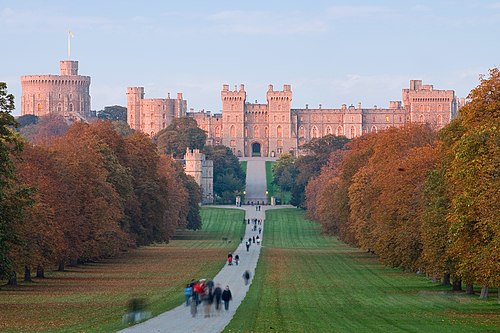 Windsor CastleRestored · prime 1820
 Tower of LondonRestored · prime 1285
 Bamburgh CastleRestored · prime 1904
All castles in England → · Strongest castles in England → · Castles of Europe
Play As Your Clan
Hold a real castle against whatever you choose to send at it, take a ship out in her own service years, or stand at the shoulder of someone the record remembers. The chronicler sets the scene; the deeds are yours.
Notable bearers of the Spencer name
- Diana, Princess of Wales (1961–1997), née Spencer
- Charles Spencer, 9th Earl Spencer (b. 1964)