Vance
also Vans, de Vaux, Vaux
Of the valleys, a Norman name on the Scots-Irish road.
- Origin
- North East, England
- Famous bearer
- J. D. Vance (b. 1984), author and US Vice President
- Register
- English family
Where the Vance name comes from
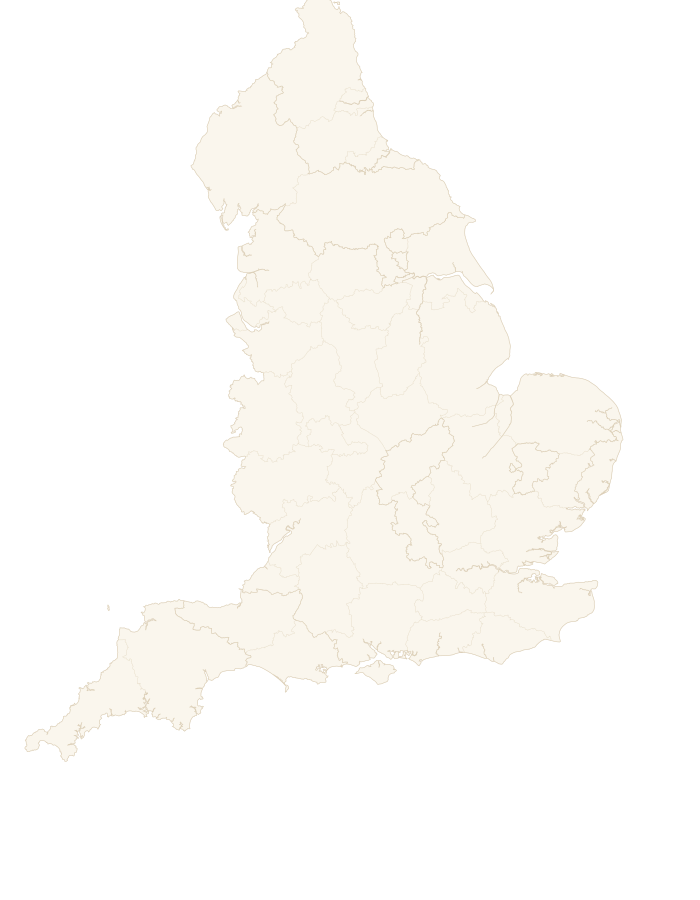
CoreHistoric reach
The seat of Vance
Seat vacantChief
No one leads the Vance community yet. When the movement opens, you can stand for its leadership, or help elect whoever does.
Current mission
No shared goal set yet. Once Vance has leadership, it sets the public focus: a restoration, a gathering, a real-world project that helps its own.
The Vance clan is being rebuilt. Join the waiting list for the movement today, and you help decide who leads it and what it does.
Help rebuild the Vance clan →What does the Vance name mean?
From the Anglo-Norman de Vaux (also de Vans), 'of the valleys', Old French vaus, the plural of val. The Norman de Vaux families spread across northern England and into south-west Scotland, where the line became the Vans of Barnbarroch in Galloway. The clipped border form Vance carried from the Scottish south-west into Ulster with the seventeenth-century plantation, and from Ulster into Appalachia.
The history of Vance
Of the valleys, and the Norman habit of naming a man after his ground
Vance is a contraction of the Anglo-Norman de Vaux, also written de Vans and Latinised as de Vallibus, from the Old French vaus, the plural of val: of the valleys. The form belongs to a naming habit the Conquest brought over with it. Some of the early Norman nobility who arrived in England distinguished themselves by putting 'de', of or from, before the name of their village or estate in France. That is a territorial surname, and it was a direct consequence of feudal landownership. The name was a claim on ground before it was a label for a family.
In England the introduction of family names is generally attributed to the preparation of the Domesday Book, completed by 1086. Surnames were taken up first among the feudal nobility and gentry and spread only slowly to the rest of society, and Christopher Daniell dates what may be the first recorded use of a modern surname inherited by several generations to 1140. By 1400 most English families, and those of Lowland Scotland, were using hereditary surnames. The de Vaux were early into that system because they were precisely the class it started with.
Robert and Aitard, in the retinue of Roger Bigod
William's invasion force landed at Pevensey in Sussex on 28 September 1066, and on 14 October it met Harold Godwinson's army at Hastings. Robert and Aitard de Vaux rode in the retinue of Roger Bigod, and the family was granted land for its service in the battle, taking estates in Norfolk. Land was the whole currency of that autumn. William claimed ultimate possession of the country his armies had taken and asserted the right to dispose of it as he saw fit; from then on all land was held directly from the king in return for military service.
The scale of the transfer can be measured. Historians put the number of Norman landholders at around 8,000, a very small group set over the native English population, and the Domesday Book of 1086 documents the result: by that date only about five per cent of the land in England south of the Tees was still in English hands. Families like the de Vaux were the instrument of that replacement, and a surname that had described a valley in Normandy became a name written into English soil.
Gilsland, Dalston and the unfinished northern frontier
The de Vaux grants lay in the least settled part of the new kingdom. Hubert de Vaux obtained the barony of Gilsland, which straddled Cumbria and Northumberland. Ranulf de Vaux held the lordships of Tryermayne, Sowerby, Carlatton and Hubbertby in Cumbria. Robert de Vaux received the barony of Dalston, also in Cumbria, though he went back to Normandy rather than sit on it. Three members of the family were later given the status of Knight of the Garter.
This was frontier duty rather than a comfortable endowment. In the winter of 1069-70 William's forces systematically devastated Northumbria in the Harrying of the North, and he wore his crown ceremonially at York on Christmas Day 1069 as a symbol of his authority over the region. The Treaty of Abernethy in 1072 made Malcolm of Scotland William's man, but left it deliberately unclear whether that covered Cumbria and Lothian only or the whole Scottish kingdom. A house seated on Gilsland lived inside that unresolved question.
The branches that walked away with other names
The habit that made the name could also shed it. Robert de Strickland, a grandson of Hubert de Vaux of Gilsland, is the ancestor of the Stricklands of Gilsland, a family carrying a different surname off the same stock. The Willes family of Warwickshire likewise descend from Hubert de Vaux.
Under a system in which the surname was the estate, a younger son who took new ground could arrive under a new name without any sense of having broken the line. That is why the de Vaux descent runs considerably wider than a count of everyone spelling the name Vaux, Vans or Vance would ever show, and why the Vance page is really the story of one branch that kept the original word.
Carrick, Dirleton, and the Wigtownshire house at Barnbarroch
The family crossed the border it had been posted to guard. Adam de Vaux, son of Hubert of Gilsland, obtained lands in Carrick. William de Vaux, son of John de Vaux of Dalton, obtained the barony of Dirleton in Lothian, and from John de Vaux of Dirleton descend the Vass of Lochslin, reckoned septs of Clan Ross and Clan Munro. One Norman house had put branches on both the western and the eastern approach to Scotland.
The line that matters most to the modern spelling settled in the south-west. In Galloway the family became the Vans of Barnbarroch, a Wigtownshire house of standing from the fifteenth century, while the clipped border form Vance took hold along the Anglo-Scottish frontier itself. In England the name stayed thickest in Northumberland and Cumbria, and it later gathered in the industrial north-east, on Tyneside and in Wearside and Durham, and in London.
The plantation name: barristers, members and a dean
The Vances of Ireland are held to descend from an ancestor of the de Vaux out of Scotland, and the name arrived in force with the seventeenth-century plantation of the northern counties. It took root there. Andrew Vance (1815-1862) practised as an Irish barrister and served as a government official. John Vance, who died in 1875, sat as Member of Parliament for Dublin and for Armagh. A Joseph Vance served as an Anglican priest in Ireland.
The name went out with the church and the empire as readily as with the emigrant ship: George Vance (1828-1910) rose to be Dean of Melbourne. It also stayed at home. Foy Vance, born in 1974, is an Irish musician, and Demi Vance, born in 1991, is a Northern Irish footballer.
Backcountry soldiers and an Ohio governor
From Ulster the name travelled to the Appalachian backcountry in the eighteenth century, and the earliest American Vances on record are frontier men. David Vance (c. 1745-1813) served as a soldier in the Revolutionary War. Wilson Vance (1845-1911) is recorded as an American soldier, and Joseph W. Vance (1841-1927) as an American military officer.
The settled generations went into office and into print. Joseph Vance (1786-1852) became governor of Ohio. Elijah Vance (1801-1871), John L. Vance (1839-1921) and Calvin B. Vance (1842-1926) all sat as American politicians, and David Vance (1836-1912) combined a shipmaster's career with public office. Women of the name kept the other record of the same century: Florence Steele Martin Vance (1840-1924) as a diarist and letter writer, Ada Reedy Vance and Sallie Ada Vance as poets.
A Medal of Honor, a diplomat and a demographer
Leon Vance (1916-1944), an American Air Force officer, received the Medal of Honor. Joseph Williams Vance Jr. (1918-1942) served as an American naval officer in the Second World War. Gene Arden Vance Jr. (1963-2002), an American staff sergeant, was killed in action.
In civilian life the name turns up across American public work. Sheldon B. Vance (1917-1995) served as an American diplomat. Harold Sines Vance (1889-1959) ran an automobile company and then held government office. Robert C. Vance (1894-1959) was a newspaper publisher and philanthropist, Rupert Vance (1899-1975) a sociologist and demographer, and James E. Vance Jr. (1925-1999) a geographer. Joseph McArthur Vance (1868-1948) and Edward Vance, born in 1957, both practised as architects.
Music hall, the pitcher's mound and the airwaves
Dazzy Vance (1891-1961) pitched in American baseball, and Columbus Vance (1902-1982), Joe Vance (1905-1978), Sandy Vance and Cory Vance followed him onto the mound. Jack Vance (1916-2013) wrote fantasy and science fiction. Louis Joseph Vance (1879-1933) wrote novels and then screenplays and produced films. Vivian Vance (1909-1979) acted and sang, and is best remembered for playing Ethel in I Love Lucy, while Nina Vance (1914-1980) worked as an artistic director.
The British bearers kept to performance as well. Alfred Vance (1839-1888) sang and wrote songs for the English music hall. Dennis Vance (1924-1983) produced and directed for British television. Tommy Vance (1941-2005) broadcast on British radio, and Chris Vance, born in 1971, is an English actor. Janetta Vance (1855-1921) competed as a British archer, and James Vance (1877-after 1897) played as a Scottish inside left.
The name reached the other dominions on the same tide. Bob Vance (1924-1994) played and then administered New Zealand cricket, and Robert Vance, born in 1955, played New Zealand cricket after him. Colin Vance (1929-2018) and Murray Vance, born in 1980, played Australian rules football. Jack Vance (1933-2013) and Jonathan Vance, born in 1964, both reached general officer rank in the Canadian forces, Samuel Vance (1879-1947) shot for Canada, and Jean Vance worked as a British-Canadian biochemist.
Also found in
The Vance name has substantial historical presence beyond England. See it on Scotland.
Historic Places, Rebuilt
Explore the streets and seats the Vance name knew, rebuilt with AI as they stood in history.
The castles of the homeland
The great strongholds of the homeland, look one up, see what it looked like in its prime, and recreate it to explore.
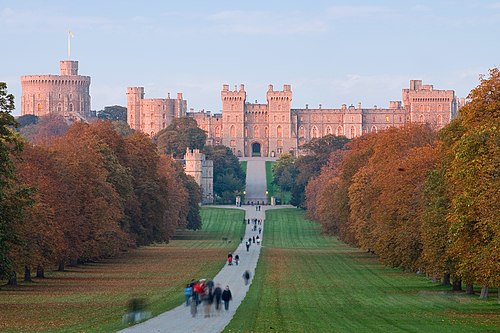 Windsor CastleRestored · prime 1820
 Tower of LondonRestored · prime 1285
 Bamburgh CastleRestored · prime 1904
All castles in England → · Strongest castles in England → · Castles of Europe
Play As Your Clan
Hold a real castle against whatever you choose to send at it, take a ship out in her own service years, or stand at the shoulder of someone the record remembers. The chronicler sets the scene; the deeds are yours.
Notable bearers of the Vance name
- J. D. Vance (b. 1984), author and US Vice President
- Cyrus Vance (1917–2002), US Secretary of State
- Cyrus Vance Jr. (b. 1954), Manhattan District Attorney