Walton
The settlement of strangers, England mapped it eighty times.
- Origin
- North West, England
- Famous bearer
- Ernest Walton (1903–1995), Irish physicist; co-split the atom at the Cavendish Laboratory, Cambridge, with John Cockcroft, 14 April 1932; Nobel Prize in Physics 1951
- Register
- English family
The Walton arms and country

Coat of armsWalton of Detchant EscutcheonBorne by the Detchant Escutcheon line, one branch of the name rather than all of it.Robin S. Taylor · CC BY-SA 4.0

- Coat of arms: Granted to an individual and inherited down that one documented line. These are the arms of particular families of the name, not of everyone who shares the surname.
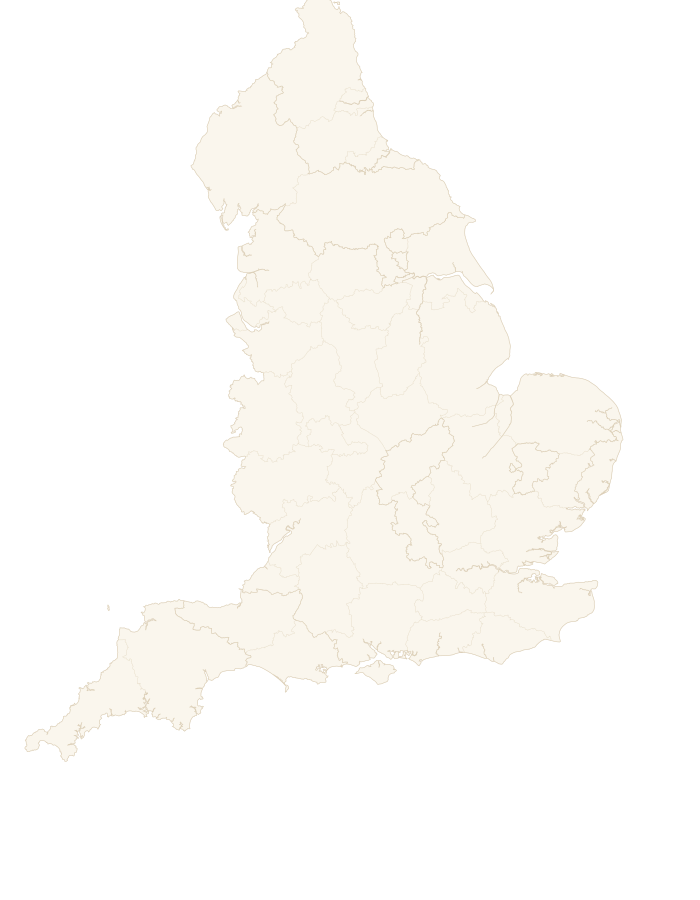
CoreHistoric reach
The seat of Walton
Seat vacantChief
No one leads the Walton community yet. When the movement opens, you can stand for its leadership, or help elect whoever does.
Current mission
No shared goal set yet. Once Walton has leadership, it sets the public focus: a restoration, a gathering, a real-world project that helps its own.
The Walton clan is being rebuilt. Join the waiting list for the movement today, and you help decide who leads it and what it does.
Help rebuild the Walton clan →What does the Walton name mean?
Locative, any of eighty Waltons (farm of Britons, or walled town, or wood settlement per element).
The history of Walton
Eighty villages called Walton, and no shared ancestor
Walton is not one family's name. It is one word's, and the word proved so useful that England spent it eighty times over. The tun was the farm, hamlet or enclosure; the element in front of it could be wald, a wood, or walh, the Old English term for a Briton, a Welsh-speaker still farming inside a Saxon landscape. A settlement of strangers, a farm among the trees, a walled town: three unconnected villages could arrive at the same spelling, and did. The first man recorded carrying it as a surname is Odo de Wolton, entered on the Hundred Rolls in Oxfordshire in 1273.
The consequence for anyone tracing a line is blunt. Walton-on-Thames in Surrey and Walton-on-the-Naze in Essex, Walton in Cumbria and Walton in Powys, West Walton in Norfolk and Walton-on-Trent in Derbyshire, Walton in Liverpool and Walton near Wakefield: every one of them could make Waltons of its own tenants, and none needed to know the others existed. There is no founder to find and no single heartland to claim. The name sits thickest today across Lancashire, Merseyside and the Yorkshire ridings, but it was minted separately in Suffolk, Somerset, Staffordshire and at Oxford, where Walton Street and Walton Manor still carry it. Most Waltons are therefore not kin to most other Waltons, and the histories below belong to several unconnected families that happen to share a word.
The Werneth choirmaster's son and a borrowed five pounds
William Turner Walton was born at Werneth, Oldham, in industrial Lancashire on 29 March 1902, second son of a local choirmaster and singing teacher. The household was hand-to-mouth and musical, and the boy sang in the parish and chapel choirs from infancy. At ten he was admitted to the Christ Church Cathedral Choir School at Oxford, on a scholarship audition his father organised in person, having borrowed five pounds for the train fare to get him there.
Christ Church gave him the training and then the college itself. He came up as an undergraduate at sixteen on a music scholarship, the youngest admitted since the seventeenth century, and the Oxford circle of Sir Hugh Allen turned him towards Stravinsky, Ravel and Schoenberg, the new music that the post-war undergraduates were the first English audience for. He left Oxford in 1922 to make his way as a composer.
Facade in a Chelsea drawing room, 1922
The Sitwells took him in. Osbert, Edith and Sacheverell Sitwell, the aristocratic patrons of the new English modernism, gave the twenty-year-old a home at their Chelsea house and kept him there for fifteen years. It was an unlikely lodging for a choirmaster's son from Oldham, and it decided the shape of his twenties.
Facade, his setting of Edith Sitwell's poems for reciter and chamber ensemble, was first performed privately at that house in 1922 and publicly at the Aeolian Hall in 1923. The press divided sharply over it. The work outlasted the argument and became the foundation work of his concert repertoire.
Belshazzar's Feast at Leeds, and two coronation marches
Belshazzar's Feast, the choral and orchestral oratorio on the Book of Daniel, was first performed at Leeds in 1931 and became the foundation event of the English choral revival of the 1930s. The Symphony No. 1, complete in 1935, took its place beside Elgar's First and Vaughan Williams's Fifth as one of the three foundational twentieth-century English symphonies.
He wrote the coronation marches Crown Imperial in 1937 and Orb and Sceptre in 1953, and became the composer the Establishment turned to for state ceremonial. He was knighted in 1951 and given the Order of Merit in 1967.
Henry V, and thirty-three years in the Bay of Naples
Walton wrote three Shakespeare film scores for Laurence Olivier: Henry V in 1944, Hamlet in 1948 and Richard III in 1955. They put English film music on the international map, and the Henry V score in particular became the model that English literary and historical film scoring was built on afterwards.
In 1948 he married Susana Gil Passo, an Argentine writer, later Lady Walton, who outlived him by twenty-seven years and died in 2010. The couple moved to the house at La Mortella on Ischia in the Bay of Naples, which was his home for his last thirty-three years and where he wrote two operas and three concertos. He died there on 8 March 1983, eighty years old, having carried a name that once meant nothing grander than the village of the Britons into the centre of English music.
The angler, the bishop and the atom
The seventeenth century produced two Waltons of letters who, on the evidence, were nothing to each other. Izaak Walton (1593 to 1683), an English writer, produced The Compleat Angler in 1653, the book his name has been attached to ever since. Brian Walton (1600 to 1661) was an English cleric and scholar who ended as a bishop. Their lives overlapped; their villages of origin did not have to.
The name's hardest moment of all came at Cambridge. Ernest Walton (1903 to 1995), an Irish physicist, worked with John Cockcroft at the Cavendish Laboratory, and on 14 April 1932 the two of them split the atom. They shared the Nobel Prize in Physics in 1951, and of everything done under the name it is the piece of work that travelled furthest from the parish that supplied it.
Writing Waltons kept appearing. Amy Catherine Walton (1849 to 1939), a British author, published as Mrs O. F. Walton. The twentieth century added the American authors Evangeline Walton (1907 to 1996) and the pulp fiction writer Bryce Walton (1918 to 1988).
Linoleum, the Antarctic and a Scottish easel
Frederick Walton (1834 to 1928) was the industrialist who invented linoleum. A near-namesake, the British railway engineer Frederick Walton (1840 to 1925), belonged to the same generation of practical men. Across the Atlantic the American inventor Mary Walton (1827 to 1894) was working in the same decades, and the American inventor Charles Walton (1921 to 2011) carried the name into the following century's technology.
Others took the name outdoors and onto canvas. Kevin Walton (1918 to 2009) was an Antarctic explorer. Elijah Walton (1832 to 1880) was an English artist, and the Scottish artists Edward Arthur Walton (1860 to 1922) and Cecile Walton (1891 to 1956) worked either side of the turn of the century. Alice Walton (1865 to 1954) was an American classicist and archaeologist, and Tony Walton (1934 to 2022) an English set and costume designer and director, dressing stages the way his namesakes had dressed floors.
From a Georgia delegate to the world's largest retailer
The name crossed the Atlantic early and went into American public life fast. William Walton (1706 to 1768) was a merchant and politician in New York. John Walton (1738 to 1783) sat as a Georgia delegate to the Continental Congress, and George Walton (1749 or 1750 to 1804) was an American politician of the same founding generation. Back in Britain, Alfred Walton (1816 to 1883) was a radical politician, while in the United States John C. Walton (1881 to 1949) served as Governor of Oklahoma.
The largest American chapter began with two retailers. Sam Walton (1918 to 1992) founded Walmart and Bud Walton (1921 to 1995) co-founded it with him; the company grew into the largest retailer in the world and, with just over 2.2 million employees, the world's largest private employer. In 1987 Sam Walton endowed the Walton Family Foundation, which has since concentrated on schools and on water and environmental work. By 2025 the family descended from that partnership was reckoned the wealthiest in the world, an outcome no thirteenth-century tenant of a walled farm would have recognised.
Champions of the Walton name
The bearers whose lives are inseparable from this surname. Each has their own page, biography, achievements, geography, connection to the family.
The castles of the homeland
The great strongholds of the homeland, look one up, see what it looked like in its prime, and recreate it to explore.
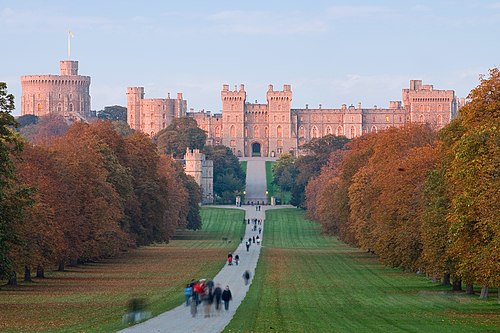 Windsor CastleRestored · prime 1820
 Tower of LondonRestored · prime 1285
 Bamburgh CastleRestored · prime 1904
All castles in England → · Strongest castles in England → · Castles of Europe
Play As Your Clan
Hold a real castle against whatever you choose to send at it, take a ship out in her own service years, or stand at the shoulder of someone the record remembers. The chronicler sets the scene; the deeds are yours.
Notable bearers of the Walton name
- Ernest Walton (1903–1995), Irish physicist; co-split the atom at the Cavendish Laboratory, Cambridge, with John Cockcroft, 14 April 1932; Nobel Prize in Physics 1951
- Izaak Walton (1593–1683), author of The Compleat Angler (1653)