
Scotland · Still standing
Alloa Tower
Alloa Tower is an early 14th‑/15th‑century Scottish tower house in Alloa, Clackmannanshire, historically the seat of the Erskine family, later Earls of Mar. It is a four‑storey rectangular stone tower with battlements and a surviving timber roof, now a scheduled monument and a public property of the National Trust for Scotland.
Its prime
1450
Today
Still standing
As it stood in 1450
What Alloa Tower looked like in its prime.
Massive rectangular tower of coursed rubble sandstone approximately four storeys plus attic, roughly 62.5 by 39.5 ft, with exceedingly thick walls and a crenellated parapet. A rounded corner stair-turret projects at one angle; several tall chimneys rise from the roofline. Window openings are small and regularly spaced but show later re‑fenestration. Ground-level ashlar arched doorway with a stone surround opens from a low-walled forecourt approached along a paved path, trees flanking the approach.
Its story
The story of Alloa Tower.
Raising the Erskine Tower, 14th to 16th Centuries
Several nineteenth-century works, Groome's Gazetteer among them, date the tower to 1223; archaeological investigation in the early 1990s placed the original fortified house in the early 14th century. It was built as part of a line of fortifications defending the north shore of the Firth of Forth, and had a cellar that sometimes served as a pit prison. By the middle of the 14th century it had been enlarged with a great hall and stood three storeys high, entered at first-floor level; in the 15th century it was raised to four or five levels, the first-floor entrance retained. Ground-floor access was probably added late in the 16th century. One of the earliest and largest of Scottish tower houses, it retains its original timber roof and battlements, and served as the medieval residence of the Erskine family, later Earls of Mar.
From Margaret Tudor to Mary, Queen of Scots, 1524-1566
Margaret Tudor met the Chancellor James Beaton at Alloa on 11 July 1524 to discuss transferring power from the Regent Albany to the young James V, and James V came by boat with Mary of Guise on 7 April 1540. Mary, Queen of Scots visited John, Lord Erskine and his wife Annabell Murray on 16 June 1562, and again in May 1565.
Mary returned on 28 July 1566, soon after the birth of Prince James. The visit attracted the attention of her enemies and the details are disputed: one chronicle has her leaving her servants at Newhaven and crossing in a small boat crewed by "simple men of seafare trade", while George Buchanan and the Book of Articles call the crew "notorious pirates", associates of the Earl of Bothwell including William and Edmund Blackadder. At Alloa on 28 July she announced that she would travel to Jedburgh to hold justice courts, and on the 31st she wrote to Annabell Murray's brother-in-law, the Laird of Abercairney, on behalf of the evicted widow of one of his tenants. Claude Nau wrote that her only companions were her ladies-in-waiting and the Earl of Mar, and that Darnley made only a brief visit; when he came by road, Mary told him to go away.
James VI and the Wedding Masque, 1580-1592
James VI stayed at Alloa for four days in August 1580. In December 1592 the widowed John Erskine, Earl of Mar, married Marie Stewart, a daughter of Esmé Stewart, 1st Duke of Lennox, at Holyroodhouse; James VI and Anne of Denmark gave the bride clothes, and the infare festivities customarily held at a bridegroom's family home followed at Alloa. Costume was bought for a masque in which Anne of Denmark performed, dancing in silk taffeta and "gold tock", a kind of tinsel fabric. The party was cut short when Sir John Carmichael and Sir George Home arrived from Edinburgh with news of the crisis caused by the discovery of the Spanish blanks.
The Witch Trials, 1596-1658
John Erskine, second Earl of Mar, is known to have been involved in two trials. In 1596 he was asked to raise a commission to try Margaret Crawford, who had been accused of practising mass in the Catholic way. The second, held from 1613 to 1614, concerned the Erskine of Dun siblings, Robert, Anna, Helen and Isobel, who were found guilty of consorting with a witch, Janet Irvine, in order to poison their nephews so that they could claim their inheritance. Between May and August 1658 many residents of Alloa were caught up in a witch-hunt. Margaret Duchell was arrested by the Alloa kirk session and, after interrogation, confessed to making a pact with the devil, to harming others and to attending witches' sabbaths with six other women; she died in prison in May. Four of the six, Margaret Taylor, Bessie Paton, Janet Black and Katherine Rainie, were arrested between June and August.
Alloa House and the Tower That Outlived It, 1710-1960
In 1710 John Erskine, 6th Earl of Mar, built a very large mansion, Alloa House, which took in the tower as its annexe. Mar wrote of it: "There is something in the Old Tower, especially if made to conform to the new design, which is venerable for its antiquity & makes not a bad appearance & would make one regret the being obliged to pull it down." He made plans to remodel the tower's interior, though it is unclear what changes were made. The house burned down in 1800 and was rebuilt by George Angus in 1834-1838 for the 9th Earl, then demolished sometime after 1868. The tower was designated a scheduled monument in 1960 and listed in category A on 9 June that year; it is owned by the National Trust for Scotland and open as a public attraction, with events at Easter and Christmas.
Step inside
7 places to explore in 1450.
The record describes 7 distinct spots at Alloa Tower, including 3 interiors: great hall (first floor), cellar / pit prison, attic space beneath the timber roof. Create your own photoreal reconstruction and explore every one, more scenes means more rooms, more angles, and more of the place to stand in.
Build Your Own Castle
Recreate Alloa Tower with AI to explore it.
The artist rebuilds it as it stood in 1450, a photoreal reconstruction that belongs to you alone. Pay with coins, no subscription needed.
Recreate this castle →Defend this castle →Whose castle
Clans who held Alloa Tower.
The families that held Alloa Tower for a decade or more across its history, follow a name to its clan.
Medieval residence of the Erskine family, later Earls of Mar, from the early 14th century; the 6th Earl's Alloa House of 1710 incorporated the tower as its annexe.
From the archive
Alloa Tower on paper: the measured plan and period views.
The survey plan and photographs below are the ground truth this page's reconstructions are checked against, drawn and photographed while the castle was still a working garrison. Every image is public-domain or openly licensed, with its source named.
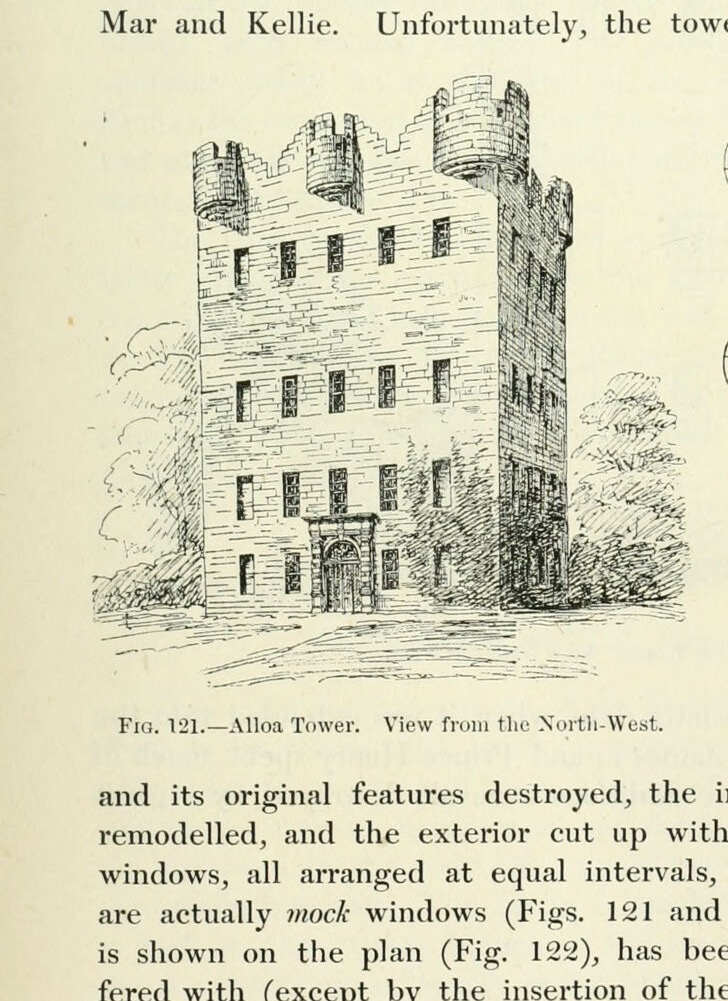
FIG. 121. Alloa Tower. View from the North-West.
1887 · MacGibbon & Ross, Castellated and Domestic Architecture of Scotland, vol. 1 (1887)
Public domain
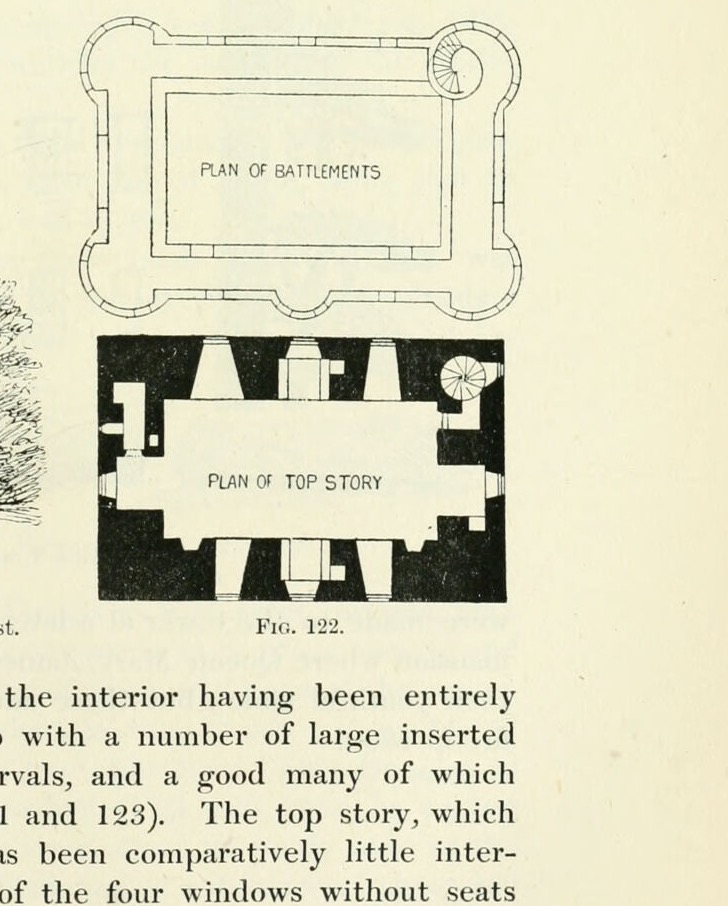
FIG. 122.
1887 · MacGibbon & Ross, Castellated and Domestic Architecture of Scotland, vol. 1 (1887)
Public domain
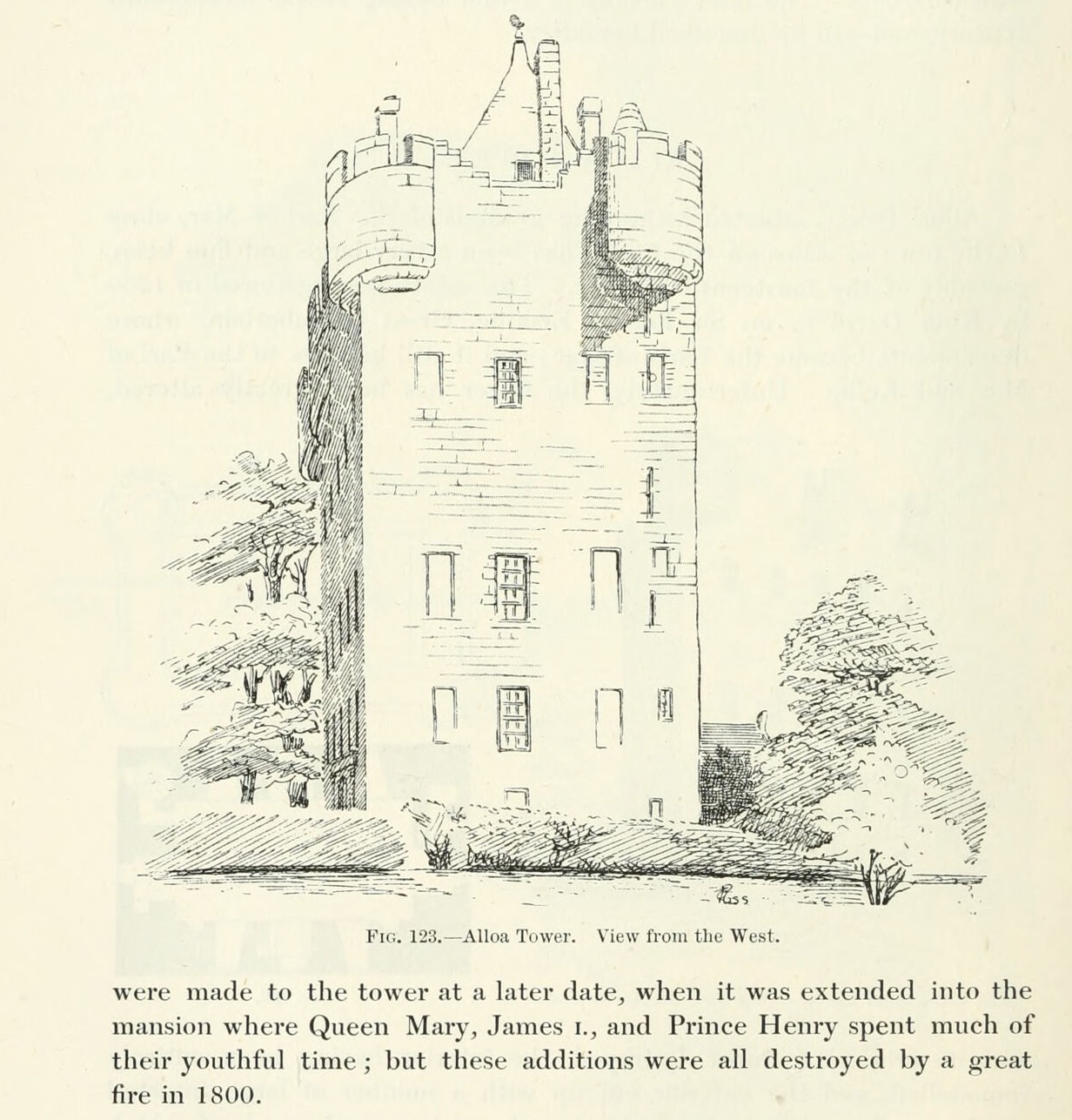
Fig. 123. Alloa Tower. View from the West.
1887 · MacGibbon & Ross, Castellated and Domestic Architecture of Scotland, vol. 1 (1887)
Public domain
Nearby
Landmarks within reach of Alloa Tower.


Questions about Alloa Tower
What is the history of Alloa Tower?
What is inside Alloa Tower?
Who owns Alloa Tower now?
Why was Alloa Tower built, and what was it used for?
Where is Alloa Tower?
When was Alloa Tower built?
Which family or clan held Alloa Tower?
What did Alloa Tower look like in its prime?
Is Alloa Tower still standing, or is it a ruin?
Can you visit Alloa Tower?
More castles of Scotland


Explore the city


