
Scotland · Ruin
Stanely Castle
Stanely Castle is an L-shaped 15th-century tower house standing on a small island/promontory at the foot of the Gleniffer Braes, south of Paisley, Scotland. Built of large roughly squared local freestone blocks, it comprised a main rectangular tower and a square jamb extension; by the 19th century it was abandoned and after 1837 partially submerged by the reservoir. The site is now a ruin, visible only when water levels fall.
Its prime
1450
Today
Ruin
As it stood in 1450
What Stanely Castle looked like in its prime.
A compact L-shaped tower house of four storeys built of large, roughly squared local freestone laid in rough courses, with dressed corbels and window margins; a square jamb projects from the main rectangular block. Walls show small windows and keyhole-shaped arrow slits, and the roofline rises to a parapet and possible garret level. The building stood on a narrow marsh island/promontory at the waterline, with the lower masonry meeting the surrounding marsh or reservoir.
Its story
The story of Stanely Castle.
Stanely was the ancient seat of the Danzielstons. In the early 15th century the estate passed to the Maxwells of Calderwood, and the L-shaped tower house was probably built early in that century, on an island within a marsh at the foot of the Gleniffer Braes south of Paisley, four storeys of large, roughly squared local freestone, raised in two phases, a rectangular tower to which a square jamb was later added.
The Maxwells sold Stanely in 1629 to Lady Ross of Hawhead; the Hearth Tax return of 1691 lists eleven hearths, more than the nine the main floors account for, suggesting attic rooms. In the 18th century it passed to the Boyle Earls of Glasgow, and the 4th Earl sold it to the Paisley Water Company, who built the present reservoir.
Since 1837 the castle has been partially submerged by the reservoir and is completely inaccessible; only when the water is drained can it be seen standing on a narrow promontory connected to the south-west bank.
Step inside
10 places to explore in 1450.
The record describes 10 distinct spots at Stanely Castle, including 6 interiors: northeast spiral staircase (interior), south gable private stair to the hall, ground-floor cellars and more. Create your own photoreal reconstruction and explore every one, more scenes means more rooms, more angles, and more of the place to stand in.
Build Your Own Castle
Recreate Stanely Castle with AI to explore it.
The artist rebuilds it as it stood in 1450, a photoreal reconstruction that belongs to you alone. Pay with coins, no subscription needed.
Recreate this castle →Defend this castle →Whose castle
Clans who held Stanely Castle.
The families that held Stanely Castle for a decade or more across its history, follow a name to its clan.
Danzielston
Stanely was the ancient seat of the Danzielstons, until the estate passed from them in the early 15th century.
The Maxwells of Calderwood held Stanely from the early 15th century until they sold it in 1629.
Sold to Lady Ross of Hawhead in 1629; the Rosses held it until the 18th century.
The Boyle Earls of Glasgow held Stanely in the 18th century, until the 4th Earl sold it to the Paisley Water Company.
From the archive
Stanely Castle on paper: the measured plan and period views.
The survey plan and photographs below are the ground truth this page's reconstructions are checked against, drawn and photographed while the castle was still a working garrison. Every image is public-domain or openly licensed, with its source named.
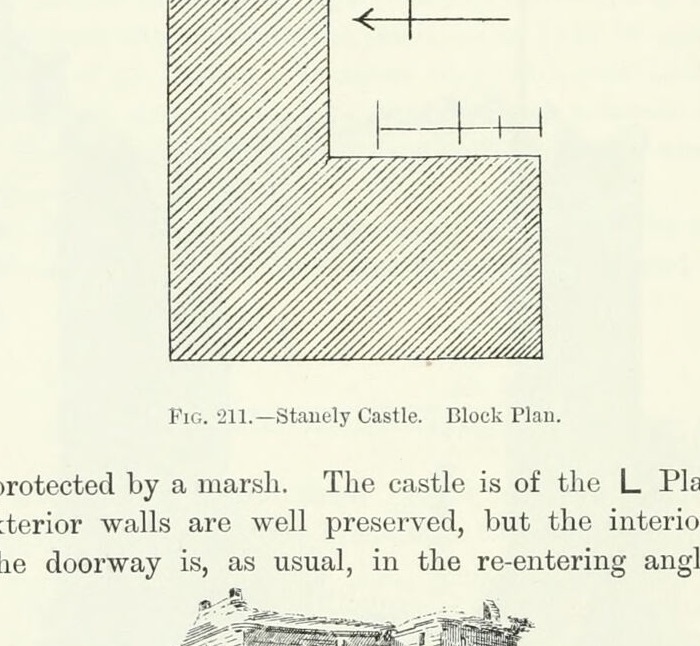
Fig. 211. Stanely Castle. Block Plan.
1889 · MacGibbon & Ross, vol. 3 (1889)
Public domain
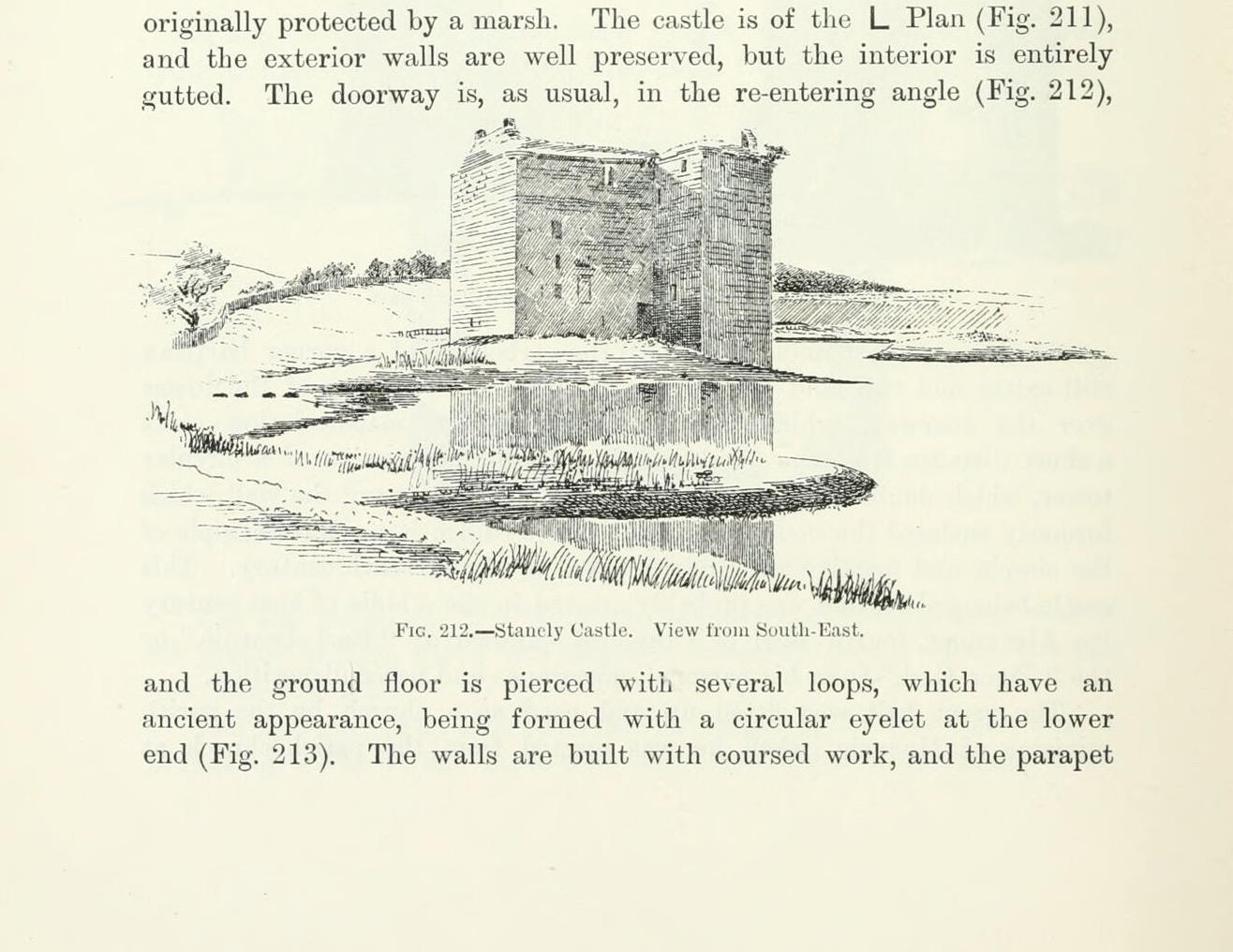
Fig. 212. Stanely Castle. View from South-East.
1889 · MacGibbon & Ross, vol. 3 (1889)
Public domain
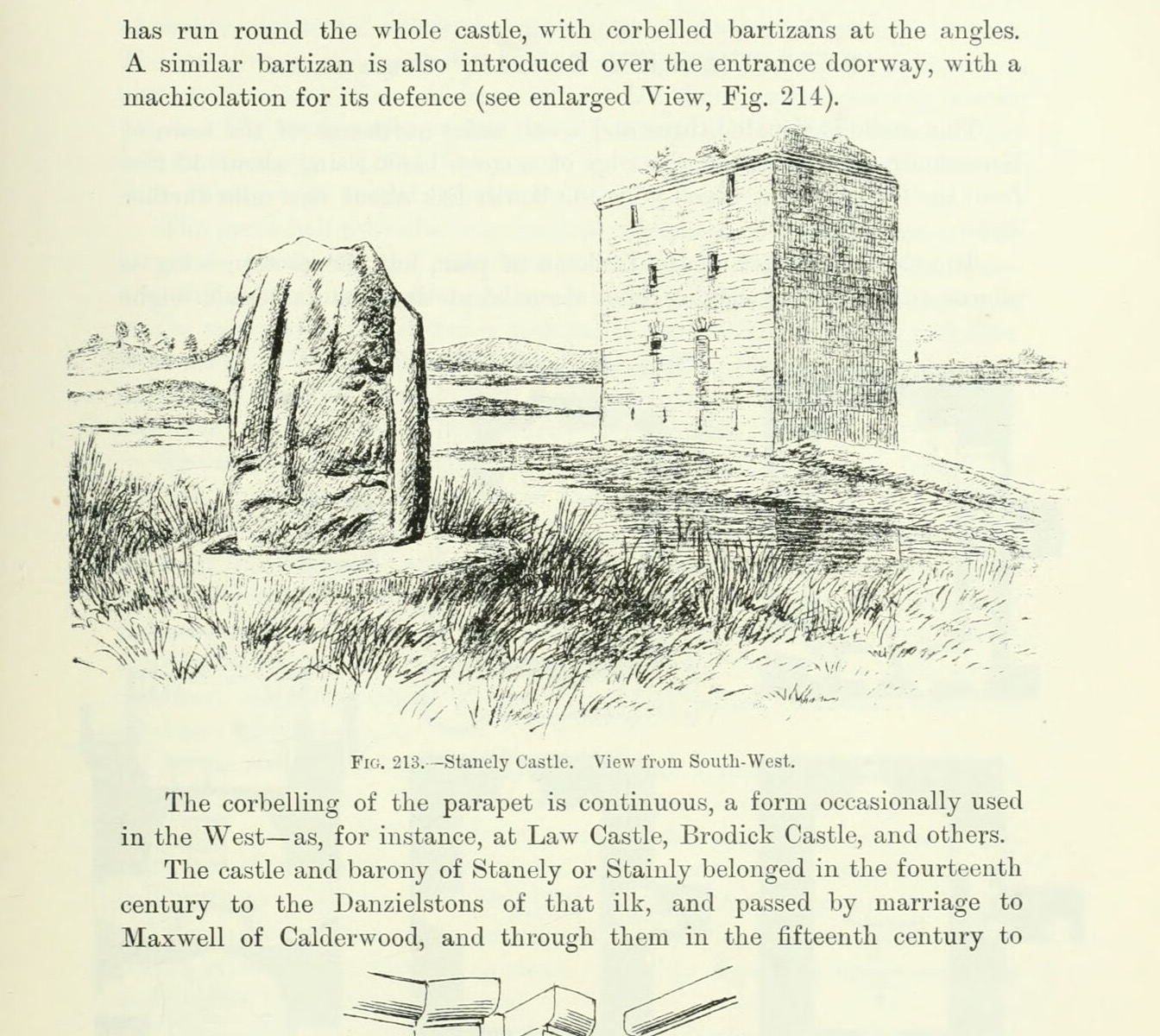
Fig. 213. Stanely Castle. View from South-West.
1889 · MacGibbon & Ross, vol. 3 (1889)
Public domain
Nearby
Landmarks within reach of Stanely Castle.


Questions about Stanely Castle
What is the history of Stanely Castle?
What is inside Stanely Castle?
Where is Stanely Castle?
When was Stanely Castle built?
Which family or clan held Stanely Castle?
What did Stanely Castle look like in its prime?
Is Stanely Castle still standing or is it a ruin?
Can you visit Stanely Castle?
More castles of Scotland


Explore the city


