Baker
The baker, oven smoke in every market town.
- Origin
- South East, England
- Famous bearer
- Sir Samuel White Baker (1821–1893), explorer of the Nile and discoverer of Lake Albert (1864)
- Register
- English family
The Baker arms and country

Coat of armsBaker Family Coat of ArmsHstoops · CC BY-SA 4.0 
Coat of armsBaker (of Orset Hall, Essex) armsBorne by the Orset Hall line, one branch of the name rather than all of it.Lobsterthermidor · CC BY-SA 3.0

_arms.svg)
- Coat of arms: Granted to an individual and inherited down that one documented line. These are the arms of particular families of the name, not of everyone who shares the surname.
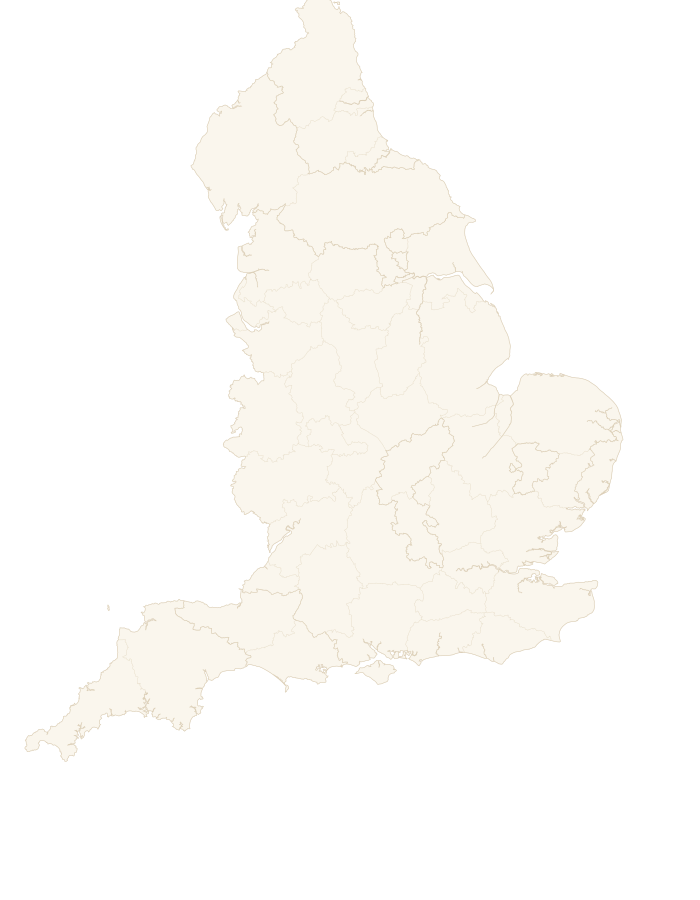
CoreHistoric reach
The seat of Baker
Seat vacantChief
No one leads the Baker community yet. When the movement opens, you can stand for its leadership, or help elect whoever does.
Current mission
No shared goal set yet. Once Baker has leadership, it sets the public focus: a restoration, a gathering, a real-world project that helps its own.
The Baker clan is being rebuilt. Join the waiting list for the movement today, and you help decide who leads it and what it does.
Help rebuild the Baker clan →What does the Baker name mean?
Occupational, baker. Old English bæcere.
The history of Baker
The man at the oven, and the word that stuck
Baker is the trade said plainly. The modern spelling descends from Middle English bakere and, behind it, Old English bæcere, formed on the verb bacan, "to dry by heat": the name is the oven rather than the loaf, and it was in use as a byname before the 8th century CE. It did not only mean a man who baked for sale: in humbler communities it attached to whoever owned the communal oven, the one fire in the settlement hot enough to bake in, and the neighbours carried their dough to his door.
The female form is Baxter, written Baxster in older records and commoner in Scotland than in England, a woman's occupational title hardened into a hereditary surname now carried by men and women alike. The Gaelic form is Mac a' Bhacstair, and some bearers have used DNA testing to trace their line to the Baxter sept of Clan MacMillan, a modern genetic finding for particular families rather than a documented medieval descent for the name.
Every European language built the same surname from its own word for the job: Bäcker and Becker in German, Boulanger and Bulinger in French, Dufour and Fournier for the man at the oven itself, Piekarz in Polish. Not borrowings, but the same obvious fact recorded independently everywhere people ate bread. And there is a quiet point in that English word surviving at all: after 1066 Anglo-Norman displaced Old English among the ruling class, yet the byname on the man at the oven stayed English, because the people who used it every morning were the people who spoke it.
How a job became a name your children kept
The introduction of family names in England is generally dated to the preparation of the Domesday Book in 1086, and the habit started at the top: nobility and gentry first, spreading slowly downward, with the first surname recorded as inherited by more than one generation placed around 1140. A name like Baker came from the other end of that process, and later. It was not a claim to land; it was what the neighbours already called you.
By 1400 most English families, and those of Lowland Scotland, had hereditary surnames; in Wales the change waited until unification under Henry VIII in 1536. It was not always welcome: in late medieval England mandatory surnames were resisted, because being reliably identifiable meant being reliably taxed. A four-year study led by the University of the West of England, concluded in 2016, analysed 45,602 surnames of the British Isles and found over 90 per cent native to Britain and Ireland; asked what an occupational surname was, its project leader Richard Coates reached for two: "obvious examples are Smith and Baker".
The oven was the expensive thing in the village
Under the surname sits a piece of economics. Ovens were expensive capital investments that required careful operation, and that is what created the trade: because not everyone could build or run one, specialised bakeries opened and a man could live by the oven alone. The oven was the line between a household chore and a profession, and the Baker family descends from the side of it with the capital. Ovens were dangerous too: in medieval Europe they were often kept apart from other buildings and sometimes sited outside the city walls altogether, to stop the town burning down.
Once medieval regulation came in, baking settled into a very stable industry, run far more professionally than brewing, so that towns and villages held fewer bakers than brewers. Fewer bakers meant a better living and a name worth passing on. By the sixteenth century the craft guild system was well established around it, master bakers instructing apprentices and assisted by journeymen, a career ladder, in a world that had very few.
1267, and the thirteenth loaf
Bread was the one thing everybody ate every day, and that made the baker the most closely watched tradesman in medieval England. In 1267 Henry III promulgated the Assize of Bread and Ale, in Latin the Assisa panis et cervisiae, which regulated the price, weight and quality of the bread and beer sold in towns, villages and hamlets. It was the first law in British history to regulate the production and sale of food, and the most significant and long-lasting commercial law of medieval England. On the face of it the statute was given at the request of the bakers of Coventry, the trade asking to be regulated, because regulation also reduced competition.
The mechanism was the family's daily arithmetic. The price of a loaf did not move; the weight did. When the quarter of wheat sold at twelve pence, the farthing loaf of the best white bread was to weigh six pounds sixteen shillings by the statute's own reckoning, roughly 2.5 kg. For every six pence added to the quarter of wheat that farthing loaf came down, until with wheat at twenty shillings a quarter it was cut to six shillings and three pence, around 120 g. Every time the grain market moved, the baker recalculated what a farthing bought, and got it right, in public, at dawn.
Getting it wrong was expensive and humiliating. The assize brought local licensing with recurring fees, inspection and verification of weights and measures, quality and price control, and fines for those who broke it; in the countryside manorial lords enforced it, holding court three times a week for the purpose. For a baker caught short on weight the pillory waited, and the surviving assize records of the City of London and of the boroughs of Norwich, York and Chester show it was used often.
This is where the baker's dozen comes from. A thirteenth loaf added to a batch of twelve was the trade's own insurance against the weight rule: cheaper to give a loaf away than to be fined or pilloried over an ounce. The record puts the connection no more strongly than likely, and fixes no date to the phrase. Worth saying plainly, because the custom is usually retold as settled fact. The extra loaf was never generosity, either. It was a tradesman protecting himself from the law, and it outlived the statute as a byword for good measure.
Charter, livery, and a saint for the trade
London's bakers organised remarkably early. A fraternity of bakers existed in the city as early as 1155, known from records of payments to the Exchequer, a craft association working under London ordinances three centuries before it held a royal charter. The Worshipful Company of Bakers was then formed by charters dated 1486, 1569 and 1685, and regulated bread quality and weight standards across the City of London into the eighteenth century. It still exists, with mostly ceremonial and charitable functions, so an unbroken thread of more than eight hundred years runs from a payment on an Exchequer roll to a livery hall in the modern City, and five bakers have served as Lord Mayor of London.
Bread was never only commerce, and the trade knew it. It sits at the centre of the Christian Eucharist as sacramental bread, and Bethlehem itself means "house of bread". In Roman Catholic tradition the patron saint of bakers is Honoratus of Amiens, Saint Honoré, a sixth-century bishop for whom the Saint Honoré cake is named; Lazarus of Bethany was a rival candidate until the French bakers' guild settled the question in Honoré's favour in the seventeenth century. A trade that argued for centuries about which saint owned it was a trade that thought well of itself.
Sugar, the factory floor, and the sixty-hour week
The Columbian Exchange, begun in 1492, reshaped what a baker made. Sugar became widely available as cultivation spread in the Caribbean, cocoa and chocolate reached the Old World, and in the eighteenth century processors learned to refine sugar from beet, so Europeans could grow it at home; puff pastry and Danish dough belong to that change. The craft began writing itself down too, with Antoine-Augustin Parmentier's The Perfect Bread-Baker in 1778.
Industrialisation did not kill the trade; it multiplied it. A study of Manchester between 1824 and 1885 found "baker and shopkeeper" the third most common occupation in the city, with 178 male bakers, 19 female bakers and 8 whose sex is not recorded, ahead of cotton spinning, calico printing and grocery. Those nineteen women are worth noticing: the Baxters were still at the oven six hundred years after the word was coined for them.
In 1895 the New York State Assembly passed a bakeshop law that banned employees from sleeping in the bakeries, set the sanitary standards for drainage and plumbing, capped hours and created an inspectorate. Joseph Lochner, a bakery owner in Utica, was convicted of making his employees work more than sixty hours a week and took his case to the United States Supreme Court, which held in Lochner v. New York in 1905, over a dissent from Justice Oliver Wendell Holmes, that the law violated a constitutional freedom of contract. That ruling named the Lochner era and shaped American law until the late 1930s. It began in a bakehouse.
Where the Bakers settled
In England the name's heartland is the corn country of the south and east: Kent, Surrey, both Sussexes, Hampshire, Berkshire and Oxfordshire, Buckinghamshire, Essex, Hertfordshire and Bedfordshire, and across into Norfolk, Suffolk and the Cambridgeshire fens. Historically it reached much further: London itself, the West Country from Cornwall to Wiltshire, the west Midlands, and the north-west from Cheshire and Lancashire into Cumbria. From England it spread into Wales, Scotland and Ireland, and the law followed: the assize was extended to Ireland by Poynings' Law in 1495.
Then it went overseas. The 1820 British emigrants to the Cape Colony included a substantial Baker contingent from the coastal parishes of Devon and Cornwall; the free-settler emigration to New South Wales in the 1820s and 1830s carried a parallel Baker stream into the Hunter Valley and the harbour suburbs of Sydney. In North America the name concentrates first in the seventeenth-century settlement zones of Massachusetts and Virginia, then runs into Pennsylvania and Ohio with the post-1820 arrivals. If your family reached Ohio or Otago or the Eastern Cape carrying this name, it left an English market town where somebody kept the oven.
The law the name grew up under outlived the Middle Ages by a long way. The assize of bread stayed in force until the beginning of the nineteenth century and was then abolished in London; the Bread Acts of 1822 and 1836 required loaves to be sold by the pound or a multiple of it, ending the farthing loaf; and the statute was finally repealed by the Statute Law Revision Act 1863, in force on 28 July 1863. Close to six centuries of a family trade being told by statute exactly what its loaf must weigh.
The people who carried the name
The earliest Baker on this record is a rebel: Thomas Baker, a fourteenth-century English rebel leader in the Peasants' Revolt, which puts a man of the name at the front of the largest popular rising of medieval England in the same century the surname was hardening into an inherited thing. After him come Augustine Baker (1575-1641), the Welsh Benedictine monk and ascetical writer; Thomas Baker (1656-1740), the antiquarian who spent his life on the records other people threw away; and Anne Elizabeth Baker (1786-1861) of Northampton, a philologist and illustrator, a Baker who studied words for a living.
The Victorian generation took the name a long way from the bakehouse. Sir Samuel White Baker (1821-1893) married the Transylvanian-born Hungarian Florence von Sass at Vidin in Bulgaria in 1859, left Khartoum in March 1863, and on 14 March 1864 stood on the cliff above a lake no European had identified and named it Lake Albert for the Prince Consort, the second of the two source-lakes of the Nile, confirming John Hanning Speke's 1858 identification of the headwaters at Lake Victoria. Florence Baker (1841-1916) went every mile with him and is recorded as an explorer in her own right. His brother Valentine Baker (1827-1887), Baker Pasha, commanded the Ottoman gendarmerie in the late 1870s, and Herbert Baker (1862-1946) became one of the leading English architects of his generation.
In the wars the name is in the casualty lists, among them Thomas Baker (1897-1918), the Australian soldier and flying ace killed in the First World War. In America it went into public life and letters: Newton D. Baker (1871-1937), mayor of Cleveland and United States Secretary of War; Howard Baker (1925-2014), senator for Tennessee; and Mary Baker Eddy (1821-1910), born a Baker, who founded the Church of Christ, Scientist.
The modern Bakers are known by voice and face. Stanley Baker (1928-1976), the Welsh actor and producer, led Zulu in 1964; Tom Baker (born 1934) was the fourth Doctor in Doctor Who from 1974 to 1981; Dame Janet Baker (born 1933) was the English mezzo-soprano of her era; Ginger Baker (1939-2019) drummed for Cream and Blind Faith. Marilyn Monroe (1926-1962) was baptised Norma Jeane Baker, daughter of the film editor Gladys Pearl Baker (1902-1984). The most famous face of the twentieth century was born under the name of the parish oven.
That is the point of the name. Baker was not granted by a king; it was earned every morning before dawn, weighed by statute and answered for in public, and it belonged to people the town could not do without and did not always thank.
Champions of the Baker name
The bearers whose lives are inseparable from this surname. Each has their own page, biography, achievements, geography, connection to the family.
Historic Places, Rebuilt
Explore the streets and seats the Baker name knew, rebuilt with AI as they stood in history.
The castles of the homeland
The great strongholds of the homeland, look one up, see what it looked like in its prime, and recreate it to explore.
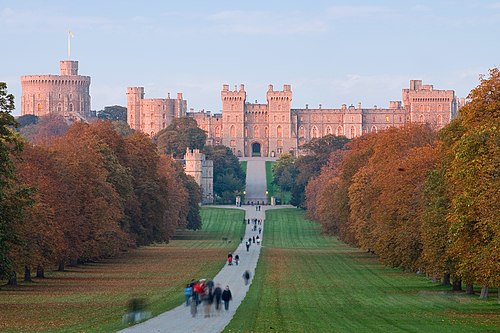 Windsor CastleRestored · prime 1820
 Tower of LondonRestored · prime 1285
 Bamburgh CastleRestored · prime 1904
All castles in England → · Strongest castles in England → · Castles of Europe
Play As Your Clan
Hold a real castle against whatever you choose to send at it, take a ship out in her own service years, or stand at the shoulder of someone the record remembers. The chronicler sets the scene; the deeds are yours.
Notable bearers of the Baker name
- Sir Samuel White Baker (1821–1893), explorer of the Nile and discoverer of Lake Albert (1864)
- Stanley Baker (1928–1976), Welsh actor; Zulu (1964), Sir Henry in Hell Drivers
- Tom Baker (b. 1934), English actor; the fourth Doctor in Doctor Who 1974–81
- Dame Janet Baker (b. 1933), English mezzo-soprano
- Ginger Baker (1939–2019), English drummer of Cream and Blind Faith