Barnes
By the barn.
- Origin
- London, England
- Register
- English family
Where the Barnes name comes from
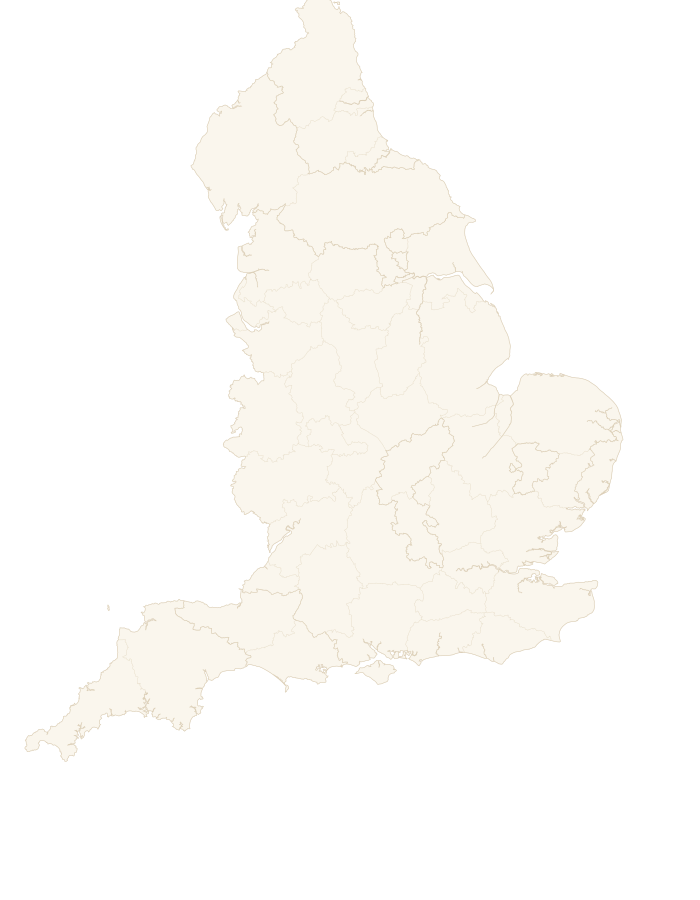
CoreHistoric reach
The seat of Barnes
Seat vacantChief
No one leads the Barnes community yet. When the movement opens, you can stand for its leadership, or help elect whoever does.
Current mission
No shared goal set yet. Once Barnes has leadership, it sets the public focus: a restoration, a gathering, a real-world project that helps its own.
The Barnes clan is being rebuilt. Join the waiting list for the movement today, and you help decide who leads it and what it does.
Help rebuild the Barnes clan →What does the Barnes name mean?
Locative or servile, by the barns; or child of the barn-born.
The history of Barnes
Which barn, and whose
The sources do not agree on where Barnes comes from, and the honest version says so. One etymology takes it from Old English beorn, a warrior, a word that had itself come in from Old Norse. Another takes the plain reading: a man who worked in a barn, or whose house stood beside one, known to neighbours as the fellow by the barns, his sons known the same way after him. Anglo-Saxon, Norse and Irish provenance have all been argued for it.
Both readings put the name at the working end of an English farm: the threshing floor, the winter hay, the croft against the tithe barn wall. The riverside district of Barnes, on the London Thames, later supplied the name to incomers with no connection to farming at all. Which of these a family carries is decided by where its line sat before it moved, not by the spelling.
The century England learned to keep a name
Surnames did not come into use in western Europe until the 11th century, and in England their introduction is generally credited to the making of the Domesday Book in 1086. Christopher Daniell places what may be the first recorded modern surname, one inherited by more than one generation, in 1140. Before that a byname described a living man and died with him. The barn readings put Barnes among the names taken from a location, the sort drawn from a homestead, farm, enclosure or cottage. Such names had an advantage in that transition: the thing they pointed at was still standing after the man who first answered to the name was dead.
The Norman Conquest changed the record around the name rather than the name itself. William dispossessed English landowners so thoroughly that by 1086 only about five per cent of land south of the Tees was in English hands, and after 1075 every earldom was held by a Norman. Anglo-Norman became the speech of the ruling class and documents shifted from Old English to Latin. Place-names were barely touched by the invasion, having already shifted far more under the earlier Scandinavian arrivals than they did under this one.
Hereditary surnames spread downward from the nobility and gentry, and by 1400 most English families, and those of Lowland Scotland, had them. They were not always welcome: in the late Middle Ages compulsory surnames were resisted in England because people associated them with taxation. The other engine was movement, country people coming from small settlements into the towns, where a newcomer needed something to be called and the place he had come from was the readiest answer.
Dorset, Wiltshire and the arable south
By the British census of 1881 the surname had a measurable shape on the map. Barnes was densest in Dorset, where it ran at 2.9 times the British average, then Wiltshire, Cumberland, Hampshire, Norfolk, Cambridgeshire, Buckinghamshire, Huntingdonshire, Lancashire and Sussex. That is a southern and West Country weighting first, with a northern tail through Cumberland and Lancashire.
The four-year study led by the University of the West of England that reported in 2016 read sources from the 11th to the 19th century and found that over 90 per cent of the 45,602 surnames in its dictionary were native to Britain and Ireland. Its leader, Richard Coates, set the categories out plainly, names linked to a place standing beside the occupational Smiths and Bakers and the patronymic Jacksons. Barnes sits in the first group, recording a spot on the ground rather than an ancestor or a trade.
Poets, scholars and a nonconformist
The name appears in the early modern record among men of letters. Barnabe Barnes, born about 1571 and dead in 1609, was an English poet. Joshua Barnes (1654-1712) was an English scholar. Ambrose Barnes (1627-1710) was an English nonconformist, one of those who would not conform to the established church.
Nothing links these three to one another: by the 17th century Barnes was far too common for two bearers to be assumed kin. That is the ordinary condition of a habitation surname, taken independently, many times over, in many parishes, by families who never met.
Cricket whites, football boots and a referee's whistle
English sport carries a long run of the name. Sydney Barnes (1873-1967) was an English cricketer, Horace Barnes (1891-1961) an English footballer, and Walley Barnes (1920-1975) a Welsh footballer who went on to broadcast. Table tennis produced two English players, Pinkie Barnes (1915-2012) and Chester Barnes (1947-2021).
Later came the English footballers Ashley Barnes, born 1989, and Harvey Barnes, born 1997, and Wayne Barnes, born 1979, the English rugby union referee. Paddy Barnes, born 1987, boxed for Ireland, and Sid Barnes (1916-1973) played cricket for Australia.
Barnes on the emigrant ships
The name travelled with the 19th and 20th century emigrations, and can be tracked by the hyphens in the descriptions of its bearers. Hiram Barnes (1832-1917) was an Australian stagecoach pioneer. Gustave Barnes (1877-1921) was an English-born Australian artist, Rory Barnes, born 1946, is a British-born Australian author, Keith Barnes (1934-2024) was a Welsh-born Australian rugby league footballer, and Jimmy Barnes, born 1956, is a Scottish-Australian rock musician.
Canada took its share: Trevor J. Barnes, born 1956, a British-born Canadian geographer, and Sarah-Jane Barnes, born 1954, a British-Canadian geologist. Freda Ellen Barnes (1902-1991) was a New Zealand political activist. The imperial services moved others, Osmond Barnes (1834-1930) as an officer of the British Indian Army and Reginald Barnes (1871-1946) in the British Army. Ireland kept its own, among them Eileen Barnes (1876-1956), botanical artist, and Monica Barnes (1936-2018), politician.
The ward, the newsroom and the pulpit
In 20th century British public life the name turns up across the professions. Josephine Barnes (1912-1999) was an English obstetrician. Frederic Gorell Barnes (1856-1939) was an English politician, and Rosie Barnes, born 1946, another. Edwin Barnes (1935-2019) was a British Anglican bishop who became a Catholic priest.
In print and on air: Leonard Barnes (1895-1977), the British anti-colonialist writer and journalist; Clive Barnes (1927-2008), the English theatre and dance critic; Carol Barnes (1944-2008), the British newsreader and broadcaster; and Binnie Barnes (1903-1998), the English actress.
The Leicester house where the talk was in two languages
Julian Patrick Barnes was born at Leicester on 19 January 1946, the second son of two French teachers, in a household bilingual in French and English from his primary-school years. He went to the City of London School, and in 1964 up to Magdalen College, Oxford to read modern languages. What followed was an apprenticeship rather than a debut: three years as a lexicographer on the supplement to the Oxford English Dictionary, where he is the named contributor of entries including bohemian and gormless, then staff writing at the New Statesman and, from 1981, the chief reviewer's chair at the Sunday Times. Metroland, his first novel, came in 1980.
Flaubert's Parrot (1984) was the breakthrough, a novel written as an obsessive monograph in which a widowed English doctor hunts the stuffed parrot Flaubert wrote in front of. Shortlisted for the Booker, it reset what English biographical fiction could do for the next twenty years. Staring at the Sun (1986), A History of the World in 10 and a half Chapters (1989), Talking it Over (1991) and The Porcupine (1992) followed, and by the mid-1990s he was the senior English figure in the literary traffic between England and France.
He married the literary agent Pat Kavanagh in 1979; after her death he wrote Levels of Life (2013), a three-part essay on grief and the most directly autobiographical of his books. The Booker itself came in 2011, at sixty-five and after three previous shortlistings, for The Sense of an Ending, his novel on memory and the unrecoverable past. He has lived in north London since 1980 and belonged, with Ian McEwan, Salman Rushdie and Martin Amis, to the Granta Best of Young British Novelists list of 1983. Commander of the British Empire in 2004 and Legion d'honneur in 2017, he has kept publishing: The Noise of Time (2016), The Only Story (2018), Elizabeth Finch (2022). A surname off the English parish map, carried out of a Leicester schoolteachers' house into the centre of the modern English novel.
Champions of the Barnes name
The bearers whose lives are inseparable from this surname. Each has their own page, biography, achievements, geography, connection to the family.
Historic Places, Rebuilt
Explore the streets and seats the Barnes name knew, rebuilt with AI as they stood in history.
The castles of the homeland
The great strongholds of the homeland, look one up, see what it looked like in its prime, and recreate it to explore.
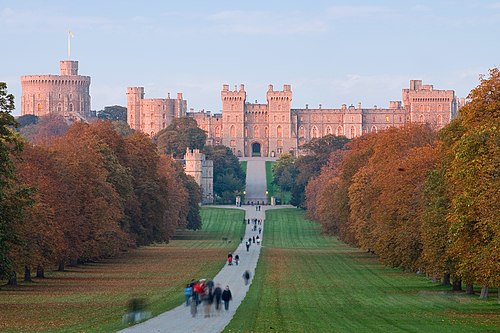 Windsor CastleRestored · prime 1820
 Tower of LondonRestored · prime 1285
 Bamburgh CastleRestored · prime 1904
All castles in England → · Strongest castles in England → · Castles of Europe
Play As Your Clan
Hold a real castle against whatever you choose to send at it, take a ship out in her own service years, or stand at the shoulder of someone the record remembers. The chronicler sets the scene; the deeds are yours.