Bennett
Blessed Benedict, Lancashire knots it tight.
- Origin
- North West, England
- Register
- English family
Where the Bennett name comes from
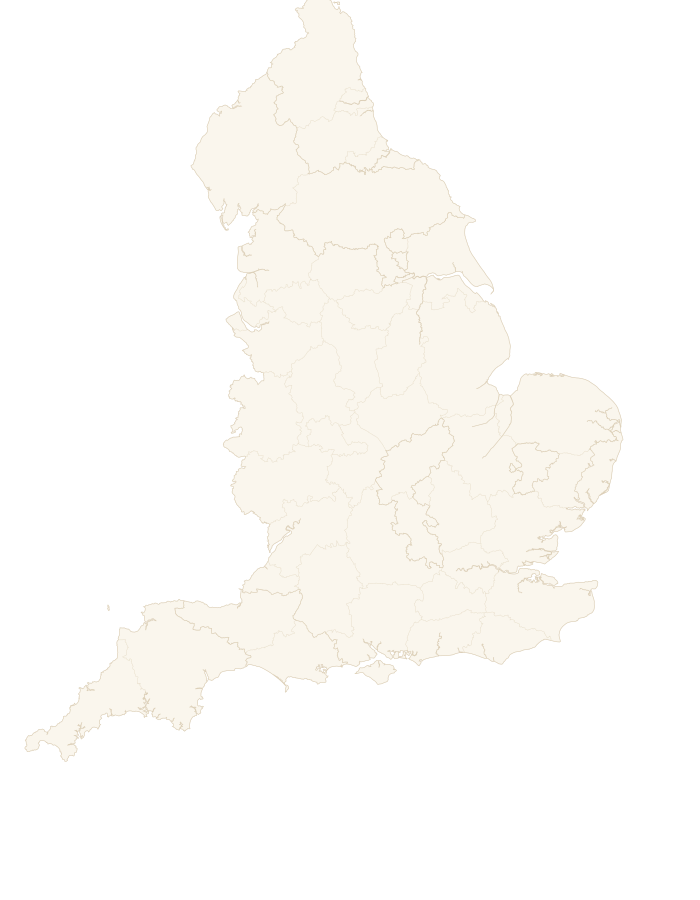
CoreHistoric reach
The seat of Bennett
Seat vacantChief
No one leads the Bennett community yet. When the movement opens, you can stand for its leadership, or help elect whoever does.
Current mission
No shared goal set yet. Once Bennett has leadership, it sets the public focus: a restoration, a gathering, a real-world project that helps its own.
The Bennett clan is being rebuilt. Join the waiting list for the movement today, and you help decide who leads it and what it does.
Help rebuild the Bennett clan →What does the Bennett name mean?
From Benedict, Latin 'blessed'. Norman Bennet and English Bennett share feast-day christening roots.
The history of Bennett
Blessed, and said out loud at the font
The name behind Bennett is Benedict, from the Latin for blessed. Bennett is the English spelling of the Anglo-Norman Ben[n]et, the same name that survives across the Channel as the French given name Benoît and the surname Bénet. It arrived with the Conquest of 1066, which made a northern dialect of Old French the language of the English ruling class and turned official documents from Old English into Latin. One of the clearest signs of that shift was in personal names: names common in France replaced Anglo-Saxon ones, so that William, Robert and Richard became ordinary English names. Benedict travelled the same road.
What carried it far beyond the Norman elite was the church. The Rule of St Benedict had set the shape of European time, dividing the day between work, prayer and hospitality, and the name reached English children through feast-day christening. English godparents poured Benedict and Bennett into the font from the 12th century onward, and it is that christening name, not a trade and not a landholding, that the surname preserves. One popular font name throws off a whole cluster of surnames: over ninety Italian surnames descend from Giovanni alone, and Benedict did the same in English, leaving Bennett, Bennet, Benett, Benet and Bennette.
1208 in County Durham, and the two centuries after it
The oldest public record of the surname is dated 1208, in County Durham. That is early. Surnames are documented among the barons of England in the 11th century, and their introduction is generally credited to the Domesday survey of 1086, but a byname then was neither heritable nor universal. Christopher Daniell dates the first recorded use of a modern surname inherited by more than one generation to 1140.
The habit spread downward, taken up first among the feudal nobility and gentry and only slowly reaching everybody else: by 1400 most English families, and most of Lowland Scotland, were using hereditary surnames. It was not always welcome. In the late Middle Ages mandatory surnames were resisted in England because people associated them with taxes, which is exactly what a fixed name is useful for.
Early English bynames worked from a trade, a father's name, a birthplace or a physical feature. Bennett is the second kind: an ancestor christened Benedict, a son known by the father, then a household that kept the name whether or not anyone in it was christened Benedict again. Of the 45,602 surnames analysed in the University of the West of England study that reported in 2016, over 90 per cent are native to Britain and Ireland.
Why so few font names had to serve so many people
There is a hard statistical reason names like Bennett became common. Of the boys born in London in 1510, 24.4 per cent were named John, 13.3 per cent Thomas and 11.7 per cent William, and through the early modern period the three commonest male given names accounted for close to half the male population. A parish carrying four Johns could not run on given names alone, so the second name was not decoration: it was how the manor court and the tithe book told one man from another.
That bottleneck is why a modest handful of saints' names produced such a crowd of surnames, and Bennett, in steady use at the font, was well placed to become one of them. The pressure eased only much later: by 1900 the three commonest names covered 22.9 per cent of newborn boys in the United Kingdom, and by 1994 only 11 per cent. By then Bennett had been fixed and inherited for five centuries. It settled thickest in Lancashire and across the Yorkshire ridings, with Cumbria, Cheshire and the Mersey towns behind it, and a long historic reach through the midland shires down into Kent, Sussex and London.
Perth in 1219, Edinburgh in the 1600s, and the Leinster Beinéid
The name crossed both of Britain's internal borders early. George F. Black records that Benedictus, son of Walter de Sancto Edmundo, witnessed a charter for the sale of land at Perth in 1219, and the name is found in Perthshire. It was common in Edinburgh throughout the 17th century. North of the border the spelling that took hold was mostly the single-t Bennet, while double-t Bennett is the form common along the Anglo-Scottish border itself: the two spellings map a frontier, not two names.
In Ireland the name is an Irish rendition of Beinéid, and its ground is south Leinster. Across the south-eastern province of Ulster it takes a distinctly Gaelic shape, MacBennett, recorded in Monaghan, Down and Tyrone: the Mac prefix fixed to a Latin saint's name the Normans had carried in. Irish bearers include the Northern Irish novelist and screenwriter Ronan Bennett (born 1956), the writer Claire-Louise Bennett, and Thomas Westropp Bennett (1867–1962), politician and magistrate.
The Leeds butcher's son who rewrote English comedy
Alan Bennett was born at Armley, on the working-class west side of Leeds, on 9 May 1934, the son of a Co-operative Society butcher. He was the first in his family through the eleven-plus, took a first in medieval history at Exeter College, Oxford in 1957, and was a junior history lecturer at Magdalen College in 1960 when Dudley Moore pulled him into the Oxford and Cambridge revue being got up for the Edinburgh Festival.
Beyond the Fringe opened on the fringe of that festival on 22 August 1960, written and performed by four men: Peter Cook and Jonathan Miller from Cambridge, Dudley Moore and Bennett from Oxford. It turned the rapid-fire sketch comedy of the university revues on the institutions British comedy had until then protected. It ran at Edinburgh, transferred to the West End for two years and to Broadway for fourteen months, and the British and American satirical comedy revolution is dated from it.
He did not want the life of a comedian. He left the team in 1964, moved to a flat in Camden Town and started writing plays: Forty Years On (1968) with John Gielgud, then Habeas Corpus (1973) and The Old Country (1977), both with Alec Guinness. By the late 1970s his stage voice, an ironic Yorkshire phrasing turned on the English liberal establishment, was the most distinctive in the British theatre.
Talking Heads followed in 1988: six twenty-five-minute monologue plays for BBC One, each carrying the emotional structure of a small realistic novel on a single face. A second series came in 1998, and the Bennett monologue has been the English-language model for the form ever since, taught on postgraduate television-writing courses as the foundational text. The History Boys opened at the National Theatre in 2004 and went on to Broadway, winning three Olivier Awards and six Tonys including Best Play. He accepted a Companion of the British Empire and declined a knighthood.
Novelists, composers and a drummer
The name has an unusually long run in English music: William Sterndale Bennett (1816–1875) was a composer, pianist, conductor and music educator, Richard Rodney Bennett (1936–2012) an English composer, Robert Russell Bennett (1894–1981) an American composer and arranger, and Brian Bennett (born 1940) is an English drummer. In letters, Arnold Bennett (1867–1931) is the English novelist of the name.
On stage and screen the run is as long: Hywel Bennett (1944–2017), the Welsh actor; Jill Bennett (1931–1990), the British actress; Tracie Bennett (born 1961), the English stage and television actress; and, in Hollywood, Constance Bennett (1904–1965) and Joan Bennett (1910–1990).
There is a scholarly seam too, neatly shaped given where the surname comes from: Jack A. W. Bennett (1911–1981) was a New Zealand scholar of Middle English literature, and Henry Stanley Bennett (1889–1972) an English literary historian. In the sciences it runs from the zoologist Edward Turner Bennett (1797–1836) and the botanist John Joseph Bennett (1801–1876) to the archaeologist Crystal Bennett (1918–1987).
The name that went across the water
Bennetts carried the name into every English-speaking country. Richard Bennett (1608–1675) served as a British colonial governor of Virginia. Richard Bedford Bennett, 1st Viscount Bennett (1870–1947), became Prime Minister of Canada, and the premiership of British Columbia was held by W. A. C. Bennett (1900–1979) and later by Bill Bennett (1932–2015).
In the United States the name attaches to some genuinely useful work. Hugh Hammond Bennett (1881–1960) founded the Soil Conservation Service; Edward Herbert Bennett (1874–1954) was an architect and Chicago city planner; Henry Hamilton Bennett (1843–1908) photographed the Wisconsin Dells; Belva Ann Bennett (1830–1917) worked as an attorney, educator and author.
South of the equator, Gabriel Bennett (1817–1895) was the Australian auctioneer of Bennett & Fisher, Max Bennett (born 1939) is an Australian neuroscientist, and New Zealand claims the cricketer Hamish Bennett. In the air, Don Bennett (1910–1986) led the Pathfinder force of the Royal Air Force in the Second World War. The name also travelled back the other way, from surname into given name, in the English habit of using an important family's surname as a first name: it produced Bennett Cerf (1898–1971), founder of Random House, and the film director Bennett Miller (born 1966). Having come out of the font as a christening name and hardened into a surname, it now works at both ends of a person's name.
Champions of the Bennett name
The bearers whose lives are inseparable from this surname. Each has their own page, biography, achievements, geography, connection to the family.
Historic Places, Rebuilt
Explore the streets and seats the Bennett name knew, rebuilt with AI as they stood in history.
The castles of the homeland
The great strongholds of the homeland, look one up, see what it looked like in its prime, and recreate it to explore.
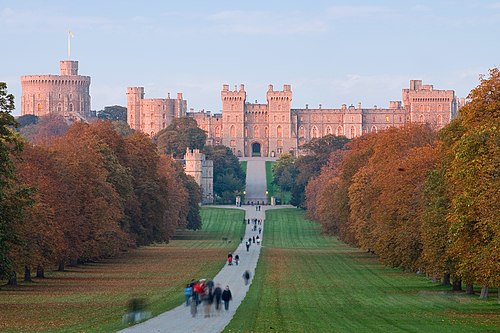 Windsor CastleRestored · prime 1820
 Tower of LondonRestored · prime 1285
 Bamburgh CastleRestored · prime 1904
All castles in England → · Strongest castles in England → · Castles of Europe
Play As Your Clan
Hold a real castle against whatever you choose to send at it, take a ship out in her own service years, or stand at the shoulder of someone the record remembers. The chronicler sets the scene; the deeds are yours.