Cox
The cock, youth and pride.
- Origin
- West Midlands, England
- Register
- English family
The Cox arms and country

Coat of armsEscutcheon of the Cox baronets of Dunmanway (1706)Borne by the Dunmanway line, one branch of the name rather than all of it.Charles Matthews · CC BY-SA 4.0
.svg)
- Coat of arms: Granted to an individual and inherited down that one documented line. These are the arms of particular families of the name, not of everyone who shares the surname.
CoreHistoric reach
The seat of Cox
Seat vacantChief
No one leads the Cox community yet. When the movement opens, you can stand for its leadership, or help elect whoever does.
Current mission
No shared goal set yet. Once Cox has leadership, it sets the public focus: a restoration, a gathering, a real-world project that helps its own.
The Cox clan is being rebuilt. Join the waiting list for the movement today, and you help decide who leads it and what it does.
Help rebuild the Cox clan →What does the Cox name mean?
From cock, young man, leader; or descendant of someone called Cocc.
The history of Cox
Four different bynames that ended up spelt the same way
Cox looks like a family and is not one. The name is of English or Welsh origin, and it may have arisen independently in several separate places in Great Britain, with the variations only arriving at a standard spelling long afterwards. Two Cox households three counties apart in 1500 could have shared nothing whatever except a sound. Cox is the 69th most common surname in the United Kingdom precisely because it was coined many times over by unrelated neighbours, rather than descending from one man with a seal and a charter.
One of the earliest firmly dated appearances of the modern spelling is a marriage: Alicea Cox, wed at St Martin in the Fields in Westminster in 1556. Around it sit the near-identical forms Cock, Cocks, Coxe, Coxen and Coxon, and there is no evidence beyond similar spelling and phonetics that any of them is related to Cox at all. They may be variants of one another, or each may come from a different word in a different language and have collided on the page later.
Little William: the pet suffix that made the name
The strongest single explanation has nothing to do with poultry. Old English cocc carried the sense of "the little", and it was sometimes attached after the name of a leader or a chieftain as a term of endearment. The surviving surnames show the machinery plainly: Wilcox, Willcocks and Willcox are all William plus that archaic cocc, and all three mean, near enough, "little William". In some families only the tail of that compound endured, the given name in front falling away until nothing was left on the register but Cox.
Why a village needed such a word is answerable with numbers. One lasting effect of the Norman Conquest was that names common in France displaced Anglo-Saxon ones, and William, Robert and Richard became ordinary English male names. Through the early modern period the three most popular male given names accounted for nearly half the male population: of the boys born in London in 1510, 24.4 per cent were named John, 13.3 per cent Thomas and 11.7 per cent William. A parish with four Williams could not function on given names alone.
Ordinary speech solved that long before officialdom did, and solved it with affection rather than administration. Little William: a pet form applied by neighbours to one man, in one place, to tell him from the other three. Nobody granted it and nobody paid for it. It stuck because it worked, and where the family prospered the nickname outlived the man, and eventually the given name in front of it.
The heap, the red hills, the fishing boat and the bird
A second reading takes the same Old English word in its other sense (cock, a heap or a mound) which made a serviceable byname for a man living beside any heap, hill or bundle. Haycock and Haycox descend from exactly that practice, meaning a man from the hay mounds or hay fields, and here too cox is the part some families carried on alone.
A third comes from over the border. Welsh coch means "red", and it could be pinned either on a man's hair, calling him in essence the Red, or on where he lived, marking him as the man from the ruddy-hued hills. In Cornwall the same idea produced Cock and Couch, pronounced cooch, from Cornish cogh, red or scarlet. This is why English Cox lines and Welsh Coch lines overlap in the border parishes and only local context can sort them.
Cornwall supplies a fourth route, an occupation rather than a description: Cornish cok is a fishing boat, and the surname Cocking is its diminutive cokyn, a small fishing boat, so those bearers were named for the craft they worked from. And last, the obvious one: the English word cock, rooster in American usage, comes from the Anglo-Saxon cocc, and some bearers got the name as a nickname for the way they carried themselves.
The Norman at Hastings, and how much of it to believe
There is a tradition, and it deserves telling straight rather than either swallowed or suppressed. It holds that at the Battle of Hastings in October 1066 one Alric Le Coq rode among Duke William's companions, a strutting Norman soldier nicknamed le coq, whose children were in turn the little cockes. Le Coq would anglicise to Cox easily enough, and families have claimed that descent for a long time.
The caution belongs on the same page. Later lists of the companions of William the Conqueror do survive, but most are padded with extra names, and only about 35 individuals can reliably be claimed to have been with William at Hastings at all. Treat the Norman soldier as family tradition rather than as evidence, which costs a Cox nothing, because the name's real medieval story is the better one.
The Conquest did shape the surname, just not through one man. The introduction of family names in England is generally attributed to the preparation of the Domesday Book in 1086, and surnames were adopted first among the feudal nobility and gentry, spreading only slowly into the rest of society. By 1400 most English families, and those of Lowland Scotland, had hereditary surnames; Wales followed after unification under Henry VIII in 1536. Ordinary people were in no hurry: in the late Middle Ages compulsory surnames were resisted in England, because they were associated with taxes.
Where the Coxes actually settled
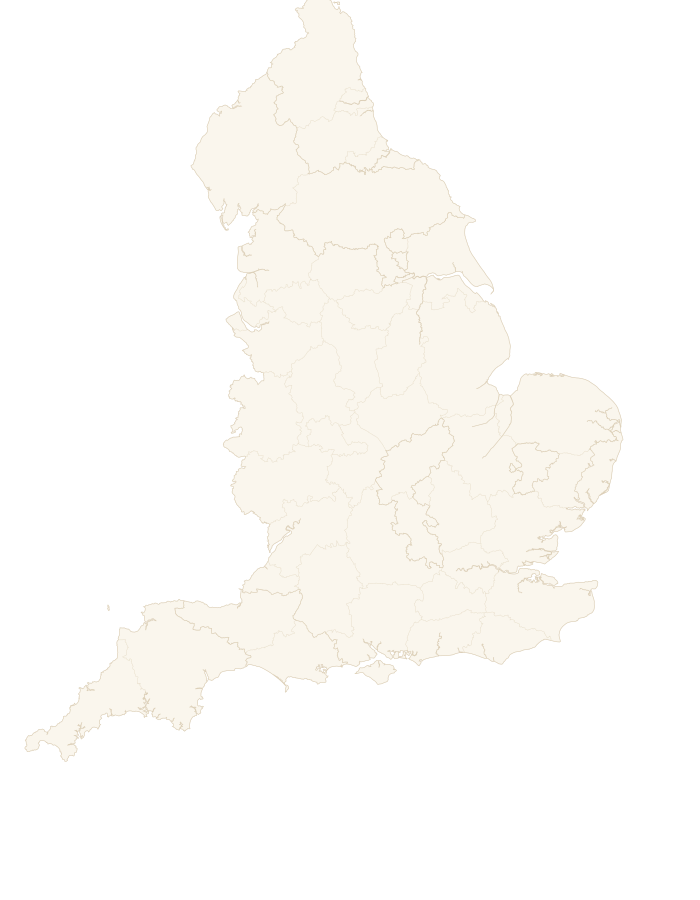
The modern distribution of the name reads like a map of its own origins. Its heartland runs through Birmingham and the Black Country, Staffordshire, Warwickshire, Worcestershire and Herefordshire, and Shropshire (a belt leaning hard against the Welsh border) and again through the West Country: Gloucestershire, Somerset and Bristol, Dorset and Wiltshire, Devon and Cornwall.
That is the best argument that the name really did have several parents. The Marches half sits precisely where English cocc and Welsh coch met in the same parish registers; the Cornish and Devon half sits where cogh, red, and cok, fishing boat, were still live words. A West Midlands Cox and a Cornish Cox may both be entirely native and still entirely unrelated.
Beyond those two cores the name spread as English families did: south and east into Kent, Surrey, Sussex, Hampshire, Berkshire and Oxfordshire, Buckinghamshire and London, and north-west into Cheshire, Lancashire, Merseyside and Cumbria, following work into the industrial towns.
The Gaelic Coxes and the Coxes of Limburg
Two more surnames arrive at Cox from outside English entirely. One native Scottish and one native Irish surname were anglicised into it, and neither has any connection to little Williams, hay mounds or red hills; they were rendered into English by sound, by clerks reaching for the nearest familiar spelling. An Irish or Highland Cox may therefore carry a Gaelic descent the English etymologies do not touch at all, traceable only through the Gaelic original.
The other outside route is Continental. Cox is also native to Belgian and Dutch Limburg, where it and the related Cockx are worn-down forms of Cocceius, itself a latinisation of Kok, the Dutch word for cook. That is an occupational name out of a kitchen, with no English ancestor in it anywhere, arriving at the identical four letters by its own road.
For a reader who knows only the surname, the lesson is that Cox is answered by parish, not by dictionary. The spelling will not tell you which origin you have; the place your family was living when the name froze onto it will.
Coxes who crossed an ocean
The North American origins of the name are speculated across several written accounts, most pointing to three distinct families arriving from England in the 17th and 18th centuries: Nicholas Cocke of Middlesex, at some unknown date before 1658; the brothers Thomas, William and Walter Cocke, originally of Surry, in 1690; and the family of a Dr Cocke of Williamsburg in 1705. Note the spelling they carried across: still Cocke, the x-form settling on their descendants later, on the far side of the Atlantic.
The name travelled the other way too. William Cox, a Dorset farmer's son, built the first wheeled road across the Blue Mountains in six months in 1814 and opened the Australian interior to settlement, work that turned a colony pinned to its coastline into a country with an inland.
In the United States the name reached the edge of the presidency. James Middleton Cox (1870-1957) was born on a farm near the village of Jacksonburg in Butler County, Ohio, the youngest son of Gilbert Cox and Eliza Andrew, and went to a one-room school until he was 16. Apprenticed to a small weekly paper in 1886, he took over the struggling Dayton Evening News, renamed it the Dayton Daily News and had made it a success by 1900, crusading against the local Republican boss along the way. He sat in the United States House of Representatives from 1909 to 1913, served three terms as Governor of Ohio, and in 1920 took the Democratic nomination for president on the 44th ballot with Franklin D. Roosevelt as his running mate. He lost heavily to Warren G. Harding, went back to his newspapers, and built the chain that survives today as Cox Enterprises.
The name was never one family, and that is what makes it worth carrying. Every Cox descends from somebody a village needed a separate word for.
Champions of the Cox name
The bearers whose lives are inseparable from this surname. Each has their own page, biography, achievements, geography, connection to the family.
Historic Places, Rebuilt
Explore the streets and seats the Cox name knew, rebuilt with AI as they stood in history.
The castles of the homeland
The great strongholds of the homeland, look one up, see what it looked like in its prime, and recreate it to explore.
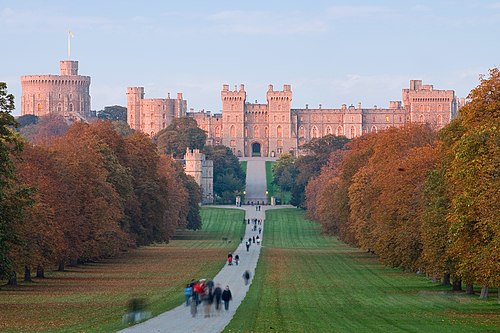 Windsor CastleRestored · prime 1820
 Tower of LondonRestored · prime 1285
 Bamburgh CastleRestored · prime 1904
All castles in England → · Strongest castles in England → · Castles of Europe
Play As Your Clan
Hold a real castle against whatever you choose to send at it, take a ship out in her own service years, or stand at the shoulder of someone the record remembers. The chronicler sets the scene; the deeds are yours.