Curtis
The courteous one, Norman manners joke.
- Origin
- South East, England
- Register
- English family
The Curtis arms and country

Coat of armsArms of Curtis of GatcombeBorne by the Gatcombe line, one branch of the name rather than all of it.MostEpic · CC BY 4.0

- Coat of arms: Granted to an individual and inherited down that one documented line. These are the arms of particular families of the name, not of everyone who shares the surname.
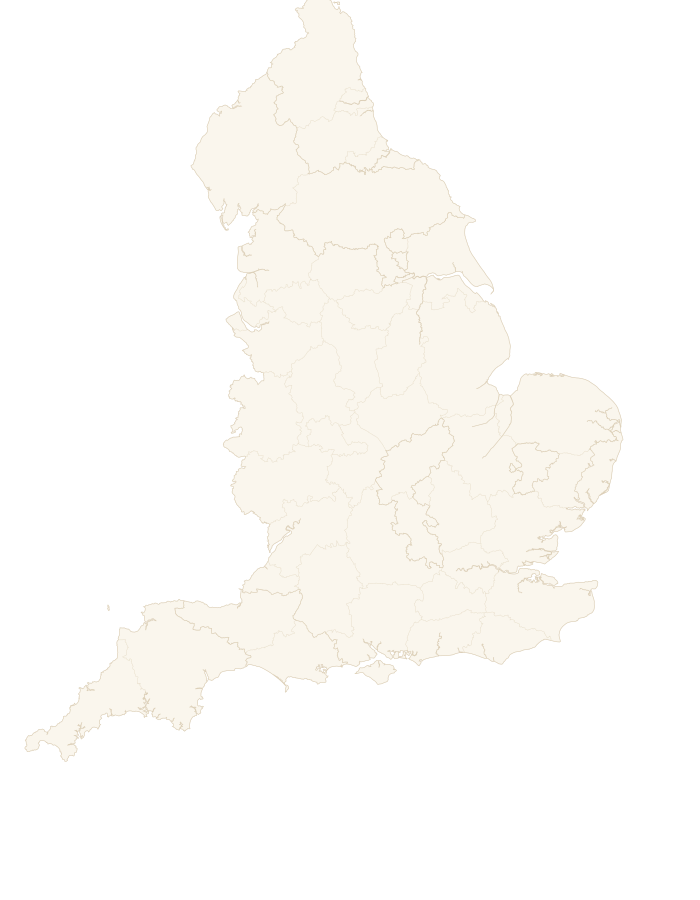
CoreHistoric reach
The seat of Curtis
Seat vacantChief
No one leads the Curtis community yet. When the movement opens, you can stand for its leadership, or help elect whoever does.
Current mission
No shared goal set yet. Once Curtis has leadership, it sets the public focus: a restoration, a gathering, a real-world project that helps its own.
The Curtis clan is being rebuilt. Join the waiting list for the movement today, and you help decide who leads it and what it does.
Help rebuild the Curtis clan →What does the Curtis name mean?
Courteous Old French curteis, nickname for refined manners, ironic or sincere.
The history of Curtis
The word that came ashore with the Conquest
In Old French a man who was curteis was polite, courteous, well-bred: curt-, court, plus the suffix -eis, so literally court-ish, and behind it the Latin cohors. The word crossed the Channel with the Norman Conquest, and the English spelling fossilises Anglo-Norman rather than Paris. Western French wrote u where Parisian French wrote o, and kept -eis where Paris had -ois; English clipped -eis to -is. Modern French courtois and the English word court took the Parisian road. Curtis did not.
The byname recorded a judgement passed by the people who saw a man every day. Other surnames answer what a man did, whose son he was or where he came from. This one answers how he carried himself. After 1066 the language of the ruling class was Anglo-Norman, a northern dialect of Old French that displaced Old English at the top of society and pushed French words and French given names into ordinary use. To call a neighbour courteous in that borrowed vocabulary was to measure him against the court itself.
How a nickname became a thing you could inherit
A byname is not yet a surname. English surnames began as a reference to one aspect of one man, his trade, his father's name, his birthplace or a feature of his body, and they were not necessarily passed on: the man called Curteis in one generation might have a son known by something else entirely. Family names in England are generally traced to the preparation of the Domesday Book in 1086, and the first to carry them were the nobility and gentry, Norman incomers marking themselves with a de before a village back in France.
The habit worked downward slowly, and it was not always welcome: in the late Middle Ages mandatory surnames were resisted in England because they were associated with taxes, a fixed name being how the exchequer found a man again. Christopher Daniell points to 1140 for what may be the first recorded surname inherited across generations, and by 1400 most English families, and most in Lowland Scotland, used them. Somewhere in those three centuries a village compliment stopped describing a living man and became a possession his children could not put down.
The compliment no two families shared
Nickname surnames, the cognominal class, are the broadest group of all, covering appearance, temperament and personality alike. Richard Coates, who led the four-year University of the West of England study that closed in 2016 (45,602 surnames, over 90 per cent of them native to Britain and Ireland), left a warning every Curtis should hear: such a name describes the original bearer, as Brown, Short and Thin do, but Short may in fact be an ironic nickname for a tall man.
That is the trap in a surname meaning courteous. The compliment could be sincere, paid to a man whose bearing stood out in a muddy parish, or the dry local verdict on somebody who overdid the bowing; neither reading can be recovered now. There was never one Curtis. Any settlement in Norman and post-Norman England could coin the byname on its own, and the name carries no chief, no seat and no founding pedigree: two Curtis families with no traceable connection are the normal case, not the exception. The name is at home across Kent, Surrey, both Sussexes and Hampshire, the Thames valley counties, Essex and East Anglia, with older ground in London, the West Country and the north-west.
The spelling never settled either, and Curtiss carries the same word. One route runs into the name from outside it altogether: Hungarian immigrants called Kertesz often took Curtis in English-speaking countries because it sounded close and eased their way into a new community.
Eighty tons of biscuit a day out of Wapping
William Curtis was born at Wapping, on the Thames below the Tower, on 25 January 1752, eldest son of the proprietor of a small ship's-biscuit bakery that supplied the Royal Navy victualling office at Deptford. His father died in 1771 and the business came to him at nineteen. He built it from a single bakehouse into the largest Royal Navy victualling contractor on the river.
The making of the firm was the Naval Provisioning Act of 1782, which the Wapping bakeries were positioned to win. His bakehouses supplied the Channel Fleet through the 1780s and the Mediterranean Fleet from 1793, and across the Napoleonic war years they baked something approaching half of all the sea-biscuit the Royal Navy consumed in the entire conflict, around eighty tons a day from the Wapping ovens at the height of it.
The City then sent him to Parliament. He was returned for the City of London at the general election of 1790 and held the seat through six successive elections to 1818. He had been Sheriff of London in 1788 and was Lord Mayor in 1795, and he ran the City's emergency-relief committee through the food-shortage winter of 1795 to 1796. George III created him a baronet of Cullands Grove in 1802 for the victualling work.
A pair o' kilts at Holyroodhouse
His friendship with the Prince Regent, the future George IV, shaped his later public life, and he sailed on the royal yacht at the peace of 1814. In August 1822 he accompanied the king on the royal visit to Edinburgh, the first by a reigning monarch to Scotland since 1651. Sir Walter Scott choreographed it, and the choreography required the king to wear a kilt at the levee at Holyroodhouse. The seventy-year-old Curtis wore one too, in the same Royal Stewart tartan.
The pair-of-kilts appearance on 17 August 1822 mattered beyond the court occasion: in the political history of the visit it belongs to the public rehabilitation of Highland Scottish identity into the official register of the post-Union British state. William Heath's caricature A Pair o' Kilts ran across the London print-shops the following week. Curtis retired to Ramsgate on the Kent coast and died there on 18 January 1829, and the bakery passed to his son and victualled the Navy for another generation.
Three botanists, two astronomers, no kinship on record
The name turns up twice and three times over in the same trade, and the honest thing to say is that nothing on record joins the bearers to each other. William Curtis, 1746 to 1799, was an English botanist, no relation on record to the Wapping baronet; Samuel Curtis, 1779 to 1860, was an English botanist; Moses Ashley Curtis, 1808 to 1872, was an American botanist and mycologist. Heber Doust Curtis, 1872 to 1942, was an American astronomer, and so was Ralph Hamilton Curtiss, 1880 to 1929, who carried the double-s spelling.
That is what a byname coined separately in village after village produces once the descendants scatter. Glenn Curtiss, 1878 to 1930, was an American aviation pioneer and founder of the Curtiss Aeroplane and Motor Company; Samuel Ryan Curtis, 1805 to 1866, a Union general in the American Civil War. Martha E. Sewall Curtis and Alice B. Curtis were American suffragists and writers.
Others put the name on the front of institutions that still carry it. Cyrus H. K. Curtis, 1850 to 1933, was an American magazine publisher, and Louisa Knapp Curtis, 1851 to 1910, the first editor of The Ladies Home Journal. Mary Louise Curtis, 1876 to 1970, founded the Curtis Institute of Music in Philadelphia, and Lionel George Curtis, 1872 to 1955, the Royal Institute of International Affairs.
From surname back to first name
Two of the name became archbishops: Patrick Curtis, 1740 to 1832, in Ireland, and Edwin Curtis, 1906 to 1999, an Englishman in the Anglican church in Mauritius. In the second half of the twentieth century it went to work in British popular culture. Ian Curtis, 1956 to 1980, sang for Joy Division; Richard Curtis, born 1956, is a British comedy scriptwriter, and Adam Curtis, born 1955, an English television documentarian.
Then the surname turned back into a first name. Curtis was the 72nd most popular boy's name in the United States in 1963, and it reached its height in the United Kingdom in 1996, when it was the 78th most popular boy's name in England and Wales. Parents choosing it were not thinking about Anglo-Norman suffixes or twelfth-century courts. They were doing what the neighbours of the first Curteis did: picking a word that sounded well on a man.
Champions of the Curtis name
The bearers whose lives are inseparable from this surname. Each has their own page, biography, achievements, geography, connection to the family.
Historic Places, Rebuilt
Explore the streets and seats the Curtis name knew, rebuilt with AI as they stood in history.
The castles of the homeland
The great strongholds of the homeland, look one up, see what it looked like in its prime, and recreate it to explore.
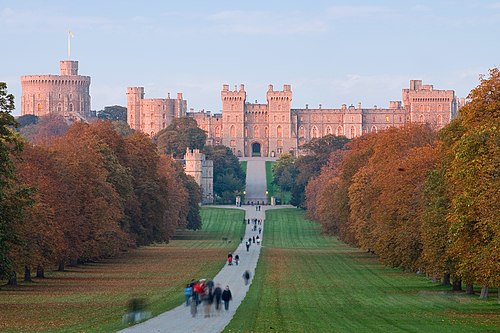 Windsor CastleRestored · prime 1820
 Tower of LondonRestored · prime 1285
 Bamburgh CastleRestored · prime 1904
All castles in England → · Strongest castles in England → · Castles of Europe
Play As Your Clan
Hold a real castle against whatever you choose to send at it, take a ship out in her own service years, or stand at the shoulder of someone the record remembers. The chronicler sets the scene; the deeds are yours.