Davis
Son of David, one spelling among England's commonest.
- Origin
- West Midlands, England
- Famous bearer
- Steve Davis (b. 1957), English professional snooker player; six-time World Champion (1981, 1983–84, 1987–89)
- Register
- English family
The Davis arms and country

Coat of armsArmorial Bearings of the DAVIS family of Croft Castle, Leominster, HerefsBorne by the Croft Castle line, one branch of the name rather than all of it.Rs-nourse · CC BY-SA 4.0

- Coat of arms: Granted to an individual and inherited down that one documented line. These are the arms of particular families of the name, not of everyone who shares the surname.
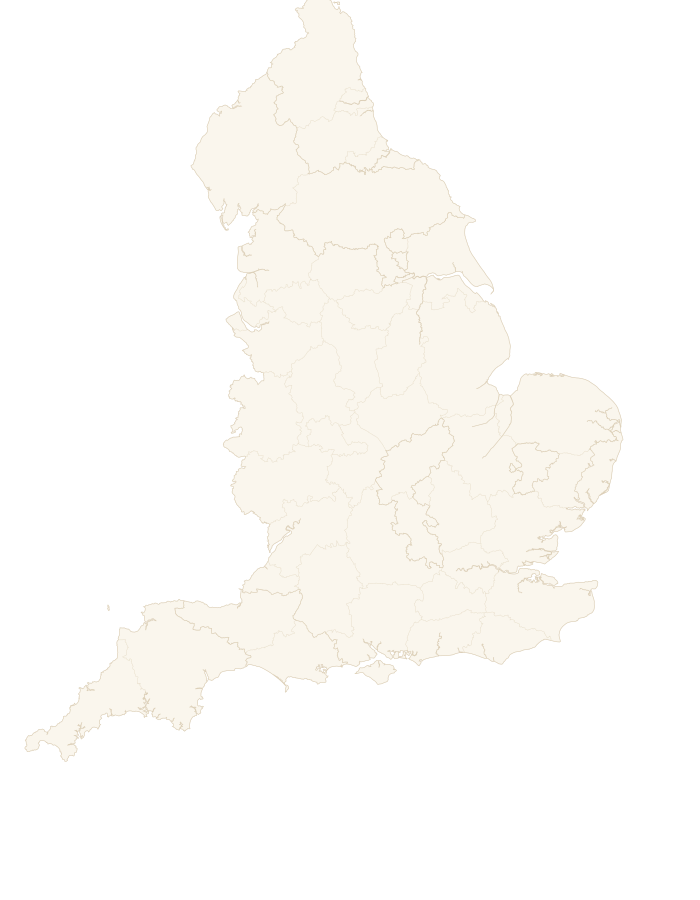
CoreHistoric reach
The seat of Davis
Seat vacantChief
No one leads the Davis community yet. When the movement opens, you can stand for its leadership, or help elect whoever does.
Current mission
No shared goal set yet. Once Davis has leadership, it sets the public focus: a restoration, a gathering, a real-world project that helps its own.
The Davis clan is being rebuilt. Join the waiting list for the movement today, and you help decide who leads it and what it does.
Help rebuild the Davis clan →What does the Davis name mean?
Son of David, Middle English Davis and Davies share the same patronymic root; spelling tracks parish clerk and migration, not separate origins.
The history of Davis
Dewi Sant, the only patron saint buried in his own country
David is the patron saint of Wales, and unlike the patrons of England, Scotland and Ireland he was a native of the country he protects. Welsh calls him Dewi Sant. He was bishop of Mynyw in the sixth century, born by tradition at Henfynyw in Ceredigion, and died on 1 March in either 589 or 601. Almost everything told of him comes from the Buchedd Dewi, the Life of David written by Rhygyfarch around 1090, which historians treat with caution: Rhygyfarch wrote partly to win the Welsh church a standing equal to Canterbury's.
His rule was severe even by monastic standards. His monks pulled the plough themselves rather than yoke draught animals, ate only bread with salt and herbs, drank only water (hence their nickname, watermen) and owned nothing, so that even to say "my book" was an offence. The dove is his emblem; the leek, his other, is the symbol of Wales itself. His last sermon left the language one of its best-known lines: "Gwnewch y pethau bychain", do the little things.
A banner, a shrine and fifty churches
What made the surname is the scale of the cult. The poem Armes Prydein of around 930 prophesied that when all seemed lost the Cymry would unite behind David's standard and drive out the English. Rome recognised him under Pope Callixtus II in 1120, and more than fifty churches in south Wales carried his dedication before the Reformation.
His shrine at St Davids in Pembrokeshire drew pilgrims through the whole Middle Ages. Vikings stripped its precious metal, a new shrine was raised in 1275, Edward I prayed at it in 1284, and Bishop Barlow carried off its jewels and relics between 1536 and 1548.
Why so many Welsh boys were christened Dafydd
Devotion on that scale runs straight into the baptismal register. Naming a son for Dewi was the plainest act of piety and of Welshness a family could make, and Dafydd became one of the small handful of names Welsh fathers used over and over. That matters more here than anywhere else, because Welsh surnames were built out of first names: a crowded font makes a crowded surname list. The Reformation narrowed the stock of baptismal names further, and David lost nothing by it, a scriptural Hebrew name no reformer could object to, and a national name at the same moment.
There is a second and quite separate root, which Davis families in the English west should know. Biblical David stayed in fashion among Tudor English parents in the southwest, well away from any Welsh influence. Not every Davis came over the border.
Davis and Davies: one name and two clerks
When Welsh patronymics froze into fixed surnames, some kept the ap in reduced form at the front: ap Hywel gave Powell, ap Rhys gave Price, ap Hugh gave Pugh, ab Owen gave Bowen. With Dafydd the prefix was dropped altogether and an English possessive s added instead. Davis and Davies are not two names but the same patronymic written by two sets of parish clerks.
The split tracks a border, not a bloodline. Davis fixed in the English-side parishes of Herefordshire, Worcestershire, Gloucestershire and Somerset, Davies on the Welsh side in Monmouthshire, Brecknockshire and Glamorgan. The registers give the game away: one family across two generations appears as Davis at a baptism and Davies at a burial. By the census of 1841 the two spellings together stood among the four commonest surnames in England and Wales. Search both spellings: the one on your certificate was the clerk's choice, not your ancestor's.
The March, the Black Country and the West Country
The name is thickest along a band running from the Welsh March into industrial England: Shropshire, Herefordshire and Worcestershire, Staffordshire, Warwickshire, Gloucestershire and the Birmingham and Black Country conurbation. That is the anglicising edge, where Welsh Davids were entered in English registers and where Welsh families later followed work into the ironworks.
The second concentration is the West Country (Somerset and Bristol, Dorset and Wiltshire, Devon and Cornwall) and that one is Tudor English naming, not Welsh migration.
John Davis of Devon and the strait that carries the name
The best-documented Davis of the age of sail was born in Devon around 1550, on the English side of the divide. John Davis made three Arctic voyages between 1585 and 1587 hunting the north-west passage. He never found it, but he charted the Greenland coast and sailed the water that has been the Davis Strait ever since. Few families anywhere can point to an ocean carrying their name.
His second legacy lasted longer. The Seaman's Secrets, published in 1599, was the standard English-language navigational textbook for the next two centuries. In 1605 he piloted the first English East India Company voyage to the Spice Islands, and died that same year.
Radnor, Haverford and Merion: the Welsh Tract
The first great Davis emigration was religious. About 1681 a group of Welsh-speaking Quakers asked William Penn for land in Pennsylvania where they could conduct their affairs in Welsh, and in 1684 he ordered forty thousand acres laid out west of the Schuylkill as a single barony. The boundaries were fixed in 1687, but by the 1690s the land had been carved between counties and self-government never came.
What survived was the map (Radnor, Haverford, Merion, Bala Cynwyd, Narberth) and a substantial Davis contingent settled in those townships. After the Civil War 104 Welsh families from the Tract went south and founded a Welsh presence at Knoxville, Tennessee.
Tobacco, anthracite, and what the American figures do not prove
Two further channels carried the name across. The seventeenth-century tobacco-planter emigration took a Davis stream into the James River valley of Virginia, the line from which Jefferson Davis, president of the Confederate States from 1861 to 1865, descended. After 1845 an industrial Welsh emigration ran the surname into the anthracite coal valleys of Pennsylvania and the steel and glass towns of Ohio.
Raw American surname counts are not a measure of Welsh descent. Many African American family names originate in slavery, when enslavers imposed their own surnames on the people they held; Davis is one of the names distributed that way, and no link to Wales or the West Country follows from it. The honest measure is the Welsh Government's study of Welsh-origin surnames: 718,000 people in Wales, nearly 35 per cent of the population, carry one, against 3.8 per cent in the United States, 4.1 per cent in Australia and 4.7 per cent in New Zealand: 16.3 million across the countries studied.
At home the name heads a sport and a great orchestra. Joe Davis (1901-1978) founded the modern snooker World Championship, and Steve Davis, born in 1957, took six world titles between 1981 and 1989. Sir Colin Davis (1927-2013) conducted the London Symphony Orchestra from 1995 to 2006. A saint's name, a strait, a coalfield and a snooker table is a great deal of ground for a surname that began as son of Dafydd.
Champions of the Davis name
The bearers whose lives are inseparable from this surname. Each has their own page, biography, achievements, geography, connection to the family.
Historic Places, Rebuilt
Explore the streets and seats the Davis name knew, rebuilt with AI as they stood in history.
The castles of the homeland
The great strongholds of the homeland, look one up, see what it looked like in its prime, and recreate it to explore.
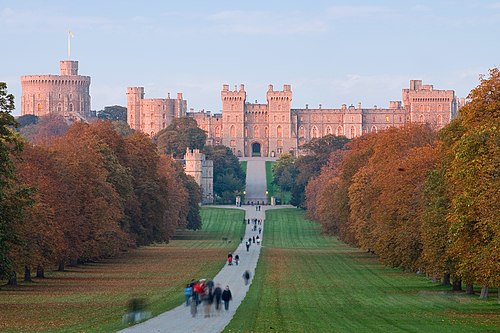 Windsor CastleRestored · prime 1820
 Tower of LondonRestored · prime 1285
 Bamburgh CastleRestored · prime 1904
All castles in England → · Strongest castles in England → · Castles of Europe
Play As Your Clan
Hold a real castle against whatever you choose to send at it, take a ship out in her own service years, or stand at the shoulder of someone the record remembers. The chronicler sets the scene; the deeds are yours.
Notable bearers of the Davis name
- Steve Davis (b. 1957), English professional snooker player; six-time World Champion (1981, 1983–84, 1987–89)
- Sir Colin Davis (1927–2013), English conductor of the London Symphony Orchestra (1995–2006)
- John Davis (c. 1550–1605), Elizabethan navigator; explored the Davis Strait off Greenland 1585–87
- Joe Davis (1901–1978), English billiards and snooker champion; founder of the modern snooker World Championship
- Jefferson Davis (1808–1889), President of the Confederate States 1861–65