Day
David, dairy, or daylight jest.
- Origin
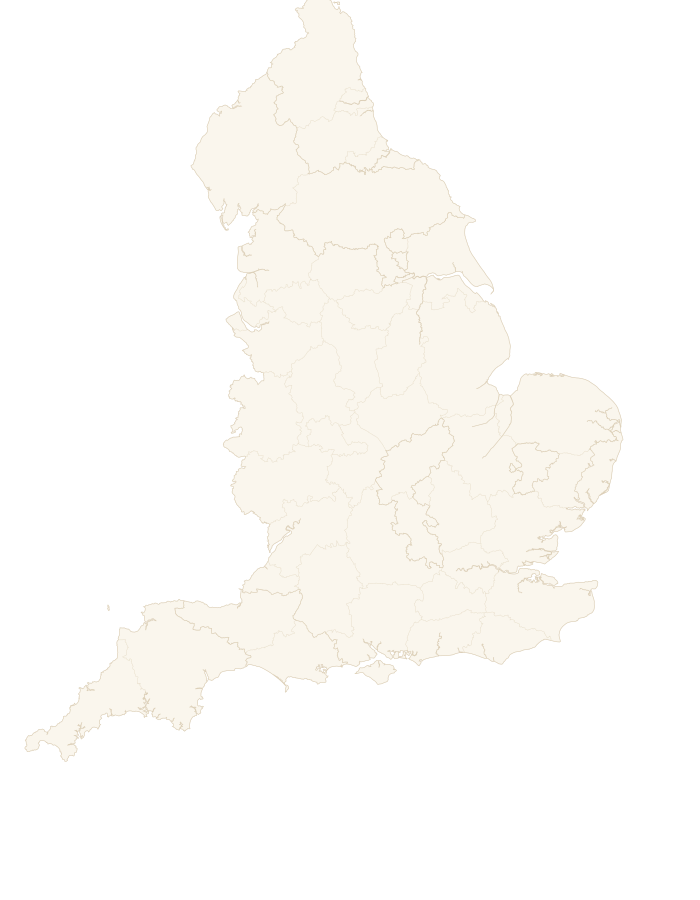
- South East, England
- Register
- English family
The Day arms and country

Coat of armsDay (of Manarabon, Carmarthenshire) armsBorne by the Manarabon line, one branch of the name rather than all of it.Lobsterthermidor · CC BY-SA 3.0
_arms.svg)
- Coat of arms: Granted to an individual and inherited down that one documented line. These are the arms of particular families of the name, not of everyone who shares the surname.
CoreHistoric reach
The seat of Day
Seat vacantChief
No one leads the Day community yet. When the movement opens, you can stand for its leadership, or help elect whoever does.
Current mission
No shared goal set yet. Once Day has leadership, it sets the public focus: a restoration, a gathering, a real-world project that helps its own.
The Day clan is being rebuilt. Join the waiting list for the movement today, and you help decide who leads it and what it does.
Help rebuild the Day clan →What does the Day name mean?
From David or Daye, dairy-servant; or '-the-day' nickname. Triple etymology pool.
The history of Day
David, the dairy and the daylight jest
Three roots feed one syllable. Day can be a worn-down English form of David, a given name that came into English use from the Hebrew stock alongside Daniel and Elizabeth; it can be occupational, from daye, the servant who kept the dairy; and it can be a byname fastened on a cheerful man, the day against the night. Nothing in the record forces a choice between them, and the name spread on all three routes at once, which is exactly why it turns up so early and so widely on English parish and tax lists.
The pressure that made such bynames necessary is measurable. Through the early modern period the three commonest male given names accounted for close to half the male population of England: of boys born in London in 1510, 24.4 per cent were christened John, 13.3 per cent Thomas and 11.7 per cent William. A parish with four Johns needed a second word for each of them, and the second word could come from a father, a job or a joke.
The machinery behind the fixing is well documented. The introduction of family names in England is generally attributed to the preparation of Domesday Book in 1086, adopted first among the feudal nobility and gentry and spreading only slowly down through society; in the late Middle Ages, mandatory surnames were resisted in England precisely because people associated them with taxation. Day belongs to the layer beneath the gentry, alongside the occupational Smith, Taylor and Miller and the descriptive Brown and Short, and it holds ground today from Kent and the two Sussexes through Hampshire and Buckinghamshire into Essex, Norfolk, Suffolk and the Cambridgeshire fens, with an older western reach through Somerset, Dorset and Gloucestershire into the west midland counties.
A vice-chancellor at Cambridge, a poet, and a founder of Madras
The name enters the higher record with George Day, born about 1501 and dead in 1556, who was vice-chancellor of the University of Cambridge in 1537 and Bishop of Chichester from 1543 to 1551. He held academic and episcopal office across the two decades in which the English church was remade, a Day at the top of both the university and a southern diocese.
A century on, the name is attached to verse rather than doctrine: James Day, an English poet, flourishes in the record in 1637. It is a small entry, but it places a Day inside the literary culture of Caroline England, a long way from the dairy servant the name may once have described.
The most consequential seventeenth-century bearer worked far from either. Francis Day, born in 1605 and dead in 1673, was an English colonial administrator counted among the founders of Madras, the city now called Chennai. It is the first point at which the name is attached to the making of a place rather than the holding of an office, and it marks the beginning of the long outward movement that carried Days to Nova Scotia, New South Wales and the American west.
Ardfert, Cashel and Clogher: the Days of the Irish church
Day is an English and an Irish surname, and its Irish strand is unusually concentrated in the church and the courts. Edward Day, 1738 to 1808, was Archdeacon of Ardfert. After him the record carries a run of nineteenth-century senior appointments held by Irish churchmen of the same surname and, repeatedly, the same christian name.
Maurice Day, 1816 to 1904, was Church of Ireland Bishop of Cashel and Waterford. Maurice Day, 1843 to 1923, was Anglican Bishop of Clogher. Maurice William Day, 1858 to 1916, was an Irish Anglican priest who held the deanery of Waterford. Three Maurice Days in the Irish church inside a single century, holding two bishoprics and a deanery between them.
The name also reached the bench. Robert Day, 1746 to 1841, was an Irish politician, barrister and judge across ninety-five years of life. The antiquarian Robert Day, 1836 to 1914, collected and photographed the Irish past rather than judging it, and Robert Day, 1884 to 1949, sat as an Irish Labour Party politician from Cork.
Blacking, wool, iron, ink and the two-stroke engine
The name sits deep in the manufacturing century. Charles Day, who died in 1836, founded Day and Martins Blacking. At Mark in Somerset, Albert Day traded as iron and brass founders, the west-country end of the name working metal. Daniel Day, 1767 to 1848, was an American pioneer in woollen manufacturing.
The single most consequential Day invention came from Joseph Day, 1855 to 1946, inventor of the modern two-stroke engine. Charles Day, 1879 to 1931, was an American engineer and co-founder of Day and Zimmermann.
Alongside the founders and engineers, the name runs through the drawing and printing trades. Alexander Day, 1751 to 1841, was a British miniaturist and art dealer. William Day, 1797 to 1845, was a British lithographer and watercolour artist. Frances Sally Day, 1816 to 1892, was an English painter, and Alfred Day, 1810 to 1849, an English music theorist.
The New York Sun and the dot: Benjamin Henry Day and his son
Benjamin Henry Day, 1810 to 1889, was an American illustrator and printer and the founder of the original New York Sun. His son Benjamin Henry Day Jr., 1838 to 1916, was likewise an illustrator and printer, and invented the printing technology that still carries the family name, the Ben Day process. Two generations of one family, father and son, built first the paper and then the method by which its pictures were reproduced.
Around them the name was planting itself across North America. John Day, dead in 1775, was a merchant and politician in Nova Scotia, and John Day Jr., dead in 1792, a soldier and political figure in the same colony. Charles Dewey Day, 1806 to 1884, sat as a Canadian judge. Jeremiah Day was president of Yale University from 1817 to 1846. Rowland Day, 1779 to 1853, went to Congress from New York, and Merritt H. Day, 1844 to 1900, gave his name to Day County in South Dakota. Edward Denny Day, 1801 to 1876, took the name the other way as an Irish-Australian police magistrate.
A Victoria Cross, a Medal of Honor, and the Hydrographer of the Navy
George Fiott Day, 1820 to 1876, was a Royal Navy captain and a recipient of the Victoria Cross. Archibald Day, 1899 to 1970, took the Royal Navy in a different direction, rising to be Hydrographer of the Navy.
The wars of the twentieth century took their share of the name. Harold Day, a Welsh Royal Navy officer, became a flying ace in the First World War. Miles Jeffery Game Day, 1896 to 1918, was a British naval aviator and a poet, dead in the last year of that war at twenty-two. David Day, 1916 to 1944, was an English cricketer and a British Army officer, dead in 1944.
In American service the name accumulated the Medal of Honor four times over. Charles Day, 1844 to 1901, won it as a soldier in the American Civil War, and David F. Day, 1847 to 1914, as a Union Army soldier; Robert H. Day, 1835 to 1929, served as a Union officer before a second career as a railroad and electrical engineer. Matthias W. Day earned it as a United States army officer. Bud Day, born George E. Day, 1925 to 2013, was a United States Air Force colonel and Medal of Honor recipient, and his exact contemporary James L. Day, 1925 to 1998, rose to general in the United States Marine Corps.
Jockeys at the front, forwards in the pack
Racing gave the name a dynasty. Sam Day, 1802 to 1866, was an English jockey, and his nephew Sam Day Jr., 1818 to 1838, was an English jockey too, dead at twenty. Alfred Day, 1830 to 1868, was a British jockey of the next generation. More than a century later the name was still on the American tracks with the jockey Pat Day, born 1953.
In Wales the name went into the forwards. Harry Day, 1863 to 1911, was a Welsh international rugby union forward. Tom Day, 1907 to 1980, played rugby union for Wales, and Bert Day, 1908 to 1977, was a Welsh rugby union international who also played the professional league game. Dominic Day, born 1985, carried the same name into the modern Welsh game.
English cricket kept its own line of Days. Albert Day, 1865 to 1908, played for Yorkshire. Samuel Day, 1878 to 1950, known as Sammy Day, was that rarer thing, an English cricketer and footballer both, and Arthur Day, 1885 to 1969, followed him into the first-class game. Alf Day, 1907 to 1997, was a Welsh footballer; Mervyn Day made a long career as an English professional goalkeeper; and Ryan Day, born 1980, took the name onto the professional snooker circuit for Wales.
The bow tie, the three Academy Awards and the modern name
Sir Robin Day, born at Hampstead on 24 October 1923, served in the Royal Artillery from 1943, read law at St Edmund Hall, Oxford, was called to the bar at the Middle Temple in 1952 and took the presidency of the Oxford Union in 1950. He joined Independent Television News as one of its original four newsreaders and was on air on the opening night of ITV, 22 September 1955, under a founding brief that newsreaders would also be reporters. Those four invented the on-screen newsreader-reporter role that has been the default form of television news ever since.
The interview that made him came in June 1957, when at thirty-three he questioned the Foreign Secretary Selwyn Lloyd on ITN, applying the method of a bar cross-examination where the convention had been deference and pressing the minister on what he had known and when over Suez. Fifteen minutes reset the relationship between government and broadcasting in Britain. He presented Panorama for fifteen years from 1959, took the chair of Question Time at its launch in 1979 and held it for a decade, was knighted in 1981, and died in Westminster on 7 August 2000.
The other head of the twentieth-century name was born at Greenwich on 29 April 1957. Daniel Day-Lewis, son of the poet Cecil Day-Lewis and the actress Jill Balcon, trained at the Bristol Old Vic Theatre School from 1975 and spent four years in classical repertory and at the Royal Shakespeare Company. He won the Academy Award for Best Actor at thirty-one for My Left Foot in 1989, again in 2007 for There Will Be Blood and again in 2012 for Lincoln, the only person ever to win it three times. He was knighted in 2014 and retired from the screen after Phantom Thread in 2017, having held to the retirement since.
The name closes the century across every register. Robin Day, 1915 to 2010, was a British furniture designer, and Corinne Day, 1962 to 2010, an English fashion and documentary photographer. Dorothy Day, 1897 to 1980, was an American religious and social activist. Sandra Day O'Connor, 1930 to 2023, born Sandra Day, sat as an associate justice of the Supreme Court of the United States. Three etymologies, one short syllable, and a name that reached the bench, the pulpit, the newsroom and the screen.
Champions of the Day name
The bearers whose lives are inseparable from this surname. Each has their own page, biography, achievements, geography, connection to the family.
- Daniel Day-Lewis
The Poet Laureate's son who won three Academy Awards for Best Actor, the only person to have done so, and retired from the screen at the height of his career.
- Sir Robin Day
The Oxford Union president who became one of ITN's first newsreaders in 1955, chaired Question Time for its first decade, and built the modern British televised political interview.
Historic Places, Rebuilt
Explore the streets and seats the Day name knew, rebuilt with AI as they stood in history.
The castles of the homeland
The great strongholds of the homeland, look one up, see what it looked like in its prime, and recreate it to explore.
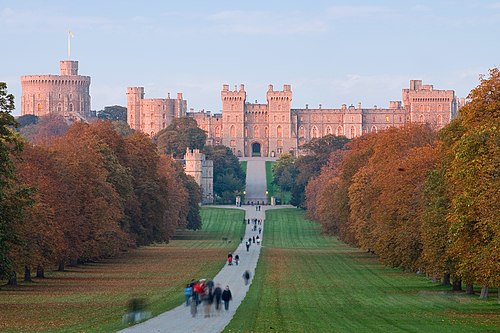 Windsor CastleRestored · prime 1820
 Tower of LondonRestored · prime 1285
 Bamburgh CastleRestored · prime 1904
All castles in England → · Strongest castles in England → · Castles of Europe
Play As Your Clan
Hold a real castle against whatever you choose to send at it, take a ship out in her own service years, or stand at the shoulder of someone the record remembers. The chronicler sets the scene; the deeds are yours.