Dickens
Son of little Richard, London fog in print.
- Origin
- London, England
- Famous bearer
- Charles Dickens (1812–1870), novelist
- Register
- English family
Where the Dickens name comes from
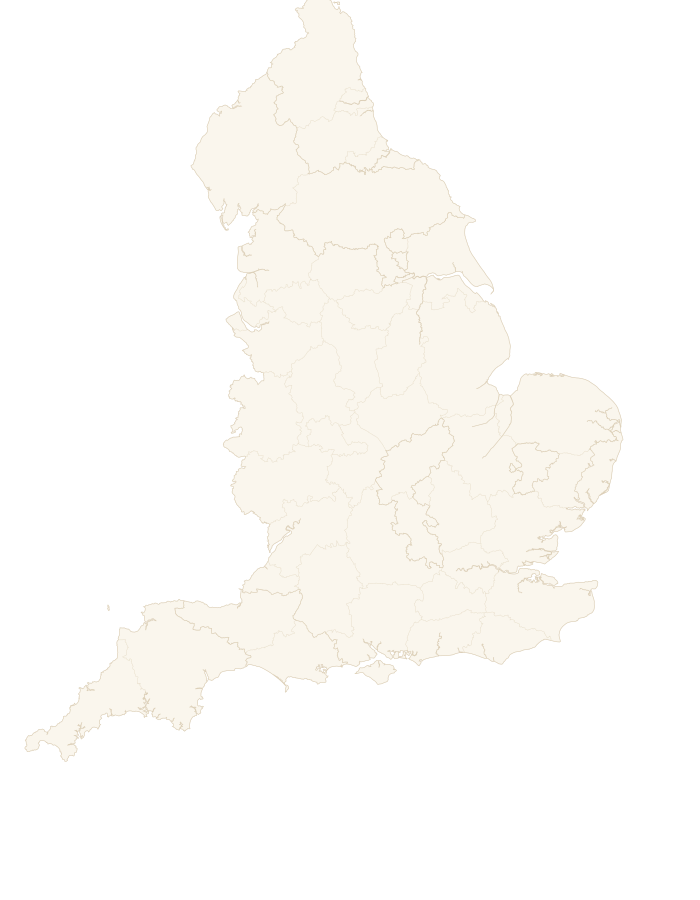
CoreHistoric reach
The seat of Dickens
Seat vacantChief
No one leads the Dickens community yet. When the movement opens, you can stand for its leadership, or help elect whoever does.
Current mission
No shared goal set yet. Once Dickens has leadership, it sets the public focus: a restoration, a gathering, a real-world project that helps its own.
The Dickens clan is being rebuilt. Join the waiting list for the movement today, and you help decide who leads it and what it does.
Help rebuild the Dickens clan →What does the Dickens name mean?
Patronymic, son of Dickin (little Richard). Middle English -s genitive.
The history of Dickens
Dickin's boy, and the -s that fixed him in a register
Richard came into England with the Normans. The Conquest put Anglo-Norman, a northern dialect of Old French, in as the language of the ruling class, and one plain sign of the shift was that families began naming sons in the French fashion rather than the Anglo-Saxon: William, Robert and Richard soon became common. English speech then wore Richard down to its diminutive, Dick.
Dickens is built from that. Dick took a further diminutive to give Dickin, little Richard, and then the Middle English genitive -s, meaning belonging to, or the son of. The ending is genuinely ambiguous, because English servants commonly took an employer's name with an s added, which is why Vickers is read as a vicar's servant and Roberts as either the son or the servant of a Robert. A Dickens may be either.
Such bynames hardened into heritable surnames slowly and from the top down. Family names in England are generally credited to the Domesday Book of 1086 and were taken up first among the feudal nobility; by 1400 most English families, and those of Lowland Scotland, had settled hereditary ones, though ordinary people resisted, since compulsory second names meant taxes. Patronymics dominate the result because England had so few given names: of the boys born in London in 1510, 24.4 per cent were christened John and 11.7 per cent William. A parish holding four Richards made its distinctions in the nursery.
A Navy Pay Office clerk and his eight children
The line that made the name famous begins with John Dickens (1785–1851), a clerk in the Royal Navy Pay Office, and Elizabeth Barrow (1789–1863), who had eight children. Their eldest son was born at 1 Mile End Terrace, Landport, Portsmouth, on the seventh of February 1812 and christened Charles John Huffam Dickens. His father's postings moved the household to London in 1815, to Chatham in Kent in 1817 and back to London in 1822. The five years at Chatham were the happiest of the boy's childhood, and the Medway dockyard returned again and again in the novels.
In 1824 John Dickens was arrested for debt and committed to the Marshalsea Prison, and the twelve-year-old Charles was put to pasting labels on blacking-pots in a riverside warehouse at Hungerford Stairs for six shillings a week. The four months there, February to June 1824, became the engine of everything he afterwards wrote. His son's verdict on him was affectionate, a jovial opportunist with no money sense, and he made him permanent as Mr Micawber in David Copperfield in 1850. His brothers took ordinary Victorian work: Alfred Lamert Dickens (1822–1860) became a railway engineer, Augustus (1827–1866) a land agent.
Boz, and the serial that changed publishing
Charles returned to school for two years at the Wellington House Academy in Hampstead Road, left at fifteen for clerk's work at a solicitor's office in Gray's Inn, taught himself shorthand out of Gurney's manual, and at nineteen was a parliamentary reporter for the Mirror of Parliament and then the Morning Chronicle. His first published sketch, A Dinner at Poplar Walk, appeared in the Monthly Magazine in December 1833 over the pseudonym Boz.
Sketches by Boz, collected in February 1836, launched him at twenty-four. In April he married Catherine Hogarth (1815–1879) and began the monthly serial of the Posthumous Papers of the Pickwick Club. The early numbers sold modestly; from the fourth, after Sam Weller walked into the book, sales climbed to forty thousand and Pickwick became the publishing event of the late 1830s. Each of the fifteen novels that followed appeared first in parts, and that instalment model made the Victorian three-volume novel a popular form.
Fifteen novels and the arguments inside them
The novels run from Oliver Twist (1837 to 1839) and Nicholas Nickleby through Barnaby Rudge (1841), A Christmas Carol (1843), Dombey and Son, David Copperfield (1849 to 1850), Bleak House (1852 to 1853), Hard Times (1854), Little Dorrit (1855 to 1857), A Tale of Two Cities (1859) and Great Expectations (1860 to 1861), to Our Mutual Friend and the Mystery of Edwin Drood, left unfinished in 1870. Bleak House, David Copperfield, Great Expectations and Little Dorrit sit on every modern list of the central works of nineteenth-century world literature.
He used the novels, and the two journals he edited, Household Words from 1850 to 1859 and All the Year Round from 1859 until his death, to argue the social questions of the period. The Poor Law of 1834 is fought in Oliver Twist, the Yorkshire boarding schools in Nicholas Nickleby, the workhouse system in Our Mutual Friend, the Court of Chancery in Bleak House, the sanitary condition of the industrial towns in Hard Times, and the Marshalsea that had held his father in Little Dorrit; the American Notes of 1842 took the side of the abolitionists.
Gads Hill, the readings, and Poets' Corner
From 1858 he took his own work onto the platform, and the public readings became the second arm of his fame: packed halls across Britain and Ireland, and two American tours, in 1842 and in 1867 to 1868. In 1856 he had bought Gads Hill Place at Higham in Kent, a small Restoration house his father had pointed out to him as a child as the kind of place a hard-working man might one day own. He retired there in 1869 and died on the ninth of June 1870, in his fifty-ninth year, with Edwin Drood unfinished at the sixth monthly number.
He had asked to be buried at Rochester Cathedral, in the Kent he had known since Chatham; instead he was carried to Poets' Corner in Westminster Abbey on the fourteenth of June 1870, under a slab his executors composed: he was a sympathiser to the poor, the suffering, and the oppressed. The fifteen novels have not been out of English-language print since, and are translated into every major language on earth.
The Dickens children, in ink and in uniform
Ten children were born to Charles and Catherine, and those who grew up took the name into work of their own. Charles Culliford Boz Dickens (1837–1896), the eldest, became an editor and writer, and Kate (1839–1929) an artist. Walter Savage Landor Dickens (1841–1863) served as an officer in the Indian Army and Sydney Smith Haldimand Dickens (1847–1872) in the Royal Navy. Francis Jeffrey Dickens (1844–1886) went to Canada and served in the Royal Canadian Mounted Police, Henry Fielding Dickens (1849–1933) was a barrister and King's Counsel, and Edward Bulwer Lytton Dickens (1852–1902) was an Australian politician.
The generations after them kept both trades, the pen and the service. Mary Angela Dickens (1862–1948), daughter of Charles Culliford Boz Dickens, was a journalist and novelist who wrote Children's Stories from Dickens. Henry Fielding Dickens's son Gerald Charles Dickens (1879–1962) rose to admiral in the Royal Navy. Monica Dickens (1915–1992), a great-granddaughter of the novelist, was a writer, and Cedric Charles Dickens (1916–2006), another, was steward of his literary legacy; Gerald Charles Dickens (born 1963), a great-great-grandson, is an actor, and Lucinda Anne Dickens Hawksley (born 1977) an author.
The other Dickenses, who descend from nobody in particular
Most people called Dickens descend from no single line: the name was made independently wherever a Dickin had children, or a servant, so it appears across Britain with no connection to Gads Hill. A. G. Dickens (1910–2001) was a British academic and writer on the English Reformation, Frank Dickens (1932–2016) a cartoonist and creator of the strip Bristow, Archie Dickens (1907–2004) a pin-up artist, and Andy Dickens (born 1953) is a jazz trumpeter and bandleader.
The name travelled with emigration. Little Jimmy Dickens (1920–2015) was an American country singer and Hazel Dickens (1925–2011) an American bluegrass singer; Kim Dickens (born 1965) is an American actress. Ernie Dickens (1921–1985) was a Canadian hockey defenceman and Scott Dickens (born 1984) a Canadian swimmer; Stanley Dickens (born 1952) is a Swedish racing driver and Peggy Dickens (born 1975) a French slalom canoeist. A patronymic coined at nursery scale in an English village now belongs to all of them.
Champions of the Dickens name
The bearers whose lives are inseparable from this surname. Each has their own page, biography, achievements, geography, connection to the family.
Historic Places, Rebuilt
Explore the streets and seats the Dickens name knew, rebuilt with AI as they stood in history.
The castles of the homeland
The great strongholds of the homeland, look one up, see what it looked like in its prime, and recreate it to explore.
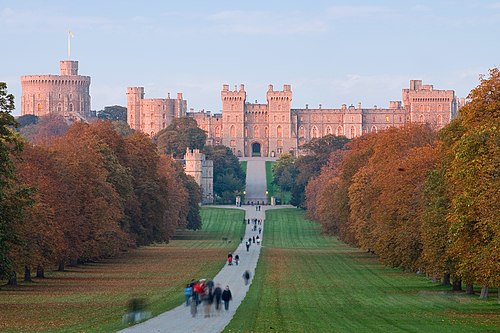 Windsor CastleRestored · prime 1820
 Tower of LondonRestored · prime 1285
 Bamburgh CastleRestored · prime 1904
All castles in England → · Strongest castles in England → · Castles of Europe
Play As Your Clan
Hold a real castle against whatever you choose to send at it, take a ship out in her own service years, or stand at the shoulder of someone the record remembers. The chronicler sets the scene; the deeds are yours.
Notable bearers of the Dickens name
- Charles Dickens (1812–1870), novelist