Ellis
Son of Elijah, the prophet's name in Tudor English compression.
- Origin
- North West, England
- Famous bearer
- William Webb Ellis (1806–1872), Rugby School pupil whose 1823 act gave the founding myth of rugby football; the Rugby World Cup trophy is named the Webb Ellis Cup
- Register
- English family
The Ellis arms and country

Coat of armsEllis armsWikimandia · CC BY-SA 4.0

- Coat of arms: Granted to an individual and inherited down that one documented line. These are the arms of particular families of the name, not of everyone who shares the surname.
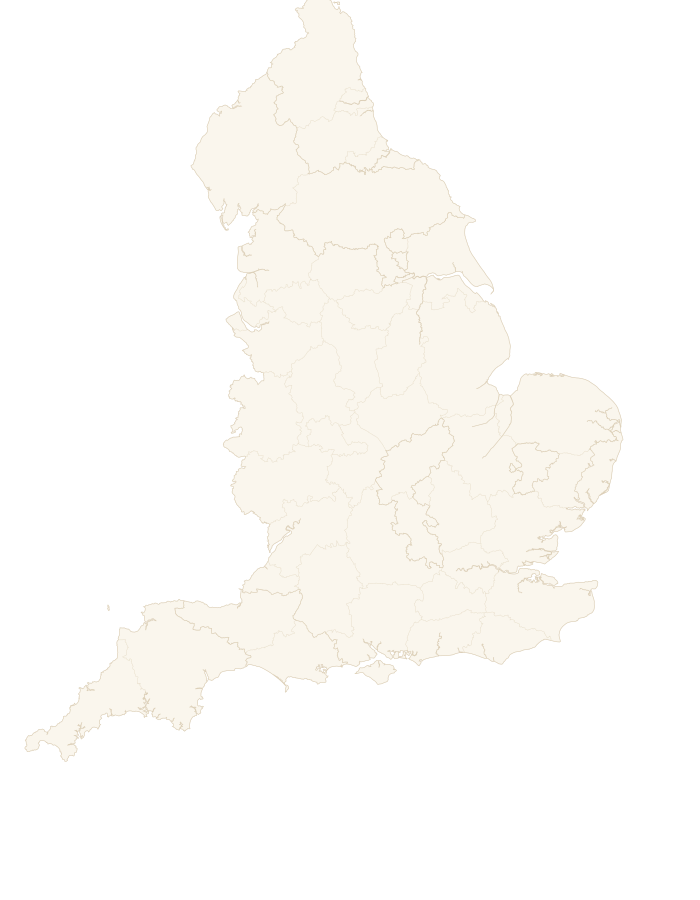
CoreHistoric reach
The seat of Ellis
Seat vacantChief
No one leads the Ellis community yet. When the movement opens, you can stand for its leadership, or help elect whoever does.
Current mission
No shared goal set yet. Once Ellis has leadership, it sets the public focus: a restoration, a gathering, a real-world project that helps its own.
The Ellis clan is being rebuilt. Join the waiting list for the movement today, and you help decide who leads it and what it does.
Help rebuild the Ellis clan →What does the Ellis name mean?
From the personal name Elias (the prophet Elijah, in mediaeval Latin Elias), which produced the Welsh form Elis and the English form Ellis. As a surname Ellis is overwhelmingly English in the modern census, though the Welsh patronymic ap Elis is a parallel source, the Welsh and English Ellis pools have converged over time. The patronymic Ellison ('son of Elias') is a derivative formation of the same root.
The history of Ellis
The prophet's name, Englished
Ellis descends from Elias, the mediaeval Latin form of the Hebrew prophet Elijah, and that one font-name produced the Welsh Elis, the English Ellis and the patronymic Ellison, 'son of Elias'. It came in with a wholesale change in what English people called their children: the Norman Conquest made Anglo-Norman the language of the ruling classes, and one clear sign of the shift was the use of names current in France instead of Anglo-Saxon ones. Official documents moved from Old English to Latin, and few given names used in England have English derivations at all: many of them are Hebrew or Greek.
A christening name is not yet a surname. Surnames are documented among England's barons in the eleventh century and family names are generally credited to the Domesday Book of 1086, taking hold among the nobility and gentry first. Christopher Daniell points to a case in 1140 as perhaps the first surname inherited across generations, and compulsory surnames were resisted in late mediaeval England because they were associated with taxes. By 1400 most English families had hereditary names anyway, and a man whose grandfather had been known as Elias's son was simply Ellis.
One fact follows from that, and it is the first an Ellis should know: the name does not describe a kindred. Of the boys born in London in 1510, 24.4 per cent were christened John, 13.3 per cent Thomas and 11.7 per cent William, so the second name did all the work of telling men apart. A byname from a father's christening name formed independently in every parish that had an Elias in it, and two Ellis families in neighbouring counties are likelier to be strangers than cousins. Richard Coates, who led the study behind the Oxford English Dictionary of Family Names in Britain and Ireland, calls such names patronymics: the ones that enshrined the father's name.
The ap that Wales gave up
Wales ran the older machinery longest. A Welshman was ap Elis, the son of Elis, and the name changed with every generation. England and Scotland had mostly settled into surnames by the fourteenth century; Wales did so after unification under Henry VIII in 1536. The same king, whose reign ran from 1509 to 1547, ordered that marital births be recorded under the father's surname, and a register built on that assumption is what a name that changes every generation cannot survive. The ap fell away and Elis flattened into Ellis.
The Welsh Ellises are their own strand of the story. Rowland Ellis (1650–1731) was a Welsh Quaker; a later Rowland Ellis (1841–1911) was a Welsh clergyman. T. E. Ellis (1859–1899) carried the name into Welsh politics. Clough Williams-Ellis (1883–1978) was a Welsh architect, his the compound form built from two family names rather than one. Mari Ellis (1913–2015) was a Welsh writer and a campaigner for women's rights, and Osian Ellis (1928–2021) a Welsh harpist.
The Salford soldier's son on the Rugby foundation
William Webb Ellis was born at Salford, Manchester, on 24 November 1806, eldest son of an officer of the Third Dragoon Guards. His father was killed at the Battle of Albuera in 1811, when William was four. His mother moved with her two boys to Rugby in Warwickshire for a reason: Rugby School was bound to educate the boys of Rugby parish free under the endowment Lawrence Sheriff made in his charter of 1567, and residence was the qualification.
He was admitted in 1816, at ten, as a Rugby foundationer, and stayed a decade. He appears in both halves of the school's 1820s record: Captain of Bigside in 1825–26, and winner of the open Major Scholarship to Brasenose College, Oxford, where he went up in 1826.
The ball picked up at Bigside, and the cup that carries his name
The foundation story of rugby football is a Bigside match in 1823, in which a sixth-form footballer of about seventeen took the ball in his hands and ran with it. It was set down long afterwards by the Rugby master and old boy Matthew Bloxam, in the school magazine The Meteor in December 1876, and it became the founding legend of the running game. Whether it happened just so has been argued over ever since; that the name attached to it belongs to an army widow's son from Salford is not in doubt.
Webb Ellis went a different way himself. He took his BA from Brasenose in 1829, was ordained an Anglican deacon in 1830, served as curate of St Clement Danes in the Strand from 1831, became Rector of Magdalen Laver in Essex in 1855, and made the Anglican tour of the Holy Land in 1871. He died at Menton on 24 January 1872, sixty-five years old, and was buried in the Cimetière du Vieux Château, where the Rugby Football Union historian Ross McWhirter rediscovered the grave in 1958. The Rugby World Cup trophy, commissioned in 1986, has been the Webb Ellis Cup since the first tournament in 1987.
Lancashire, Cheshire and the West Riding
The English weight of the name sits in the north-west: Lancashire, Cheshire and the West Riding of Yorkshire, with Greater Manchester and London the two places its record keeps returning to. The English Ellises are a scholarly and literary crowd rather than a landed one. Clement Ellis (1633–1700) was an English clergyman and Sarah Stickney Ellis (1799–1872) an English writer. Robinson Ellis (1834–1913) was a classical scholar, Edith Ellis (1861–1916) an author and women's rights activist, Lionel Ellis (1885–1970) a British military historian. Henry Havelock Ellis (1859–1939), born at Croydon, was a physician and social reformer whose Studies in the Psychology of Sex, published between 1897 and 1928, made him one of the founders of modern sexology. The name was current enough in its own right to be borrowed: Emily Jane Bronte's pen name was Ellis Bell.
A Puritan name on the Atlantic crossing
The biblical-prophet etymology made Ellis a common Puritan surname in the seventeenth century, and it carried the name heavily into the New England migration. One American landing place took it by accident: Ellis Island, the immigration station in New York Harbor that handled arrivals from 1892 to 1954, is named for Samuel Ellis, the Manhattan tavern-keeper who owned the island in the late eighteenth century. Arrivals who had never heard of him came into the country through a gate carrying an English patronymic.
In America the name settled into the professions and the arts. Job Bicknell Ellis (1829–1905) was a mycologist, Harvey Ellis (1852–1904) an architect and painter, Margaret Dye Ellis (1845–1925) and Leonora Beck Ellis (1862–1951) social reformers, and Ellen Deborah Ellis (1878–1974) a historian and political scientist. Bret Easton Ellis, born in 1964, brought the surname into contemporary American fiction with Less Than Zero and American Psycho.
Ellises of the wider world
Constance Ellis (1872–1942) was the first woman to graduate from the University of Melbourne as a Doctor of Medicine, in 1903. Francis Whyte Ellis (1777–1819) was a British civil servant in the Madras Presidency and a scholar of Tamil and Sanskrit.
It kept turning up in the games too, with no connection to the Rugby School boy. Harry Ellis, born in 1982, is an English rugby player, Jan Ellis (1942–2013) was a South African one, and Marc Ellis, born in 1971, a New Zealand rugby player turned businessman and broadcaster. Jill Ellis, born in 1966, is an English-born American soccer player and coach.
There was no Ellis chief, no Ellis castle and no single founder, only fathers called Elias, in Welsh parishes and English ones, whose sons were known by them until a clerk wrote it down for good. The foundation scholar at Rugby, the harpist, the Quaker, the reformers, the woman who took a Melbourne medical degree in 1903: each made something of a name that began as nothing more than a father's.
Champions of the Ellis name
The bearers whose lives are inseparable from this surname. Each has their own page, biography, achievements, geography, connection to the family.
Historic Places, Rebuilt
Explore the streets and seats the Ellis name knew, rebuilt with AI as they stood in history.
The castles of the homeland
The great strongholds of the homeland, look one up, see what it looked like in its prime, and recreate it to explore.
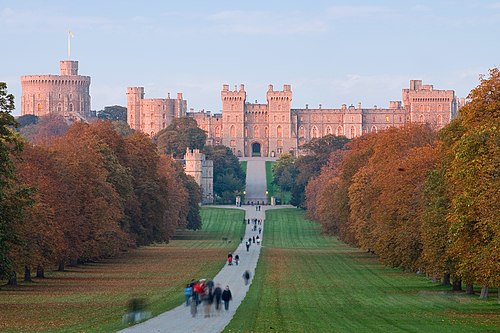 Windsor CastleRestored · prime 1820
 Tower of LondonRestored · prime 1285
 Bamburgh CastleRestored · prime 1904
All castles in England → · Strongest castles in England → · Castles of Europe
Play As Your Clan
Hold a real castle against whatever you choose to send at it, take a ship out in her own service years, or stand at the shoulder of someone the record remembers. The chronicler sets the scene; the deeds are yours.
Notable bearers of the Ellis name
- William Webb Ellis (1806–1872), Rugby School pupil whose 1823 act gave the founding myth of rugby football; the Rugby World Cup trophy is named the Webb Ellis Cup
- Henry Havelock Ellis (1859–1939), physician, sexologist
- Ruth Ellis (1926–1955), last woman executed in the United Kingdom
- Bret Easton Ellis (b. 1964), novelist (American Psycho)