Fisher
The fisher, and the Bishop of Rochester at Tower Hill.
- Origin
- North West, England
- Famous bearer
- Saint John Fisher (1469–1535), Bishop of Rochester, executed for refusing the Oath of Supremacy
- Register
- English family
The Fisher arms and country

Coat of armsArms of Fisher, Baron FisherBorne by Baron Fisher: the ennobled line of the name, not the name at large.MostEpic · CC0

- Coat of arms: Granted to an individual and inherited down that one documented line. These are the arms of particular families of the name, not of everyone who shares the surname.
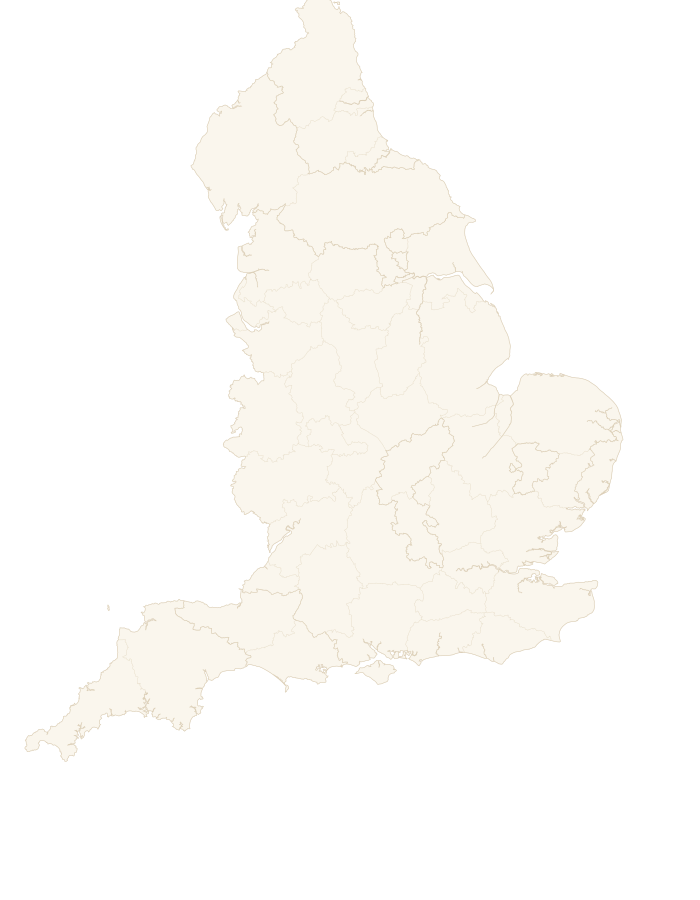
CoreHistoric reach
The seat of Fisher
Seat vacantChief
No one leads the Fisher community yet. When the movement opens, you can stand for its leadership, or help elect whoever does.
Current mission
No shared goal set yet. Once Fisher has leadership, it sets the public focus: a restoration, a gathering, a real-world project that helps its own.
The Fisher clan is being rebuilt. Join the waiting list for the movement today, and you help decide who leads it and what it does.
Help rebuild the Fisher clan →What does the Fisher name mean?
Occupational, fisherman or fish-monger. Middle English fisscher.
The history of Fisher
Fisscher, and the clerks who wrote the name down
Middle English fisscher named a man who took his living from water, at the net or over the fishmonger's board. The word reached parchment through other men's hands: under the Normans the language of official documents in England changed from Old English to Latin, and the writing was largely entrusted to clergy, since most laymen could not read: the word clerk descends from the Latin clericus, clergyman, for exactly that reason. A fisher who could not sign his own name still had it fixed for good in a churchman's roll.
Such names were not hereditary at first. English surnames were struck from a trade, a father, a birthplace or a bodily feature, and dropped as easily as taken; by 1400 most English families, and those of Lowland Scotland, carried one their children would keep. Lower down the social scale the fixing was resisted, because a permanent name was understood to mean tax. The University of the West of England's four-year survey, concluded in 2016, worked through the 45,602 surnames of its dictionary and found more than nine in ten of them native to Britain and Ireland; project leader Richard Coates gave Smith and Baker as the obvious occupational examples, and Fisher is that kind of name: work every parish needed, not one family's inheritance.
Silver darlings: the catch that founded towns
The fish that mattered to northern Europe was the herring, a staple since at least 3000 BC, eaten raw, fermented, pickled, salted or cured over smoke as kippers. It built places outright: herring prompted the founding of Great Yarmouth and of Copenhagen, and was critical to the medieval development of Amsterdam.
In Britain they were called the silver darlings. In Scotland the trade became a principal part of the economy of the North Sea coastal communities and peaked late in the 19th century, when the boom made Shetland and its town of Lerwick the herring capital of Europe. The surname's living clusters run up both English coasts (Cumbria, Lancashire, Merseyside and Cheshire on the west, York and the Yorkshire ridings and the East Riding on the east) while its older reach takes in nearly every shoreline the country has, from Cornwall, Devon and Dorset round to Kent, Essex, Suffolk, Norfolk and the fens, and London on the tidal Thames, with inland shires from Gloucestershire to Hertfordshire besides.
Brixham to Grimsby, and the fleet that swallowed the trade
By the early 19th century the fishers of Brixham in south Devon had exhausted the water they could reach. What they built to get further out (the Brixham trawler, sleek-hulled under a tall gaff rig, fast enough for long passages and stout enough to tow a heavy trawl in deep water) made large-scale ocean trawling possible for the first time and earned the village the title Mother of Deep-Sea Fisheries.
The design emptied the southern ports northward, to Scarborough, Hull, Grimsby, Harwich and Yarmouth. Grimsby, a small village before it, grew into the largest fishing port in the world by the middle of the century: Queen Victoria opened its twenty-five-acre Royal Dock in 1854 as the first modern fishing port, and of the 3,000-odd British trawlers in commission by the century's end almost a thousand worked out of it. By 1890 an estimated 20,000 men were working the North Sea. A name coined for one man with a net now belonged to crews on coal-fired ships out of sight of land.
The Bishop of Rochester, and the mitres that followed him
John Fisher of Beverley in Yorkshire was raised to the see of Rochester by Henry VII in 1504 and beheaded by Henry VIII in June 1535 for refusing the Oath of Supremacy. The office he would not surrender was the load-bearing one in the medieval Church: the episcopal office was the Church's primary source of authority, the secular clergy (priests bound to a diocese rather than a monastic rule) existed to assist the bishop, and only a bishop could ordain.
The name kept returning to that office. Cathrew Fisher (1871–1929) and Leonard Fisher (1881–1963) were English Anglican bishops, Leslie Fisher (1906–1988) an English Anglican priest, Geoffrey Fisher (1887–1972) a British religious leader; Jasper Fisher, recorded in 1639, was an English divine who also wrote for the stage. It crossed the Atlantic with the vocation attached: Ezra Fisher (1800–1874) went west as an American Baptist missionary and pioneer, Carl Anthony Fisher (1945–1993) was an American Roman Catholic bishop and Violet L. Fisher an American United Methodist bishop, churches that did not exist when the Bishop of Rochester refused the oath.
The name carries rabbinic office as well. Michoel Fisher (c. 1910–2004) was a British rabbi and Talmudic scholar and Yisroel Yaakov Fisher (1928–2003) an Israeli rabbi; Dudu Fisher, born 1951, is an Israeli cantor who also works as an actor and singer.
The Ceylon coffee country boy who boarded HMS Victory at thirteen
John Arbuthnot Fisher was born at Ramboda in the central Ceylon coffee country on 25 January 1841, eldest son of Captain William Fisher of the 78th Highlanders and Sophie Lambe. Sent home to relatives in London at six, he was nominated to the Royal Navy in July 1854, aged thirteen, by the seventy-eight-year-old Admiral Sir William Parker, the last of Nelson's captains, and joined HMS Victory at Portsmouth as a naval cadet.
He served in the China Wars in the Cantonese opium ports from 1859 to 1861, then took the technical route up: gunnery lieutenant of the Portsmouth gunnery school HMS Excellent from 1869 to 1872, where he wrote the first modern Royal Navy gunnery manual, and on to Director of Naval Ordnance in 1886. As Controller of the Navy from 1892 to 1897 he specified the service's first armoured cruisers and its modern pre-dreadnought battleships; he held the North America and West Indies Station from 1897 to 1899 and the Mediterranean Fleet through the Fashoda Crisis from 1899 to 1902; as Second Sea Lord he co-authored the Selborne Scheme that reorganised officer education. On 20 October 1904, in his sixty-fourth year, he became First Sea Lord.
Dreadnought, oil, and six hundred and twelve ships in nine months
Fisher's five and a half years as professional head of the Royal Navy turned a slowly modernising Victorian institution into an industrial fleet. He scrapped 154 obsolete vessels in his first three months, redrew the global station system to mass strength in home and Mediterranean waters against the German challenge, and laid down HMS Dreadnought in 1906: the all-big-gun, fast-armoured battleship that obsolesced every existing pre-dreadnought in every navy and became the prototype of all that followed. Between 1908 and 1914 he moved the navy off coal and onto oil, tying the British state to Persian Gulf supply for the next half century and putting the government's controlling stake into the Anglo-Persian Oil Company, later BP.
Created Baron Fisher of Kilverstone in November 1909, he left office in January 1910; Churchill recalled him on 30 October 1914 at seventy-three. The second tenure ran nine months and produced 612 new warships, the most rapid naval construction programme in British history, including five fast battle-cruisers and the first fleet submarines, alongside the North Sea blockade and convoy doctrine that strangled the German economy for three years. He resigned in May 1915 over the conduct of Gallipoli, retired to Kilverstone Hall in Norfolk and died on 10 July 1920. The Royal Naval College at Dartmouth, which he founded in 1905 to replace the Britannia training-ship, still trains the service's officers.
A test, an equation, and a name on the shopfront
Ronald Fisher (1890–1962) was a British statistician and geneticist, and a eugenicist. The surname is stamped across the working furniture of statistics (Fisher's exact test, Fisher's method for combining probabilities, the Fisher transformation) and across economics in the Fisher equation on interest rates, with Irving Fisher (1867–1947) an American economist and activist. Osmond Fisher (1817–1914) was an English geologist, C. Miller Fisher (1913–2012) a Canadian neurologist, Nellie Ivy Fisher (1907–1995) a London-born industrial chemist and Clarence Stanley Fisher (1876–1941) an American archaeologist.
In trade the name went onto the signage. Joshua Fisher (1707–1783) was an American merchant and cartographer and Hendrick Fisher (1697–1779) an American politician. Denys Fisher (1918–2002) was an English engineer and inventor; Avery Fisher (1906–1994), an American audio engineer, gave his name to the hi-fi line that became Fisher Electronics; Fisher Body built car coachwork. Zachary Fisher (1910–1999) founded the Fisher House Foundation, which builds lodging for families beside military hospitals.
Westminster, Canberra, and back to the water
In British public life the name ran through Parliament and Whitehall: Hayes Fisher, 1st Baron Downham (1853–1920) and Nigel Fisher (1913–1996), politicians; H. A. L. Fisher (1865–1940), historian, educator and politician; Warren Fisher, civil servant; Lettice Fisher (1875–1956), economist; Cicely Corbett Fisher (1885–1959), suffragist. It sailed with the emigrant ships into the parliaments at the other end. Margaret Fisher (c. 1874–1958) was the wife of Andrew Fisher, Prime Minister of Australia; Col Fisher (1923–2003) and Marie Fisher (1931–2008) were Australian politicians, Francis Fisher (1877–1960) a New Zealand one. Stanley Fisher (1867–1949) sat as Chief Justice of Ceylon, and Vilyam Genrikhovich Fisher (1903–1971) worked as a Soviet intelligence agent under the name the world knew him by, Rudolf Abel.
On stage and page it goes back to the 17th century: Payne Fisher (1616–1693), English poet, and Jane Lane, Lady Fisher (c. 1626–1689), English activist; Kitty Fisher, who died in 1767, a British courtesan; Clara Fisher (1811–1898), English actress. Later came Terence Fisher (1904–1980), British film director; Eddie Fisher (1928–2010), American singer; Carrie Fisher (1956–2016), American actress, writer and humorist; the Scots comedian Gregor Fisher and the folk singer Archie Fisher (1939–2025); the poet Roy Fisher (1930–2017), the writers M. F. K. Fisher (1908–1992) and Dorothy Canfield Fisher (1879–1958), and the cartoonist Bud Fisher (1885–1954).
In sport the name holds a corner of the snooker hall in Allison Fisher, Kelly Fisher and Mandy Fisher, a stretch of fairway in the English golfers Ross Fisher and Oliver Fisher, and a seat at the table in the Israeli bridge player Lotan Fisher. And it keeps returning to the water it came from: Brenda Fisher (1927–2022), the English long-distance swimmer, Aimee Fisher, the New Zealand canoeist, and Mel Fisher (1922–1998), the American treasure hunter who made a living from what the sea had kept.
Champions of the Fisher name
The bearers whose lives are inseparable from this surname. Each has their own page, biography, achievements, geography, connection to the family.
Historic Places, Rebuilt
Explore the streets and seats the Fisher name knew, rebuilt with AI as they stood in history.
The castles of the homeland
The great strongholds of the homeland, look one up, see what it looked like in its prime, and recreate it to explore.
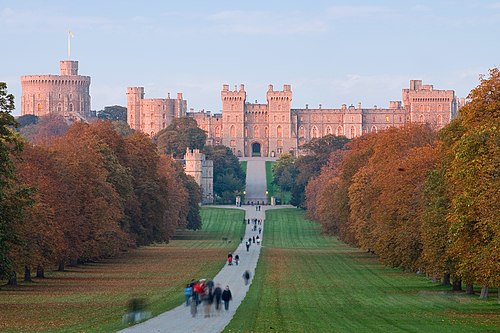 Windsor CastleRestored · prime 1820
 Tower of LondonRestored · prime 1285
 Bamburgh CastleRestored · prime 1904
All castles in England → · Strongest castles in England → · Castles of Europe
Play As Your Clan
Hold a real castle against whatever you choose to send at it, take a ship out in her own service years, or stand at the shoulder of someone the record remembers. The chronicler sets the scene; the deeds are yours.
Notable bearers of the Fisher name
- Saint John Fisher (1469–1535), Bishop of Rochester, executed for refusing the Oath of Supremacy