Fox
The fox, nickname that stuck.
- Origin
- West Midlands, England
- Famous bearer
- George Fox (1624–1691), founder of the Religious Society of Friends (Quakers)
- Register
- English family
The Fox arms and country

Coat of armsArmorial Bearings of the FOX family of Cowarne, HerefordshireBorne by the Cowarne line, one branch of the name rather than all of it.Rs-nourse · CC BY-SA 4.0

- Coat of arms: Granted to an individual and inherited down that one documented line. These are the arms of particular families of the name, not of everyone who shares the surname.
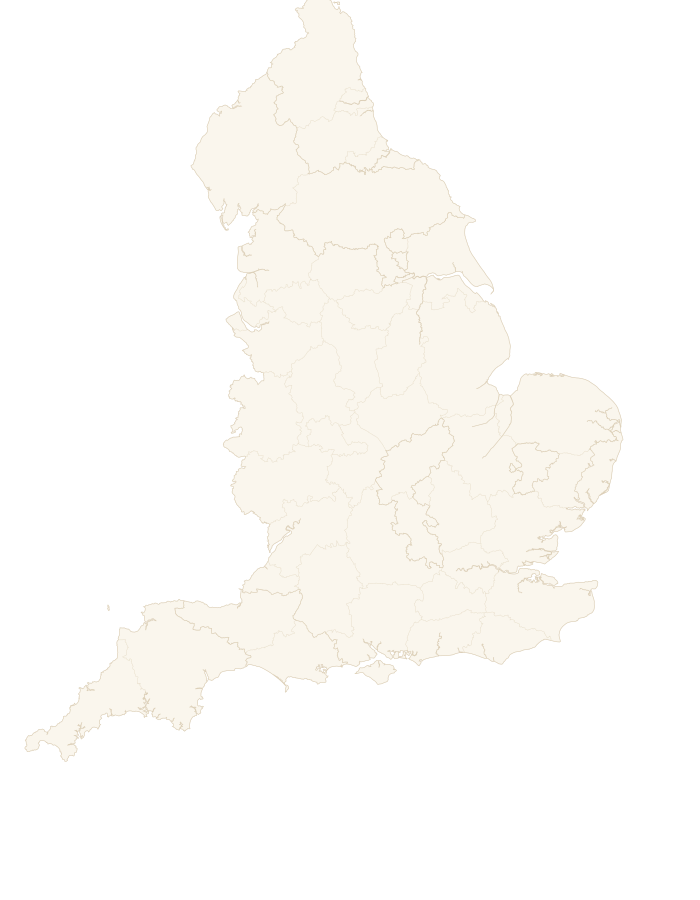
CoreHistoric reach
The seat of Fox
Seat vacantChief
No one leads the Fox community yet. When the movement opens, you can stand for its leadership, or help elect whoever does.
Current mission
No shared goal set yet. Once Fox has leadership, it sets the public focus: a restoration, a gathering, a real-world project that helps its own.
The Fox clan is being rebuilt. Join the waiting list for the movement today, and you help decide who leads it and what it does.
Help rebuild the Fox clan →What does the Fox name mean?
Nickname, the fox. Cunning or red hair in jest.
The history of Fox
The man they called the fox
Most English family names record the work a man did, or his father. Fox records neither. It belongs to the class onomastics calls cognominal surnames (names that began as nicknames), the broadest class of all. The English Fox comes from the Middle English word for the animal, given to a man who looked like the fox or was credited with its qualities: cunning, or red hair.
The byname worked because there were so few given names to go round. Of the boys born in London in 1510, 24.4 per cent were called John, 13.3 per cent Thomas and 11.7 per cent William. A parish with four Johns needed to tell them apart, and reached for whatever was visible across the market square. One John was red-headed, or sharp in a bargain. He became John the Fox, and nobody had to explain the joke.
The word is deeply Germanic: Old English fox, Proto-Germanic fuhsaz, and behind that a Proto-Indo-European root puḱ-, thick-haired, or tail. Both halves of the nickname were in the animal. The red fox, Vulpes vulpes, is the most widespread fox in the world, with an auburn pelt and a tail ending in a white marking, and its reputation for cunning made it prominent in folklore worldwide.
The century the nickname stopped being a description
For a long time a byname was not an inheritance. English surnames were formed with reference to some aspect of the individual (trade, father, birthplace, physical features) and were not necessarily passed on. The freezing began at the top: surnames are documented among the barons of England in the 11th century, the introduction of family names is generally attributed to the Domesday Book of 1086, and the practice was taken up first by the nobility and gentry.
By 1400 most English families, and those of Lowland Scotland, had adopted hereditary surnames, and Henry VIII, who reigned from 1509 to 1547, ordered marital births recorded under the father's surname. That is when Fox stops describing the man carrying it: the red-headed John's grandsons were Foxes whether fair, dark or grey. Richard Coates, who led the Oxford English Dictionary of Family Names in Britain and Ireland, cautioned that Short may have been an ironic nickname for a tall man. A village that called a man the fox may have meant he was clever. It may equally have meant he had just been caught.
Foulques, forest law and the other English Fox
Not every English Fox is a nickname. The surname can also be a corruption of the Norman personal name Folko or Foulques, in which case it is a patronymic in a nickname's clothes, the son or descendant of a man who bore it. The conquest made Anglo-Norman the language of the ruling classes and French names displaced Anglo-Saxon ones. Foulques arrived in the same tide.
The conquest left a less flattering inheritance too. The forest laws were introduced under the new regime, setting aside large sections of England as royal forest, and the man who took game off them paid for it. The animal fared no better, resented as a nuisance wherever it went after poultry, and fox hunting as an organised pursuit began in the 16th century. Red hair, quick wits and poaching fines: a Fox in a manor roll was rarely a neutral entry.
Ó Sionnaigh: the Irish name that was translated, not spelled
Ireland's Foxes are not a branch of England's. The main origin of the surname in Ireland is Ó Sionnaigh, a clan of the Irish Midlands who were rulers of Tethbae and later barons of Kilcoursey in County Offaly. They trace descent from Maine of Tethba, a son of Niall of the Nine Hostages, which places them among the Southern Uí Néill. Sionnach is the Irish for a fox: Ó Sionnaigh is the descendant of the fox, and the Ulster name Mac an tSionnaigh the son of the fox.
What makes this family unusual is the route the name took into English. Almost every Irish surname reached English by sound: a clerk heard the Irish spoken and wrote the nearest English letters, so the English form still looks like the Gaelic read aloud. Ó Sionnaigh went the other way. It was anglicised by meaning rather than by sound, and a lordship that had been Ó Sionnaigh for centuries walks into the English record as Fox, a name sharing not one letter with the original.
The route was catching, and it misfired. Mac Seancha, originally of County Sligo and now found chiefly in County Leitrim, was also turned into Fox, incorrectly, because Seancha was falsely believed to derive from Sionnach: a family handed an animal that was never theirs by a clerk translating a guess. Ireland holds a fourth Fox unconnected to any of them, de Bhosc, a Norman name from County Limerick.
George Fox on Pendle Hill, 1652
The most consequential English Fox of the seventeenth century held no land and commanded no men. George Fox (1624–1691) was a Leicestershire weaver's son, apprenticed to the trade, and in 1652 he climbed Pendle Hill in Lancashire and had there the vision of a great people to be gathered. Out of it came the Religious Society of Friends, the Quakers.
The vision was the easy part. Over the next four decades Fox preached and, harder, organised, building what began on a hillside into a fellowship structured to outlive him. It did: the Society of Friends is a worldwide Christian body that has continued in unbroken meeting ever since, begun by a tradesman's apprentice from the Midlands.
Ilchester, the Black Country and the world's 1,595th name
Some Foxes rose into land and title. Fox-Strangways, originally simply Fox, is the family name of the Earls of Ilchester, and Lane Fox a second double-barrelled line, compounds of the kind made when another family's surname was added as a condition of inheritance. The heartland today is the west Midlands and the West Country, from Birmingham and the Black Country through Shropshire and Gloucestershire into Devon and Cornwall, and historically across Lancashire, Cheshire, London and East Anglia too.
Fox is the 1,595th most common surname in the world, and no bearer should assume a line back to the barons of Kilcoursey, or be told the name is only a joke about hair. Most English Foxes descend from a man who was red-headed or quick-witted in a village with too many Johns; Irish Foxes descend from one of several unrelated Gaelic and Norman names that English flattened into a single word, one a real midland lordship of the Uí Néill.
Champions of the Fox name
The bearers whose lives are inseparable from this surname. Each has their own page, biography, achievements, geography, connection to the family.
Historic Places, Rebuilt
Explore the streets and seats the Fox name knew, rebuilt with AI as they stood in history.
The castles of the homeland
The great strongholds of the homeland, look one up, see what it looked like in its prime, and recreate it to explore.
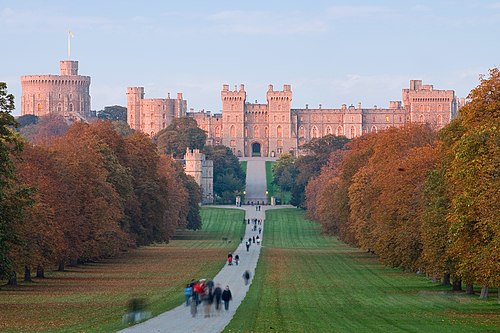 Windsor CastleRestored · prime 1820
 Tower of LondonRestored · prime 1285
 Bamburgh CastleRestored · prime 1904
All castles in England → · Strongest castles in England → · Castles of Europe
Play As Your Clan
Hold a real castle against whatever you choose to send at it, take a ship out in her own service years, or stand at the shoulder of someone the record remembers. The chronicler sets the scene; the deeds are yours.
Notable bearers of the Fox name
- George Fox (1624–1691), founder of the Religious Society of Friends (Quakers)