Gardner
also Gardiner, Gardener
The gardener, keeper of the manorial garden.
- Origin
- London, England
- Famous bearer
- Ava Gardner (1922–1990), actress (The Killers, The Barefoot Contessa)
- Register
- English family
The Gardner arms and country

Coat of armsArms of Gardner, Baron GardnerBorne by Baron Gardner: the ennobled line of the name, not the name at large.MostEpic · CC BY-SA 4.0

- Coat of arms: Granted to an individual and inherited down that one documented line. These are the arms of particular families of the name, not of everyone who shares the surname.
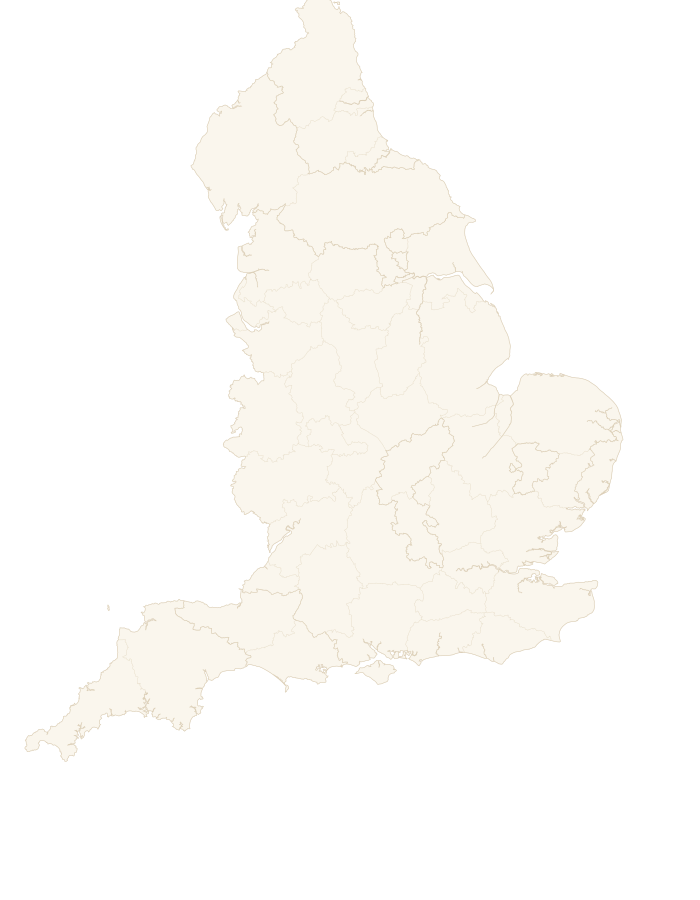
CoreHistoric reach
The seat of Gardner
Seat vacantChief
No one leads the Gardner community yet. When the movement opens, you can stand for its leadership, or help elect whoever does.
Current mission
No shared goal set yet. Once Gardner has leadership, it sets the public focus: a restoration, a gathering, a real-world project that helps its own.
The Gardner clan is being rebuilt. Join the waiting list for the movement today, and you help decide who leads it and what it does.
Help rebuild the Gardner clan →What does the Gardner name mean?
Occupational, the gardener, the keeper of a garden or orchard. The Gardner family name fixed in the late mediaeval period in the south of England, where the manorial garden (the gardinarius's responsibility) was a meaningful office on a estate. Spelling variations Gardner (with or without the second e), Gardener, and Gardiner are all the same surname; the Gardiner spelling is more common among Norfolk and Suffolk lines.
The history of Gardner
Gardinier, the Norman word for a walled plot
The Conquest put Anglo-Norman, a northern dialect of Old French, in the mouths of England's ruling class, and roughly eight thousand Normans and other continentals settled among the conquered. Their vocabulary came with them, along with the given names William, Robert and Richard that displaced the Anglo-Saxon stock. One of the imported words was gardinier, the modern French jardinier: the man who kept the enclosed plot. Middle English took it as gardener, and the clerks who kept the rolls used it as a description of a man's work rather than of his family. William le Gardinier appears in Rutland in 1199 in exactly that sense.
The label runs earlier still, to Anger Gardiner in Lincolnshire before 1166, and then thickens in a cluster of 1273 entries: Geoffrey le Gardiner in Oxfordshire, Richard le Gardiner in Cambridgeshire, Ralph le Gardener in Huntingdonshire. Walter le Gardiner is recorded in London in 1292. The tell in every one of them is the little French particle le. It marks a description a clerk could have swapped for another if the man had changed trade, and it disappears from the record only when the word stops describing and starts inheriting.
That hardening belongs to the fourteenth century. Surnames in England began as references to a trade, a father, a birthplace or a physical feature and were not necessarily passed on; by 1400 most English families and most of Lowland Scotland carried a fixed hereditary name. Compulsory naming was resisted in late-medieval England for the obvious reason that a named household was an easier household to tax. A minority of onomasticians read Gardner instead from Old English gar-dyn, a bearer of arms, whose roots are shared with the Gaelic gairden, an enclosed or fortified place; in Ireland after the Conquest the Gaelic form of the name was Mac Gairnéir, gardener.
The Saracen's head the Gardiners keep on their shield
Descendants of the Crusader William Gardiner, son of Benoni and son in turn of George of Newport, hold a tradition that accounts for the severed Saracen's head on the family arms. At Acre in 1191, the story runs, William chopped through the shoulder of a Saracen who was in the act of killing Richard Coeur de Lion, and won his crest on the spot. The head has stayed on the shield ever since, a battlefield explanation attached to a name that otherwise means a man who pruned fruit trees.
The tradition does a job that heraldry often asks of family memory. A crest wants an origin story with a king in it, and an occupational surname supplies none: nobody won arms for tending a compost heap. The Acre account converts a manorial servant's title into a crusading honour in a single stroke, and it does so through a named line (Benoni, George of Newport, William) rather than through a vague ancestor, which is what has kept it repeatable across generations of Gardiner descendants.
Both readings of the name survive side by side in the record. Most sources attest the plain occupational derivation from Old Norman gardinier; a smaller school attests the warrior sense of gar-dyn. The arms belong squarely to the second reading, and the family's story of Acre is the bridge thrown between the two. It is the one piece of the Gardner inheritance that argues rather than simply describes. Everything else the name carries (the rolls, the spellings, the county distributions) is administrative residue; the Saracen's head is a claim, made by a family about itself, and it has been maintained by descendants for the eight centuries since Acre.
Gardner, Gardiner, Gardyner: one name and several clerks
The name has been written Gardyner, Gardener, Gardenar, Gardinier, Gardiner and Gardner, and the last two are the forms that survived in bulk. They are one surname, not two families: the second e is the whole difference, and which of them a line carries is generally a matter of which parish clerk wrote it down. The Gardiner spelling runs heaviest through the Norfolk and Suffolk lines, while Gardner dominates elsewhere in the southern counties.
The medieval concentrations were Essex, Lancashire, Warwickshire and Perthshire: English, Scottish and Irish ground at once, which is why the surname is claimed by all three. The modern weight of the name sits on London and Norfolk, with the older mass in Suffolk and Essex behind it. Gardner now ranks among the hundred commonest English surnames, distributed broadly across the south rather than pooled in one county, which is the signature of a manorial occupational name rather than a territorial one.
A four-year study led by the University of the West of England, completed in 2016 and published as the Oxford English Dictionary of Family Names in Britain and Ireland, worked through sources from the eleventh century to the nineteenth and found that over ninety per cent of its 45,602 surnames are native to Britain and Ireland. Its project leader, Richard Coates, set out the classes plainly: occupational names such as Smith and Baker, place names such as Hill and Green, patronymics such as Jackson. Gardner sits in the first class with a difference worth noting: the smith served a village, but the gardener served an estate.
Grafting, deadheading and the early-spring seedbed
The work that named the family is a year, not a season. Planting out flowers and other stock, weeding, pruning, grafting, deadheading, mixing and preparing insecticides and other products for pest control, and tending the garden compost: that is the labour the word gardinier covered, and none of it stops. Young plants were started from seed in early spring for transplanting later, which meant the man responsible had to be in place months before anything was visible to the household that employed him.
Weeds are the reason the post existed. They thrive at the expense of the more refined edible or ornamental plants, and the gardener's task was to control them by physical or chemical means before they reached the mature growth at which they turn harmful to the cultivated stock. That is continuous, skilled, unglamorous attention rather than day labour hired at harvest. A landowner who wanted fruit and vegetables year on year needed a man who never left, and a man who never left acquired a title that his neighbours used for him.
The word stretched across a wide social range even then, and still does: the hobbyist in a residential garden, the householder supplementing the family's food from a small vegetable plot or orchard, the employee in a plant nursery, and the head gardener running a large estate. Gardening has a fair claim to being the oldest occupation of all. In the English manorial south, where the garden was a real office on the estate rather than a private amusement, that office was worth naming a man for, and the name multiplied everywhere the manors were thickest.
Versailles, Stowe and the century the gardener drew the plan
In eighteenth-century Europe the country estates were refashioned by landscape gardeners into formal gardens or landscaped park lands: Versailles in France, Stowe Gardens in England. The trade split in the process. The designer creates the plan, provides directions and supervision during construction, and manages establishment once the ground is broken; the gardener is the one with the skill to hold the design afterwards. Garden design came to be counted an art in most cultures, distinct from the maintenance that keeps it alive.
The designer's problem is one of given conditions: soil, location and climate, ecological and geological processes, all fixed before a single plant is chosen, with the choice of plants made to suit them. Vita Sackville-West, Gertrude Jekyll and William Robinson were garden designers as well as working gardeners, and the themes their successors handle (perennial, butterfly, wildlife, Japanese, water, tropical, shade) still descend from that division. The modern end of the line is the landscape architect laying out residential estates, public parks and parkways, campuses and corporate office parks, certified through the Association of Professional Landscape Designers.
A few bearers took the name back to the plants themselves. Charles Austin Gardner (1896–1970) was a Western Australian botanist, working a flora on the far side of the world from the manor gardens that made the surname. Nathaniel Lyon Gardner (1864–1937) worked the American side of the same discipline. William Gardiner (1808–1852) is the strangest of them, a Scottish poet, botanist and umbrella maker at once, which is roughly the shape of a nineteenth-century provincial naturalist's life.
Two Lord Chancellors, four hundred years apart
The highest office the name has held, it has held twice. Stephen Gardiner (c. 1493–1555) was bishop and Lord Chancellor of England, holding the great seal in the same century in which the surname finished settling into its handful of spellings. Gerald Gardiner, Baron Gardiner (1900–1990), held the same office as Lord Chancellor of the United Kingdom four hundred years later. Nothing links the two men but the post and the name, and the name is the older of the two institutions.
Around them stands a line of scholars. Bernard Gardiner (c. 1668–1726) was an English academic administrator; Samuel Rawson Gardiner (1829–1902) the historian; Sir Alan Gardiner (1879–1963) the English Egyptologist. Percy Gardner (1846–1937) and Ernest Arthur Gardner (1862–1939) were both English classical archaeologists, and Jane F. Gardner (1934–2023) a British academic of the following century. For a name that began in the kitchen garden, it has an unusual density of readers of dead languages.
The American branch went into law and elected office. Addison Gardiner (1797–1883) was Lieutenant Governor of New York and a judge; Asa Bird Gardiner (1839–1919) a lawyer and politician; James Knoll Gardner (1940–2017) a judge. In politics the name reached the state houses repeatedly: Henry J. Gardner (1819–1892) and Augustus Peabody Gardner (1865–1918) in Massachusetts, Oliver Max Gardner (1882–1947) and Fay Webb-Gardner (1885–1969) in North Carolina, Frederick D. Gardner (1869–1933) in Missouri, Booth Gardner (1936–2013) in Washington.
New York, Rhode Island and the men who bought land with the name
The surname crossed the Atlantic hard between the sixteenth and eighteenth centuries, landing heaviest in New England and Maryland. Lion Gardiner (1599–1663) was the English settler who put the name into New York, and George Gardiner, born between 1608 and 1615 and dead about 1677, established it in Rhode Island in the same generation. Both arrived while the colonies were still being laid out rather than filled in, which is why the Gardiner spelling sits at the front of the American record for this name.
Silvester Gardiner (1707–1786) turned the name into a business: a physician who became a land developer, working the frontier of colonial property at the moment when land, not office, was the fastest route to standing. John Sylvester John Gardiner (1765–1830), Welsh-born and American by career, took the clerical road instead. Archibald Gardner (1814–1902) carried it west a century later as a pioneer, businessman and millwright, and a millwright is close kin to a gardener, a man employed for a skill that a settlement cannot do without.
The name spread through the rest of the English-speaking world on the same wave. Fred Gardiner made his career in Toronto politics and James Garfield Gardiner (1883–1962) in Canadian national politics. Australia took Gavin F. Gardner (1848–1919), co-founder of the Adelaide Stock Exchange, and Walter Everson Gardner (1873–1943), a mine manager; and, less respectably, Frank Gardiner, the Scottish-born bushranger who worked the colonial roads.
The Mountjoy title and the Countess of Blessington
Ireland took the name early (the Gaelic rendering after the Norman Conquest was Mac Gairnéir) and by the eighteenth century the Gardiner spelling stood well up in Irish public life. Luke Gardiner (1690–1755) was an Irish politician; Charles Gardiner (1720–1769) an Irish politician and landowner; Luke Gardiner, 1st Viscount Mountjoy (1745–1798), politician and property developer at once, which is the combination that turns ground into rent. The name ran from the parliamentary benches to the title deeds, which is as far from a manorial kitchen garden as an occupational surname can travel while still being about land.
The name reached an earldom at the end of that run. Charles Gardiner, 1st Earl of Blessington (1782–1829), stands in the record as a socialite rather than an administrator, and the countess who shared his title became the more durable figure: Marguerite Gardiner, Countess of Blessington (1789–1849), the Irish writer, who outlived him by twenty years. Of all the Gardiners in the record, she is the one whose standing rests on what she wrote rather than on an office she was given.
Elsewhere the name stayed in ordinary public life on both sides of the Irish Sea. Allen Francis Gardiner (1794–1851) was an English missionary; Barry Gardiner, born in 1957, and Sir George Gardiner (1935–2002) sat in the modern British Parliament from opposite directions, as did Antony Gardner (1927–2011) and Trixie Gardner (1927–2024), a British dentist before she was a politician. Muriel Gardiner practised psychiatry in America, and Jane Gardiner taught as a schoolmistress and grammarian.
The Finchley schoolmaster's daughter who took the Merton chair
Helen Louise Gardner was born at Finchley in north London on 13 February 1908, the only daughter of the headmaster of the Stationers' Company's School and a teacher. She went to the North London Collegiate School, sat the London Matriculation at seventeen and took first-class results in all six subjects, and was admitted on an open scholarship to St Hilda's College, Oxford, in 1926. She read English Language and Literature under the post-Quiller-Couch Honours School syllabus and sat her finals in 1929.
She came out with a starred First, the top English degree of her Oxford year, and became the first woman to win the Charles Oldham Shakespeare Prize in the same twelve months. Those two results launched everything after. A junior lectureship at Royal Holloway College followed in 1934, and in 1941 she returned to Oxford on a tutorial fellowship at St Hilda's; the years from 1941 to 1975 were the productive register of her working life. The Art of T. S. Eliot (1949) was the foundational post-war academic study of the poet, followed by The Business of Criticism (1959) and Religion and Literature (1971).
Her most-cited work was editorial. John Donne: The Divine Poems (1952) and The Elegies and the Songs and Sonnets (1965) remained the standard editions of the Donne canon for half a century, and her work on Four Quartets and Eliot's collected critical prose produced the reference edition of that canon too. She was appointed Merton Professor of English Literature at Oxford in 1966, held the chair for nine years, and was created DBE in 1967. The New Oxford Book of English Verse 1250–1950 (1972) set the late-twentieth-century revision of the English poetic canon. She died at Oxford on 4 June 1986 and is buried at Holywell Cemetery, having carried a Norman-French gardener's name from a Finchley schoolmaster's house to the senior chair of the discipline.
A witch trial, a witch religion, and a man who climbed office blocks
Gerald Gardner (1884–1964) is the English occultist named as the founding father of Wicca, the modern religion that took the word witch and turned it from an accusation into a self-description. The name had already stood on the other side of that transaction: Jeane Gardiner of Bermuda is remembered as an alleged witch, which is to say as a woman the charge was made against. One Gardner faced the accusation and another built a faith out of it, and nothing connects the two but four centuries and a shared surname.
There is a criminal seam too. Frank Gardiner ended a Scottish start as an Australian bushranger; Roy Gardner (1884–1940) was an American bank robber and outlaw. Harry Gardiner (1871–c. 1933) was neither criminal nor quite respectable but something odder again: the American buildings climber, a man whose recorded occupation was going up the outsides of tall buildings. The name is common enough that it turns up in every register a country keeps, which is the practical consequence of belonging to a trade every estate employed.
The making trades kept the name too. Lawrence Gardner, who died in 1850, was the British engineer who founded L Gardner and Sons Ltd and put the surname on a company nameplate. Daniel Gardner (1750–1805) painted, Diana Gardner (1913–1997) was an English wood engraver and writer, Clive Gardiner (1891–1960) an artist, illustrator and designer, and Eve Gardiner (1913–1992) an English beautician and make-up artist whose craft is the same instinct applied to a face.
Martin, Howard and the Gardners of the American mind
Two American Gardners shaped how a general reader thinks. Martin Gardner (1914–2010) was an American mathematics and science writer who was also a working magician, a combination that let him write about proof and about deception with the same hand. Howard Gardner, born in 1943, is the American psychologist whose name is the one most non-specialists can attach to the study of the mind. The surname simply landed twice in the same business within one generation.
The scientific bench under them is deep. Meredith Gardner (1912–2002) was an American linguist and cryptographer, the two disciplines that meet in code-breaking; Burleigh B. Gardner (1902–1985) an anthropologist, Milton Eugene Gardner (1901–1986) a physicist, Sheldon Gardner (1934–2005) a psychologist, Lauren Gardner an epidemiologist and Cynthia Gardner a geologist and volcanologist. Crispin Gardiner (born 1942) carried the other spelling into New Zealand physics, and John Stanley Gardiner (1872–1946) into British zoology.
In letters the name goes wide rather than deep in any one form. Isabella Gardner (1915–1981) was an American poet; Leonard Gardner (born 1933) a writer; Herb Gardner (1934–2003) a cartoonist, playwright and screenwriter; James Alan Gardner (born 1955) a science-fiction author and Craig Shaw Gardner (born 1949) another author of the name. Elizabeth Jane Gardner (1837–1922) painted, Eugene C. Gardner (1836–1915) designed buildings, Matilda Hall Gardner (1871–1954) campaigned for the vote, and on the English side Alfred George Gardiner (1865–1946) was a journalist and essayist and Wrey Gardiner (1901–1981) a writer, poet, editor and publisher.
A flying ace, a Victoria Cross and two men in orbit
The name has a military record out of proportion to its peaceable meaning. Cecil Gardner (1889–1918) was an English flying ace of the First World War and died in the year the war ended, at twenty-nine. Philip John Gardner (1914–2003) was an English recipient of the Victoria Cross. James Alton Gardner was awarded the Medal of Honor in the Vietnam War and was dead at twenty-three, in 1966. Behind them stands James Gardiner (1688–1745), a Scottish soldier of the British Army.
Two Gardners went to orbit within the same programme. Dale Gardner (1948–2014) flew the Shuttle and made the first untethered spacewalks in 1984; Guy Gardner (born 1948), born the same year, flew as a Shuttle astronaut in the same era. For a surname that began with a man responsible for a walled plot of ground, having two bearers working outside a spacecraft in the same decade is the widest the name has travelled from its own meaning.
Sport and public life fill out the rest. Maureen Gardner (1926–1974) was a British sprint hurdler, Teddy Gardner (1922–1977) an English boxer and Rulon Gardner (born 1971) an American Greco-Roman wrestler; Larry Gardner (1886–1976) and Brett Gardner (born 1983) played American baseball two generations apart. Wayne Gardner (born 1959) and Frank Gardner (1931–2009) raced motorcycles and cars for Australia, and Charlie Gardiner (1904–1934) played Canadian ice hockey after a Scottish birth. Sir Roy Gardner (born 1945) chaired Manchester United, Frank Gardner (born 1961) reports for British television and Sue Gardner (born 1967) ran the Wikimedia Foundation.
Two Gardiners reached further still. Sir John Eliot Gardiner, born in 1943, is an English conductor of international standing, and Henry Balfour Gardiner (1877–1950) an English composer of the generation before him. Toni Avril Gardiner (born 1941), born in Britain, became Princess Muna al-Hussein as the second wife of King Hussein of Jordan, a manorial gardener's surname carried into a royal house in Jordan.
Champions of the Gardner name
The bearers whose lives are inseparable from this surname. Each has their own page, biography, achievements, geography, connection to the family.
Historic Places, Rebuilt
Explore the streets and seats the Gardner name knew, rebuilt with AI as they stood in history.
The castles of the homeland
The great strongholds of the homeland, look one up, see what it looked like in its prime, and recreate it to explore.
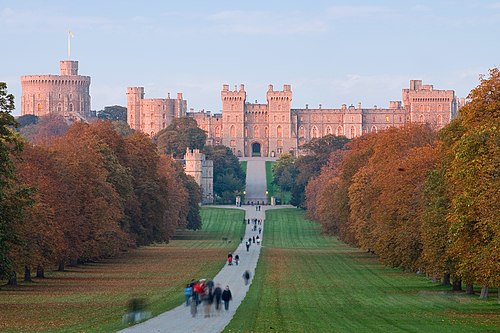 Windsor CastleRestored · prime 1820
 Tower of LondonRestored · prime 1285
 Bamburgh CastleRestored · prime 1904
All castles in England → · Strongest castles in England → · Castles of Europe
Play As Your Clan
Hold a real castle against whatever you choose to send at it, take a ship out in her own service years, or stand at the shoulder of someone the record remembers. The chronicler sets the scene; the deeds are yours.
Notable bearers of the Gardner name
- Ava Gardner (1922–1990), actress (The Killers, The Barefoot Contessa)
- Erle Stanley Gardner (1889–1970), Perry Mason novelist
- Isabella Stewart Gardner (1840–1924), art collector, museum founder
- Dale Gardner (1948–2014), NASA astronaut