Harris
Harry's son, the West Country spelling, and the Welsh chapel surname of Howell Harris.
- Origin
- South West, England
- Famous bearer
- Howell Harris (1714–1773), Welsh Methodist Revival leader, founder of the Trefeca community
- Register
- English family
The Harris arms and country

Coat of armsEscutcheon of Baron HarrisBorne by Baron Harris: the ennobled line of the name, not the name at large.CC BY-SA 4.0 
Coat of armsHarris of Peckham EscutcheonBorne by the Peckham Escutcheon line, one branch of the name rather than all of it.Robin S. Taylor · CC BY-SA 4.0


- Coat of arms: Granted to an individual and inherited down that one documented line. These are the arms of particular families of the name, not of everyone who shares the surname.
This name is thick on both sides of the border, so the map shows the whole of Britain and Ireland with every region it touches highlighted. It is a regional pattern for the surname, not proof that your branch lived in each place.
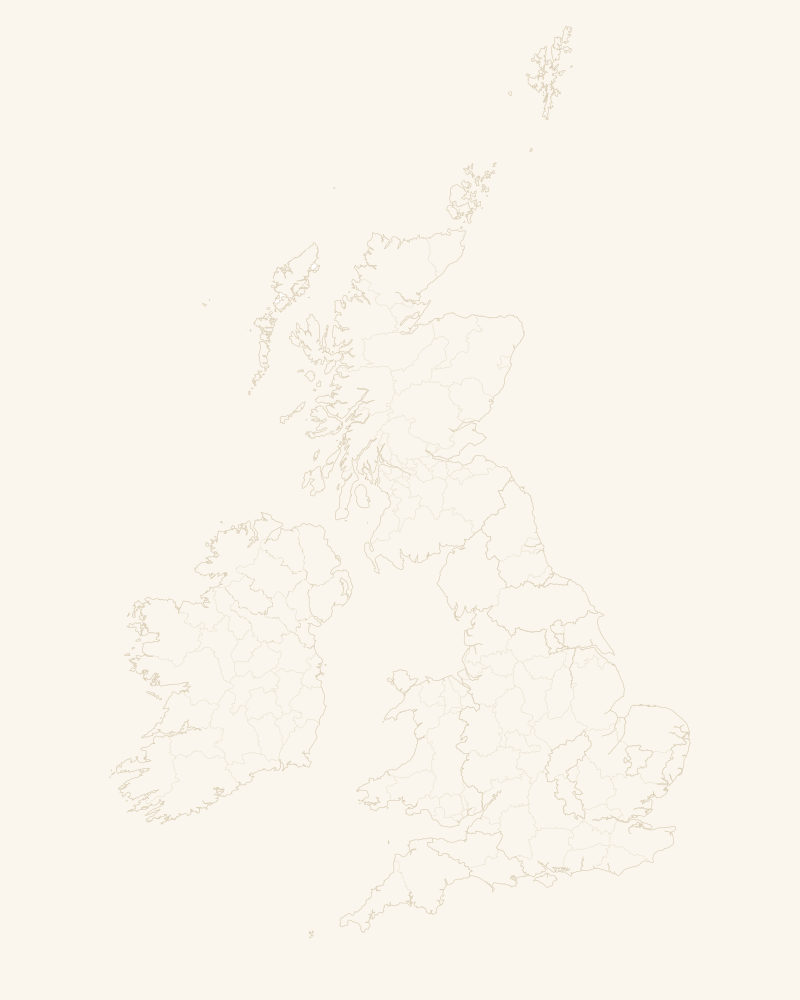
CoreHistoric reach
The seat of Harris
Seat vacantChief
No one leads the Harris community yet. When the movement opens, you can stand for its leadership, or help elect whoever does.
Current mission
No shared goal set yet. Once Harris has leadership, it sets the public focus: a restoration, a gathering, a real-world project that helps its own.
The Harris clan is being rebuilt. Join the waiting list for the movement today, and you help decide who leads it and what it does.
Help rebuild the Harris clan →What does the Harris name mean?
Son of Harry, southwestern Harry-son; overlaps Welsh ap Harry / Parry territory in border registers. The Welsh-speaking Brecknockshire form, ap Harry, is the source of the Carmarthenshire- and Brecon-Harris pool, which is the same surname as the south-western English-Harris pool by the same patronymic-from-Henry mechanism, but historically distinct in lineage.
The history of Harris
Harry, the king's name worn by ploughmen
Harris begins with a borrowed name. Henry came into England as Henri, carried over by the Normans after the Conquest of 1066, as part of a wholesale replacement of the country's naming stock. Anglo-Norman displaced Old English among the ruling class, and one of the clearest signs of the shift was that people began using names common in France instead of Anglo-Saxon ones. Only an estimated 8,000 Normans and other continentals settled in England, but the names they brought (William, Robert, Richard, Henri) spread far beyond those families, because names follow lords and godfathers rather than blood.
Henry then became a king's name and stayed one, from Henry I, whose law book the Leges Henrici Primi still recorded slaveholding as legal, to Henry VIII, who reigned from 1509 to 1547. A king's name is a name every parish hears, and within a few generations it belonged to men who would never see a court. In ordinary speech it wore down to its spoken form: Harry. That is the whole distance the surname travels. Harris is Harry's, and Harry is Henry as an English mouth actually said it.
It is worth grasping how few names there were to go round. Among London boys born in 1510, John took 24.4 per cent of the total, Thomas 13.3 and William 11.7. Where a third of the men in a village answered to the same few names, a second identifier was necessity, not decoration, and the readiest one to hand was the father.
The -s that means son of
Harris is a patronymic surname formed from the personal name Harry plus the genitive ending -s. The construction is possession put to work: Harry's. Harry's son, Harry's boy, Harry's household. Patronymics are the oldest and commonest class of surname there is, and English produced them in bulk: Richardson, Williams, Jackson, Wilson, Roberts, Evans, Davies, Edwards, Watson. Harris sits squarely in that company.
The same father's name threw off more than one surname, and this is where the family splits. The -s genitive gave Harris; the fuller -son form gave Harrison. Both say the same thing about the same man, and which one a family carried came down largely to which clerk wrote them and where: south-western counties favoured the -s ending, northern registers preferred -son. There is no difference of rank or lineage buried in it, only the habits of the men holding the pen.
One complication the name scholars flag: English servants often took an employer's name with an s added, so Roberts could belong to either the son or the servant of a man called Robert. The same door stands open for Harris.
The century the name stopped changing
For a long stretch a byname was not yet a surname. Early English surnames referred to something about the individual (his trade, his father's name, where he was born) and were not necessarily inherited. A Harry's son called himself Harris; his own son, John, might be recorded as Johnson. The name moved each generation, which is why so few surnames now cover so many people: only when the movement stopped did one man's byname become a whole descent's property.
Surnames are documented among the barons in England in the 11th century, and the introduction of family names is generally attributed to the preparation of the Domesday Book in 1086. They began with the nobility and gentry and worked slowly downwards, until by 1400 most English families, and those of Lowland Scotland, had hereditary surnames. That is the moment Harris became a family name rather than a description.
Ordinary people did not necessarily welcome it: in the late Middle Ages mandatory surnames were resisted in England because they were associated with taxes. The state kept pushing, and Henry VIII ordered that marital births be recorded under the father's surname, the rule that has carried Harris down the male line ever since.
ap Harri, and why Harris is a Welsh name
The other road to Harris runs through Wales, and it is why the name is not simply an English one. Welsh naming worked by ap, meaning son of: a man was ap Harri, Harry's son, and his own son was ap something else again. When Wales was brought under unified administration with England under Henry VIII in 1536, English-style fixed surnames followed and the ap forms collapsed into them. Ap Harri gave Parry and Perry by swallowing the p into the name; it also gave Harries and Harris outright.
That is why Harris is most frequent in South Wales, and why it stood as the 22nd most common surname in Wales in 2020. The Brecknockshire and Carmarthenshire pool is dense, and it reaches the same word as the south-western English pool by the same mechanism (a patronymic from Henry) while being historically distinct in lineage. A Welsh Harris and a Devon Harris are not cousins, and Harries, Parry and Perry are relatives of the name rather than strangers to it.
Howell Harris and the Trefeca community
The most consequential bearer of the name in Wales was Howell Harris (1714–1773) of Trefeca in Brecknockshire. Alongside Daniel Rowland of Llangeitho he was the principal lay-evangelical leader of the Welsh Methodist Revival of the 1730s and 1740s, a movement that reached the Welsh-speaking poor in their own language and remade the religious life of the country.
In 1752 he founded a community at Trefeca, which became the most influential Welsh dissenting community of the eighteenth century: a working settlement where members lived, farmed and printed together under a shared discipline, and an institutional home for Welsh nonconformity at the moment it needed one. Welsh Methodism has held Harris as a founding name ever since, spoken in the same breath as Williams, Edwards and Roberts.
For a reader whose Harrises left South Wales in the nineteenth century, and went on to America, Australia or New Zealand, that chapel tradition is very often the culture they carried with them.
The Irish Harrises
Harris is also found in Ireland, by two routes. The larger is settlement: the name came over largely as a result of the Plantation of Ulster, carried by English and Welsh planter families who kept it. The smaller is translation: Irish Harris in some cases represents an anglicised form of the Gaelic name Ó hEarchadha, a native family renamed into the nearest English-sounding word by clerks who would not write Irish.
The best-known modern bearer of the Irish name is the actor Richard Harris, born in Limerick, whose performances in This Sporting Life (1963), Camelot (1967), The Field (1990) and Unforgiven (1992) brought him two Academy Award nominations for Best Actor, and whose late role as Albus Dumbledore in the first two Harry Potter films introduced the name to a third global audience.
The island of Harris is a different name entirely
There is a Harris in the Outer Hebrides (the Isle of Harris, the southern part of Lewis and Harris) and a second Harris on the island of Rum. Because the spelling matches exactly, families with the surname routinely assume a Hebridean origin, and it is a false trail. Harris the surname is documented as an English and Welsh patronymic from Harry; the island is a place name of separate origin that arrived at the same string of letters.
That is worth saying plainly, because tartan and clan merchandising has always been happy to sell a Hebridean story to anyone whose name looks Scottish. If your Harrises came out of Devon, Cornwall, Somerset, Gloucestershire or Brecknockshire, where the surname is thickest, the island is scenery rather than ancestry.
Barons, and 624,252 Americans
The name rose as well as spread. Baron Harris was created in the Peerage of the United Kingdom in 1815 for General Sir George Harris, and the Earls of Malmesbury, created in 1800 for the diplomat Sir James Harris, carry Harris as their family name. Four Harris baronetcies exist besides, two in the Baronetage of England and two in that of the United Kingdom.
In the United States the surname is enormous. At the 2010 census Harris ranked 25th most frequent in the country with 624,252 bearers, and Harrison 141st with 181,091, the two halves of one patronymic, still travelling together centuries after they left England and Wales. Not all of that number descends from European migration: many African American family names have their origins in slavery, where a surname was assigned by an enslaver rather than inherited down a European line. Those lineages have their own history, and it is not the line this atlas traces.
For the Harrises whose descent does run back through Devon and Bristol, Brecon and Carmarthen, the name is a plain and durable thing: not an estate, not a trade, but a father called Harry, a king's name in a working man's mouth, repeated in enough parishes, often enough, to become one of the commonest surnames in England and Wales.
Champions of the Harris name
The bearers whose lives are inseparable from this surname. Each has their own page, biography, achievements, geography, connection to the family.
Also found in
The Harris name has substantial historical presence beyond England. See it on Wales.
Historic Places, Rebuilt
Explore the streets and seats the Harris name knew, rebuilt with AI as they stood in history.
The castles of the homeland
The great strongholds of the homeland, look one up, see what it looked like in its prime, and recreate it to explore.
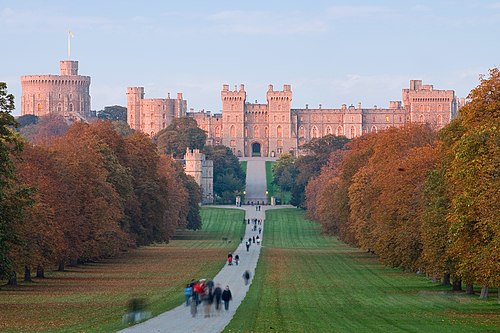 Windsor CastleRestored · prime 1820
 Tower of LondonRestored · prime 1285
 Bamburgh CastleRestored · prime 1904
All castles in England → · Strongest castles in England → · Castles of Europe
Play As Your Clan
Hold a real castle against whatever you choose to send at it, take a ship out in her own service years, or stand at the shoulder of someone the record remembers. The chronicler sets the scene; the deeds are yours.
Notable bearers of the Harris name
- Howell Harris (1714–1773), Welsh Methodist Revival leader, founder of the Trefeca community