Harvey
Breton battle-name, English orchard now.
- Origin
- South West, England
- Famous bearer
- William Harvey (1578–1657), discoverer of the circulation of the blood
- Register
- English family
The Harvey arms and country

Coat of armsHarvey (of Thorpe St Andrew, Norfolk) armsBorne by the Thorpe St Andrew line, one branch of the name rather than all of it.Lobsterthermidor · CC BY-SA 3.0 
Coat of armsHarvey (of Cotwalton, Stone, Staffordshire) armsBorne by the Cotwalton line, one branch of the name rather than all of it.Lobsterthermidor · CC BY-SA 3.0
_arms.svg)
_arms.svg)
- Coat of arms: Granted to an individual and inherited down that one documented line. These are the arms of particular families of the name, not of everyone who shares the surname.
CoreHistoric reach
The seat of Harvey
Seat vacantChief
No one leads the Harvey community yet. When the movement opens, you can stand for its leadership, or help elect whoever does.
Current mission
No shared goal set yet. Once Harvey has leadership, it sets the public focus: a restoration, a gathering, a real-world project that helps its own.
The Harvey clan is being rebuilt. Join the waiting list for the movement today, and you help decide who leads it and what it does.
Help rebuild the Harvey clan →What does the Harvey name mean?
Breton Herve, Breton-Norman infantry left the name along the south coast.
The history of Harvey
The Breton name that came ashore in 1066
The army William of Normandy took across the Channel was not Norman alone. It was assembled from Normandy and from all over France, with large contingents from Brittany and Flanders, mustered at Saint-Valery-sur-Somme and ready to cross by about 12 August 1066. Modern estimates of its size range from 7,000 to 12,000 men, roughly equal numbers of cavalry and archers with the foot soldiers matching both together. Only about thirty-five individuals can reliably be named as present at Hastings; the rest are a crowd, and the Breton infantry stood in it.
The Bretons had the worst of the opening of the battle on 14 October. Some of them panicked and broke, English troops came down off the ridge to chase them, and the Norman cavalry turned and cut the pursuers down. William made the accident into a tactic and twice more feigned withdrawal to pull the shield wall apart. Whatever else the Breton contingent gave England that day, it gave it a stock of Breton font names, and among them Herve, a baptismal name rather than a trade or a village.
What followed made the name stick. Norman French replaced Old English among the ruling class, and names common in France came in with it: William, Robert and Richard were soon ordinary at the font. An estimated 8,000 Normans and other continentals settled in England, and although marriages between Norman men and English women were uncommon before 1100, within a century intermarriage was common at every level of society; by the early 1160s Ailred of Rievaulx could write that it was unremarkable. Herve went into the English name stock and came out, much later, as Harvey.
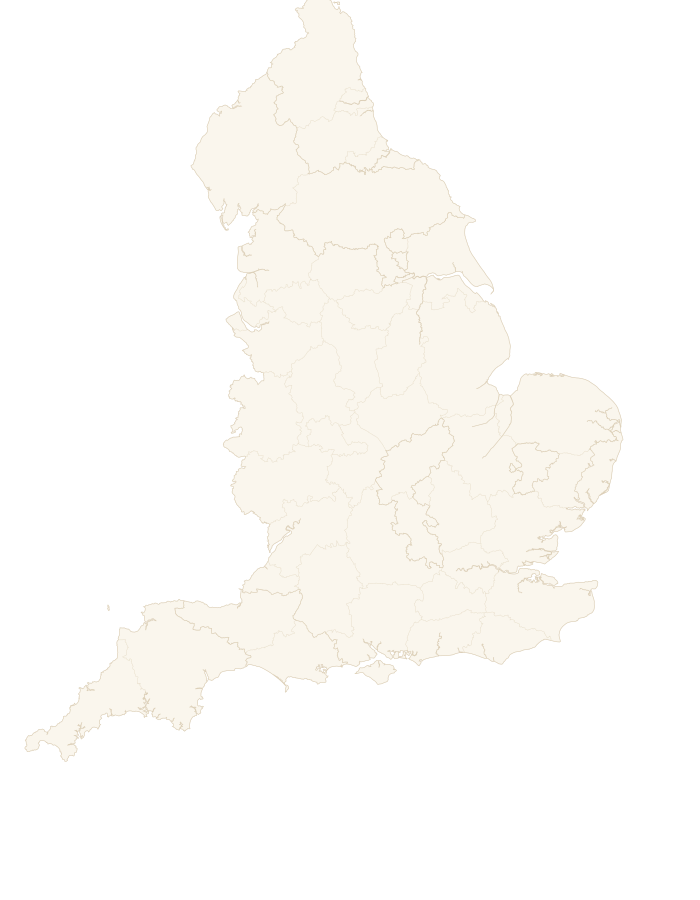
Where the name settled can still be read off the map. Its older weight sits along the south and south-east, in Kent and Surrey, in both Sussexes, in Hampshire and the Isle of Wight, in Berkshire, Oxfordshire and Buckinghamshire, and in London, with a second block through Warwickshire, Worcestershire, Herefordshire, Staffordshire and Shropshire. Today it is heaviest further west and further east again: Cornwall, Devon, Somerset, Dorset, Wiltshire and Gloucestershire on one side, Norfolk, Suffolk, the Cambridgeshire fens, Essex, Hertfordshire and Bedfordshire on the other. A coastal name that worked inland.
From font name to family name
England's family names are generally dated to the preparation of the Domesday Book in 1086, and they began at the top: the feudal nobility and gentry took them first and the practice spread downward slowly. Some of the incoming Norman nobility marked themselves out by putting 'de' in front of the name of a village or estate in France, a territorial surname born straight out of feudal landholding. Names built on a father's baptismal name, which is what Harvey is, were the other great class, and the oldest and commonest type of surname there is.
None of it was hereditary at first. An early English surname described a man by his trade, his father's name, where he was born or what he looked like, and the description could die with him. Christopher Daniell dates what may be the first recorded use of a modern surname inherited across generations to 1140. Within three centuries the practice had hardened: by 1400 the name was inherited in most English and Lowland Scottish families. The change was not welcomed everywhere: in the late Middle Ages compulsory surnames were resisted in England precisely because people associated them with taxation.
Under Henry VIII, who reigned from 1509 to 1547, marital births were ordered to be recorded under the father's surname, and from that point the name is simply there in the record, fixed and countable. Nicholas Harvey, member of parliament for Huntingdonshire, died in 1532. Thomas Harvey (c. 1512–1577) sat in the Commons; Francis Harvey (1534–1602) sat for Colchester. William Harvey (1510–1567) was an English herald, and Henry Harvey, who died in 1585, was a lawyer and the head of a college.
Two Lord Mayors and a bench of members
The name did well in the City of London. James Harvey, a merchant, was Lord Mayor in 1581 and died in 1583. Sebastian Harvey, also a merchant, was Lord Mayor in 1618 and died in 1621. Two Harvey mayoralties in the City is a considerable showing for a surname that had arrived as an immigrant font name.
In parliament the name recurs from the Tudors to the Hanoverians. Francis Harvey died in 1632 as a sitting member; another Francis Harvey (1611–1703) was a lawyer and member for Northampton. Edmund Harvey (c. 1601–1673) was a soldier as well as a member of parliament. Daniel Harvey (1631–1672) was an English merchant and diplomat, and Michael Harvey, who died in 1748, a landowner and politician.
The line runs on into the modern state. Daniel Whittle Harvey (1786–1863) was a British politician and the founder of the Sunday Times. Ernest Musgrave Harvey (1867–1955) was chief cashier of the Bank of England and was made a baronet. Oliver Harvey, 1st Baron Harvey of Tasburgh (1893–1968), served as a British civil servant and diplomat, and Arthur Vere Harvey, Baron Harvey of Prestbury (1906–1994), was a Royal Air Force officer before he was a politician.
The Kentish yeoman's son who proved the circle
William Harvey was born at Folkestone in Kent on 1 April 1578, eldest of the nine children of Thomas Harvey, a prosperous yeoman of the town who later served as its mayor, and Joan Halke. He went to the King's School at Canterbury at ten, took his degree at Gonville and Caius College, Cambridge in 1597, and crossed the following autumn to the University of Padua, then the foremost medical school in Europe. There he studied under Hieronymus Fabricius, whose careful work on the valves in the veins put him on the road to everything that followed. He took his doctorate of medicine at Padua in April 1602.
Home in London he married Elizabeth Browne, daughter of the royal physician Lancelot Browne, in November 1604, and was admitted to the College of Physicians in 1607. From 1609 he was physician to St Bartholomew's Hospital, walking the wards twice a week; in 1615 he became the College's Lumleian Lecturer in Anatomy and Surgery, a duty he held for forty-one years. His Lumleian notes of April 1616, still kept at the British Library, contain the earliest written statement of what he had come to believe: that the heart's contraction drives the blood in a continuous circuit out through the arteries and back through the veins.
The book came in 1628, printed by William Fitzer at Frankfurt am Main: seventy-two pages of Latin octavo called Exercitatio Anatomica de Motu Cordis et Sanguinis in Animalibus. By dissection, by vivisection to watch the valves working, and by an arithmetical estimate of how much blood the heart moves in an hour, it showed that arteries and veins form one closed circuit and that the same blood goes round the body many times a day. Fourteen hundred years of Galenic doctrine, which held that there were two separate systems, went over with it.
He was sworn physician extraordinary to James I in 1618 and physician in ordinary to Charles I in 1630. He was at Edgehill in October 1642, reading a book under a hedge with the royal children in his charge, and spent the war years at Merton College, Oxford, near the king, working on embryology; he was briefly Warden of Merton in 1645. His second great work, the Exercitationes de Generatione Animalium of 1651, on the development of the chick and the deer, founded the comparative study of animal development. He died at his brother's house at Roehampton on 3 June 1657 and lies in the Harvey vault at St Andrew's church, Hempstead, in Essex.
Almanacs, pulpits and the practice of physic
The name was busy in print in the same century. Gabriel Harvey (1545–1631) was an English scholar and writer. Richard Harvey (1560–1630) was an English theologian and a controversialist. John Harvey (1564–1592) was an astrologer and a physician. Christopher Harvey (1597–1663) was an English clergyman and poet.
Medicine kept the name after 1657. Gideon Harvey (c. 1638–c. 1701) was a Dutch-English physician. Later the name spread across the sciences: William Henry Harvey (1811–1866) was an Irish botanist and phycologist, and H. W. Harvey (1887–1970) an English marine biologist. Ethel Browne Harvey (1885–1965) worked as an American embryologist, and Barbara Harvey (1928–2025) as a British medieval historian.
The name on the Navy List
Through the age of sail the surname turns up in the fleet again and again, without any single family behind it. John Harvey (1740–1794) commanded HMS Brunswick. Henry Harvey (1743–1810) rose to admiral. Eliab Harvey (1758–1830) was a Royal Navy officer and a politician. John Harvey (1772–1837) had a long service career, Thomas Harvey (1775–1841) another, and Edward Harvey (1783–1865) also reached flag rank as a British admiral.
On land the pattern repeats. Edward Harvey (1718–1778) became a British Army general; Daniel Harvey (c. 1664–1732) was an army officer and a politician; John Harvey (1778–1852) served through the War of 1812 and afterwards governed in Canada. Frederick Maurice Watson Harvey (1888–1980) was a Canadian military officer and a rugby union footballer, and Charles Harvey (1888–1969) an officer of the British Indian Army.
Three Harveys hold the Victoria Cross. Francis Harvey (1873–1916), a British Marine, was awarded his posthumously. Samuel Harvey (1881–1960) and Jack Harvey (1891–1940) both survived to wear theirs. William Frederick James Harvey (1897–1972) was a flying ace of the First World War. Catherine Harvey, later Caughey (1923–2008), operated the Colossus computer at Bletchley Park in the Second.
Bargy Castle and the Wexford Harveys
Bargy Castle stands near Tomhaggard in County Wexford, a Norman fortress built round a square keep with two wings added at right angles in the fifteenth and seventeenth centuries. The Rossiter family held it from the fifteenth century until 1667, when Cromwell confiscated it in answer to Rossiter's part in the defence of Wexford. It was granted to William Ivory, and Ivory sold it to the Harveys.
One Harvey owner lived in London and let the place fall down. After his death it passed to Councillor John Harvey, who restored it. The last Harveys to hold Bargy were James Harvey and his wife Henrietta. In 1960 it was bought by Colonel Charles Davison, father of Chris de Burgh, whose family moved in on 1 December that year; in July 1961 a licence was granted to Maeve Davison, nee de Burgh, to run the castle as a hotel, which she did with her husband and her father, Eric de Burgh.
The name is written into Wexford's other memory as well. Bagenal Harvey, who died in 1798, was a commander of the United Irishmen. Elsewhere in Ireland the name kept quieter company: Arnold Harvey (1878–1966) was an Irish sportsman and clergyman, Brian Harvey (1916–2005) an Irish Anglican priest, and Duncan Harvey (1882–1957) an Irish rugby union footballer.
Hayle iron, Newfoundland shores and the modern roll
In Cornwall the name went into iron. John Harvey was a partner in Harveys of Hayle, the late-eighteenth-century ironfounders. The industrial habit travelled. Hayward A. Harvey (1824–1893) was an American engineer and industrialist and the inventor of Harvey armour. Fred Harvey (1835–1901) developed the Harvey House restaurants in the United States. Gerry Harvey, born 1939, became one of Australia's better-known businessmen.
Newfoundland collected an unusual share of the name. Ann Harvey (1811–1860) was a fisher and a rescuer there. Moses Harvey (1820–1901) was a Newfoundland clergyman, essayist and naturalist, and Augustus William Harvey (1839–1903) a Newfoundland industrialist and politician. Further out again, Charles Malcolm Barclay-Harvey (1890–1969) was Governor of South Australia in 1944, and Wilson Godfrey Harvey (1866–1932) Governor of South Carolina.
The living name is loud. Alex Harvey (1935–1982) was a Scottish blues and rock musician and his brother Leslie Harvey (1944–1972) played in the same trade; PJ Harvey, born 1969, is a British singer and songwriter, and Jonathan Harvey (1939–2012) was a British composer. Len Harvey (1907–1976) was a British boxer, Neil Harvey, born 1928, an Australian cricketer, and Colin Harvey, born 1944, a British football player and then manager. Harold Harvey (1874–1941) painted with the Newlyn School and Samantha Harvey, born 1975, writes novels. It is a wide roll for a name that started out as a Breton Christian name in a fleet crossing the Channel.
Champions of the Harvey name
The bearers whose lives are inseparable from this surname. Each has their own page, biography, achievements, geography, connection to the family.
Historic Places, Rebuilt
Explore the streets and seats the Harvey name knew, rebuilt with AI as they stood in history.
Castles the Harvey held
Strongholds this name held for a decade or more, look one up, or rebuild it to explore.
- Bargy Castle
Bought from William Ivory by the Harveys, who restored the castle; James Harvey was the last of the family to own it.
The castles of the homeland
The great strongholds of the homeland, look one up, see what it looked like in its prime, and recreate it to explore.
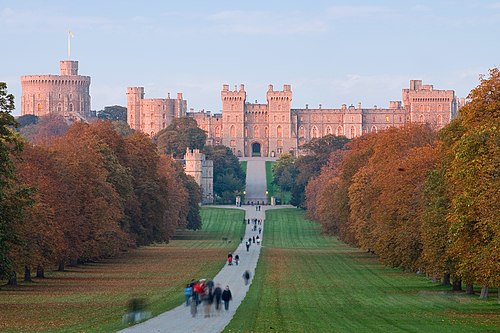 Windsor CastleRestored · prime 1820
 Tower of LondonRestored · prime 1285
 Bamburgh CastleRestored · prime 1904
All castles in England → · Strongest castles in England → · Castles of Europe
Play As Your Clan
Hold a real castle against whatever you choose to send at it, take a ship out in her own service years, or stand at the shoulder of someone the record remembers. The chronicler sets the scene; the deeds are yours.
Notable bearers of the Harvey name
- William Harvey (1578–1657), discoverer of the circulation of the blood