Haynes
Hainaut or hedged field, context splits.
- Origin
- South East, England
- Register
- English family
Where the Haynes name comes from
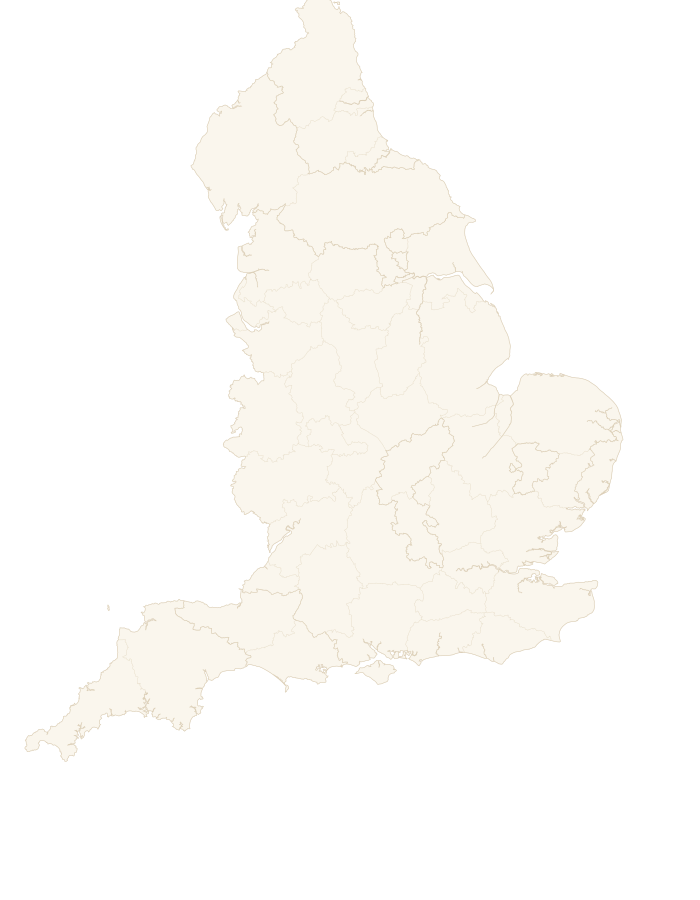
CoreHistoric reach
The seat of Haynes
Seat vacantChief
No one leads the Haynes community yet. When the movement opens, you can stand for its leadership, or help elect whoever does.
Current mission
No shared goal set yet. Once Haynes has leadership, it sets the public focus: a restoration, a gathering, a real-world project that helps its own.
The Haynes clan is being rebuilt. Join the waiting list for the movement today, and you help decide who leads it and what it does.
Help rebuild the Haynes clan →What does the Haynes name mean?
From Hainault immigrants Hainese; or enclosure from hay; or John's son in dialect.
The history of Haynes
Four medieval names that fell into the same sound
The Oxford Dictionary of Family Names in Britain and Ireland does not treat Haynes as one name. It treats it as the point where four medieval names collided and were flattened into one sound. The first is the Middle English personal name Hain, thought to be a pet form of Anglo-Norman names such as Reynald, Reyner and Rainbert, the French-derived stock that arrived with the elite after 1066. The second is the personal name Hagan, which had several origins of its own.
The third is the Old English haga, an enclosure, in its oblique form hagan, which reached Middle English as hayne and could fasten onto a man through a locative epithet, the sort meaning 'at the enclosure'. The -s on the end is the genitive, marking the child of a father called Hain, or added later by analogy with names that already carried one. Two further routes belong to the Haines and Haynes spellings alone: the Bedfordshire parish of Haynes, whose own name comes from an Old English word for enclosures, and the Irish name Hynes, drawn into the English spelling. The same dictionary notes a proposed origin in the Welsh Einws, a pet form of Einion, and finds no evidence for it.
The Flemish Hainault story that circulates in family lore sits outside that account. The dictionary's four routes do not include it, and nothing in the record here settles the name on any one of them rather than another.
Ten thousand in the 1881 census, and a knot in the Midlands
In 1881 the census counted 10,446 people named Haynes in Great Britain. They were spread widely across England rather than penned into one county, with a clear knot in the Midlands. Around 2011 one count put 15,237 bearers in Great Britain and 110 in Ireland, while on a broader basis the name ranks 249th in Great Britain with 33,812 bearers. Neither figure describes a regional surname.
The heaviest concentration is the West Midlands, where Haynes stands 89th with 4,937 bearers. After that the map opens out: East Sussex, where it is 17th with 3,323; Cambridgeshire, 32nd with 3,357; Hampshire, 84th with 3,385; then Tyne and Wear, West Yorkshire, Cheshire and Essex, each above 1,700. Smaller pockets sit in Gwynedd, Bedfordshire, Oxfordshire and Northamptonshire. In Ireland, bearers around the middle of the nineteenth century clustered in Cork.
A Tudor cleric sent abroad, a Cromwellian officer at home
Simon Haynes, who died in 1552, was an English cleric and diplomat, a pairing that in the Tudor decades meant a man given the crown's business overseas as well as a living at home. He is the earliest firmly dated bearer of the modern spelling in this record.
The next century puts the name on the other side of a civil war. Hezekiah Haynes, who died in 1693, was a parliamentarian army officer. Samuel Haynes, an English cleric and author who died in 1752, belongs to the generation after them, when a parish living and a writing career were routinely the same job.
The governor who ran two colonies
By 1400 most English families had settled into hereditary surnames, so the men who crossed the Atlantic in the seventeenth century carried names already fixed for two hundred years. The American Haynes line is the English one continued, not a new coinage made on arrival.
John Haynes, born in 1594 and dead in 1653 or 1654, was colonial governor of Massachusetts and then of Connecticut. He held the highest office of two separate colonial governments, so the surname sits in the founding record of both rather than merely among their settlers. Further south a Thomas Haynes sat in the Virginia House of Burgesses, which puts the name in a southern colonial assembly as well as in the northern governor's chair.
Coining silver, watching the sky, cutting the plate
Hopton Haynes, 1667 to 1749, was employed at the Royal Mint and wrote on theology, two halves of a life that fitted together in a period when the Mint's officers were lettered men. Edward Haynes, recorded as active between 1683 and 1708, was an English astronomer, which puts the surname among the period's observers as well as its officials.
The eighteenth century also put the name onto printed plates. John Haynes, working between about 1730 and 1750, was a British draughtsman and engraver; Joseph Haynes, 1760 to 1829, was an English etcher and engraver. Between them they cover the century in which the engraved plate was how a picture or a satire reached the public.
Pottery, banking and a Victorian bookshelf
George Haynes, 1745 to 1830, was a British entrepreneur who manufactured pottery, worked as a banker and owned a newspaper. In a Georgian provincial town those three trades amounted to one occupation: the placing of capital into whatever the local market would carry.
Annie Haynes, 1864 to 1929, was a British mystery writer, working through the decades in which detective fiction took over the British popular market. E. S. P. Haynes, 1877 to 1949, was a British lawyer and writer, and Alwyn Sidney Haynes, 1878 to 1963, a British colonial administrator and agriculturalist.
The name also appears in the first generation of organised sport. Carleton Haynes, 1858 to 1945, was an English cricketer; Charles Haynes, 1855 to 1935, was a British army officer and a footballer; George Haynes, 1865 to 1937, and Harry Haynes, 1873 to 1902, were English footballers.
A works in Indiana, a camera, a judge's bench in the west
Elwood Haynes, 1857 to 1925, was an American inventor and co-founder of the Haynes-Apperson Company, a firm that carried his surname as its trading name. William S. Haynes, 1864 to 1939, was an American flute manufacturer, another case of the name becoming a maker's mark. Frank Jay Haynes, 1853 to 1921, and Jack Ellis Haynes, 1884 to 1962, were both American photographers, the elder of them also a publisher and entrepreneur.
John Carmichael Haynes, 1831 to 1888, was born in Ireland and ended as a rancher, judge and public servant in British Columbia. The Civil War put the surname on both muster rolls: Asbury F. Haynes, 1842 to 1931, was a Union Army soldier, while Melton Haynes, 1827 to 1883, was a Confederate soldier and civil engineer. Caleb V. Haynes, 1895 to 1966, rose to major general in the United States Air Force.
Johnny Haynes, one shirt, 658 games and a hundred pounds a week
John Norman Haynes was born at Edmonton in north London on 17 October 1934, the only son of a post-office clerk. Spotted at fourteen playing for Edmonton schoolboys, he chose Fulham over Tottenham, signed amateur forms at fifteen in 1950 and professional forms at seventeen in 1952, and then played for that one club for the whole of an eighteen-year senior career. He played inside-forward, the deep creative role English tactical organisation was built around in the 1950s, and the thirty-yard pass struck to a winger's feet without a bounce was known at Craven Cottage as the Haynes pass. Bill Nicholson, the manager he had turned down as a boy, called him the best passer of a ball he had ever seen in any position.
He first played for England three days before his twentieth birthday, won fifty-six caps, captained the side twenty-two times and led it at the World Cups of 1958 and 1962. The maximum wage had held players' pay at twenty pounds a week through the post-war years. When the Professional Footballers' Association forced its abolition in January 1961, the Fulham chairman Tommy Trinder, who had called Haynes a hundred-pound-a-week player as a turn of phrase, was held to it by the press and signed him on exactly that. He was the first British professional footballer paid a hundred pounds a week.
He gave Fulham 658 first-team appearances, the second-highest total in the club's history, left in 1970 and played on as a player-coach at Durban City. Retirement was quiet: Edinburgh, scouting work for Fulham, a newsagent business run with his partner Avril. In 2005 the club named the Craven Cottage stand facing the Thames the Johnny Haynes Stand. He died in Edinburgh on 18 October 2005, the day after his seventy-first birthday.
Studios, seances and the classical past
Arthur Haynes, 1914 to 1966, was an English comedian. Manning Haynes, who died in 1957, was a British film director, and Stanley Haynes, 1906 to 1958, a British film producer and screenwriter.
In writing and scholarship the name held a steady line. Dorothy K. Haynes, 1918 to 1987, was a Scottish writer of horror and the supernatural. Renée Haynes, 1906 to 1992, was an English writer, historian and psychical researcher. D. E. L. Haynes, 1913 to 1994, was an English classical scholar, archaeologist and curator, and Natalie Haynes, born in 1974, is an English classicist and broadcaster. Four medieval names walked into one spelling, and the people who came out of it have been spreading across English life ever since.
Champions of the Haynes name
The bearers whose lives are inseparable from this surname. Each has their own page, biography, achievements, geography, connection to the family.
Historic Places, Rebuilt
Explore the streets and seats the Haynes name knew, rebuilt with AI as they stood in history.
The castles of the homeland
The great strongholds of the homeland, look one up, see what it looked like in its prime, and recreate it to explore.
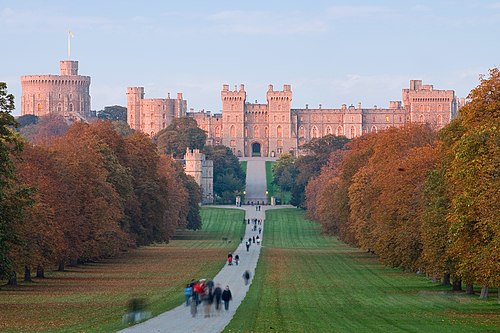 Windsor CastleRestored · prime 1820
 Tower of LondonRestored · prime 1285
 Bamburgh CastleRestored · prime 1904
All castles in England → · Strongest castles in England → · Castles of Europe
Play As Your Clan
Hold a real castle against whatever you choose to send at it, take a ship out in her own service years, or stand at the shoulder of someone the record remembers. The chronicler sets the scene; the deeds are yours.