Hopkins
Little Hodge, border favourite.
- Origin
- South West, England
- Famous bearer
- Matthew Hopkins (c.1620–1647), self-styled "Witch-Finder General"
- Register
- English family
Where the Hopkins name comes from
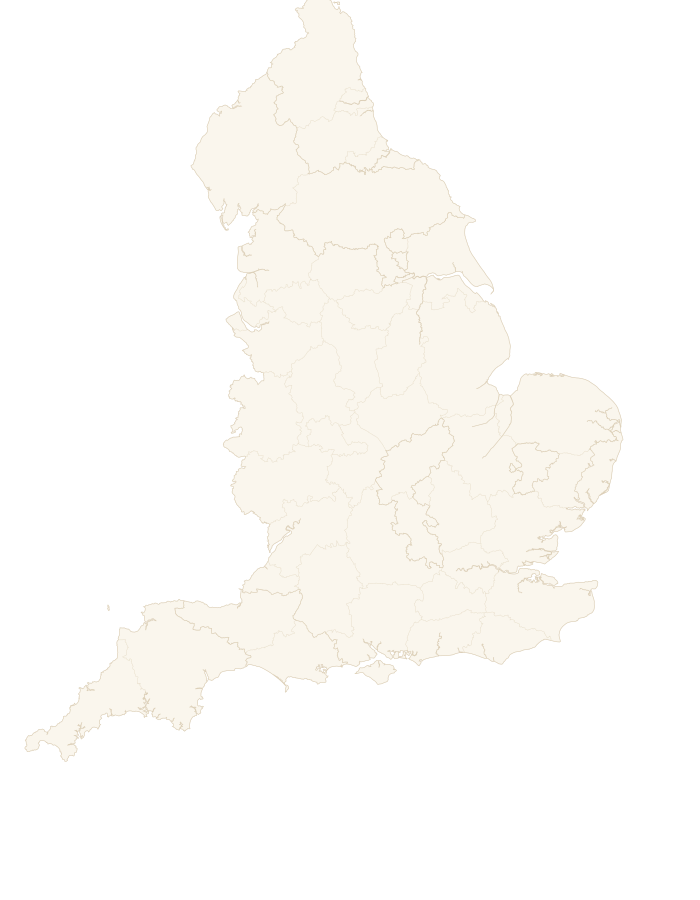
CoreHistoric reach
The seat of Hopkins
Seat vacantChief
No one leads the Hopkins community yet. When the movement opens, you can stand for its leadership, or help elect whoever does.
Current mission
No shared goal set yet. Once Hopkins has leadership, it sets the public focus: a restoration, a gathering, a real-world project that helps its own.
The Hopkins clan is being rebuilt. Join the waiting list for the movement today, and you help decide who leads it and what it does.
Help rebuild the Hopkins clan →What does the Hopkins name mean?
Hob-kin, little Robert (Hodge/Hob). Welsh ap-Robert parallels thicken border frequency.
The history of Hopkins
The ships that brought the name Robert
On 28 September 1066 William of Normandy's army of Norman, French, Flemish and Breton troops landed at Pevensey in Sussex, and on 14 October it broke Harold Godwinson's shield wall at Hastings. Some 8,000 Normans and other continentals settled afterwards, and Anglo-Norman displaced Old English among the ruling classes. One effect bore directly on this surname: the names of France came in, and William, Robert and Richard became common where Anglo-Saxon names had been.
The fashion had a consequence nobody planned. Through the early modern period the three commonest male given names covered nearly half the male population of England; of the boys born in London in 1510, 24.4 per cent were christened John, 13.3 per cent Thomas and 11.7 per cent William. In a parish holding four Roberts the font name was useless in daily speech, and English answered with shortenings and pet forms.
Rob, then Hob, then little Hopkin
Hopkins stacks three layers of that speech in order. Robert was clipped to Rob. Rob was then turned into Hob by altering the opening consonant. Richard threw off a pet form of its own, Hick, which is why the surname Hickman means Hick's man. Hob, and its cousin Hodge, did duty for Robert in ordinary talk for centuries, rustic and familiar where Robert itself was formal.
Onto Hob went -kin, the affectionate diminutive, making little Hob: Hopkin. Last came -s, the genitive that meant belonging to: Hopkin's son, Hopkin's household, Hopkins.
That final -s is ambiguous in a way worth knowing. It marked a man's son, but servants in England also took an employer's name with an s added, so Roberts may descend from Robert's son or from Robert's servant. Hopkins was assembled this way in parish after parish by people with no connection to one another, and two families of the name sharing no ancestor at all is the normal case, not the exception.
Hardened by 1400 in England, by 1536 in Wales
Hereditary surnames arrived slowly. Their introduction in England is credited to the making of the Domesday Book in 1086; the habit began among the feudal nobility and spread downward, and by 1400 most English families, and most in lowland Scotland, carried one. It was not always welcome: compulsory surnames were resisted in the late Middle Ages because people associated them with taxation.
Wales kept the older machinery far longer. A Welshman was ap Robert, son of Robert, and the name moved on each generation instead of descending; fixed surnames only became general there after the union with England under Henry VIII in 1536. Hopkins sits on the seam between the two systems. Its older recorded weight runs along the Welsh border and the country behind it, Shropshire, Herefordshire and Worcestershire, Gloucestershire, Staffordshire and Warwickshire, with London and the West Country besides.
A Mayflower passenger and a Continental Navy officer
The name crossed the Atlantic at the beginning of English settlement in New England: Constance Hopkins was among the passengers of the Mayflower. Esek Hopkins, 1718 to 1802, served as an officer of the Continental Navy, and Lemuel Hopkins, 1750 to 1801, was an American poet.
Nineteenth-century America carried it into public work of every kind. Nelson K. Hopkins was Comptroller of New York State from 1872 to 1875; Isaac S. Hopkins was a professor and the founder of the Georgia Institute of Technology; Johns Hopkins was a philanthropist. In the following century Harry Hopkins was economic adviser to Franklin D. Roosevelt.
The rats that stopped growing: Cambridge, 1912
Frederick Gowland Hopkins was born at Eastbourne in Sussex on 20 June 1861, the only child of a bookseller who died when the boy was a year old. He went from the City of London School into a commercial laboratory as an apprentice analytical chemist, and was twenty-two before he could pay for an external London degree in chemistry out of his own practice, twenty-seven before he could enter Guy's Hospital as a medical student. He qualified in 1894 and stayed to teach the science just then beginning to be called biochemistry.
In 1898 Trinity College brought him to Cambridge as a tutor in chemical physiology and he never left. With Sydney Cole he isolated the amino acid tryptophan in 1900, and in 1906 he showed that an animal cannot live on pure protein, fat, carbohydrate, water and minerals however carefully balanced: it needs minute quantities of something further, which he called accessory food factors. The proof came in the Journal of Physiology in 1912. Two groups of young rats were fed identical purified diets; one also got three cubic centimetres of milk a day and grew normally, the other got none and stopped growing within a fortnight. When he switched the milk between the groups, the failing rats began to grow and the growing rats stopped.
That paper founded vitamin science and explained scurvy, rickets and beriberi at a stroke. Hopkins became the first Sir William Dunn Professor of Biochemistry at Cambridge in 1914 and built the Dunn Institute, out of which most of the great names of the next British generation came. He shared the 1929 Nobel Prize for Physiology or Medicine with Christiaan Eijkman of Utrecht for the discovery of the vitamins, and was President of the Royal Society from 1930 to 1935.
From a Port Talbot bakery to the Old Vic
Philip Anthony Hopkins was born at Margam in Port Talbot, Glamorgan, on New Year's Eve 1937, the only child of a Margam baker, and was raised at the family bakery. From Cowbridge Grammar School he took a place at the Cardiff College of Music and Drama in 1955, served two years of National Service in the Royal Artillery, and reached the Royal Academy of Dramatic Art in 1961. He met Laurence Olivier at the National Theatre in 1965 and was taken into the Old Vic company, playing Edmund in King Lear and the title part in Coriolanus alongside Olivier, John Gielgud and Maggie Smith.
His first major film credit was Richard the Lionheart in The Lion in Winter in 1968, and The Elephant Man followed under David Lynch in 1980. Then came Dr Hannibal Lecter in Jonathan Demme's The Silence of the Lambs, released in February 1991, a performance of twenty-four minutes and fifty-two seconds inside a two-hour film. At the ceremony of March 1992 the picture took Best Picture, Director, Actor, Actress and Adapted Screenplay, the third film in Academy history to take all five.
Nominations followed for The Remains of the Day in 1993, Nixon in 1995 and Amistad in 1997; he played C. S. Lewis in Shadowlands and Odin across the four Thor films. On 25 April 2021, at the ninety-third Academy Awards, he took a second Best Actor Oscar for the title role in Florian Zeller's The Father. He was eighty-three, the oldest winner of that award in the Academy's history. He was made CBE in 1987 and knighted in 1993.
Organ lofts, laboratories and cricket grounds
The name turns up in the church and in the arts. Ezekiel Hopkins was Bishop of Derry and Raphoe; Elizabeth Hopkins, 1731 to 1801, was an English actress; Gerard Manley Hopkins was a poet and a Jesuit. Edward John Hopkins was an English organist and composer, Keith Hopkins a historian and sociologist, and Patty Hopkins, born 1942, a British architect.
Emigration scattered the name as thoroughly as the parishes had multiplied it. Livingston Hopkins, 1846 to 1927, was an American-born cartoonist who worked in Australia; Bert Hopkins played cricket for Australia and Gareth Hopkins for New Zealand; Thelma Hopkins, 1936 to 2025, was a Northern Irish athlete and Mel Hopkins, 1934 to 2010, a Welsh international footballer.
None of it came down one line. It came from a habit of speech in medieval England and Wales, where a neighbour called a man Hob because his name was Robert, and his children were known by it after him. The name that reached a Cambridge laboratory bench, a Port Talbot bakery and a berth on the Mayflower was made out of ordinary affection for an ordinary name, and it has been carried well.
Champions of the Hopkins name
The bearers whose lives are inseparable from this surname. Each has their own page, biography, achievements, geography, connection to the family.
- Frederick Gowland Hopkins
The Sussex chemist who proved that diet alone was not enough, that the body needs minute accessory substances to live, and who in 1929 took the Nobel Prize for the work that gave the world the vitamins.
- Sir Anthony Hopkins
The Port Talbot-born Welsh actor whose performance as Dr Hannibal Lecter in Jonathan Demme's The Silence of the Lambs (1991) won the Academy Award for Best Actor on twenty-four minutes and fifty-two seconds of screen-time, and whose 2020 performance in Florian Zeller's The Father took the second Best Actor Oscar at eighty-three, making him the oldest winner of the Best Actor award in Academy history.
Historic Places, Rebuilt
Explore the streets and seats the Hopkins name knew, rebuilt with AI as they stood in history.
The castles of the homeland
The great strongholds of the homeland, look one up, see what it looked like in its prime, and recreate it to explore.
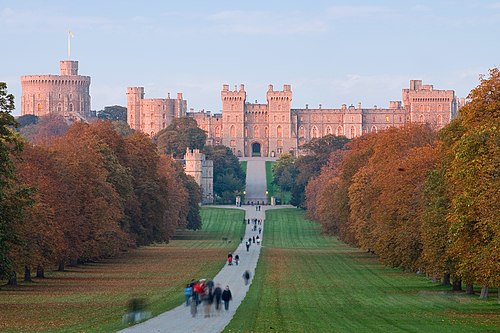 Windsor CastleRestored · prime 1820
 Tower of LondonRestored · prime 1285
 Bamburgh CastleRestored · prime 1904
All castles in England → · Strongest castles in England → · Castles of Europe
Play As Your Clan
Hold a real castle against whatever you choose to send at it, take a ship out in her own service years, or stand at the shoulder of someone the record remembers. The chronicler sets the scene; the deeds are yours.
Notable bearers of the Hopkins name
- Matthew Hopkins (c.1620–1647), self-styled "Witch-Finder General"