Hudson
Son of Hudd, the Yorkshire patronymic carried into Hudson Bay.
- Origin
- Yorkshire & the Humber, England
- Famous bearer
- Henry Hudson (c. 1565-1611), English navigator; discovered Hudson Bay 1610; abandoned by mutinous crew at James Bay 1611
- Register
- English family
The Hudson arms and country

Coat of armsEscutcheon of Hudson of LondonCharles Matthews · CC BY-SA 4.0 
Coat of armsEscutcheon of the Hudson baronets of Melton Mowbray (1660)Borne by the Melton Mowbray line, one branch of the name rather than all of it.Charles Matthews · CC BY-SA 4.0

.svg)
- Coat of arms: Granted to an individual and inherited down that one documented line. These are the arms of particular families of the name, not of everyone who shares the surname.
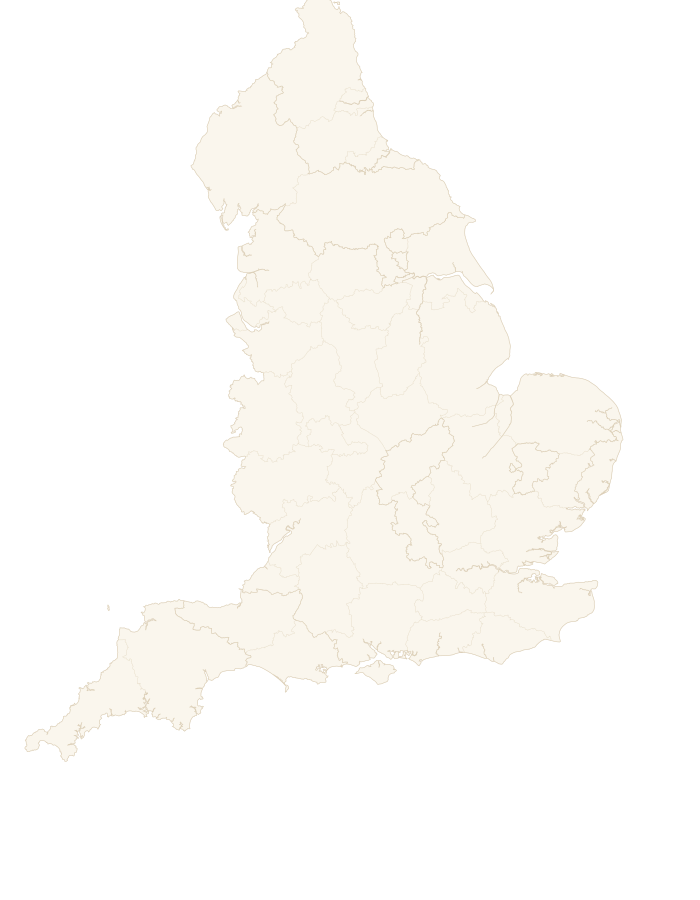
CoreHistoric reach
The seat of Hudson
Seat vacantChief
No one leads the Hudson community yet. When the movement opens, you can stand for its leadership, or help elect whoever does.
Current mission
No shared goal set yet. Once Hudson has leadership, it sets the public focus: a restoration, a gathering, a real-world project that helps its own.
The Hudson clan is being rebuilt. Join the waiting list for the movement today, and you help decide who leads it and what it does.
Help rebuild the Hudson clan →What does the Hudson name mean?
Patronymic, son of Hudd (a Middle English diminutive of Hugh or Hudde, ultimately from the Germanic personal-name Hud-). The diminutive-plus-son patronymic Hudson belongs to the northern English -son patronymic group (Watson, Jackson, Wilkinson, Dickson) that crystallised into the hereditary surname across the fourteenth-and-fifteenth-century surname-fixation period. The Hudson surname is densest in the Yorkshire and Lincolnshire counties where the northern -son patronymic tradition was strongest.
The history of Hudson
Hudd's son, in an England with too few Johns
The England that made this surname had a desperately small pool of given names. Of the boys born in London in 1510, 24.4 per cent were christened John, 13.3 per cent Thomas and 11.7 per cent William; right through the early modern period the three commonest male names accounted for close to half the male population. After the Norman Conquest, names common in France displaced Anglo-Saxon ones, and William, Robert and Richard soon became common. Pet forms carried the load that formal names could not. Hick did duty for Richard, and Hudd for Hugh; a man known as Hudd had sons known as Hudd's son.
Turning that byname into something a grandson inherited was the work of the fourteenth and fifteenth centuries. Christopher Daniell puts the first recorded modern surname inherited by multiple generations at 1140, the FitzGerald taken by the sons of a Frenchman called Robert in honour of an earlier relative named Gerald, and by 1400 most English families, and those from Lowland Scotland, had adopted hereditary surnames. Hudson belongs to the northern -son group alongside Jackson, Watson, Wilkinson and Dickson. Richard Coates, who led the four-year University of the West of England study published in 2016 as the Oxford English Dictionary of Family Names in Britain and Ireland, described patronymic surnames as those which originally enshrined the father's name, and gave Jackson as his example. Hudson is built the same way, and it remains densest in Yorkshire and Lincolnshire, where the -son habit ran hardest.
Four voyages north, 1607 to 1611
Henry Hudson (c. 1565-1611) made four voyages of Arctic and North American exploration in five years, under three commercial flags. In 1607 the Muscovy Company sent him north in the Hopewell, towards Greenland and Spitsbergen. In 1608 the same company put him in the same ship and pointed him east, towards Novaya Zemlya.
In 1609 the commission came from the Dutch East India Company, which gave him the Half Moon; that voyage took him to the North American river that has borne his name ever since. The fourth voyage, of 1610 and 1611, was English again: the Discovery, sailing for a company of adventurers, and it was the one that put his name on the far north.
The strait, the bay and the river that kept the name
The 1610 voyage found the channel now called Hudson Strait, which connects to the Atlantic Ocean in Canada, and beyond it the inland sea of Arctic Canada that became Hudson Bay. The bay has carried his name without interruption since 1611, and so has the strait that admitted him.
So has the river of the 1609 voyage, running mainly through New York State and giving its name in turn to the Hudson Valley. Between 1609 and 1611 a patronymic out of the north of England was fixed to a strait, an Arctic inland sea and a river of New York, and it has stayed on all three.
A surname printed across the map of the Americas
From the river the name moved inland with settlement. Hudson, New York, is a city in Columbia County; Hudson County, New Jersey, took it, as did Hudson City, now part of Jersey City, and Hudson Square in Manhattan. Beyond New York it repeats until it stops looking like a name at all: Hudson is on the map in Colorado, Florida, Illinois, Indiana, Iowa, Kansas, Maine, Massachusetts, Michigan, New Hampshire, North Carolina, Ohio, Pennsylvania, South Dakota, Texas, Wisconsin and Wyoming.
Not all of them come from the navigator. Hudson, Ohio, a city in Summit County, was founded by David Hudson (1761-1836), an American businessman who put his own surname on the place. Canada has a Hudson in Ontario, another in Quebec and a third inside Edmonton. Argentina has Hudson in Buenos Aires Province, in Berazategui Partido, and Australia has a Hudson in the Cassowary Coast region of Queensland. Chile has the name on a volcano, Mount Hudson, and in its naval records on Francisco Hudson (1826-1859), an officer and hydrographer of the Chilean navy.
The Hornet, the bomber and the 4-6-4
In 1909 the name went onto an American car company, and stayed there for forty-five years. The Hudson Motor Car Company built the Super Six from 1916 to 1926, revived it in 1933 and again from 1940 to 1950; the Greater Eight ran 1931 to 1932, the Utility Coupe 1937 to 1942, the Commodore 1941 to 1952. The last of its badges came in the 1950s: the Hudson Hornet of 1951 to 1954, the Wasp of 1952 to 1954, the compact Jet of 1953 to 1954 and the two-door Italia coupe of 1954 to 1955. The firm merged into American Motors in 1954.
Heavier machinery took the name too. In North American railroading a Hudson is any steam locomotive with a 4-6-4 wheel arrangement; the New York Central ran a Hudson class through the 1930s and Canadian Pacific its Royal Hudsons from 1937 to 1960, while Robert Hudson was the name of a locomotive manufacturer, now defunct. The Lockheed Hudson served the Second World War as a light bomber and coastal reconnaissance aircraft. At sea there was the destroyer USS Hudson (DD-475) from 1943 to 1946, the Revenue Service cutter USRC Hudson of 1893 that came out of the Battle of Cárdenas, and the Canadian Coast Guard research vessel CCGS Hudson of 1963. In New York the Henry Hudson Bridge carries the name over the traffic, and in Detroit it hung over a department store, Hudson's, until the chain closed.
Botanists, entomologists and a soap that sold dry
The name recurs stubbornly in the observing sciences. William Hudson (1730-1793) was a British botanist and apothecary. William Henry Hudson (1841-1922) was an Argentine-British author, naturalist and ornithologist. George Vernon Hudson (1867-1946) was a New Zealand entomologist. Hilda Phoebe Hudson (1881-1965) was an English mathematician, and Robert George Spencer Hudson (1895-1965) a British geologist and palaeontologist. In American medicine the line ran through two generations: Erasmus Darwin Hudson (1805-1880), surgeon, and his son Erasmus Darwin Hudson Jr (1843-1887), physician.
Trade and the arts account for the rest. Robert Spear Hudson (1812-1884) was the British businessman who popularised dry soap powder, and his son Robert William Hudson (1856-1937) carried on as a soap manufacturer. Henry Philerin Hudson (1798-1889) was an Irish music collector. Erlund Hudson (1912-2011) was a British artist. Hugh Hudson (1937-2023) was an English film director, Garth Hudson (1937-2025) a Canadian musician, and Norman Hudson (b. 1945) an English publisher and adviser on historic houses.
The railway financier, the Queen's courtier and the Snowy Mountains engineer
George Hudson (1800-1871) was an English railway financier. Jeffrey Hudson (1619-1682) was an English dwarf at the court of Queen Henrietta Maria of England. In public life the name reached the Lords and the Commons: Robert Hudson, 1st Viscount Hudson (1886-1957) was a British politician and Austin Hudson, 1st Baronet (1897-1956) a British Conservative politician, and Grant M. Hudson (1868-1955) sat as a United States Representative from Michigan. Manley Ottmer Hudson (1886-1960), an American professor of international law, edited the American Journal of International Law and served as a judge of the Permanent Court of International Justice.
The service records are wide. William Hudson (1896-1978), born in New Zealand, was the Australian engineer of the Snowy Mountains Scheme. William L. Hudson (1794-1862) was a nineteenth-century officer of the United States Navy. Harold B. Hudson (1898-1982) was a Canadian flying ace, and Murray Ken Hudson (1938-1974) a New Zealand soldier awarded the George Cross. Noel Hudson (1893-1970) was an Anglican bishop.
Historic Places, Rebuilt
Explore the streets and seats the Hudson name knew, rebuilt with AI as they stood in history.
The castles of the homeland
The great strongholds of the homeland, look one up, see what it looked like in its prime, and recreate it to explore.
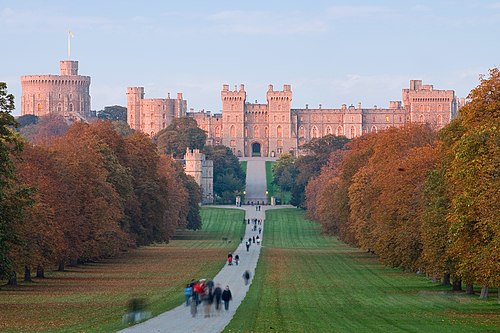 Windsor CastleRestored · prime 1820
 Tower of LondonRestored · prime 1285
 Bamburgh CastleRestored · prime 1904
All castles in England → · Strongest castles in England → · Castles of Europe
Play As Your Clan
Hold a real castle against whatever you choose to send at it, take a ship out in her own service years, or stand at the shoulder of someone the record remembers. The chronicler sets the scene; the deeds are yours.
Notable bearers of the Hudson name
- Henry Hudson (c. 1565-1611), English navigator; discovered Hudson Bay 1610; abandoned by mutinous crew at James Bay 1611
- Rock Hudson (1925-1985), American film actor
- Kate Hudson (b. 1979), American actress