Hunt
The hunter, chase and warren.
- Origin
- South West, England
- Famous bearer
- Colonel John Hunt, Baron Hunt (1910–1998), leader of the 1953 Everest expedition
- Register
- English family
The Hunt arms and country

Coat of armsHunt (of Horningtoft, Norfolk) armsBorne by the Horningtoft line, one branch of the name rather than all of it.Lobsterthermidor · CC BY-SA 3.0 
Coat of armsHunt (of Hindolveston, Norfolk) armsBorne by the Hindolveston line, one branch of the name rather than all of it.Lobsterthermidor · CC BY-SA 3.0
_arms.svg)
_arms.svg)
- Coat of arms: Granted to an individual and inherited down that one documented line. These are the arms of particular families of the name, not of everyone who shares the surname.
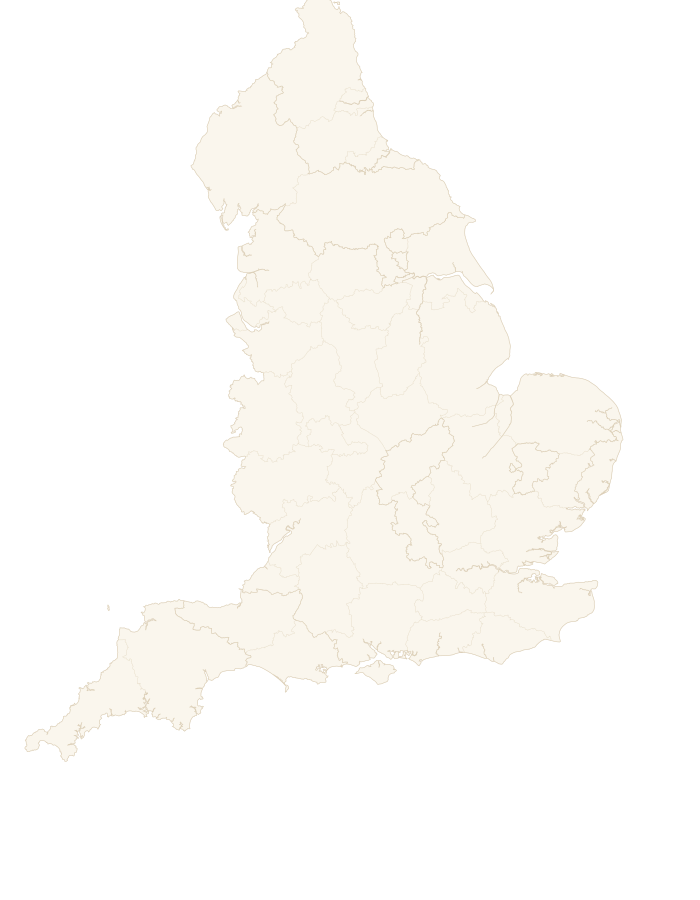
CoreHistoric reach
The seat of Hunt
Seat vacantChief
No one leads the Hunt community yet. When the movement opens, you can stand for its leadership, or help elect whoever does.
Current mission
No shared goal set yet. Once Hunt has leadership, it sets the public focus: a restoration, a gathering, a real-world project that helps its own.
The Hunt clan is being rebuilt. Join the waiting list for the movement today, and you help decide who leads it and what it does.
Help rebuild the Hunt clan →What does the Hunt name mean?
Occupational, hunter or huntsman.
The history of Hunt
The word for the work, from huntian to the hunt
Hunt is an occupational surname for a hunter or huntsman, and the word behind it is old and physical. Old English had the verb huntian, to chase game, probably grown from the noun hunta, a hunter, and tied to hentan, to seize. Further back sits Proto-Germanic huntojan, source also of Gothic hinþan, to seize, and Old High German hunda, booty. Old English already carried the nouns huntung and huntoþ; the noun hunt in its modern shape is dated to the early 12th century, taken from the verb.
The word kept moving after the surname had set. By the 1570s a hunt meant a body of persons associated for the purpose of hunting with a pack of hounds, the field rather than the act. From about 1600 it also meant the act of searching for something, the sense that still runs in treasure hunting. A family called Hunt carries a word that began as a job, hardened into an institution, and finished as a metaphor.
Two other families share the spelling without sharing the root. In Ireland the surname stands for Ó Fiachna, in which fiach means the chase; that kindred belonged to the Síol Muireadaigh of the Connachta, kin to the Ó Conchubhair and the Mac Diarmada, and was seated in County Roscommon and County Sligo. In Estonia, where Hunt is also very common, the word simply means wolf, and the discus thrower Margus Hunt (born 1987) and the footballer Rimo Hunt (born 1985) belong to that line rather than the English one.
Forest law, and the men who knew which way the deer ran
The conquest of 1066 rebuilt the ground under the English huntsman. William granted the lands of dispossessed Englishmen to his continental followers, and the Domesday Book of 1086 records the scale of it: only about five per cent of land in England south of the Tees was left in English hands. The language of official documents changed from Old English to Latin, and the forest laws were introduced, setting aside large sections of England as royal forest.
Across medieval Europe the upper class took sole rights to hunt in defined areas of a feudal territory. Game there was a source of food and furs, often supplied by professional huntsmen, but the same ground was expected to provide recreation for the aristocracy. Once hunting shifted from a subsistence activity to a selective one, two things followed: the specialist hunter with his own training and equipment, and hunting as a sport for the upper class. The Middle English word game itself moved to mean an animal that is hunted.
That proprietary view of game shows most clearly in the Robin Hood legends, where one of the chief charges against the outlaws is that they hunt the King's deer. Subsistence hunting stayed the business of the lowest classes while the stylised pursuit of game became a luxury and a way to keep the skills of war sharp in peacetime. Hunting sat among the seven mechanical arts in the scheme of Johannes Scotus Eriugena.
Hawk on the fist, cadge on the road
The Normans separated two crafts the English had lumped together: falconry was practised from horseback, hawking on foot, and both were central to Norman cultural identity. An immediate effect of the conquest was an appetite for falconry strong enough that commoners were outlawed from hunting particular lands so the nobility could enjoy both sports freely. The birds travelled on a wooden frame called a cadge, carried by men whose whole employment was another man's hawks.
The office was older than the Normans found it. By 875 falconry was widely practised in Western Europe and Saxon England, and the poem on the Battle of Maldon in 991 has the leader Byrhtnoth let his tame hawk fly from his hand to the wood before the fighting. The Bayeux Tapestry of the 1070s shows King Harold with a hawk, and he is said to have owned the largest collection of books on the sport in Europe. This is the world in which a man could be known simply as the hunt, because everyone in the lordship knew whose hounds he kept.
How finely the ranks were graded can be read in the Boke of Saint Albans, first printed in 1486 and often attributed to Dame Juliana Berners, which sorts hawks by the rank supposedly entitled to fly them: the peregrine to an earl, the sacre to a knight, the goshawk to a yeoman, the sparrowhawk to a priest, the kestrel to a knave or servant. The list is wrong in several respects, and the falconer Phillip Glasier dismissed it as a formalised and fanciful listing of birds, but its social arithmetic is the point. King Edward I sent a falconer out to catch hobbies for his own use.
When the byname hardened into a family name
The introduction of family names in England is generally attributed to the preparation of the Domesday Book in 1086, and surnames were taken up first among the feudal nobility and gentry before spreading slowly through the rest of society. Christopher Daniell dates what may be the first recorded modern surname inherited by more than one generation to 1140. By the 14th century most English and most Scottish people used surnames.
Hunt belongs with Smith, Baker, Taylor, Miller and Thatcher, fixed on a man by the work he did rather than the father he had or the village he came from. In England a servant commonly took his employer's name, sometimes with an s added, so that Vickers is understood as the name of a vicar's servant. A Dictionary of English Surnames notes that surnames of office, such as Abbot, Bishop and King, are often nicknames instead. In late medieval England mandatory surnames were resisted, because they were associated with taxes.
The four-year study led by the University of the West of England that concluded in 2016 analysed sources from the 11th to the 19th century and found more than 90 per cent of the 45,602 surnames in its dictionary native to Britain and Ireland; its leader, Richard Coates, put Smith and Baker forward as the obvious occupational cases. Hunt sits heaviest across the southern and western counties, in Cornwall, Devon, Somerset, Dorset and Wiltshire, Gloucestershire, Hampshire, Berkshire and Oxfordshire, Kent, Surrey and Sussex, with older weight in Warwickshire, Staffordshire, Shropshire, Lancashire and Cheshire.
From the king's venison to the shooting estate
Falconry in the United Kingdom and parts of Europe probably reached its zenith in the 17th century, then faded through the late 18th and 19th centuries as firearms became the tool of choice. Joseph Strutt wrote in 1801 that the ladies not only accompanied the gentlemen in pursuit of the diversion but often practised it by themselves, and even excelled the men in knowledge and exercise of the art. A revival came with a run of falconry books: the Old Hawking Club was formed in 1864, and its surviving members founded the British Falconers' Club in 1927.
The vocabulary narrowed as the practice changed. In Britain, hunting without qualification means fox hunting on horseback with hounds, a social activity of the upper classes with roles strictly defined by wealth and status, while what other countries call hunting is called shooting for birds and stalking for deer. Game is defined by the Game Act 1831, the grouse season opens on 12 August, the Glorious Twelfth, and a driven shoot places its guns in assigned positions while beaters move through cover swinging sticks and flags. The Cobham Report of 1997 valued game bird shooting to the rural economy at around 700 million pounds.
Statute finally caught both crafts. After a centuries-old but informal existence, falconry was given formal legal status in Great Britain by the Wildlife and Countryside Act 1981, on condition that captive raptors native to the UK were ringed and government-registered. The Hunting Act 2004 made the use of dogs to chase wild mammals illegal in England and Wales from February 2005, with exemptions for hunting with hounds and none at all for hare coursing.
The soldier who put two men on the top of the world
Henry Cecil John Hunt was born at Simla in India on 22 June 1910, into a military family of the Hunt name, and became a professional soldier himself: trained at Sandhurst, commissioned into a British Indian regiment, serving on the North-West Frontier and in the Italian campaign of the Second World War, where he was decorated for distinguished service. Alongside the soldiering he kept a serious mountaineer's life in the Alps and the Himalaya, climbing hard routes and learning the high mountains at first hand across many years.
By the early 1950s the summit of Mount Everest had defeated every expedition that had attempted it for thirty years and had cost a number of lives. Hunt was appointed to lead the British attempt of 1953, and the problem in front of him was as much organisation as climbing: tons of supplies and oxygen to be moved up the mountain, camps to be staged ever higher, and the choosing and supporting of the two men who would go for the top from the last camp. He planned the assault with the thoroughness of a soldier laying on an operation, drove the expedition up in measured stages, and established a camp higher than any before it.
For the summit pair he chose the New Zealander Edmund Hillary and the Sherpa Tenzing Norgay, and on 29 May 1953, carried by the whole effort organised beneath them, the two reached the summit and came safely down. The news reached London on the morning of 2 June 1953, the day of the coronation of Queen Elizabeth II, so that Everest and the crowning ran together as one moment of national rejoicing. Hunt had insisted from the first that the achievement belonged to the whole team, and he was knighted for it. He gave much of the rest of his life to young people, leading the organisation of the Duke of Edinburgh's Award scheme, was raised to the peerage, and died on 7 November 1998.
Hunts of the printing house, the papyrus and the laboratory
The name reaches print early. Christopher Hunt (1584–1607) worked as an English bookseller and stationer. Two centuries later Leigh Hunt (1784–1859) was an English author and critic, and Henry George Bonavia Hunt (1847–1917) made his career as an English music educator.
Scholarship took the name further. Arthur Surridge Hunt (1871–1934) was an English papyrologist, working on the fragile written scraps that carry the ancient world forward, and Tim Hunt (born 1943) is a British biochemist. Georgina Hunt (1922–2012) was an English abstract artist and Michael John Hunt (born 1941) an English painter, while Gareth Hunt (1942–2007) worked as a British actor and Harriet Hunt (born 1978) as a British chess player.
Fliers, governors and one very fast driver
Where the old office sent men out ahead of everyone else, the modern name went too. Charles Cooke Hunt (1833–1868) worked as an Australian explorer. Hubert Hunt (1898–1981) was a British flying ace of the First World War and Jack Hunt (1899–1954) a British aviator. Rex Hunt (1926–2012) served as a British diplomat and governor, and James Hunt (1947–1993) was a British racing driver.
The name crossed the Atlantic with the rest of the English migration. Washington Hunt (1811–1867) served as Governor of New York. Augusta Merrill Hunt (1842–1932) worked as an American philanthropist, suffragist and temperance leader, Esther Hunt (1751–1820) is remembered as an American Quaker pioneer, and Alfred E. Hunt (1855–1899) as an American metallurgist and industrialist.
Later American Hunts turned to oil, sport and the page. H. L. Hunt (1889–1974) became an American oil tycoon, Lamar Hunt (1932–2006) an American sports promoter and Caroline Rose Hunt (1923–2018) an American heiress and philanthropist. Irene Hunt (1903–2001) wrote for American children. The huntsman's name, made for the man who knew the ground and the pack, proved unusually good at travelling.
Champions of the Hunt name
The bearers whose lives are inseparable from this surname. Each has their own page, biography, achievements, geography, connection to the family.
Historic Places, Rebuilt
Explore the streets and seats the Hunt name knew, rebuilt with AI as they stood in history.
The castles of the homeland
The great strongholds of the homeland, look one up, see what it looked like in its prime, and recreate it to explore.
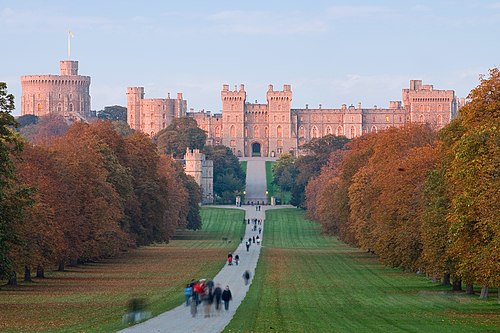 Windsor CastleRestored · prime 1820
 Tower of LondonRestored · prime 1285
 Bamburgh CastleRestored · prime 1904
All castles in England → · Strongest castles in England → · Castles of Europe
Play As Your Clan
Hold a real castle against whatever you choose to send at it, take a ship out in her own service years, or stand at the shoulder of someone the record remembers. The chronicler sets the scene; the deeds are yours.
Notable bearers of the Hunt name
- Colonel John Hunt, Baron Hunt (1910–1998), leader of the 1953 Everest expedition