Jackson
Son of Jack, the industrial north's signature.
- Origin
- North East, England
- Famous bearer
- Thomas Jonathan "Stonewall" Jackson (1824–1863), Confederate States Army general; commanded the famous flank-march at Chancellorsville, 2 May 1863
- Register
- English family
The Jackson arms and country

Coat of armsArms of Jackson of HickletonBorne by the Hickleton line, one branch of the name rather than all of it.Aergia · CC BY-SA 4.0

- Coat of arms: Granted to an individual and inherited down that one documented line. These are the arms of particular families of the name, not of everyone who shares the surname.
CoreHistoric reach
The seat of Jackson
Seat vacantChief
No one leads the Jackson community yet. When the movement opens, you can stand for its leadership, or help elect whoever does.
Current mission
No shared goal set yet. Once Jackson has leadership, it sets the public focus: a restoration, a gathering, a real-world project that helps its own.
The Jackson clan is being rebuilt. Join the waiting list for the movement today, and you help decide who leads it and what it does.
Help rebuild the Jackson clan →What does the Jackson name mean?
Son of Jack, pet form of John. Northern -son patronymics fixed early in Yorkshire and Northumberland.
The history of Jackson
Jack's son, and the crowd of Jacks he came from
Jackson means exactly what it looks like: the son of Jack. Jack is not a name in its own right at the point the surname formed; it is the everyday pet form of John, the way Hick was the pet form of Richard and gave England the surname Hickman, Hick's man. The formal name went into the parish register and the tax roll; the short name was what a man was actually called across a yard or a field. When the byname hardened into a surname, it was the spoken form that stuck, which is why the country is full of Jacksons and comparatively short of Johnsons in the north.
The reason there were so many Jacks to be the son of is a piece of documented English history rather than a coincidence. Through the whole early modern period the three most popular male given names accounted for close to half the male population, and John led them. London's baptism registers for 1510 give John to 24.4 per cent of boys, Thomas to 13.3 per cent and William to 11.7. That concentration held for centuries: right through the nineteenth century the commonest boy's name in England was either John or William. A naming pool that narrow, feeding a naming system that turned fathers into surnames, could only produce a small number of very large surnames.
Behind that lies the Norman Conquest, and the change it worked on what English people called their children. Anglo-Norman replaced Old English as the language of the ruling class after 1066, and one of the clearest signs of the shift was in personal names: William, Robert and Richard became common where Anglo-Saxon names like Alfred, Edgar, Edmund, Edwin, Harold and Oswald had stood. Only a small fraction of the given names used in England ever had an actual English derivation. The Jacksons are named for a fashion in Christian names that swept the country from the top down, and then held for five hundred years.
The century the byname stopped changing
There is a difference between being called Jack's son and being a Jackson, and it is the whole story of this name. In the first case the name dies with you: your own son is not Jackson but Thomas's son, and the label reshuffles every generation. In the second, it detaches from the man and becomes property, passed down like a strip of land. Everything that makes a surname traceable seven centuries later (parish registers, wills, muster rolls, emigration manifests) depends on that one change.
In England it happened slowly and from the top. Surnames are documented among the barons in the eleventh century, and their spread is generally attributed to the administrative demands that produced the Domesday Book in 1086, the great survey of landholding compiled after the Conquest. The evidence shows surnames adopted first by the feudal nobility and gentry and only gradually working down through the rest of society. The historian Christopher Daniell dates what may be the first recorded use of a modern surname inherited across multiple generations to 1140. Some of the Norman incomers marked themselves out by putting de before the name of a village or estate in France: a territorial surname, and a direct consequence of feudal landholding.
Jackson belongs to the later, broader wave. English surnames were first formed with reference to something about the individual (his trade, his father's name, where he was born, what he looked like) and they were not necessarily inherited. By 1400 most English families, and most families in Lowland Scotland, had adopted hereditary surnames; by the fourteenth century most English and Scottish people used a surname of some kind. Wales came much later, after unification under Henry VIII in 1536, which is why Welsh surnames are a separate and even narrower story.
It was not always welcome. In late medieval England compulsory surnames were resisted, because people understood perfectly well what they were for: a fixed, inherited name is what allows a government to find you, tax you, and know whose son inherits what. Elsewhere in Europe governments simply legislated, as the Napoleonic Code did. The English did it earlier and more organically, but the pressure was the same.
Why so few surnames carry so many people
Patronymic surnames are the oldest and commonest type there is, and a single given name can spawn a whole cluster of them: there are thought to be more than ninety Italian surnames built on Giovanni alone. English did the same thing with John. Jackson, Johnson and Jenkinson are three routes out of one font name, and the Welsh Jones is simply the Welsh for Johnson. A reader who finds Jacksons and Jenkinsons and Joneses tangled together in the same parish is not looking at a coincidence; they are looking at one Christian name refracted through three naming habits.
The most authoritative modern work on this puts Jackson at the centre of the pattern. A four-year study led by the University of the West of England, concluded in 2016, analysed sources from the eleventh to the nineteenth century to establish the origins of 45,602 surnames of the British Isles, and found that over 90 per cent of them are native to Britain and Ireland. Its leader, Richard Coates, gave Jackson as his worked example of the patronymic class: surnames that are patronymic, he explained, are those which originally enshrined the father's name, such as Jackson, or Jenkinson. The findings were published as the Oxford English Dictionary of Family Names in Britain and Ireland.
That study also lists the commonest surnames in the United Kingdom (Smith, Jones, Williams, Brown, Taylor, Davies and Wilson) and the shape of the list tells you what happened. Four of the seven are patronymics. In 1980 Jackson stood as the twenty-fourth most common surname in England and Wales, which for a name generated by a single nickname of a single font name is an extraordinary position. It is not that the Jacksons were a great house that multiplied. It is that hundreds of unconnected English families, in hundreds of unconnected villages, each had a man called Jack, and each fixed his son's byname at roughly the same moment in history.
Yorkshire, Tyneside and the coalfield spine
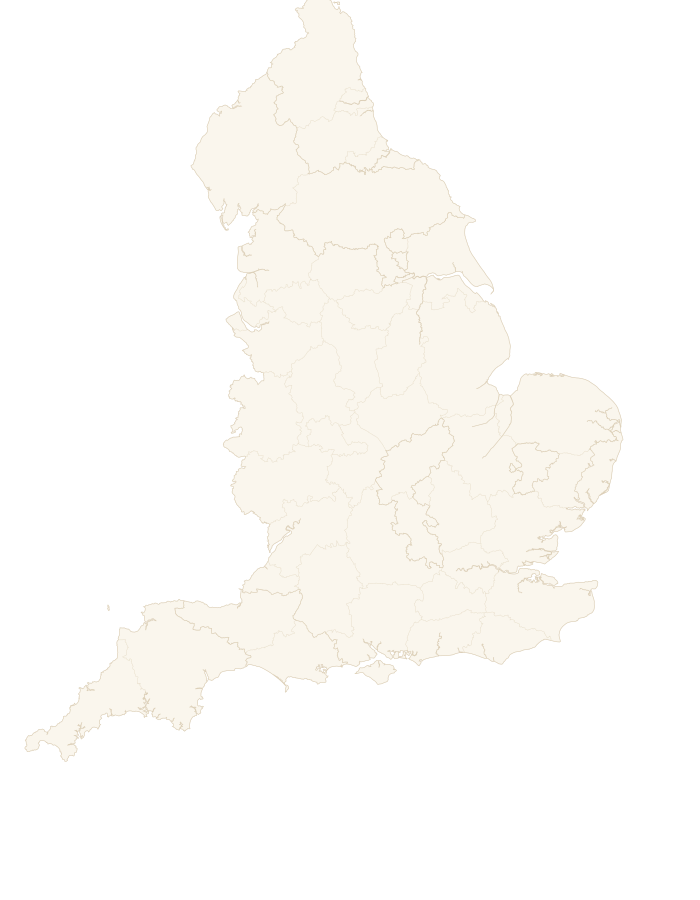
For all that Jackson formed independently in many places, it did not spread evenly. The -son patronymics fixed early and hard in the north, Yorkshire and Northumberland above all, and the modern map of the name still shows it. The catalogue's densest Jackson country runs Northumberland, Tyneside, Wearside and Durham, the Tees valley, the city of York, and then the whole breadth of Yorkshire from the North Riding through the West and South Ridings to the East Riding and the Humber. That is a single continuous block, and it is the block where the -son ending was the default way of making a name.
That geography then did something no naming historian could have predicted: it turned out to sit on coal, iron and deep water. Jackson tracks the labour of the industrial north, from the Tyneside shipyards down through the Durham pits to the steel of Sheffield. A surname that formed among medieval farming families in the northern shires became, four centuries later, a surname of pitmen, platers, riveters and furnacemen, and then, because industry pulls people, a surname carried out of those valleys to every port that would take an emigrant ship.
The wider English footprint reaches well beyond that core: Cumbria, Lancashire, Manchester, Merseyside and Cheshire to the west; Lincolnshire, Nottinghamshire, Derbyshire, Staffordshire, Shropshire and the Black Country through the midlands; and London, Kent, Surrey, Sussex, Hampshire and the Thames valley counties in the south. If your Jacksons came out of Birkenhead or Bermondsey rather than Barnsley, that is not a break in the line. It is the ordinary southward drift of a northern name across five hundred years.
Cavaliers, pirates and a miser of Carlisle
Because Jackson is a name of the middling sort rather than a baronial one, the bearers who surface in the record are the ones who did something conspicuous. Sir Anthony Jackson, born in 1599 and dead in 1666, was an English lawyer and soldier who threw in with the Stuart cause and supported both Charles I and Charles II: a career that spanned the civil wars, the execution of one king and the restoration of the next, and which cost most men of his persuasion their estates before it paid anyone back.
At sea the name turns up on the other side of respectability. William Jackson, active between 1639 and 1645, was an English pirate, raiding through the same decade in which England tore itself apart at home, a recognisable seventeenth-century type, whose voyages were an instrument of national policy when convenient and piracy when not.
The most memorable of the early Jacksons may be Margery Jackson of Carlisle, 1722 to 1812, remembered as a miser, a litigant, a landlady and a local character of the border city. Ninety years of life, a fortune held with a tight fist and a taste for the courts made her a figure the whole town knew, and that a woman of no title is remembered by name across three centuries says something about the kind of stubbornness the northern Jacksons were capable of. Sir George Duckett, first baronet, who lived from 1725 to 1822 and sat as a British MP, was born plain George Jackson: a reminder that in Georgian England a surname was something you could be required to trade away as the price of an inheritance.
The name on both sides of the American wars
American Jacksons mostly descend from two distinct streams that happen to share a spelling: Ulster-Scots families out of the north of Ireland, and English families straight from the northern counties. Neither was grand on arrival. Andrew Jackson senior died in 1767, the same year his son Andrew was born, and that posthumous son became the seventh president of the United States, holding office from a childhood that began with no father at all. His wife Rachel Jackson, born the same year as him in 1767 and dead in 1828, did not live to see out his first term.
By the Revolution the name was already in arms on the American side: Henry Jackson, 1747 to 1809, served as a general in the Continental Army. Four generations later it was on both sides at once. Thomas Jonathan Jackson, born 1824, is the Jackson most Americans can name: the Confederate general called Stonewall, whose flank march at Chancellorsville on 2 May 1863 remains one of the most studied manoeuvres in military history, and who did not survive the year. Conrad Feger Jackson, born 1813, was a general in the Union Army and was killed in 1862. The same English patronymic stood in both battle lines, which is what happens to a name carried by tens of thousands of unrelated families.
One thing has to be said plainly, because it changes how the American numbers should be read. Jackson is among the surnames most heavily borne in the United States by families whose ancestors were enslaved and given the name of an enslaver rather than carrying it out of Europe. Many family names of African Americans have their origins in slavery, and some freed people afterwards chose surnames for themselves. Those families' histories are real and central to America, but they are not the history of this English name, and American frequency figures cannot be read as evidence about it. This atlas follows the European ancestral line, which is why the English and Welsh figure of 1980 is quoted above and the American one is not.
What the Victorians and the wars did with the name
The nineteenth century is where Jacksons start appearing at the top of British institutions rather than in the ranks of them. John Hughlings Jackson, 1835 to 1911, was one of the founding figures of British neurology. John Jackson, 1811 to 1886, sat as an English bishop. John Edward Jackson, 1805 to 1891, was an English clergyman, antiquary and archivist, precisely the kind of man to whom later genealogists owe their surviving parish material. In the arts, John Jackson the painter, 1778 to 1831, carried the name into the English exhibition rooms, and Mason Jackson, 1819 to 1903, was a wood-engraver in the great age of the illustrated press.
Industry and public life followed. Sir John Jackson, 1851 to 1919, was a British engineer and Member of Parliament; William Jackson, 1840 to 1917, was raised to the peerage as the first Baron Allerton. Sir Stanley Jackson, 1870 to 1947, managed the rare triple of army officer, Test cricketer and politician, and the earlier John Jackson, 1833 to 1901, was one of the English game's professionals in its formative decades.
Then the wars. Sir Henry Jackson, 1855 to 1929, rose to be First Sea Lord, running the Royal Navy through the middle of the First World War. Norman Cyril Jackson, 1919 to 1994, of the Royal Air Force, was awarded the Victoria Cross, and Derek A. Jackson, 1906 to 1982, was a British atomic physicist who spent the war as an RAF radar expert. Later, Sir Mike Jackson, born 1944, served as Chief of the General Staff, the professional head of the British Army.
The Jacksons who went out with the ships
Follow the emigrant routes and the name is waiting at the far end. William Jackson, 1897 to 1959, won the Victoria Cross with the Australian Army; John Francis Jackson, 1908 to 1942, flew as an Australian fighter ace. Archie Jackson, 1909 to 1933, batted for Australia and was dead at twenty-three. Marjorie Jackson, born 1931, sprinted for Australia and went on to serve as Governor of South Australia: a runner who ended as a state's head of ceremony. In New Zealand, Peter Jackson, born 1961, became one of the most successful film directors alive; in Canada, George Jackson, 1808 to 1885, sat as an MP.
Others took the name outward in other directions. Frederick George Jackson, 1860 to 1938, was a British army officer and Arctic explorer, with an island in Franz Josef Land named after him; Sir Frederick John Jackson, 1859 to 1929, was an English explorer and ornithologist. Kenneth H. Jackson, 1909 to 1991, was an English linguist who spent his career on the Celtic languages: a Jackson working, in effect, on the older name-layers of the islands his own surname came from.
The catalogue's champion for the name is Glenda Jackson, 1936 to 2023, and she is a fair summary of what the surname has usually meant. A bricklayer's daughter from Birkenhead, she won two Academy Awards in three years, then left acting altogether and served twenty-three years as a Labour Member of Parliament, then came back to the stage at seventy-nine to play King Lear. Colin Jackson, born 1967, ran the 110 metres hurdles for Wales at the very top of the world game. Neither came from land or title. Jackson has never been a name that opened doors; it is a name that got used by people who opened them anyway, which is exactly what you would expect of a surname minted, over and over, in the working parishes of the English north.
Champions of the Jackson name
The bearers whose lives are inseparable from this surname. Each has their own page, biography, achievements, geography, connection to the family.
Historic Places, Rebuilt
Explore the streets and seats the Jackson name knew, rebuilt with AI as they stood in history.
The castles of the homeland
The great strongholds of the homeland, look one up, see what it looked like in its prime, and recreate it to explore.
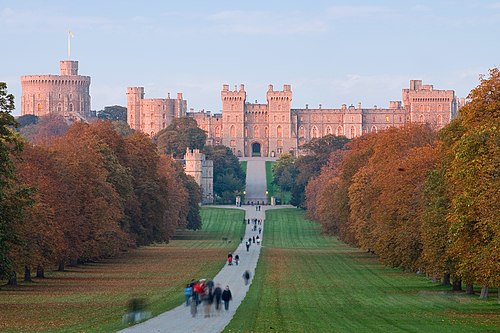 Windsor CastleRestored · prime 1820
 Tower of LondonRestored · prime 1285
 Bamburgh CastleRestored · prime 1904
All castles in England → · Strongest castles in England → · Castles of Europe
Play As Your Clan
Hold a real castle against whatever you choose to send at it, take a ship out in her own service years, or stand at the shoulder of someone the record remembers. The chronicler sets the scene; the deeds are yours.
Notable bearers of the Jackson name
- Thomas Jonathan "Stonewall" Jackson (1824–1863), Confederate States Army general; commanded the famous flank-march at Chancellorsville, 2 May 1863