Jenkins
Little John, Welsh thumbprint on English registers.
- Origin
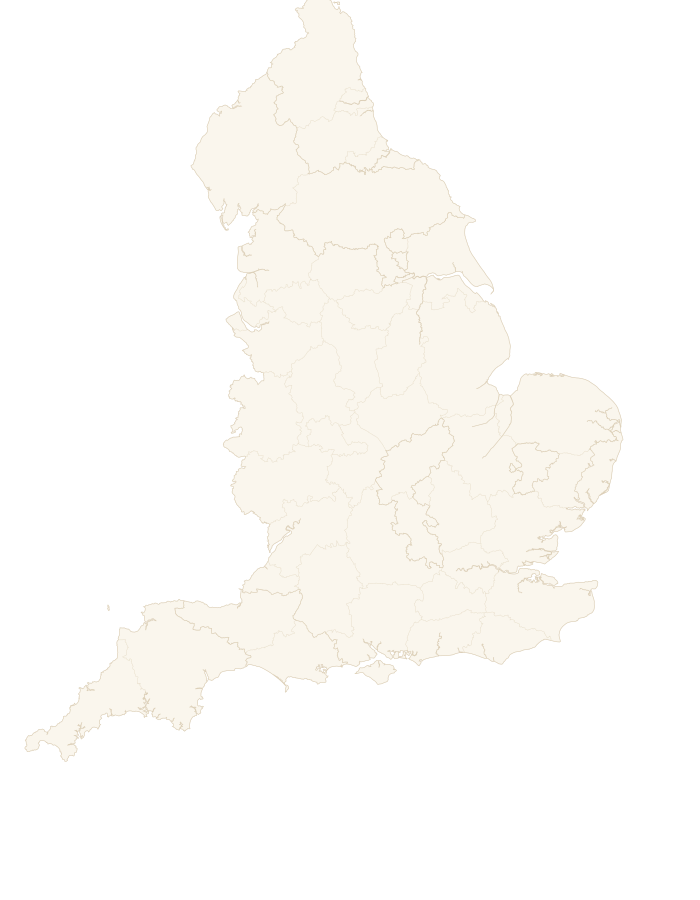
- South West, England
- Register
- English family
Where the Jenkins name comes from
CoreHistoric reach
The seat of Jenkins
Seat vacantChief
No one leads the Jenkins community yet. When the movement opens, you can stand for its leadership, or help elect whoever does.
Current mission
No shared goal set yet. Once Jenkins has leadership, it sets the public focus: a restoration, a gathering, a real-world project that helps its own.
The Jenkins clan is being rebuilt. Join the waiting list for the movement today, and you help decide who leads it and what it does.
Help rebuild the Jenkins clan →What does the Jenkins name mean?
Little John, John + Middle English -kin. Welsh Jenkin lines cross the border into Gloucester and Hereford.
The history of Jenkins
Little John, and the borrowed syllable that made him
Jenkin is John with a small tail on the end. The -kin element is the -kijn of Dutch or Danish origin, a diminutive that took hold in England and fastened itself to the commonest given name in the country. English clerks treated the result as something to be translated rather than spelled: Jenkin came out of Flemish or French as John the Younger, and more bluntly as Little John. The undiminished Jehan and Jehannes were sometimes written up as John the Elder, but nobody was ever called Big John.
The surname carries the same sense, John the Little. Its earliest documented occurrence is in Monmouthshire, in the Domesday Book of 1086, though the form almost certainly predates the Conquest that produced the survey. Cornwall is where the name began; southern Wales is where it became a crowd. Welsh has its own version of it, Siencyn. And Jenkins is not a clipped Jenkinson, which means the son of little John and is a separate build.
When half the men in England answered to three names
The reason a pet form of John became a surname at all is arithmetic. Of the boys born in London in 1510, 24.4 per cent were christened John, 13.3 per cent Thomas and 11.7 per cent William, and those three names covered close to half the early modern male population. A parish register was less a list of individuals than a list of Johns.
The pressure shows inside the households. Early English texts list a father called John with two sons, one entered as John the elder and one as John the younger, which has sunk generations of readers who took it for birth order. It was the formal name set against the diminutive, the distinction Senior and Junior carry now. Jenkin was that distinction made into a word, and the word outlived its reason.
The clerk's -s, and how a nickname became an inheritance
The final s is an English genitive doing a job of work. It marks belonging, and in surname formation it did double duty: Roberts could be the son of a Robert or the servant of one, and Vickers is thought to have begun as the name a vicar's servant took from his employer. Fixed onto Jenkin, it turns a pet name into a household's property, then into a family's permanent label.
Inheriting such labels was still new. Family names in England are generally credited to the Domesday Book of 1086, and Christopher Daniell puts the first surname inherited across several generations at 1140. They began among the feudal nobility and spread downwards slowly enough that later-medieval resistance to compulsory surnames was really resistance to the taxes that came with them. By 1400 most English families had them.
1536, the year Welsh names stopped moving
England and Scotland had largely settled into fixed surnames by the fourteenth century. Wales did not, and the date at which it did is a legislative one: surname use there followed unification under Henry VIII in 1536. Before that a Welsh name was a running account of descent, rewritten every generation: the son of a Siencyn took his father's name as his identifier, and his son in turn took his. Nobody in that system was permanently anything.
The same king ordered that births in marriage be recorded under the father's surname. Put the two together and the effect is a freeze frame: whatever a man was called when the machinery reached his parish became the name of everyone descended from him. Lines whose father at that moment was a Jenkin or a Siencyn came out of the sixteenth century as Jenkinses and never moved again. It is why so few surnames carry so many Welsh people, and why Jones, Williams and Davies sit among the seven commonest names in the United Kingdom.
Marcher clerks and the Latin column
The border country did the paperwork, and the paperwork was Norman. William granted land to his followers and built castles commanding the military strong points throughout the land. Norman forces held Hereford by 1067, when the Shropshire landowner Eadric the Wild allied with the Welsh rulers of Gwynedd and Powys and rose against them; Shrewsbury castle was attacked in the western rising of 1069.
What that apparatus produced was records. The Great Survey completed in 1086 covered much of England and parts of Wales, listing every tenant-in-chief and who had held the land before 1066. Official documents had shifted from Old English to Latin, and the men running the courts spoke Anglo-Norman. On the Marches a Welsh-speaking household met a clerk writing Latin for a French-speaking lord, and the name that came back out was an English-looking one. The family's historic footprint follows that frontier: Shropshire, Herefordshire and Worcestershire, Gloucestershire, then eastward into Warwickshire, Staffordshire and the Black Country.
Cornwall, Devon and the little Johns
The other pool is the West Country. The name originated in Cornwall and is commonly seen in Cornish and in Devon ancestry, and its modern spread still traces that arc: Cornwall and Devon, Somerset and Bristol, Dorset and Wiltshire, Gloucestershire, then along the south coast into Hampshire, Sussex and Kent.
Medieval English had a now-obsolete plural for the people of that western edge, the little Johns, used of the Cornish and later of the Welsh. The explanation splits two ways and the sources do not settle it: one reading takes it as a remark on small stature, the other, thought the likelier, as a jibe classing them as unacknowledged children of King John, who had held the earldoms of Cornwall and Gloucester before he was king. Either way, it pinned the diminutive of John to the two regions where the surname went deepest.
That matters for descent. A Jenkins family in a Cornish parish, one in Devon and one in the Monmouthshire valleys did not branch from each other. Each is a separate household that happened to hold a man called Jenkin when the name froze, and in Wales they froze in enormous numbers at once. A shared surname here is not shared blood; it is shared machinery.
The Abersychan boy who went up to Balliol
Roy Harris Jenkins was born on 11 November 1920 in the Monmouthshire mining valley above Pontypool, the only son of Arthur Jenkins, a Cwmavon coal-miner who became Labour member of parliament for Pontypool and parliamentary private secretary to Clement Attlee. A Welsh county scholarship took him to Balliol College, Oxford in 1938 to read Philosophy, Politics and Economics.
Balliol in those years held Edward Heath, Tony Crosland and Denis Healey. He took a first in 1941, was commissioned into the Royal Artillery and served as a cryptanalyst at Bletchley Park. He entered the Commons at a by-election in 1948 as the youngest member of Attlee's parliament, and held Birmingham Stechford for twenty-seven years.
Nine months that rewrote the statute book
As Harold Wilson's Home Secretary from 1965 to 1967, Jenkins drove through the legislation that still underpins modern British public law: the abolition of the death penalty for murder, the partial decriminalisation of consensual homosexual acts, the abolition of theatre censorship, the Race Relations Act and the Divorce Reform Act. It stands as the most consequential nine months of social-reform legislation in post-war British history, carried against opposition from every direction.
As Chancellor of the Exchequer from 1967 to 1970 he absorbed the devaluation of 1967 and brought the public finances into surplus by 1969 to 1970, the only Labour Chancellor before Gordon Brown to deliver a calendar-year surplus. He was the leading pro-European in his party and led the Labour campaign in the 1975 referendum, which returned a Yes by two to one.
In 1976 he left domestic politics to serve as the fourth President of the European Commission, overseeing the creation of the European Monetary System. He returned in 1981 to co-found the Social Democratic Party with David Owen, Bill Rodgers and Shirley Williams, and won the Glasgow Hillhead by-election in 1982. Raised to the peerage as Baron Jenkins of Hillhead and given the Order of Merit in 1993, he spent his last sixteen years writing: Gladstone in 1995, then Asquith, then Churchill in 2001, each in turn the standard life of its subject. He died at East Hendred in Oxfordshire on 5 January 2003, aged eighty-two, having carried a Welsh patronymic meaning son of little John out of an Abersychan mining family and into the British political establishment.
Champions of the Jenkins name
The bearers whose lives are inseparable from this surname. Each has their own page, biography, achievements, geography, connection to the family.
Historic Places, Rebuilt
Explore the streets and seats the Jenkins name knew, rebuilt with AI as they stood in history.
The castles of the homeland
The great strongholds of the homeland, look one up, see what it looked like in its prime, and recreate it to explore.
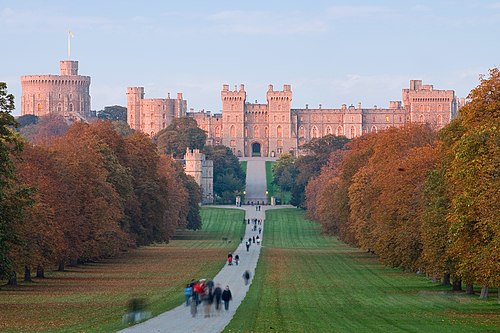 Windsor CastleRestored · prime 1820
 Tower of LondonRestored · prime 1285
 Bamburgh CastleRestored · prime 1904
All castles in England → · Strongest castles in England → · Castles of Europe
Play As Your Clan
Hold a real castle against whatever you choose to send at it, take a ship out in her own service years, or stand at the shoulder of someone the record remembers. The chronicler sets the scene; the deeds are yours.