Clan Keswick
Six generations of stewardship over the British China trade, from Edinburgh to Hong Kong.
- Origin
- Lothian & Edinburgh, Scotland
- Famous bearer
- William Keswick (1834-1912), chairman of Jardine, Matheson & Co. from 1886
- Register
- Scottish clan
Ranked of all time
The 10 Most Powerful Scottish Clans of All Time
Where the Keswick name comes from

The seat of Clan Keswick
Seat vacantChief
No one leads the Clan Keswick community yet. When the movement opens, you can stand for its leadership, or help elect whoever does.
Current mission
No shared goal set yet. Once Clan Keswick has leadership, it sets the public focus: a restoration, a gathering, a real-world project that helps its own.
The Keswick clan is being rebuilt. Join the waiting list for the movement today, and you help decide who leads it and what it does.
Help rebuild the Keswick clan →What does the Keswick name mean?
From the Old English 'cēse-wīc', cheese-farm, originally a place-name from settlements in Cumbria and northern Yorkshire. The Scottish branch of the surname is most associated with the family that has held the chairmanship of Jardine Matheson, the British trading house in East Asia, since the late 19th century.
The history of Clan Keswick
The cheese farm that turned into a surname
Keswick begins as a piece of ground, not as a family. The name is Old English cese-wic, the cheese farm, a holding whose business was dairying. Places of the name survive in Cumbria and in northern Yorkshire, and it is from those settlements that the surname comes. Nothing in it describes a man's trade or his father. It describes where he had been.
The name is English in origin and Scottish in its best documented line. By the early nineteenth century Keswicks were settled in southern Scotland: Thomas Keswick is styled of Coldstream, John Johnstone Jardine Keswick lived at Dormont near Lockerbie in Dumfriesshire, and the family keeps a base at Glenkiln in the same county to this day. It was from that corner of Scotland that the surname went to China, and it has been an East Asian name for six generations since.
The marriage into the Canton house
The connection that made the family was a marriage, not a fortune. Jean Jardine Johnstone was the elder sister of Dr William Jardine of Lochmaben, the Lanarkshire-born, Edinburgh-trained ship's surgeon who in 1832 founded at Canton, with James Matheson, the firm of Jardine, Matheson & Co. Jean's daughter, Margaret Johnstone, married Thomas Keswick, and Thomas entered the Jardine business. Their son William was born in 1834, and the sources place his birth both at Edinburgh and in Dumfriesshire. He was educated at the Edinburgh Academy and sent east as a junior clerk at twenty.
The house he joined was already one of the great trading concerns of the China coast, and its early money came from opium: Jardine Matheson traded the drug into China and its interests weighed heavily in the First and Second Opium Wars, until the firm gave the traffic up in 1870 and put its capital into shipping, railways, textiles and property instead. William Keswick reached Hong Kong in 1855, and it was the firm after that turn, the shipping and wharves and land companies, that the Keswicks built and are known for.
He was the first of his name in the East, and he set the pattern the family kept: a Scottish boy sent out young as a clerk, made partner if he proved any good, and brought home at the end of it to London and Parliament while the next Keswick took his place on the coast.
The Yokohama waterfront, July 1859
In July 1859, in his twenty-fifth year, William Keswick sailed north from Shanghai to Yokohama. The port had been opened to foreign trade only the month before under the Harris Treaty with Japan, and on the first of July he registered Jardine Matheson there as the first foreign trading firm in the country. He took a long lease on a strip of the Yokohama Bund opposite the British consulate and built the firm's first godown on it.
In three years he made the branch the leading silk, tea and cotton-piece-goods house in Japan, shipping the first Japanese silk exports to Lyon and Manchester and importing the cotton textiles and machinery that fed the beginning of Meiji industrialisation. A twenty-five-year-old clerk with a warehouse on the Bund had put the firm into a country that had been closed a year earlier, and the Yokohama business he founded was still the base of the company's Japanese trade in the twentieth century.
He returned to Hong Kong as a partner in 1862 and became taipan, the managing partner of the house in China, from 1874 to 1886. Those twelve years were the firm's great expansion out of pure trading and into infrastructure. He chartered the China Sugar Refining Company in 1878, took a controlling stake in the Hong Kong and Whampoa Dock Company from 1880, founded the Hongkong and Kowloon Wharf and Godown Company in 1886, and brought Jardines into the syndicate that built the first stretch of the Imperial Chinese Railway from Tianjin to Kaiping that same year.
The first generation on the coast
William was not the only Keswick of his generation in the East. John Johnstone Jardine Keswick (1842-1904) worked from Calcutta, where he headed Jardine Skinner & Co with a fellow Scot, John Stewart, as his partner, and in the first years of the twentieth century he was chairman of the Rio Tinto Company. He lived at Dormont, near Lockerbie in Dumfriesshire.
William's younger brother James Johnstone Keswick (1845-1914) reached the Far East in 1870 and stayed twenty-six years, mostly in Hong Kong, where he was known as James the bloody polite, a tribute to his personality. He sat on the Legislative Council and was chairman of the Hong Kong General Chamber of Commerce in five separate spells between 1890 and 1900, married a daughter of Sir Harry Smith Parkes, and was taipan of Jardine Matheson from the 1890s to the turn of the century.
His lasting work was a company. In 1889, with his close associate Sir Paul Chater, J. J. Keswick founded Hongkong Land, the development company that has stayed tied to Jardine Matheson ever since. Between them the Keswick taipans were connected with the ownership or management of the Indo-China Steam Navigation Company, the Canton Insurance Office, the Hong Kong Tramway, the Star Ferry, the Whampoa dock and the HSBC: not a list of investments so much as the working parts of a port.
Epsom, Eastwick Park and the return home
William Keswick left Hong Kong in 1886 for London, where he joined Matheson & Co as a senior director answerable only to Sir Robert Jardine (1825-1905), the founder's nephew and head of the London house. He had already served three spells on the Legislative and Executive Councils of Hong Kong between 1868 and 1887 and founded the Hong Kong Chamber of Commerce. In England he was made High Sheriff of Surrey in 1898, sat as Member of Parliament for Epsom from 1899 until his death, and was a director of the Bank of England from 1899 to 1903 and of the Hudson's Bay Company.
He had taken the chairmanship of the parent firm in 1886, the first of his name to head the house his great-uncle founded, and he held it until he died on 9 March 1912 at Eastwick Park, Great Bookham in Surrey, where he had lived since 1882. The house passed to his son Henry.
Henry Keswick (1870-1928) had gone out to Hong Kong in 1895 after two years in the firm's New York office, arriving the year before his uncle James left the colony. He came home to represent Hong Kong at the coronation of King George V in 1911, which broke the family's continuous presence in the East for the first time, sailed back out to the Far East in his yacht Cutty Sark in 1922, and remained a director of Jardines until his death. Like his father he sat for Epsom. He left a United Kingdom estate of 466,409 pounds, something near 46 million at 2014 values, and three children: David Johnston, William Johnstone, and John Henry.
Tony and John Keswick in Shanghai
Sir William Johnstone Keswick (1903-1990), known all his life as Tony, was born at Yokohama, in the port his grandfather had opened, and came home as a boy to Winchester College and Trinity College, Cambridge. He arrived in the Far East in 1926 and from 1935 to 1941 ran the Shanghai office, then the firm's head office in Asia. He was chairman of the Shanghai Municipal Council, the body governing the International Settlement, through the crisis years that ran up to the Pacific War, and he survived an attempt on his life in Shanghai.
His brother Sir John Keswick (1906-1982) followed him east in 1929 and took over in Shanghai after the shooting. Both men went into the Special Operations Executive when the war came: Tony as head of its China Theatre, John working in Chongqing alongside General Dai Li, the intelligence chief of Chiang Kai-shek's Nationalist government. John got out of Shanghai with his wife Clare when the Japanese took the city, reached Ceylon, and served the rest of the war on the staff of Admiral Lord Louis Mountbatten. Two directors of a trading firm had become officers of Britain's secret service.
John Keswick went back to Shanghai after 1945 to rebuild the office and re-establish the firm's trading links across China and Asia. After the Communist victory in 1949 the head office was moved to Hong Kong, and although he tried to go on working with the new government, conditions closed in until the mainland operations were shut in 1954 with the loss of the company's Chinese interests and twenty million dollars. He joined the Hong Kong Executive Council in 1952, retired as taipan in 1953, went to Matheson & Co in London in 1956, and came back briefly as non-executive chairman in Hong Kong from 1970 to 1972.
The remaking of the firm, 1970 to 1988
The recovery from 1954 was financed at home. In London, John and Tony Keswick put up the money for the buy-out of the firm and then for its public flotation, which turned a private partnership of the China coast into a listed company. It is the least visible thing the family did and close to the most important: without it there would have been no capital base for what followed.
Tony's eldest son, Henry Neville Lindley Keswick, born in 1938, joined Jardines in 1961 and was posted to Hong Kong, Singapore and Malaysia. He was made a director in 1967, senior managing director in 1970 and chairman in 1972, stepping back from both roles in 1975. He returned to London and chaired Jardine Matheson Holdings from there until his death in November 2024, a span of oversight over the group measured in decades rather than years.
His youngest brother Simon, born in 1942, joined the firm in 1962 and became a director in 1972, left in 1977 for Matheson & Co in London, and came back in 1983 as senior managing director and then chairman. He is the one who turned the house outward, restructuring it as an international group rather than a Hong Kong one, redomiciling the holding company to Bermuda and rebuilding its senior management before retiring as taipan in 1988. The middle brother, Sir Chippendale Keswick, born in 1940 and universally called Chips, went a different way entirely, into the London merchant bank Hambros, and was later chairman of Arsenal Football Club.
Maggie's, and the name now
The best loved Keswick of the modern family never ran the firm. Maggie Keswick (1941-1995), the only child of Sir John and Clare Keswick, was a gardener and an author, married to the landscape architect Charles Jencks, and she founded Maggie's Centres, the cancer care centres that carry her name. A family that had spent a century building warehouses, docks and wharves produced, in this generation, the woman whose name is on a building people go to when they are frightened.
The commercial line runs on. Edward Percy Keswick Weatherall, born in 1957 and a great-grandson of Henry Keswick (1870-1928), was managing director of the Jardine Matheson Group from 2000 to 2006, having been chief executive of Hongkong Land before that. Adam Keswick, born in 1973, Chips's son, joined the board in 2007 and has been chief executive of Jardine Pacific and of Jardine Motors. Ben Keswick, born in 1972, Simon's son, joined the group in 1998, worked through Dairy Farm and Hongkong Land, took an MBA at INSEAD, ran Jardine Pacific as chief executive, and became chairman and managing director, taipan, of Jardine Matheson Limited in April 2012, and chairman of Jardine Matheson Holdings from 2019.
Six Keswicks have held the chair since William took it in 1886, and the great-great-grandson of the clerk who landed at Hong Kong in 1855 holds it now. The group they run reaches from Hongkong Land and Mandarin Oriental to Jardine Cycle & Carriage and food retail across Asia, and the family still holds a large stake in it. In Britain the surname is rare enough that when it appears in the financial pages it means one family, and its Scottish end is still in Dumfriesshire, at Glenkiln, a long way from the godown a young clerk put up on the Yokohama Bund.
Champions of the Keswick name
The bearers whose lives are inseparable from this surname. Each has their own page, biography, achievements, geography, connection to the family.
Historic Places, Rebuilt
Explore the streets and seats the Keswick name knew, rebuilt with AI as they stood in history.
The castles of the homeland
The great strongholds of the homeland, look one up, see what it looked like in its prime, and recreate it to explore.
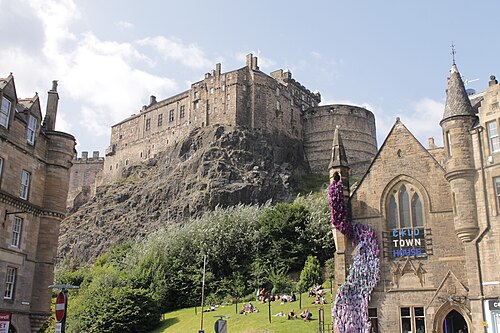 Edinburgh CastleRestored · prime 1520
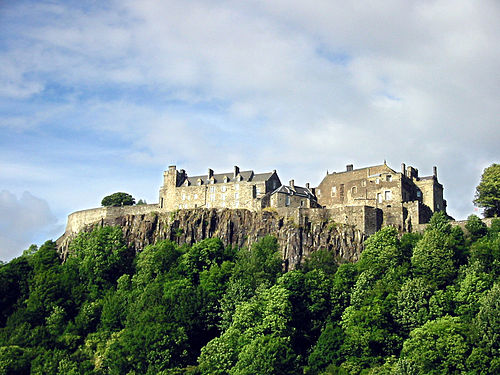 Stirling CastleRestored · prime 1542
 Glamis CastleStill standing · prime 1900
All castles in Scotland → · Strongest castles in Scotland → · Castles of Europe
Play As Your Clan
Hold a real castle against whatever you choose to send at it, take a ship out in her own service years, or stand at the shoulder of someone the record remembers. The chronicler sets the scene; the deeds are yours.
Notable bearers of the Keswick name
- William Keswick (1834-1912), chairman of Jardine, Matheson & Co. from 1886
- Sir William Johnstone Keswick (1903-1990), wartime SOE officer and Jardines partner
- Sir John Keswick (1906-1982), chairman of Jardine Matheson
- Sir Henry Keswick (1938-2024), chairman of Jardine Matheson Holdings 1970-2000
- Ben Keswick, chairman of Jardine Matheson Holdings since 2019