Smith
also Smyth
The forge surname, the most common occupational name in Scotland and the world.
- Origin
- Lothian & Edinburgh, Scotland
- Famous bearer
- Adam Smith (1723–1790), moral philosopher, founder of modern economics
- Register
- Scottish family
The Smith arms and country

Coat of armsSmith (of North Nibley, Gloucestershire) armsBorne by the North Nibley line, one branch of the name rather than all of it.Lobsterthermidor · CC BY-SA 3.0
_arms.svg)
- Coat of arms: Granted to an individual and inherited down that one documented line. These are the arms of particular families of the name, not of everyone who shares the surname.
This name is thick on both sides of the border, so the map shows the whole of Britain and Ireland with every region it touches highlighted. It is a regional pattern for the surname, not proof that your branch lived in each place.
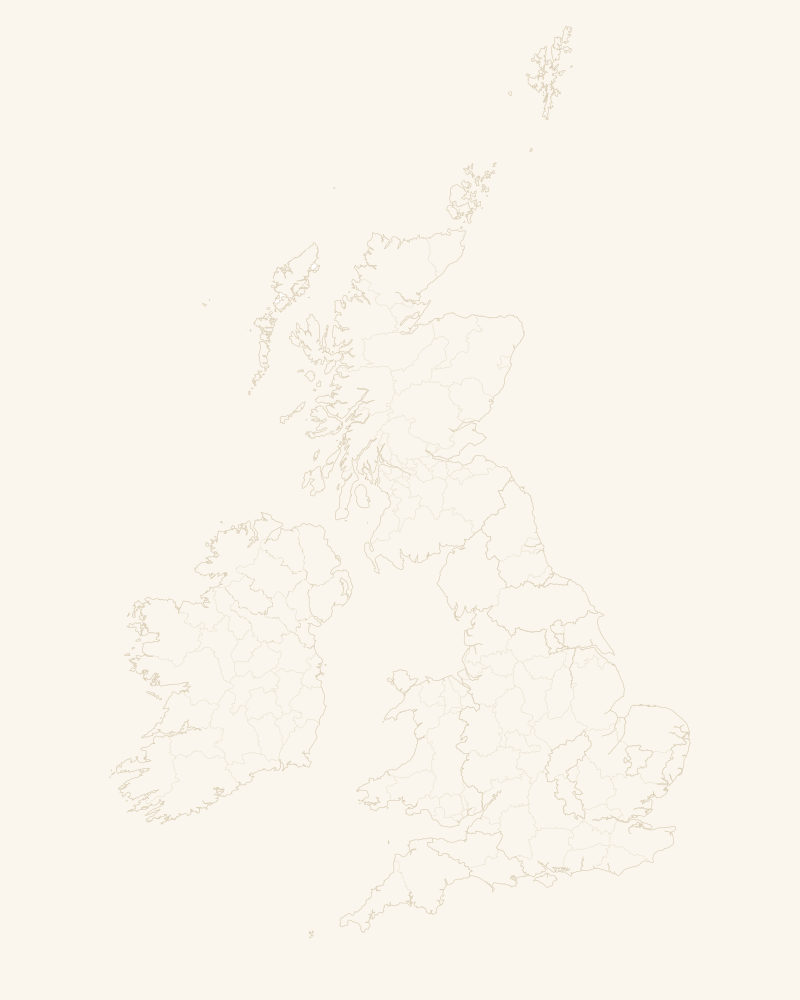
CoreHistoric reach
The seat of Smith
Seat vacantChief
No one leads the Smith community yet. When the movement opens, you can stand for its leadership, or help elect whoever does.
Current mission
No shared goal set yet. Once Smith has leadership, it sets the public focus: a restoration, a gathering, a real-world project that helps its own.
The Smith clan is being rebuilt. Join the waiting list for the movement today, and you help decide who leads it and what it does.
Help rebuild the Smith clan →What does the Smith name mean?
Occupational, the smith, the man at the forge. Old English smitan, 'to strike'. The most numerous occupational surname in every Germanic-derived language: Schmidt in German, Smit in Dutch, Smed in Danish. The Gaelic equivalents are several: Gobha in Scotland (Anglicised as Gow), and Mac an Ghabhann in Ireland, Anglicised as MacGowan in Ulster but compressed directly to Smith across most of County Cavan and the surrounding midlands. The Irish Smith pool is therefore a hidden Mac Gabhann pool, distinct in lineage from the Scottish-Smith and English-Smith pools but indistinguishable in the modern surname spelling.
The history of Smith
The man known by the blow he struck
The name is the work, carried plain and without a prefix: Old English smiþ, one who works in metal, kin to smitan, to smite or to strike. A man was not called Smith because his father had been, but because he was the one at the anvil, and the village had only the one. Ecceard Smith of County Durham was recorded in 975, centuries before inherited surnames were normal in England at all.
What froze the description into a family name was time. By 1400 most English families, and those of Lowland Scotland with them, had taken up hereditary surnames, and the byname stuck to whichever household held the fire at that moment. Because every settled community needed a smith, it stuck in thousands of parishes at once, to men who were no relation to each other. A study of 45,602 British and Irish surnames, led by the University of the West of England and concluding in 2016, found Smith at the head of the list.
What the fire looked like from the inside
A smith read heat by colour: iron glows red, then orange, then yellow, then white, and the working heat is the bright yellow-orange in between. Heavy work took two men. The smith held the iron with tongs and tapped the exact spot with a small hammer, and his striker, usually the apprentice, brought a sledgehammer down where the tap had landed. Good steel stayed rare and expensive until the Bessemer process of the 1850s, so a village smith forge-welded small pieces of steel into iron to give an axe or a chisel its cutting edge.
Before the Industrial Revolution the smithy stood in every town, usually at its centre, and the smith held the knowledge to make or mend the lot: weapons and armour at one end, nails and lengths of chain at the other, and between them the gates, grilles, railings, cooking pots, ploughs and tools the parish ran on. Medieval scholarship counted smithing among the seven mechanical arts.
Every army moved with its farriers
Nailing iron to a horse's foot was a European invention: an iron shoe with four nail holes on each side lay in the tomb of the Merovingian king Childeric I, and the first mention in literature is in Ekkehard's Waltharius around 920. By the reign of Edward III, 1327 to 1377, shoeing had split off into a trade of its own. Farriers are named as a separate craft by 1346 at the latest, and Edward's 1350 ordinance on London wages ordered them not to charge more than they had taken before the time of the pestilence, meaning the Black Death.
A statute of the same year made the shoer of horses at court the ferrour des chivaux, sworn in before judges to practise his craft properly and confine himself to it alone. That specialisation won battles: when Edward took his army into France in the first phase of the Hundred Years' War it moved with an immense baggage train carrying its own forges, so the Sergeants-Farrier and their assistants could shoe in the field and keep the army self-sufficient. Britain still fences the trade off by law, under the Farriers (Registration) Act 1975.
The armourers, and the women who held the hammer
The other specialism was armour, and the records show it was not only men's work. Alice la Haubergere carried a byname meaning mail-maker, and in the early 1300s she kept an armour shop in Cheapside and worked at the trade herself. In 1346 Edward III appointed Katherine Le Fevre to keep up the king's forge within the Tower of London at the wages pertaining to the office, and in York in 1403 Agnes Hecche was left her father's mail-making equipment in his will and ran the business on with her brother.
The line never broke. Armourers are the oldest trade in the British Army and now sit at the core of the Royal Electrical and Mechanical Engineers. Lord Trenchard, founder of the Royal Air Force, put their case in six words: without armament, there is no Air Force.
Schmidt, Smit, Smed, Gow: one history in five languages
Smith is the most prevalent surname in the United Kingdom, the United States, Canada, Australia and New Zealand, and the fifth most common in Ireland; 2,442,977 Americans carried it at the 2010 census. By 1900 it was already said to be common to every village in England, north, south, east and west. Every Germanic language made its own version of the same byname for the same reason: Schmidt in German, Smit in Dutch, Smed in Danish.
Migration then folded those rivers together. German Schmidts anglicised to Smith in America, in peacetime as much as during the two world wars, and Polish Kowalskis did the same. Smyth is not the affectation it is taken for; Charles Bardsley noted in 1901 that the y is the almost invariable spelling in the early rolls. Other branches record what a man actually made: Naismith the nail-smith, Arrowsmith, and Sixsmith for the sickle or scythe smith.
The Cavan Smiths who were never English at all
An Irish Smith is usually not an English Smith with an Irish address. The Gaelic name for the trade is Mac an Ghabhann, son of the smith, anglicised as MacGowan across much of Ulster but compressed straight to Smith through County Cavan and the surrounding midlands. That is a large part of why Smith stands fifth among Irish surnames: a Gaelic kindred pool sits inside an English-looking spelling, distinct in lineage from the English and Scottish Smiths and indistinguishable from them in the modern name.
Gaelic Scotland did the same in its own dialect. Gobha, the blacksmith, gave Gow, which carried the trade through the Gaelic-speaking north-west under the Clan Chattan confederation, and the Lewis poet Iain Crichton Smith (1928–1998) wrote under both halves of the name, as Iain Mac a' Ghobhainn in Gaelic. It follows that there is no single Clan Smith and never was, and that a Smith on a nineteenth-century sept list is a Smith a clan society added, not a kinsman of its chief.
Where the Smiths thickened
In Scotland the surname is densest through the central-belt industrial counties, Edinburgh and the Lothians, Lanarkshire and the Forth Valley, where the 19th-century metal trades reinforced a name the parishes already held in quantity. South of the Border the same shape appears for its own reasons, thickening through the West Midlands hardware towns, the Yorkshire cutlery quarters, the Lancashire mills and London. The two distributions are parallel rivers, not evidence that your line crossed the Tweed.
Then the machines came for the trade. Henry Maudslay's screw-cutting lathe of the 1790s began the replacement of smiths by machinists, and when motor cars arrived a great many smiths became the first generation of motor mechanics.
The bearers, and the branches that took land
The most consequential Smith in Scottish intellectual history was Adam Smith (1723–1790) of Kirkcaldy in Fife, posthumous son of a customs officer, who wrote The Theory of Moral Sentiments and then The Wealth of Nations in 1776 and founded modern political economy. Beside him stand Madeleine Smith (1835–1928), the Glasgow socialite at the centre of the arsenic trial of 1857, and Walter Smith of Lanarkshire, who won seven Scottish titles in a row with Rangers and took them to a European final. Captain John Smith carried the name to Jamestown in 1607. A few Smiths moved from the forge into land: the family that took Haughton Castle in Northumberland around 1640 had John Dobson turn its ruin into a mansion, and the Smyths held Portlick Castle in Westmeath from 1703 until 1955.
None of that is quite why the name matters. Smith is the commonest surname in five countries because for a thousand years no settlement in Europe could function without the one household able to turn iron into a plough, a hinge, a horseshoe or a blade, and the community named that household after what it did. If you carry the name, that is what you are named for.
Champions of the Smith name
The bearers whose lives are inseparable from this surname. Each has their own page, biography, achievements, geography, connection to the family.
- Adam Smith
The Kirkcaldy customs officer's posthumous son who wrote The Theory of Moral Sentiments and The Wealth of Nations and founded modern political economy.
- Walter Smith
The dignified Lanarkshire man who won seven Scottish titles in a row with Rangers, took them to a European final, and carried the Smith name through the Scottish game with universal respect.
Also found in
The Smith name has substantial historical presence beyond Scotland. See it on England and Ireland.
The same name across Europe
Smith shares its meaning, not its bloodline, with these names from other corners of Europe: cognates, the same word for the same thing, formed independently in each language. Cousins by meaning, with separate ancestral stories a search box flattens into near-twins.
- FerrariItalianThe smith, Italy's Smith, and a name that means speed.
- KovalUkrainianThe smith, the bare forge-name of the steppe.
- KowalskiPolishOf the smith, Poland's Smith, in the gentry's -ski.
- LefebvreFrenchThe smith, Smith and Schmidt's French cousin.
- SchmidtGermanThe forge surname of the German lands, Smith's cousin by meaning, not by blood.
- SmitDutchThe smith, Smith and Schmidt's Dutch cousin.
Historic Places, Rebuilt
Explore the streets and seats the Smith name knew, rebuilt with AI as they stood in history.
Historic Places, Rebuilt · New
The castle on its crag, St Giles' crown spire, and the closes tumbling to the Cowgate.
Historic Places, Rebuilt · New
The merchant city on the Clyde on the eve of mass emigration, the Cathedral, the Trongate, and the Broomielaw where the ships left.
Historic Places, Rebuilt · New
Scotland's ecclesiastical capital at its peak, the great cathedral, the bishop's castle on the sea, and the new university.
Historic Places, Rebuilt · New
John Brown's shipyard on launch day for the Queen Mary, the great hull on the ways, the cranes and the cloth-capped crowd.
Castles the Smith held
Strongholds this name held for a decade or more, look one up, or rebuild it to explore.
- King Charles's Castle
Augustus Smith took the lease of the islands in 1834; in 1922 it passed to Arthur Dorrien-Smith, who put the castle into the guardianship of the Ministry of Works.
- Haughton Castle
Acquired by the Smith family c.1640; John Dobson converted the ruin into a substantial mansion for them between 1816 and 1845.
- Portlick Castle
Held by the Smyth family from 1703 until 1955.
Landmarks the Smith held
Palaces, houses and great buildings tied to this name, look one up, or rebuild it to explore.
- Mendips, Menlove Avenue
Home of George and Mary 'Mimi' Smith, who raised their nephew John Lennon at Mendips from 1945 to 1963.
The castles of the homeland
The great strongholds of the homeland, look one up, see what it looked like in its prime, and recreate it to explore.
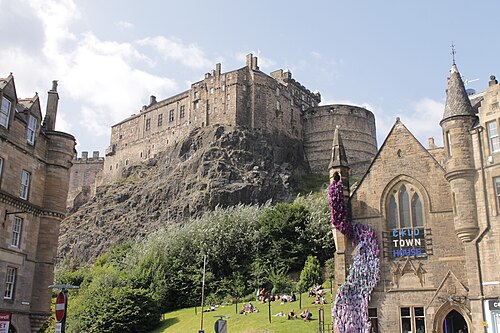 Edinburgh CastleRestored · prime 1520
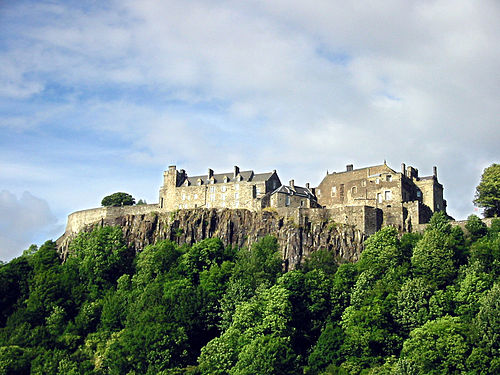 Stirling CastleRestored · prime 1542
 Glamis CastleStill standing · prime 1900
All castles in Scotland → · Strongest castles in Scotland → · Castles of Europe
Play As Your Clan
Hold a real castle against whatever you choose to send at it, take a ship out in her own service years, or stand at the shoulder of someone the record remembers. The chronicler sets the scene; the deeds are yours.
Notable bearers of the Smith name
- Adam Smith (1723–1790), moral philosopher, founder of modern economics
- Madeleine Smith (1835–1928), Glasgow socialite, central figure of the 1857 arsenic trial
- Iain Crichton Smith / Iain Mac a' Ghobhainn (1928–1998), Lewis-born poet writing in both Scots and Gaelic
Stories of Smith
Adam Smith and the Wealth of Nations
1776Adam Smith was born in Kirkcaldy in Fife in 1723, the posthumous son of the Comptroller of Customs. He held the chair of moral philosophy at Glasgow from 1752 to 1764, then resigned to take a tutorship of the young Duke of Buccleuch and a salary for life on the Buccleuch estate. He spent twelve years in the small house at Kirkcaldy where his mother kept the books, walking on the strand below the house in the afternoons, writing An Inquiry into the Nature and Causes of the Wealth of Nations. The book came out in two quarto volumes from William Strahan in London on the ninth of March 1776. Two months later it was clear to anyone reading it carefully that European economic argument had a new spine. Five months after that, the American colonies declared independence on the principles, in part, of the same book. David Hume read his presentation copy on his deathbed at Edinburgh and wrote to Smith that he was much pleased.
Read the story →
Captain John Smith at Jamestown
1607Sometime in late December 1607, in a longhouse at the Powhatan-Confederacy capital town of Werowocomoco on the north bank of the Pamunkey River in tidewater Virginia, Captain John Smith, twenty-seven years old, the Lincolnshire-born adventurer and one of the seven councillors of the Virginia Company colony at Jamestown that had been established in May of the same year, was brought before Wahunsenacawh (the paramount chief Powhatan, in his sixties), bound, and laid on two large stones in the centre of the longhouse with the Powhatan executioners holding clubs above his head. By Smith's own account in his Generall Historie of Virginia (1624), Pocahontas (the ten-or-eleven-year-old daughter of Powhatan, Matoaka in the Powhatan language) ran forward, took Smith's head in her arms, and laid her own head upon his to prevent the execution. By the modern ethnohistorical reading (Helen Rountree's standing Pocahontas's People, 1990; Camilla Townsend's standing Pocahontas and the Powhatan Dilemma, 2004), the ceremony Smith experienced was not in fact an execution but a Powhatan adoption-ritual into the tribal kinship system, in which the initiate's symbolic death is followed by the reincorporation into a new father-son relationship under Powhatan. Smith, by his initial 1608 report (A True Relation, written within the year of the events), did not mention Pocahontas's intervention; the intervention first appears in the 1624 Generall Historie, sixteen years after the events. The English colonial-American historical tradition has taken the Pocahontas-rescue story as foundational; the modern ethnohistorical reading takes it as an artefact of the 1624 publishing-context rather than the 1607 events.
Read the story →