Wilson
Son of Will, second most common surname in Scotland, behind Smith.
- Origin
- Lothian & Edinburgh, Scotland
- Motto
- Semper vigilans
- Famous bearer
- James Wilson (1742–1798), signer of the Declaration of Independence, US Supreme Court Justice
- Register
- Scottish family
The Wilson arms and country

Coat of armsEscutcheon of the Barons WilsonBorne by Barons Wilson: the ennobled line of the name, not the name at large.Vexald · CC BY-SA 4.0 
Coat of armsEscutcheon of Baron Wilson of TillyornBorne by the Baron Wilson of Tillyorn: the ennobled line of the name, not the name at large.Cypp0847 · CC BY-SA 4.0


- Coat of arms: Granted to an individual and inherited down that one documented line. These are the arms of particular families of the name, not of everyone who shares the surname.
This name is thick on both sides of the border, so the map shows the whole of Britain and Ireland with every region it touches highlighted. It is a regional pattern for the surname, not proof that your branch lived in each place.
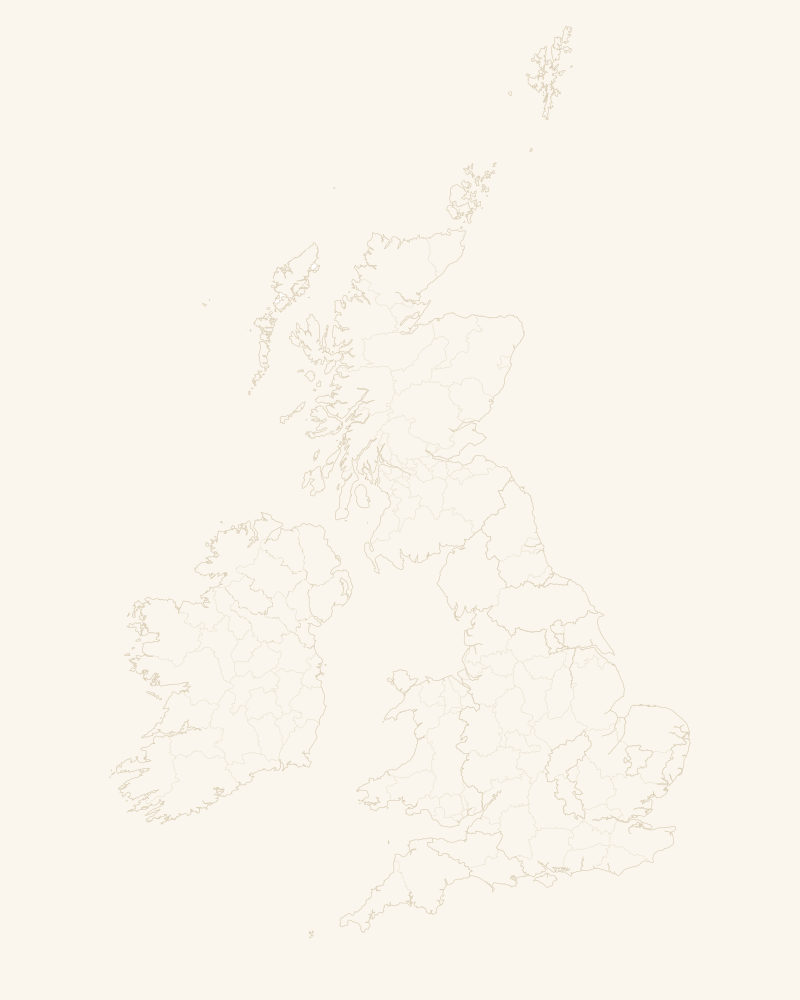
CoreHistoric reach
The seat of Wilson
Seat vacantChief
No one leads the Wilson community yet. When the movement opens, you can stand for its leadership, or help elect whoever does.
Current mission
No shared goal set yet. Once Wilson has leadership, it sets the public focus: a restoration, a gathering, a real-world project that helps its own.
The Wilson clan is being rebuilt. Join the waiting list for the movement today, and you help decide who leads it and what it does.
Help rebuild the Wilson clan →Motto
Semper vigilans
“Always vigilant”
What does the Wilson name mean?
Son of Will, diminutive of William. The Lowland Scots patronymic added the genitive 's' in the English fashion, in parallel with Williamson and the Welsh Williams. William as a baptismal name reached saturation in Scotland in the 13th and 14th centuries, leaving behind a surname pool of Williamsons, Wilsons, Willocks and McWilliams across every Lowland parish.
The history of Wilson
Every Lowland parish had a Will
William reached saturation as a baptismal name in Scotland in the 13th and 14th centuries, so common that the short forms did the daily work: Will, Wat, Bill. A man known as Will's son needed nothing further in a parish where everyone knew which Will was meant. Lowland Scots added the genitive s in the English fashion rather than the Gaelic Mac, and the same font of names threw off Williamson, Willock and McWilliam alongside Wilson.
Then the habit hardened into inheritance. Surnames in England are dated from the preparation of the Domesday Book in 1086, taken up first by the feudal nobility and spreading slowly downward; by 1400 most English families, and those of Lowland Scotland, had adopted hereditary surnames. The four-year study led by the University of the West of England, published in 2016 as the Oxford English Dictionary of Family Names in Britain and Ireland, found Wilson among the commonest surnames in the United Kingdom, in the company of Smith, Jones, Williams, Brown, Taylor and Davies.
Why two Wilsons are usually strangers
A name made this way is not a family. Will's son in Midlothian and Will's son in Lanarkshire were coined separately, out of the same stock of Williams, by neighbours who had never heard of one another. Wilson belongs with Anderson, Robertson and Thomson, the Lowland patronymic compression that turned the few most popular font names into the few most populous surnames. It stands second in Scotland behind Smith, and it got there by being invented over and over.
Wilsons run thickest through Edinburgh and the Lothians, the Borders, Fife, Lanarkshire and Glasgow, Stirling, and north into Aberdeen and Buchan. The same William-saturated naming filled Cumberland, Westmorland and Lancashire registers with Wilsons who owed nothing to Scotland. Two bearers meeting today share a grammar, not a grandfather, and the honest version of this history says so rather than inventing an ancestor to tidy it up.
Mac in the west, the plain s in the Lowlands
Gaelic built its surnames from mac, son, and nic for a daughter, so that MacDhomhnaill and NicDhomhnaill are one family in two mouths. The Lowlands used the plain possessive s instead. Highland clan surnames were also carried historically by descendants and dependants rather than by everyone standing on clan ground; it took a non-Gaelic-speaking administration to apply them wholesale to a territory. The Lowland son-names needed no such push. They came up from below, one household at a time.
Chiefs on the highlands as on the borders
An act of the Scottish Parliament of 1587 spoke of the cheiffis and chiftanes of all clannis, alsweill on the hielandis as on the bordouris, chiefs and chieftains of all clans as well on the highlands as on the borders, and went on to name Lowland families: Maxwells, Johnstones, Carruthers, Turnbulls and other Border reiving names. Sir Crispin Agnew of Lochnaw, Albany Herald Extraordinary at the Court of the Lord Lyon, has shown that the tidy split between Highland clans and Lowland families is a 19th-century convention rather than a legal or historical one.
The same act describes followers depending on a chief by pretence of blood or place of their dwelling. As fixed surnames spread, tenants and followers could take, or be given, the name of a landlord or a dominant kindred without sharing his blood, whether for protection, favour or solidarity. A clan surname on its own proves no descent from a chief. Wilson was carried by thousands of Lowland households at once and never tied to one seat and one charter chest, so a reader hunting for those is better rewarded hunting for the people.
The sept lists and the wrong tartan
In the 19th century, clan societies and tartan manufacturers set out to profit from the enthusiasm for all things Scottish, and drew up lists tying as many surnames as possible to a particular clan whether or not any historical connection existed. Clan MacFarlane acquired Miller and Millar as a sept, Clan Cameron acquired Taylor, Clan Sinclair acquired Mason. Patronymic forms of common personal names were parcelled out the same way, which is the machinery by which a Wilson gets told, confidently and for a price, which tartan is his.
The damage done is a false impression: that a common surname has one origin, that all its bearers are kin to one another, and that the whole crowd belongs to a single clan. There is no official list of clan septs, the decision rests with each clan, and the same sept name is claimed by more than one. Real septs existed, families who followed another chief through marriage or because they lived on a powerful laird's land, bound at times by bonds of manrent. A Wilson is welcome to a tartan; he is simply not obliged to believe the pedigree sold with it.
The Paisley emigrant and the Edinburgh antiquary
Alexander Wilson (1766–1813) of Paisley emigrated to Pennsylvania in 1794 and produced the nine-volume American Ornithology, the foundational work of New World bird study, beating Audubon to the field. It is the kind of achievement this name specialises in: a man who left a Lowland burgh and made something permanent in a country that had not yet catalogued its own birds.
Sir Daniel Wilson (1816–1892) of Edinburgh is the foundational figure of British archaeology and the first man to use the word prehistoric in English, in his Archaeology and Prehistoric Annals of Scotland, 1851. Every reader who has ever used that word is using a Wilson's coinage. The two men shared a name and a Lowland birth, and nothing in the record makes them kin; with this surname that is the expected answer rather than a disappointing one.
A Wilson signature on the Declaration
James Wilson (1742–1798) signed the Declaration of Independence in 1776 and served as a justice of the Supreme Court of the United States, and the signing is told in full in this family's own legend. The name appears in the American record again with Woodrow Wilson and the Fourteen Points of 1918, the subject of the second Wilson legend on this site.
No line of descent joins those two men, and none is claimed here. What joins them is a Lowland habit of naming a boy for his father's Will, carried across an ocean with the surname and then made to count on the far side.
Harold Wilson and the door held open
Harold Wilson was born at Huddersfield in the West Riding of Yorkshire on 11 March 1916, into a Wilson line that had come south from Scotland in the 19th century, one of countless Lowland names absorbed into the English north. He won a scholarship to Oxford, took a first in Philosophy, Politics and Economics, lectured in economic history, and served as a statistician and civil servant during the Second World War. Elected to Parliament in 1945, he was President of the Board of Trade at thirty-one.
He led the Labour Party from 1963, won four general elections, and held the office of Prime Minister from 1964 to 1970 and again from 1974 to 1976, framing the modernisation of Britain around what he called the white heat of the technological revolution. His governments established the Ministry of Technology, expanded comprehensive education and the university system, and kept the United Kingdom out of the Vietnam War despite considerable pressure to commit forces. He was created Baron Wilson of Rievaulx and appointed a Knight of the Garter.
His lasting monument is the Open University, founded under his government in 1969, which opened degree-level study to adults of any background with no entry qualifications required and has since taught more than two million students. He regarded it as the achievement he was proudest of. For a surname that spread among ordinary Lowland households because their fathers were called Will, an institution built to admit anyone without first asking what they had inherited is the right sort of monument, and the family motto, Semper vigilans, always vigilant, sits well beside it.
Champions of the Wilson name
The bearers whose lives are inseparable from this surname. Each has their own page, biography, achievements, geography, connection to the family.
Also found in
The Wilson name has substantial historical presence beyond Scotland. See it on England.
Historic Places, Rebuilt
Explore the streets and seats the Wilson name knew, rebuilt with AI as they stood in history.
Historic Places, Rebuilt · New
The castle on its crag, St Giles' crown spire, and the closes tumbling to the Cowgate.
Historic Places, Rebuilt · New
The merchant city on the Clyde on the eve of mass emigration, the Cathedral, the Trongate, and the Broomielaw where the ships left.
Historic Places, Rebuilt · New
Scotland's ecclesiastical capital at its peak, the great cathedral, the bishop's castle on the sea, and the new university.
Historic Places, Rebuilt · New
John Brown's shipyard on launch day for the Queen Mary, the great hull on the ways, the cranes and the cloth-capped crowd.
The castles of the homeland
The great strongholds of the homeland, look one up, see what it looked like in its prime, and recreate it to explore.
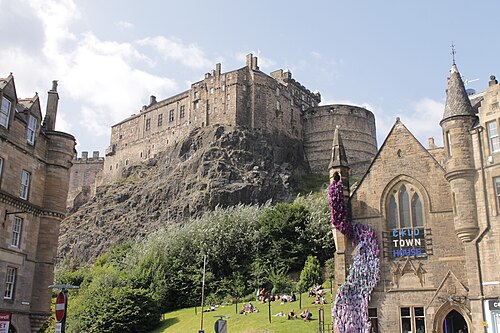 Edinburgh CastleRestored · prime 1520
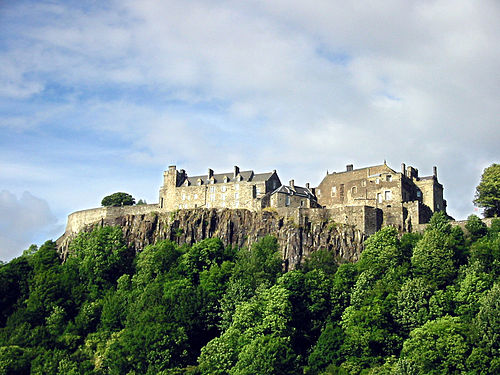 Stirling CastleRestored · prime 1542
 Glamis CastleStill standing · prime 1900
All castles in Scotland → · Strongest castles in Scotland → · Castles of Europe
Play As Your Clan
Hold a real castle against whatever you choose to send at it, take a ship out in her own service years, or stand at the shoulder of someone the record remembers. The chronicler sets the scene; the deeds are yours.
Notable bearers of the Wilson name
- James Wilson (1742–1798), signer of the Declaration of Independence, US Supreme Court Justice
- Sir Daniel Wilson (1816–1892), archaeologist, coined 'prehistoric'
- Alexander Wilson (1766–1813), ornithologist, author of American Ornithology
- Harold Wilson (1916–1995), British Prime Minister
Stories of Wilson
James Wilson signs the Declaration
1776On the second of August 1776, in the Pennsylvania State House (now Independence Hall) at Philadelphia, the engrossed Declaration of Independence (the formal calligraphic copy on parchment) was laid out for the signatures of the fifty-six delegates of the Continental Congress, the formal vote on the Declaration having been taken on the second of July and the resolution finalised on the fourth of July. Among the signatories on the Pennsylvania delegation was James Wilson, born at Carskerdo near St Andrews in Fife on the fourteenth of September 1742, schooled at the University of St Andrews, emigrated to Philadelphia in 1765, and at the time of the signing one of the principal lawyers of the colony. Wilson had, in his pamphlet Considerations on the Nature and Extent of the Legislative Authority of the British Parliament (Philadelphia, August 1774, but written in 1768), been the first writer in the English-speaking world to argue from natural-law and contractual grounds that the British Parliament had no legislative authority over the American colonies, an argument that, in 1768, had no obvious takers and that, by the summer of 1776, was the constitutional position of the Continental Congress. He was thirty-three years old. He went on to be the intellectual force behind the federalist case at the Constitutional Convention of 1787 (the long quotations from his Pennsylvania ratification speeches are preserved in Wilson's Works of 1804), to be appointed by Washington as one of the first six Associate Justices of the Supreme Court (1789), and to die, bankrupt and discredited, in a North Carolina inn in 1798.
Read the story →
Woodrow Wilson and the Fourteen Points
1918On the morning of the eighth of January 1918, in a Joint Session of the United States Congress in the House of Representatives Chamber in the United States Capitol building, Woodrow Wilson, sixty-one years old, the twenty-eighth President of the United States, of Scots-Irish Wilson stock (the Wilson family had emigrated from Strabane in County Tyrone to Pennsylvania in 1807, and Woodrow's father the Reverend Dr Joseph Ruggles Wilson was the Presbyterian theologian of the American South), delivered a speech of about forty-five minutes on the United States' war-aims in the Great War (which the United States had entered in April 1917 on the Allied side). The speech set out fourteen specific points (the Fourteen Points) that the United States proposed as the basis for any post-war peace settlement: open diplomacy, freedom of the seas, removal of economic barriers, reduction of armaments, the adjustment of colonial claims, evacuation of Russia, restoration of Belgium, return of Alsace-Lorraine to France, frontier adjustments along clearly recognisable lines of nationality for Italy, Austria-Hungary, the Balkans and Turkey, an independent Poland, and (the fourteenth and most consequential point) a general association of nations, the precursor of the League of Nations of 1920 and the United Nations of 1945. The Fourteen Points became, by the October 1918 German request for an armistice on their basis, the formal framework of the Versailles Peace Conference of 1919. Wilson was awarded the Nobel Peace Prize for 1919.
Read the story →
Frequently asked
What does the surname Wilson mean?
Where does the Wilson family come from?
Where did the Wilson family historically hold territory?
Is Wilson Scottish or English?
How old is the Wilson surname?
What is the Wilson family known for?
What is the Wilson motto?
What does "Semper vigilans" mean in English?
Is there a Wilson family crest or coat of arms?
Who is the most famous Wilson?
Who are some famous Wilsons?
What stories are told about the Wilson family?
What is the story of James Wilson signs the Declaration?
Where is the Wilson surname found today?
What does the Clan Rising page for the Wilson family cover?
Who is the head of the Wilson family today?
Neighbouring clans
- NapierInventors of logarithms and Celtic earls of Lennox.
- SmithThe forge surname, the most common occupational name in Scotland and the world.
- BrownDescriptive, the brown one, third most common surname in Scotland.
- ThomsonSon of Thomas, the Lowland Scots form, no 'p', distinguishing it from English Thompson.