Lane
The lane, hedge-bottom dweller.
- Origin
- West Midlands, England
- Famous bearer
- Sir Allen Lane (1902–1970), founder of Penguin Books
- Register
- English family
The Lane arms and country

Coat of armsLane (of Coffleet, Devon) ArmsBorne by the Coffleet line, one branch of the name rather than all of it.Lobsterthermidor · CC BY-SA 3.0
_Arms.svg)
- Coat of arms: Granted to an individual and inherited down that one documented line. These are the arms of particular families of the name, not of everyone who shares the surname.
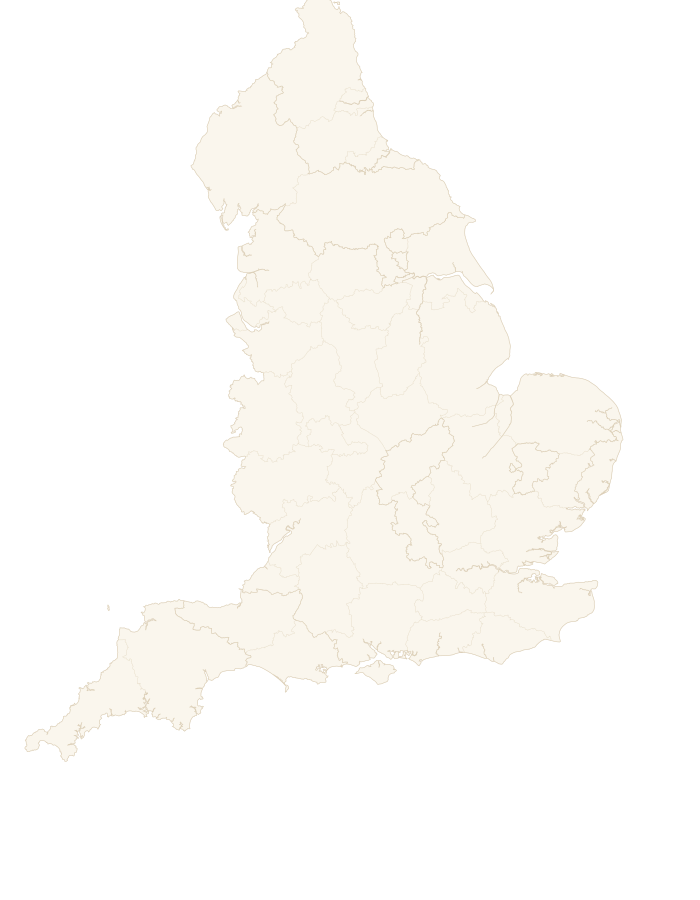
CoreHistoric reach
The seat of Lane
Seat vacantChief
No one leads the Lane community yet. When the movement opens, you can stand for its leadership, or help elect whoever does.
Current mission
No shared goal set yet. Once Lane has leadership, it sets the public focus: a restoration, a gathering, a real-world project that helps its own.
The Lane clan is being rebuilt. Join the waiting list for the movement today, and you help decide who leads it and what it does.
Help rebuild the Lane clan →What does the Lane name mean?
Locative, the lane. Old English lanu.
The history of Lane
The hollow way that became an address
Old English lanu gave Middle English its word for any narrow pathway, from a field track to the gap between two houses in a town, and it gave a byname to whoever lived on one. The Buckinghamshire tax lists of the 1400s catch the name mid-formation: John atte Lane and William atte Lane, the Saxon 'atte' doing precisely the work of the French 'de la'. That is not yet a family. It is a direction, and not yet a lineage.
The timing is the point. Family names in England are generally traced to the preparation of the Domesday Book in 1086, taken up first among the feudal nobility and gentry, and by 1400 most English families carried hereditary surnames. Those Buckinghamshire men sit inside that window: within a generation the description had stopped describing anything and simply passed to the children.
A Norman or Breton origin has also been proposed for some bearers, from L'Asne, itself perhaps from a nickname such as le Asinus, the Ass, or from a toponym in Normandy or Brittany. The force that landed at Pevensey on 28 September 1066 was Norman, French, Flemish and Breton together, and the incoming nobility habitually affixed 'de' to a village or estate back in France, producing the territorial surname that later flattens into English spelling. Two unrelated households could reach the same four letters from opposite directions.
Adam de Lone, living in 1315
The best-documented English line is the Staffordshire family, which claims Norman ancestry and lists as its earliest ancestor Adam de Lone, living in 1315. That is the family's own record rather than a proven pedigree, but it fixes a Lane presence in Staffordshire ahead of the Buckinghamshire taxmen who wrote 'atte Lane', and it is the earliest date attached to the name in England. Lane families also enjoyed standing in Kent, Gloucestershire, Buckinghamshire and Northamptonshire.
The weight of the name today sits in the West Midlands and along the Welsh border, then south through Gloucestershire into Somerset, Dorset and the West Country. The older footprint is wider: Kent and Sussex, Hampshire, London, East Anglia, and north into Lancashire and Cumbria. A name minted from a landscape feature does not migrate as a clan does. It appears wherever there were lanes, then thickens where families stayed.
The Northamptonshire knights and the crossing to Ireland
Sir Ralph Lane (c. 1530-1603), English explorer, is thought to have originated in Northamptonshire, and the county kept producing them: a knighted Sir Richard Lane is found there in the early 1600s. These are gentry Lanes, a long way from the cottager at the bend of the lane whose byname they share.
Lane families took part in the Plantations of Ireland, and Sir George Lane is reckoned to have belonged to the same family as Ralph. That is a planter route, an English family carrying an English name across the water, and it should not be confused with the Irish Lanes who were already there.
The Irish Lanes are a different name entirely
Lane also serves as an anglicised form of three Irish Gaelic surnames: O Laighin, descendant of Laighean, a byname meaning spear or javelin; O Luain, descendant of Luan, a byname meaning warrior; and O Liathain. The documentary link is thin, and no evidence has been found showing those Gaelic words actually rendered as 'Lane' in the record. What matters is that this is a separate origin, not a branch: the Staffordshire descent and the Northamptonshire knighthoods belong to the English name and explain nothing about an Irish family that reached the same spelling through a clerk's ear.
Irishmen carried the modern spelling into public life without the records settling which root they came from. Denny Lane (1818-1895) was an Irish businessman and nationalist public figure. Hugh Lane (1875-1915) was an Irish art collector and philanthropist.
The condition attached to the Bodley Head
Allen Lane Williams was born at Cotham, Bristol, on 21 September 1902, eldest son of Samuel Williams, a small Bristol manufacturer, and Camilla Lane. His maternal uncle John Lane (1854-1925) was a leading London publisher who had founded the Bodley Head in 1887, the avant-garde press behind Oscar Wilde's Salomé, Aubrey Beardsley's original Yellow Book, and the principal Aesthetic and decadent literature of the 1890s.
Allen left Bristol Grammar School at sixteen in 1919 with no leaving certificate. His uncle took him in as a junior trainee on one condition: that he drop Williams and take the surname Lane. He stayed sixteen years, became Chairman in 1925 on his uncle's death, in his twenty-third year, and built the firm's growing James Joyce and Agatha Christie lists.
Sixpence the volume, worked out on a train
In June 1934, returning by train from a weekend at Agatha Christie's house in Devon, Lane found nothing of literary quality at the Exeter St Davids bookstall: cheap thrillers, railway ephemera, and seven-and-sixpenny hardbacks beyond a casual traveller's means. On the run back to London he worked out the model of the modern English-language paperback. Good paper-covered editions of contemporary literature at sixpence the volume, the price of a packet of cigarettes, sold not through bookshops but through Woolworth's and the station bookstalls.
The Bodley Head board rejected it unanimously: sixpence paperbacks were impossible at any margin and would devalue the hardback trade the firm lived on. Lane committed his own capital and his uncle's small legacy, took office space in the crypt of Holy Trinity Church on Marylebone Road, brought in his younger brothers Richard and John, and on 30 July 1935 published the first ten Penguins, among them Hemingway's A Farewell to Arms and Christie's The Mysterious Affair at Styles. His secretary Joan Coles named the imprint when he asked for a dignified flightless bird; the office junior Edward Young drew the logo after a Saturday afternoon at the London Zoo penguin enclosure.
The first ten sold a million copies in a year. Lane left the Bodley Head that October to run Penguin on its own account, leased the Harmondsworth warehouse in 1937, and built the imprints out fast: Pelican for non-fiction and Penguin Specials for contemporary affairs in 1937, King Penguin in 1939, Puffin for children in 1940, and Penguin Classics in 1946 under E. V. Rieu, whose Odyssey opened the list and sold three million copies.
Regina v. Penguin Books Limited, November 1960
In August 1960 Penguin published the unexpurgated Lady Chatterley's Lover, and Lane was prosecuted for it at the Central Criminal Court from October into November. The defence called thirty-five literary witnesses, among them E. M. Forster, Helen Gardner, Raymond Williams and Richard Hoggart, and on 2 November 1960 the firm was acquitted. The verdict removed the central legal restraint on publishing imaginative literature in English.
Penguin sold two hundred thousand copies on the first day after the trial and three million by the end of the year. Lane was knighted in 1952, sold a controlling stake to the Pearson Group in 1970, and died at Bath on 7 July 1970 in his sixty-eighth year. The house he built out of a bad hour at a station bookstall is now part of Penguin Random House, the largest English-language publisher in the world.
Surveyors, scholars, a judge and a fighter pilot
Nicholas Lane (c. 1585-1644) was an English surveyor and cartographer; Edward William Lane (1801-1876) a British scholar and Stanley Lane-Poole (1854-1931) a British orientalist; Joseph Lane (1851-1920) an English socialist. Elizabeth Lane (1905-1988) was a British lawyer, and Geoffrey Lane, Baron Lane (1918-2005) a British judge.
Others took it onto a stage or into the air. Lupino Lane (1892-1959) was an English actor, Ronnie Lane (1946-1997) a British singer and songwriter, Margaret Lane (1907-1994) a British journalist, biographer and novelist. Brian Lane (1917-1942) was a Royal Air Force fighter pilot and ace of the Second World War. In Australia, Frederick Lane (1888-1969) was a swimmer, and Private Anthony John Lane (1920-1942) was killed in the Ration Truck massacre.
Lane, Lain and Layne on the Virginia rolls
The name reached America by more than one door. In 1663 Matthys Laenen Van Pelt emigrated from Amsterdam to New Jersey and the family shortened itself to Lane on arrival, a Dutch household walking into an English surname. Virginia county tax lists of the late 1700s carry Lane, Lain and Layne alongside one another with nothing to rank them, possibly unrelated families rather than branches; by the middle of the 1800s Lane was the form commonly adopted.
What followed was a spread of unconnected Lanes: Fitz Hugh Lane (1804-1865), painter; Jonathan Homer Lane (1819-1880), astrophysicist and inventor; George Martin Lane (1823-1897), scholar; Harriet Lane (1830-1903), niece of President James Buchanan; the historian Frederic C. Lane (1900-1984). In Canada, George Lane (1856-1925) was a politician and rancher. None of them share a pedigree. They share a lane.
Champions of the Lane name
The bearers whose lives are inseparable from this surname. Each has their own page, biography, achievements, geography, connection to the family.
Historic Places, Rebuilt
Explore the streets and seats the Lane name knew, rebuilt with AI as they stood in history.
The castles of the homeland
The great strongholds of the homeland, look one up, see what it looked like in its prime, and recreate it to explore.
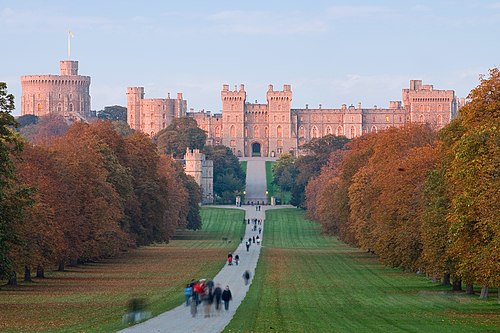 Windsor CastleRestored · prime 1820
 Tower of LondonRestored · prime 1285
 Bamburgh CastleRestored · prime 1904
All castles in England → · Strongest castles in England → · Castles of Europe
Play As Your Clan
Hold a real castle against whatever you choose to send at it, take a ship out in her own service years, or stand at the shoulder of someone the record remembers. The chronicler sets the scene; the deeds are yours.
Notable bearers of the Lane name
- Sir Allen Lane (1902–1970), founder of Penguin Books