Lee
The meadow, and a clearing-name stamped on dozens of villages.
- Origin
- North West, England
- Famous bearer
- The Reverend William Lee (c.1563–c.1614), inventor of the stocking frame
- Register
- English family
The Lee arms and country

Coat of armsLee Coat of ArmsRaster uploaded by Doalfe at en.wikipedia ; Vectorized by ZooFari · Public domain

- Coat of arms: Granted to an individual and inherited down that one documented line. These are the arms of particular families of the name, not of everyone who shares the surname.
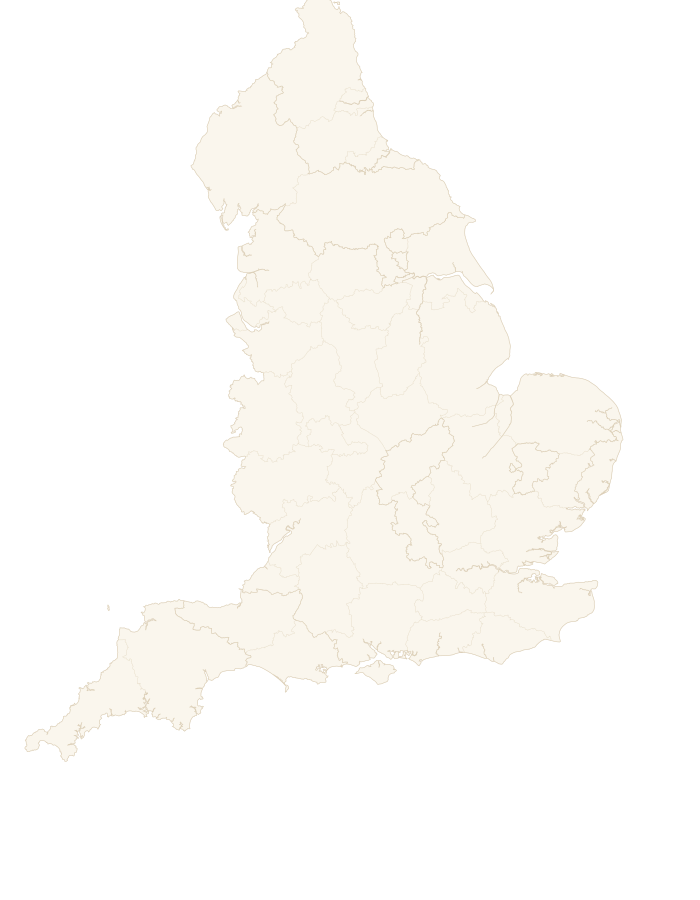
CoreHistoric reach
The seat of Lee
Seat vacantChief
No one leads the Lee community yet. When the movement opens, you can stand for its leadership, or help elect whoever does.
Current mission
No shared goal set yet. Once Lee has leadership, it sets the public focus: a restoration, a gathering, a real-world project that helps its own.
The Lee clan is being rebuilt. Join the waiting list for the movement today, and you help decide who leads it and what it does.
Help rebuild the Lee clan →What does the Lee name mean?
Locative, the lea (open meadow). Old English lēah; homonymous with Lee placenames and with early Chinese romanisation Lee / Li in modern London.
The history of Lee
The clearing in the wood, and the man who lived at the edge of it
Lee is the Old English leah: a clearing in woodland, an open break of grass in a country that was still largely wooded. It is one of the plainest names England produced, because it describes where a man lived rather than what he did or whose son he was. The same word hardened into Lea and Leigh, and into hundreds of settlement names, so the surname could be taken twice over: by the family who worked a clearing nobody had bothered to name, and by the family who came out of a village already called Lee long before they were born. Habitation names of this type describe the settlement and not the settler, and they attached to every scale of place, homesteads, farms, enclosures, hamlets, strongholds and single cottages alike.
That is also why so ordinary a word ended up carried by so many people. Surnames drawn from small places outnumber those drawn from great ones, because medieval movement ran from the small community into the town, and a newcomer needed something to be called that the town did not already have twenty of. A man who arrived from a hamlet in the woods was the man from the lee, and within a generation his children were Lees whether they had ever seen the clearing or not. No single Lee village can claim the name.
Three other roads led to the same spelling. In Ireland the name has diverse origins and widely dispersed clusters in the south-west, the west around Galway and the north-east: one recognised root is the anglicisation of Ó Laoidigh, which produced Lee, Lea and Maclee, while other Irish Lees carry English roots and others again descend from the Norman Du Lea. The 1901 Irish census recorded 4,912 entries, concentrated in Galway, Dublin, Cork, Antrim, Limerick and Down. From Norway the surname Lie was altered to Lee on arrival in the Americas in the late 1800s to suit English pronunciation.
One more coincidence has to be stated plainly, because it misleads readers and it misleads statistics. Lee is also the usual romanisation of the Chinese surname Li and of the Korean surname written with the same character, names with entirely separate roots that share only three letters in the Latin alphabet; over 30 per cent of people surnamed Lee in the United States identify as Asian or Pacific Islander in origin, which is a large part of why Lee ranked 22nd in the 2000 US census. Those families have their own long history and none of it appears here. Everything below belongs to the English, Irish and Norman-descended Lees.
Domesday, and the century the name stopped changing
The clearing names were on the ground long before anyone inherited one. Hereditary family names in England are generally attributed to the preparation of the Domesday Book in 1086, which listed the holdings of every tenant-in-chief and recorded who had held each estate before the Conquest. The survey documents an expropriation without parallel in medieval Europe: by 1086 only about 5 per cent of land in England south of the Tees remained in English hands, and after 1075 every earldom was held by a Norman. Hereditary naming began among the feudal nobility and gentry and worked downwards slowly.
The Norman lords who took the land brought a habit that shaped names like Lee for good. They distinguished themselves by putting de, meaning of or from, before the name of their village in France, or the estate they held, a territorial surname that was a direct consequence of feudal landownership. An English family living at a lea acquired the same grammar in the same generations, and the Norman Du Lea that turns up among the Irish Lees is that construction untranslated. The language of official documents changed from Old English to Latin, Anglo-Norman became the speech of the ruling class, and the clerks who wrote the clearing down were no longer writing in the tongue that named it.
The historian Christopher Daniell puts the earliest known instance of a modern surname passing down the generations at 1140. By 1400 most English families and those of Lowland Scotland had adopted hereditary surnames, although compulsory surnames were resisted in late medieval England because people associated them with taxation. The University of the West of England study completed in 2016 found that over 90 per cent of the 45,602 surnames in its dictionary are native to Britain and Ireland, and its leader Richard Coates put names like Lee in the class linked to a place rather than to a trade or a father.
The Calverton curate who watched his wife knit
William Lee was born around 1563 at Calverton, a small village seven miles north of Nottingham in the Sherwood Forest country, into a small Nottinghamshire yeoman family. He went to the local grammar school, took his BA at Christ's College, Cambridge, in 1582 or 1583, was ordained in the Church of England, and about 1586 took the curacy of his own village, which he held for the rest of his English career. The living was poor. He supplemented it the way his neighbours did, by hand-knitting hosiery for the local market through the long Nottinghamshire winters, and his wife worked at the same trade.
Hosiery in the 1580s meant two needles and a pair of hands. A skilled knitter produced one stocking in roughly a week. Lee, sitting by the cottage hearth watching his wife at it, set out around 1586, in his twenty-third year, to build a machine that would do the work instead, and spent three years on the prototype in his workshop at Calverton.
What he finished in 1589 was the stocking frame: a wooden frame on a treadle-and-bar carriage carrying two hundred and fifty-six steel needles in a single horizontal bar, each needle worked independently by a sinker that drew the yarn down and looped it through the row beneath. The operator moved the bar with a horizontal lever and the treadle with his foot, and the coordinated action laid down a full-width row of knitted loops in one stroke. A pair of coarse worsted stockings came off it in twenty-four hours against the hundred and forty hours the hand-knitter needed, a productivity gain of eightyfold. No comparable machine existed anywhere.
Two refusals, a workshop at Rouen, and the frames that came home
Lee carried the prototype to London in 1589 to ask Elizabeth I for the royal patent that would let him set up production. By his own later account the Queen refused it on the ground that the machine would put hand-knitters out of work, the standard mercantilist objection of the period to labour-saving invention. She did allow him to demonstrate the frame at Greenwich Palace, and she wore the worsted stockings he made for her. Refused the monopoly, he kept working: through the 1590s he improved the machine to a sixteenth-gauge version capable of silk stockings, and in 1603 he applied again, to James I. He was refused again, on the same argument about the knitters' livelihoods.
In 1605 he accepted an invitation from Henri IV of France to bring the manufacture to Rouen under French royal patronage. He took nine of his own workmen with him, including his brother James, and set up the first frame-knitting factory in Europe there on royal subsidy, working under the protection of the King's brother-in-law, the Duke of Sully. It was, for a few years, exactly the arrangement two English monarchs had declined to give him.
Henri IV was assassinated in May 1610 and the French protection lapsed with him. Lee died at Paris in poverty around 1614, in his fifty-first year, the machine still unpatented and the industry it would build still unbuilt. In 1615 his brother James and the seven surviving workmen brought the frames back to Nottinghamshire, and those frames founded a trade that ran continuously at Nottingham, Leicester and Derby for the next four centuries. Within a hundred and fifty years the stocking-frame industry of Nottinghamshire, Leicestershire and Derbyshire was running over twenty-five thousand frames and employing some hundred and ten thousand framework knitters, the largest single textile-machinery industry in England before Arkwright.
The design held. The frame remained substantially as Lee left it in 1589 until the fully-fashioned Cotton's Patent machine arrived in the late nineteenth century, a country curate's engineering staying in daily commercial use. The stocking frame was the foundational textile machine of the first Industrial Revolution and the platform on which Richard Arkwright and James Hargreaves built the spinning jenny and the water frame in the 1760s and 1770s. Surviving frames are kept at the Knitting Industry Museum at Calverton, in the village where he was born and built the machine, including the central single hand-frame from his own workshop: the object, the trade and the parish all in one place.
Richard Lee's crossing, and a coat of arms nobody can quite explain
A different line of Lees crossed the Atlantic in 1639, when Richard Lee I, later called the Immigrant, went out to the English Colony of Virginia. He made his fortune in tobacco, on a plantation worked by enslaved Africans, and the family he founded became one of the most consequential political households in Virginia and Maryland. He asserted descent from the Lees of Shropshire and bore arms that were confirmed in 1660 or 1661 by John Gibbon, Bluemantle Pursuivant of the College of Arms.
That claim has been argued over ever since, and the argument is worth stating rather than smoothing away. A 1988 study by William Thorndale in the National Genealogical Society Quarterly held that Richard Lee I was the son of John Lee, a clothier, and his wife Jane Hancock; that he was born not at Coton Hall in Shropshire but at Worcester, down the Severn; and that several immediate relatives had been apprenticed as vintners. That leaves the obvious question of how he came to share a coat of arms with a family he may not have descended from. The English genealogist Alan Nicholls, working from original documents left by Richard Lee, his family and their associates, has argued that some of Thorndale's conclusions rested on earlier transcription errors, and has set the Shropshire and Worcester records side by side. A great-uncle may have been the Richard Lee, Gent, buried at Coton Hall's Alveley parish in 1613.
The colonial generations built steadily. Richard Lee II married Laetitia Corbin, daughter of the Hon. Henry Corbin of Rappahannock County, sat in the House of Burgesses and later on the King's Council. His son Richard Lee III worked in London as the family's cotton broker and leased the plantation he had inherited, Machodoc, to his brothers Thomas and Henry for an annual rent of one peppercorn, payable on Christmas Day. Thomas Lee (1690-1750) took the family into wider significance: a Burgess, a founder of the Ohio Company, and co-executor of the estate of his uncle John Tayloe I, which became Mount Airy.
The brothers who signed, and Light Horse Harry
Thomas Lee married Hannah Harrison Ludwell, and their children, with those of his brother Henry Lee I (1691-1747), put an extraordinary number of Lees into the founding of the United States. Thomas Ludwell Lee (1730-1778) was a member of the Virginia Delegates and was a principal editor of George Mason's Virginia Declaration of Rights of 1776, the document that preceded the American Declaration of Independence. Two of his brothers signed that Declaration: Richard Henry Lee (1732-1794) and Francis Lightfoot Lee (1734-1797). Richard Henry Lee was a Virginia delegate to the Continental Congress and its president in 1774, served again as president of Congress under the Articles of Confederation, and was one of Virginia's first United States Senators, from 1789 to 1792.
The younger siblings went abroad and into medicine. Alice Lee (1736-1818) married the American chief physician William Shippen Jr, and the brothers Arthur Lee (1740-1792) and William Lee (1739-1795) served as diplomats. That William Lee is a different man entirely from the Calverton curate of the stocking frame; the sources connect the two families not at all, and the coincidence of name is only that.
Henry Lee I's grandson Henry Lee III (1756-1818), known as Light Horse Harry, was a Princeton graduate who served under George Washington in the Revolutionary War and was the only officer below the rank of general to receive the Gold Medal, awarded for his leadership at the Battle of Paulus Hook in New Jersey on 19 August 1779. He was Governor of Virginia from 1791 to 1794. His brothers were Richard Bland Lee, a three-term Congressman from Virginia, and Charles Lee (1758-1815), Attorney General of the United States from 1795 to 1801.
Maryland had its own Lee. Thomas Sim Lee, born in the Province of Maryland in 1745 and a second cousin of Henry Lee III, was elected Governor of Maryland in 1779 and again in 1792, and declined a third term in 1798. He had a substantial hand in the making of Maryland as a state.
Silver Spring, and a society founded in 1921
The Maryland line kept going for another two centuries. Francis Preston Blair Lee (1857-1944), great-grandson of Richard Henry Lee, represented Maryland in the United States Senate from 1914 to 1917. His son E. Brooke Lee was comptroller of Maryland and is remembered as the father of Silver Spring. His grandson Blair Lee III (1916-1985) was the second Lieutenant Governor of Maryland after the office was revived, serving from 1971 to 1979, and Acting Governor of Maryland from 1977 to 1979: over two hundred years of political service out of one immigrant's household.
The family also organised itself to keep its own record. The Society of the Lees of Virginia was formed in 1921 by descendants of Richard Lee I and his wife Ann Constable. It curates the Lee Family Digital Archive, a repository of family papers and secondary sources, preserves and interprets sites including Stratford Hall and the Lee-Fendall House, promotes archaeological, genealogical and historical research into the family's actual past rather than its legend, and holds an annual meeting.
The proposal of March 1989, and the decision to give it away
Timothy John Berners-Lee was born at East Sheen in south-west London on 8 June 1955, the eldest son of Conway Berners-Lee and Mary Lee Woods. Both parents were pioneer computer scientists who had met on the Ferranti Mark I commercial computer development team at Manchester in the early 1950s and moved to London in 1953 on joint appointment to Ferranti at Bracknell; his mother was one of the first commercial programmers in the world. He went up to The Queen's College, Oxford, in October 1973 to read physics and took a first-class BA in 1976.
He worked through the late 1970s and early 1980s at Plessey Telecommunications at Poole and then at the small Dorset firm D.G. Nash, and from 1984 at CERN, the European Organisation for Nuclear Research at Geneva, as a software engineering consultant on the document management system behind the experimental physics programme. In March 1989, in his thirty-fourth year, he wrote an internal CERN memorandum titled Information Management: A Proposal. It sketched a hypertext system in which any document on any computer connected to the global Internet could be retrieved by a single universal address, formatted in a universal markup language and carried by a universal protocol.
He then built it, over two years, on a NeXTcube workstation at CERN. Through the autumn of 1990 he wrote the specifications for HyperText Markup Language and HyperText Transfer Protocol, and devised the Uniform Resource Identifier addressing scheme that became the URL. He finished the first web browser and the first web server, both called WorldWideWeb, on the NeXTcube on Christmas Day 1990, and opened the first publicly accessible website, the info.cern.ch server at CERN, in August 1991. In 1993 he released the three specifications under an unrestricted public licence, the decision that committed the Web to an open-protocol architecture it has kept for more than three decades and the reason no company owns the format of a web page.
In October 1994, in his fortieth year, he founded the World Wide Web Consortium at the Massachusetts Institute of Technology as the standards body of the Web, and has directed it ever since; he founded the World Wide Web Foundation in 2009 to widen internet access in the developing world, and the Open Data Institute in London in 2012 with Sir Nigel Shadbolt. He was elected a Fellow of the Royal Society in 2001, knighted in 2004 as the youngest scientist then knighted, admitted to the Order of Merit in 2007, and given the Turing Award in 2017. The Web now runs to more than two billion websites and is used by over five billion people, and the foundations he laid in 1990 and 1991 are still the working architecture of every page on it. A surname that began as the word for a gap in the trees is attached to two of the more consequential machines in the English record: the stocking frame built in a Nottinghamshire village, and the hypertext system written at Geneva.
Champions of the Lee name
The bearers whose lives are inseparable from this surname. Each has their own page, biography, achievements, geography, connection to the family.
- William Lee
The Nottinghamshire curate whose 1589 invention of the stocking frame mechanised the previously hand-knitted hosiery trade, founded the East Midlands hosiery industry that lasted four centuries, and was the foundational textile machine of the first Industrial Revolution.
- Sir Tim Berners-Lee
The London-born CERN software engineer whose March 1989 proposal Information Management at the European Organisation for Nuclear Research at Geneva and his subsequent invention of HTML, HTTP and the URL system in 1990 and 1991 founded the World Wide Web, the universal hypertext system on which the modern information economy of the world is built.
Historic Places, Rebuilt
Explore the streets and seats the Lee name knew, rebuilt with AI as they stood in history.
The castles of the homeland
The great strongholds of the homeland, look one up, see what it looked like in its prime, and recreate it to explore.
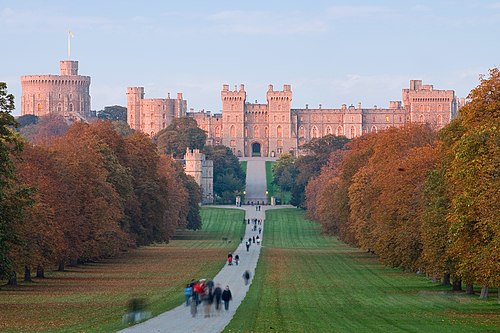 Windsor CastleRestored · prime 1820
 Tower of LondonRestored · prime 1285
 Bamburgh CastleRestored · prime 1904
All castles in England → · Strongest castles in England → · Castles of Europe
Play As Your Clan
Hold a real castle against whatever you choose to send at it, take a ship out in her own service years, or stand at the shoulder of someone the record remembers. The chronicler sets the scene; the deeds are yours.
Notable bearers of the Lee name
- The Reverend William Lee (c.1563–c.1614), inventor of the stocking frame