Long
The long one.
- Origin
- South West, England
- Famous bearer
- Sir Walter Long (1591–1672), MP for Devizes; senior parliamentary figure of the early Stuart period
- Register
- English family
The Long arms and country
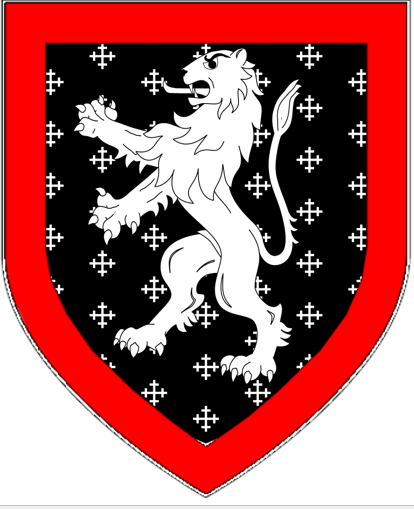
Coat of armsArms of Long ( of France)Jhughlong · CC BY-SA 4.0 
Coat of armsLong (of South Wraxall) armsBorne by the South Wraxall line, one branch of the name rather than all of it.Lobsterthermidor · CC BY-SA 3.0
.png)
_arms.png)
- Coat of arms: Granted to an individual and inherited down that one documented line. These are the arms of particular families of the name, not of everyone who shares the surname.
CoreHistoric reach
The seat of Long
Seat vacantChief
No one leads the Long community yet. When the movement opens, you can stand for its leadership, or help elect whoever does.
Current mission
No shared goal set yet. Once Long has leadership, it sets the public focus: a restoration, a gathering, a real-world project that helps its own.
The Long clan is being rebuilt. Join the waiting list for the movement today, and you help decide who leads it and what it does.
Help rebuild the Long clan →What does the Long name mean?
Descriptive, tall. Old English lang.
The history of Long
The tall one, and the neighbour he was measured against
Long is not a trade and not a landholding. It is a remark. The Old English word lang, tall, fastened to one man in one village because it told him apart from another who answered to the same font-name, and in a country where a quarter of the boys born in London in 1510 were called John and another eighth Thomas, telling two men apart was the whole problem a byname existed to solve. Scholars class Long with the cognominal names, the broadest group of all, built from nicknames for appearance.
That makes it slippery in a way a trade name never is. Richard Coates, who led the four-year University of the West of England study that concluded in 2016 and worked through the 45,602 surnames of the resulting dictionary, noted that Short may in fact have been an ironic nickname for a tall man. The same joke runs the other way. Either way the trait died with the first bearer; his grandsons inherited the word, not the height.
A second tributary fed the same spelling from the map. Long Melford in Suffolk, Long Buckby in Northamptonshire, Long Crendon in Buckinghamshire, Long Bredy in Dorset and the two Long Suttons in Lincolnshire and Somerset were named in Old English for the unusual length of a high street or a main field-strip. Each threw off families entered in the parish rolls as de Long-something, and across the late fourteenth and fifteenth centuries those compressed to plain Long. It is why the densest concentration of the surname in the modern census sits on the Wiltshire and Somerset chalk, among the Long villages themselves.
Why every language in Europe invented this name for itself
Height bynames are not borrowed between languages. They are re-coined in each one, because the observation needs no vocabulary beyond the everyday. Spanish did it with Delgado for the thin man and Moreno for the dark one, German with Schwartzkopf. Norman French did it with le Lung, and the Anglo-Norman families recorded as de Long and le Lung came into England in the eleventh century with the conquest, arriving at the same spelling an English villager had reached from lang.
The consequence matters more than the etymology. A name coined separately in parish after parish has no single founder, and that is why two medieval Longs in two counties should never be assumed to be kin.
Domesday, the taxman, and the century the name froze
Bynames became surnames only when somebody wrote them down and kept them. In England the shift is generally traced to the preparation of the Domesday Book in 1086, and it moved from the top: the feudal nobility and gentry first, the rest of society slowly after. By 1400 most English families, and those of Lowland Scotland, had hereditary surnames; Wales did not follow until unification under Henry VIII in 1536. Mandatory surnames were resisted in late medieval England, where they were associated with taxes.
The Normans who brought le Lung across arrived in a country they were remaking, and an estimated eight thousand Normans and other continentals settled after 1066. Intermarriage with the native English was uncommon at first, but by the early 1160s Ailred of Rievaulx could write that it was ordinary at every level of society. The English Long and the Norman le Lung stopped being distinguishable long before either was a surname.
O'Longain of Cannovee and Moviddy
Ireland's Longs are not one family and never were. Some are of English, Scottish and Norman descent. Others descend from Gaelic septs, the O'Longain and O'Longaig, whose anglicisation shortened a Gaelic name into an English adjective it has nothing to do with. One of those septs sat in County Armagh, but the greater number were in County Cork, at Cannovee and at Moviddy. A further and separate Irish strand comes from Lonklin, in Tipperary and Dublin.
The Irish Longs lost all their lands in the upheavals of the seventeenth century, and the name might reasonably have gone under with the estates. It did the opposite. Long is found in its greatest numbers in Munster, with Cork the most favoured county of all, and the line of direct descent from the last elected chieftain to the present day is unbroken, the title styled O'Long of Carrenelongy.
Three roads, one spelling, and one that is a different name entirely
A third route runs through Scandinavia. The names Långbäck and Langbekk appear in the thirteenth century near the Norwegian border, and around the great Swedish emigration to the United States they were anglicised into Longback, Longbrook and plain Long. An American Long may therefore be English by nickname, Norman by settlement, Irish by sept or Swedish by abbreviation, and no document in the family will necessarily say which.
That is worth stating flatly, because a name this common is exactly the kind that gets swept into tidy ancestral lists promising every bearer a single kindred and a single tartan. The sources behind this page show no such kindred. They show a byname invented over and over by people who never met, and gentry lines in Wiltshire, Cornwall and Essex that the record keeps carefully apart.
One further caution, of a different order. Long also appears as an East Asian surname in romanised form, and that name is not this name: the letters meet in the Latin alphabet the way English Lee and the Chinese surname Li do, without sharing a syllable of history. This catalogue covers the European-origin surname only, and every bearer named here is European in origin.
Draycot Cerne, Devizes and the Speaker's chair
The Wiltshire Longs of Draycot are the closest thing the English name has to a chronicle. They descend through Sir Henry Long, who died in 1490 and had been knighted at the Battle of Stoke in 1487, and they ran a substantial gentry estate at Draycot Cerne for the next four centuries, producing senior Royal Air Force officers in the twentieth. The Cornish Longs of St Germans come from a Devon and Cornish gentry family attested in parish records from the early sixteenth century; the Essex Longs of Hatfield Peverel are a separate line of medieval origin in the East Anglian fenlands.
Out of the same southern counties came a run of parliamentarians whom the record does not join into any single pedigree. Gifford Long, born about 1576 and dead in 1635, was an English politician and magistrate. Sir Walter Long, 1591 to 1672, sat for Devizes and was a senior parliamentary figure of the early Stuart period. Lislebone Long, 1613 to 1659, rose to be Speaker in the House of Commons. Three men, one surname, no proven line between them.
The name's highest political office came later. Walter Long, 1st Viscount Long of Wraxall, 1854 to 1924, was a Conservative who held the Admiralty as First Lord from 1919 to 1921, in the years when the great naval powers were arguing out disarmament. From a nickname for a tall villager to the political head of the Royal Navy is the whole arc of what an English surname can do.
The astronomer, the Academician and the ether at Jefferson
Roger Long, 1680 to 1770, was an English astronomer. Catharine Long, 1797 to 1867, was an English novelist. Edwin Long, 1829 to 1891, was a painter and Royal Academician, best known for the Babylonian Marriage Market of 1875. Selden Long, 1895 to 1952, was a British military aviator of the First World War, and Cyril Norman Hugh Long, 1901 to 1970, an English-American biochemist.
The name's largest single contribution to human welfare came from a country practice in Georgia. Dr Crawford Williamson Long, 1815 to 1878, physician and pharmacist of Jefferson, performed the first successful surgical operation under ether anaesthesia on 30 March 1842. A more famous demonstration in Boston four years later took the public credit for a long time, and the twentieth century restored Long's priority. Every patient who has gone under for surgery since is downstream of a rural doctor with a nickname surname and an idea.
Winn Parish to the Senate Finance Committee
The Louisiana Longs are the group most often characterised as a political dynasty. Huey Pierce Long, 1893 to 1935, was Governor of Louisiana from 1928 to 1932 and United States Senator from 1932, the populist voice of the state through the worst years of the Depression. His brother Earl, 1895 to 1960, was Lieutenant Governor from 1936, then Governor across three separate terms between 1939 and 1960, and their brother George S. Long sat in Congress for Louisiana from 1953.
The family's longest reach was legislative. Rose McConnell Long, 1892 to 1970, Huey's widow, took his Senate seat in 1936. Their son Russell B. Long, 1918 to 2003, held a Senate seat from 1948 to 1987 and as chairman of the Senate Finance Committee wrote much of the country's tax law, arguing for low business taxes while carrying the Earned Income Credit, which put money directly into the hands of the working poor. Gillis William Long and Speedy O. Long, cousins of Huey, Earl and George, both represented Louisiana in Congress, and Jimmy D. Long of Natchitoches Parish served thirty-two years in the state House.
That is one American family, though, and the surname is not theirs. It belongs equally to Luz Long, 1913 to 1943, the German Olympic long-jumper; to Thelma Coyne Long, 1918 to 2015, the Australian tennis player; to the Australian painters Sydney Long and Leonard Long; to Shane Long, born 1987, the Irish footballer; and to Adrian Long, 1941 to 2022, the civil engineer from Northern Ireland. Nine centuries after a clerk wrote lang beside a man's name to tell him from his neighbour, the word is still doing what it was coined to do.
Champions of the Long name
The bearers whose lives are inseparable from this surname. Each has their own page, biography, achievements, geography, connection to the family.
Historic Places, Rebuilt
Explore the streets and seats the Long name knew, rebuilt with AI as they stood in history.
The castles of the homeland
The great strongholds of the homeland, look one up, see what it looked like in its prime, and recreate it to explore.
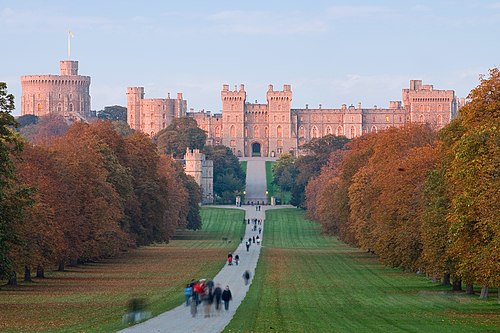 Windsor CastleRestored · prime 1820
 Tower of LondonRestored · prime 1285
 Bamburgh CastleRestored · prime 1904
All castles in England → · Strongest castles in England → · Castles of Europe
Play As Your Clan
Hold a real castle against whatever you choose to send at it, take a ship out in her own service years, or stand at the shoulder of someone the record remembers. The chronicler sets the scene; the deeds are yours.
Notable bearers of the Long name
- Sir Walter Long (1591–1672), MP for Devizes; senior parliamentary figure of the early Stuart period
- Walter Long, 1st Viscount Long (1854–1924), Conservative First Lord of the Admiralty during the First World War
- Edwin Long (1829–1891), Royal Academician painter of the Babylonian Marriage Market (1875)
- Dr Crawford Long (1815–1878), American physician who pioneered ether anaesthesia in 1842
- Huey Long (1893–1935), American populist governor of Louisiana