Matthews
Matthew's son, March and Welsh edge.
- Origin
- South West, England
- Famous bearer
- Sir Stanley Matthews (1915–2000), English footballer (Stoke City, Blackpool); the only player to win Footballer of the Year twice (1948, 1963); knighted for services to football, 1965
- Register
- English family
The Matthews arms and country

Coat of armsMatthews - coat of armsFlora Adams Darling · Public domain

- Coat of arms: Granted to an individual and inherited down that one documented line. These are the arms of particular families of the name, not of everyone who shares the surname.
CoreHistoric reach
The seat of Matthews
Seat vacantChief
No one leads the Matthews community yet. When the movement opens, you can stand for its leadership, or help elect whoever does.
Current mission
No shared goal set yet. Once Matthews has leadership, it sets the public focus: a restoration, a gathering, a real-world project that helps its own.
The Matthews clan is being rebuilt. Join the waiting list for the movement today, and you help decide who leads it and what it does.
Help rebuild the Matthews clan →What does the Matthews name mean?
Son of Matthew, Matth(y)ews vs Matthews is scribal.
The history of Matthews
A saint's name, a scribe's spelling, and a very small stock of forenames
Matthews is the son of Matthew, the -s carrying the whole of "Matthew's" in one letter. The forename travelled with the Church rather than with any one family, which is why the surname made itself in dozens of places at once and never belonged to a single kindred. The difference between Matthews, Mathews and Matthew is what a parish clerk's pen did on a given morning, not descent.
So few forenames were in use that a handful of patronymics came to cover much of England. London in 1510 gave the name John to 24.4 per cent of its boys, Thomas to 13.3 per cent and William to 11.7. Where a village held four men called Matthew, their sons were marked out by the father's name; when that mark stopped changing each generation, the surname existed. Across England and Lowland Scotland that freeze was general by 1400.
One warning belongs with the name. In England a servant often took his employer's name with an s added: Vickers began as the vicar's man, and Roberts could be the son of a Robert or the servant of one. A Matthews need not descend from a man baptised Matthew.
The March counties and a tight band of Welsh valleys
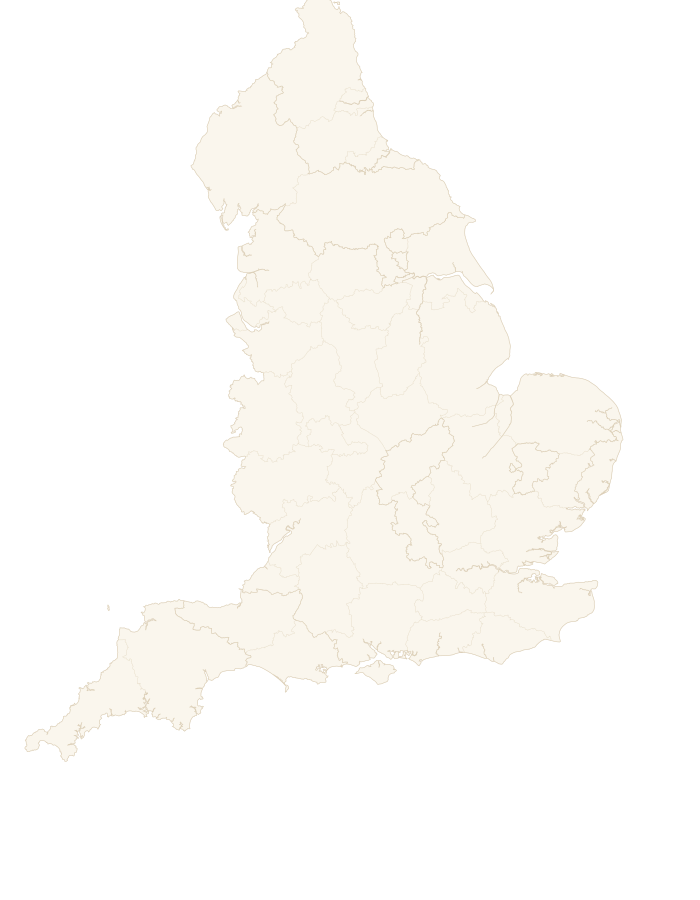
The English heartland sits along the Welsh March and the counties behind it: Shropshire, Herefordshire and Worcestershire, Staffordshire, Warwickshire and the Birmingham and Black Country ground between them. From there it runs south west through Gloucestershire into Somerset, Wiltshire and Dorset and on to Devon and Cornwall, with older strength through London, Kent, Surrey, Sussex, Hampshire and the Thames valley shires. On the Welsh side the name fixed late, because Welsh surnames did: they came in with the union under Henry VIII in 1536.
The modern figures show it. In 2014 the name was carried by about one Welsh resident in 492 against one in 917 in England, and the densest ground is the south east and the south coast: Caerphilly at one in 229, Torfaen at one in 278 and Bridgend at one in 306, with Swansea, Monmouthshire, Neath Port Talbot, Rhondda Cynon Taf, the Vale of Glamorgan, Merthyr Tydfil and Blaenau Gwent also above the Welsh average, and Wrexham the one northern name on the list.
That ground still supplies the name's Welsh public face: the singer Cerys Matthews, born in 1969, the traditional musician Ceri Rhys Matthews, and the footballers Adam Matthews and Robert William Matthews. Glamorgan carried it in county cricket through Austin Matthews, who played for Northamptonshire and for England as well.
The Hanley barber's son who made one move his whole career
Stanley Matthews was born on 1 February 1915 in Hanley, one of the six towns of the Staffordshire Potteries, the son of a barber and prize-fighter who put his four boys through running, skipping and shadow-boxing as soon as each could walk. He joined the ground staff at Stoke City at fourteen, played his first team match at seventeen in March 1932, and turned out for Stoke for the last time in February 1965, five days after his fiftieth birthday. The thirty-three years between are the longest first-class career English football has produced.
The technique was one idea worked to perfection. On the right wing he built the move the game named the Matthews dribble: a shape to go outside, a halt, a drop of the shoulder to pull the defender onto the wrong foot, then the cut back inside and away. Full-backs knew what was coming and were beaten by it anyway. He won fifty-four England caps across twenty-three years, the longest international career of any England player, was the first Footballer of the Year in 1948 and won it again in 1963, and in 1956 became the first European Footballer of the Year.
He never smoked, never drank, and trained six days a week through every off-season. Back at Stoke in 1961 at the age of forty-six, he helped the club win promotion in his first full season.
Twenty-two minutes at Wembley, and a knighthood while still playing
Matthews moved to Blackpool in 1947, and Blackpool reached three FA Cup Finals in five seasons. The third, against Bolton at Wembley on 2 May 1953, was the first shown on live television. Blackpool were three goals to one down with twenty-two minutes left. Matthews, thirty-eight years old, made two of the goals in Stan Mortensen's hat-trick and crossed for the winner in the last minute, then took his medal from the Queen. It has been the Matthews Final ever since.
The New Year Honours of 1965 made him the first footballer knighted while still playing. He coached afterwards in Malta and in Canada, and on his own initiative in the Black townships of apartheid-era South Africa, the first major European footballer to go and do it. He died at Stoke on 23 February 2000 at eighty-five. Mourners lined the whole route of the funeral to Stoke Minster, his ashes lie under the centre circle of the club's ground, and the statue outside has his right boot in the air, caught in the half-shape of the dribble.
He is not the only athlete of the name. Helen Matthews was a Scottish footballer and a suffragette; Ken Matthews (1934-2019) was an English race walker; Leigh Matthews played Australian Rules; Jimmy Matthews was an Australian Test cricketer, and Greg Matthews played for New South Wales and for Australia.
The NFL's First Family, four generations deep
The best documented family of the name is American. H. L. Matthews was born at Jeffersonville, Ohio, in 1889, played minor league baseball for South Atlantic League clubs from 1912 to 1915, enlisted in the United States Army after the First World War began and took up boxing there, then came back to baseball for the 1922 season. In 1925 he began coaching at The Citadel, where from 1926 to 1941 he rotated between baseball, track and field and boxing.
His son Clay Matthews Sr. (1928-2017) joined the San Francisco 49ers in 1950 as an offensive tackle, defensive tackle and defensive end. The Korean War interrupted him; he served as a paratrooper, rejoined the 49ers in 1953 and played three more seasons. Two of his sons reached the NFL. Clay Matthews Jr., born 1956, went in the first round of 1978 and was a linebacker for the Cleveland Browns to 1993 and the Atlanta Falcons to 1996, with four Pro Bowls. Bruce Matthews, born 1961, was a first-round pick in 1983 and played guard, tackle, centre and long snapper for the Houston and Tennessee Oilers and Titans until 2001: fourteen Pro Bowls, nine first-team All-Pro selections, and the Pro Football Hall of Fame in 2007. They are the only brothers ever to play on the same Pro Bowl team, for the American Football Conference in 1988 and again in 1989.
The fourth generation kept it going. Clay Matthews III, born 1986, was drafted by the Green Bay Packers in 2009, won Super Bowl XLV and became the franchise's all-time sack leader. Bruce's sons Kevin and Jake both made the league, Jake going sixth overall to the Falcons in 2014, and in the NFC Championship Game of the 2016-17 playoffs Jake's Falcons beat Clay III's Packers, cousin against cousin, for a place in the Super Bowl. Seven of the family have played in the NFL, one of only five to reach a third NFL generation.
Inventors, physicists and a dean of St Paul's
The name runs deep in British science. Drummond Matthews (1931-1997) was an English marine geologist and geophysicist; Paul Taunton Matthews (1919-1987) a British theoretical physicist; Mabel Lucy Matthews (1879-1970) a British electrical and production engineer at a time when very few women held the title; and Andrew Matthews (1815-1897) combined an English clergyman's living with the work of an entomologist.
In business and public life it reaches the front rank without settling into a dynasty. Harry Grindell Matthews (1880-1941) was an English inventor and Terry Matthews a Welsh-Canadian technology entrepreneur; Henry Matthews, 1st Viscount Llandaff, was a British Conservative politician and statesman; Bernard Matthews founded a food processing company; and Walter Matthews served as Dean of St Paul's Cathedral in London.
Stage, screen and the long emigration
Jessie Matthews was among the most popular English actresses, dancers and singers of the 1930s, and the name held its place in the profession through A. E. Matthews, Lester Matthews and Francis Matthews. Colin Matthews, born 1946, and David Matthews, born 1943, are English composers; Sally Matthews, born 1975, is a British operatic soprano. Darren Matthews, born 1968, is the English professional wrestler better known as William Regal.
By 2014 only about a fifth of the world's bearers were still in England and two per cent in Wales. Just over half were in the United States, eight per cent in Australia, nearly five per cent each in Canada and South Africa, and around one per cent each in New Zealand and Ireland.
Each of those countries has its own record. Peter Matthews (c.1790-1838) was a farmer and soldier who joined the Upper Canada Rebellion of 1837; Bruce Matthews the Canadian Army officer commanded the 2nd Canadian Infantry Division in the Second World War; Victoria Matthews became a Canadian Anglican bishop. In the United States, Claude Matthews was governor of Indiana from 1893 to 1897 and James M. Matthews the first chancellor of New York University. It is the ordinary shape of a name that left the March and the valleys in numbers, and did well wherever it landed.
Champions of the Matthews name
The bearers whose lives are inseparable from this surname. Each has their own page, biography, achievements, geography, connection to the family.
Historic Places, Rebuilt
Explore the streets and seats the Matthews name knew, rebuilt with AI as they stood in history.
The castles of the homeland
The great strongholds of the homeland, look one up, see what it looked like in its prime, and recreate it to explore.
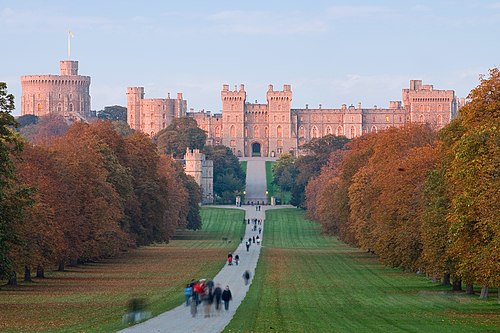 Windsor CastleRestored · prime 1820
 Tower of LondonRestored · prime 1285
 Bamburgh CastleRestored · prime 1904
All castles in England → · Strongest castles in England → · Castles of Europe
Play As Your Clan
Hold a real castle against whatever you choose to send at it, take a ship out in her own service years, or stand at the shoulder of someone the record remembers. The chronicler sets the scene; the deeds are yours.
Notable bearers of the Matthews name
- Sir Stanley Matthews (1915–2000), English footballer (Stoke City, Blackpool); the only player to win Footballer of the Year twice (1948, 1963); knighted for services to football, 1965