Payne
The villager's joke, worn with honour now.
- Origin
- South West, England
- Famous bearer
- John Howard Payne (1791–1852), American actor and writer of the song Home, Sweet Home
- Register
- English family
The Payne arms and country

Coat of armsPayne (of Hough-on-the-Hill, Lincolnshire) armsBorne by the Hough-on-the-Hill line, one branch of the name rather than all of it.Lobsterthermidor · CC BY-SA 3.0
_arms.png)
- Coat of arms: Granted to an individual and inherited down that one documented line. These are the arms of particular families of the name, not of everyone who shares the surname.
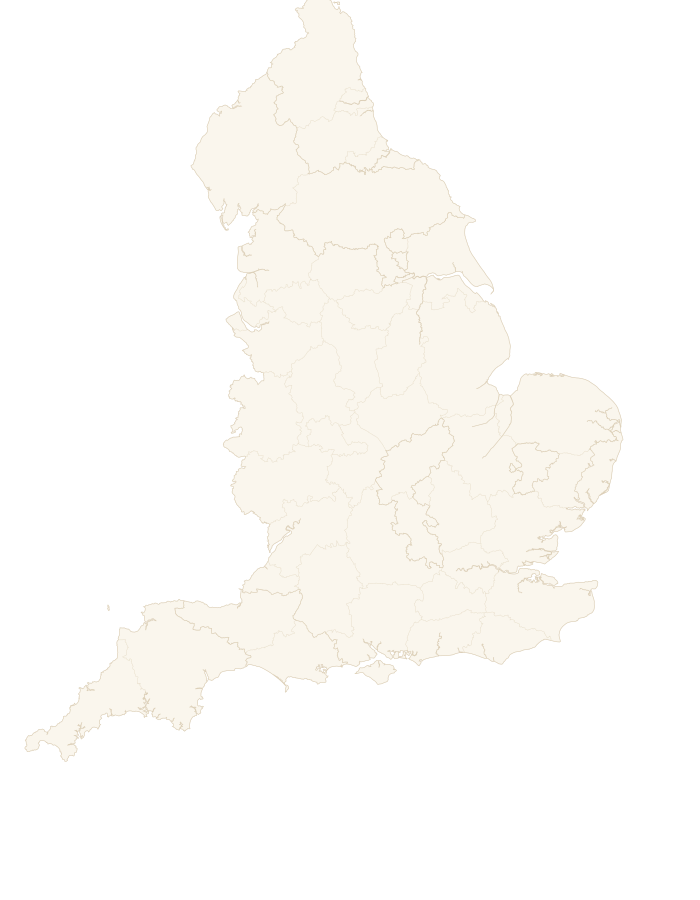
CoreHistoric reach
The seat of Payne
Seat vacantChief
No one leads the Payne community yet. When the movement opens, you can stand for its leadership, or help elect whoever does.
Current mission
No shared goal set yet. Once Payne has leadership, it sets the public focus: a restoration, a gathering, a real-world project that helps its own.
The Payne clan is being rebuilt. Join the waiting list for the movement today, and you help decide who leads it and what it does.
Help rebuild the Payne clan →What does the Payne name mean?
Old French paysan / paien or Latin paganus in Norman bynames, 'rustic' or heathen joke-name.
The history of Payne
The joke Payns sent to London
The surname begins in France. Payne is the English weathering of Payen, the form worn by the men of Payns near Troyes, and its earliest hard fixture on English ground is Hugues de Payens, who came to London in 1128 to set up the house that gave the Knights Templar their footing in England, nearly three centuries before most English families carried a fixed surname at all. The Conquest had made such names fashionable: after Hastings on 14 October 1066 the new elite brought Anglo-Norman French with them, and William, Robert and Richard pushed the Anglo-Saxon given names aside.
What the byname meant was less flattering than the men who ended up wearing it. Old French paysan and paien, and behind them Latin paganus, marked the man of the fields or the man whose churchgoing his neighbours doubted. Only about 8,000 Normans and other continentals settled in England after 1066, and by the early 1160s Ailred of Rievaulx could write that intermarriage ran through every level of society; a name minted as a Norman jibe was within a few generations carried by families on both sides of the joke.
Peter Payne takes an English heresy to Bohemia
Hereditary surnames were still hardening when the family's first famous bearer was born. Barons were using them in eleventh-century England, but the habit only reached most English and Lowland Scottish families by 1400, and in the late Middle Ages ordinary people resisted fixed surnames because they smelt of the tax roll. Sir Peter Payne, born in 1390, arrives right at that turn.
He did not keep his convictions local. Payne was an English Lollard who carried Wycliffite theology out of England to the Hussites of Bohemia, splicing one condemned movement into another, and lived on to about 1455. It makes a striking first entry in the family record: the first English Payne the catalogue names left his mark not on an English manor but in central Europe.
Dolley Payne in the President's house
The name crossed the Atlantic and rose quickly. Dolley Madison, born Dolley Payne in 1768 and dead in 1849, reached the President's house as First Lady of the United States. A generation behind her, John Howard Payne (1791–1852) worked as an American actor and wrote the song Home, Sweet Home, which put the surname into parlours that would never otherwise have heard of a Payne.
The American Paynes then filled the middling offices of the republic rather than its grand ones. Lewis S. Payne (1819–1898) sat as a New York politician; Eddie N. Payne (1873–1951), Rosanna Catherine Payne (1884–1954) and Frederick G. Payne (1904–1978) followed in American politics, with Franklin Payne a Missouri state senator. Bruce Ryburn Payne (1874–1937) took the name into education instead, as founding president of Peabody College from 1911 to 1937.
The grey that carries the family name
William Payne (1760–1830), an English painter and etcher, mixed a wash so useful to watercolourists that it took his surname and never gave it back: Payne's grey. Few families own a colour. Other Paynes took up the brush themselves: Edgar Alwin Payne (1883–1947), landscape painter, muralist and Western American artist, and Wyndham Payne (1888–1974), English artist, illustrator, model-maker and muralist at once.
The line runs to the present. C. F. Payne, born Chris Fox Payne in 1954, works as an American illustrator; Michael Gustavius Payne, born 1969, paints in Wales; Mandy Payne is a British artist. Humfry Payne (1902–1936) turned the same eye on the ground itself as an English archaeologist, dead at thirty-four, and Naomi Payne carries British archaeology on now.
On stage and in sound the name spreads as widely. Ben Iden Payne (1881–1976), English actor and director, worked the theatre and Patricia Payne, born 1942, sings as a New Zealand mezzo-soprano; Anthony Payne (1936–2021) was an English composer and Joseph Payne (1937–2008) an English harpsichordist, while later Paynes went electric: Dougie Payne on bass for Travis and Liam Payne (1993–2024) of One Direction.
The Wendover girl at Eddington's lecture
Cecilia Helena Payne was born at Wendover in Buckinghamshire on 10 May 1900, eldest of the three children of Edward John Payne, a London barrister and Oxford historian who wrote on the voyages of the Elizabethan seamen to America, and Emma Pertz, a Prussian-born painter and niece of Georg Heinrich Pertz, editor of the Monumenta Germaniae Historica. Her father died when she was four. She was schooled at Bourne End and at St Paul's Girls' School in Hammersmith.
A scholarship took her to Newnham College, Cambridge, in October 1919. That December she sat in Trinity College while Arthur Eddington reported the May 1919 solar-eclipse expedition's confirmation of general relativity, and decided in the lecture room that night, by her own later account, that astronomy was the field she would commit herself to. She took the Natural Sciences Tripos in 1923 and found the door shut behind it: Cambridge did not award degrees to women until 1948, and had no doctoral place to give her.
The thesis her referee told her to soften
In September 1923 she sailed for the United States on the Astronomical Fellowship that Harlow Shapley, director of the Harvard College Observatory since 1921, had created for the leading European graduate astronomer of each year. She was its first holder and entered the Radcliffe College graduate programme. Her PhD came in May 1925 for Stellar Atmospheres, which applied Meghnad Saha's 1920 ionisation theory to the spectra of the main-sequence stars and found hydrogen and helium present in proportions roughly a million times those of every heavier element combined.
Henry Norris Russell of Princeton refereed the manuscript and judged the hydrogen result almost certainly spurious against the solar-composition consensus of the 1920s; on his urging she added a sentence to the published thesis describing her own central finding as almost certainly not real. Russell published the same result independently in 1929 and acknowledged her prior work in a footnote. Otto Struve called the 1925 thesis the most brilliant PhD ever written in astronomy.
Three million observations and a Harvard first
She married the Russian-born Harvard astronomer Sergei Gaposchkin in March 1934, appended his surname to her own, and spent four decades with him on the photometry and spectroscopy of the variable stars, the central long programme of mid-century observational astronomy. Their catalogue ran to three million observations of three thousand individual variable stars, the foundational photometric data set of the field, and she wrote the standard textbook Variable Stars in 1938.
In March 1956 Harvard made her the first female chair of its Department of Astronomy and the first woman promoted to a tenured full professorship in any of its departments. She retired in 1973 after forty-eight years at the Observatory and died at Cambridge, Massachusetts, on 7 December 1979. Her autobiography appeared posthumously in 1984. Modern stellar astrophysics still rests on a Radcliffe thesis signed with the Payne name.
A Victoria Cross, Terminal 4 and a jockey's silks
Sir Norman Payne (1921–2003), an engineer, chaired the British Airports Authority through the construction of Heathrow Terminal 4. A. R. Payne, a British rubber scientist, has the Payne effect named for him; Roger Payne worked as a biologist and environmentalist and Katharine Payne, born 1937, as a bioacoustics researcher. Leonard A. Payne (1894–1919), a British military pilot from Swaziland, took the name into the air.
Keith Payne, born 1933, came out of Vietnam an Australian recipient of the Victoria Cross, and the Australian branch runs on around him: Marise Payne in the Senate, Michelle Payne, born 1985, riding as a jockey, Aaron Payne in rugby league, Matthew Payne in Supercars. In Britain Joe Payne (1914–1975) played football, Gareth Payne (1935–2004) played Welsh rugby, Keri-Anne Payne, born 1987, swam for Britain after a South African birth, and Charlotte Payne, born 2002, throws the hammer.
Champions of the Payne name
The bearers whose lives are inseparable from this surname. Each has their own page, biography, achievements, geography, connection to the family.
Historic Places, Rebuilt
Explore the streets and seats the Payne name knew, rebuilt with AI as they stood in history.
The castles of the homeland
The great strongholds of the homeland, look one up, see what it looked like in its prime, and recreate it to explore.
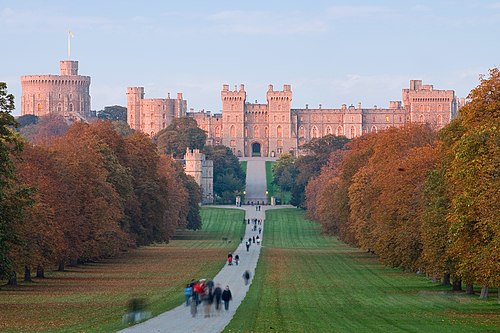 Windsor CastleRestored · prime 1820
 Tower of LondonRestored · prime 1285
 Bamburgh CastleRestored · prime 1904
All castles in England → · Strongest castles in England → · Castles of Europe
Play As Your Clan
Hold a real castle against whatever you choose to send at it, take a ship out in her own service years, or stand at the shoulder of someone the record remembers. The chronicler sets the scene; the deeds are yours.
Notable bearers of the Payne name
- John Howard Payne (1791–1852), American actor and writer of the song Home, Sweet Home
- Sir Peter Payne (1390–c. 1455), English Lollard who carried Wycliffite theology to the Bohemian Hussites
- Cecilia Payne-Gaposchkin (1900–1979), Cambridge-trained astronomer who established the hydrogen composition of stars (Harvard PhD 1925)
- Sir Norman Payne (1921–2003), engineer; chairman of the British Airports Authority through Heathrow Terminal 4 construction