Peters
also Peterson, Petersen, Peter
Son of Peter, the rock-name made patronymic.
- Origin
- South West, England
- Famous bearer
- Mike Peters (1959–2025), Welsh musician (The Alarm)
- Register
- English family
Where the Peters name comes from
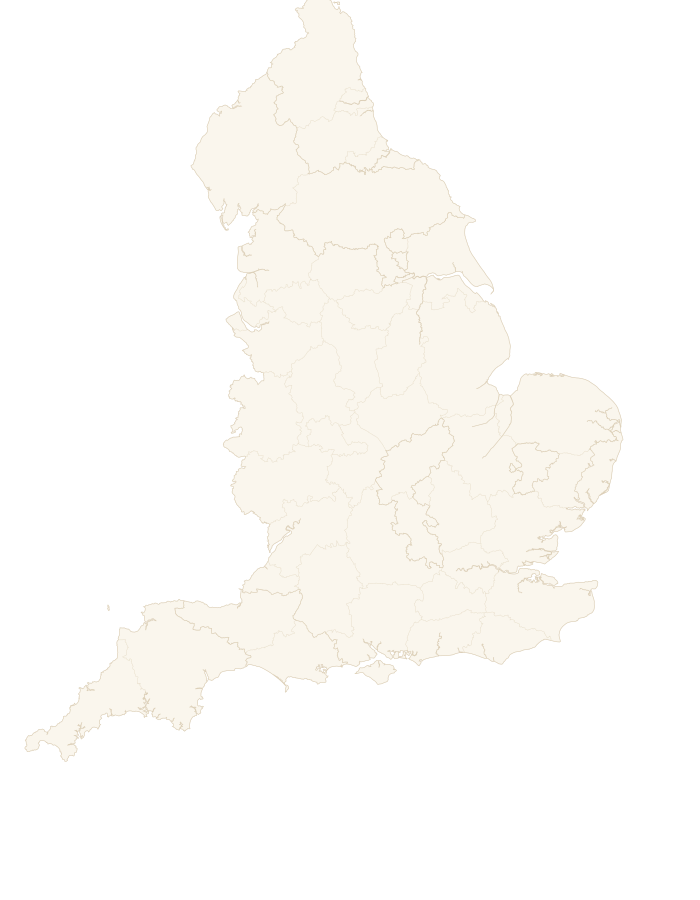
CoreHistoric reach
The seat of Peters
Seat vacantChief
No one leads the Peters community yet. When the movement opens, you can stand for its leadership, or help elect whoever does.
Current mission
No shared goal set yet. Once Peters has leadership, it sets the public focus: a restoration, a gathering, a real-world project that helps its own.
The Peters clan is being rebuilt. Join the waiting list for the movement today, and you help decide who leads it and what it does.
Help rebuild the Peters clan →What does the Peters name mean?
A patronymic, 'son of Peter', from the Latin learned form of the apostle's name (Greek Petros, 'rock'), as against the Norman-spoken Piers that gives Pearce. The name is common across the English south-west and Wales, where it served as a plain Anglicised patronymic, and runs alongside the explicit -son forms Peterson and the Scandinavian-American Petersen.
The history of Peters
The rock-name that never went Norman
Peters is a patronymic, the son of a Peter, and the Peter it keeps is the learned church-Latin form of the apostle's name rather than the Norman-spoken Piers that produced Pearce. The same construction was raised independently in Low German, Dutch and English, and English clerks also used Peters to render the Gaelic Mac Pheadair; in the United States the name further absorbed the cognate Peeters and Pieters carried in by immigrants. One count of the Peter patronymic and its relatives runs to some seven hundred spellings.
The timing of the freeze matters. By 1400 most English families, and most in the Scottish Lowlands, had settled on hereditary surnames, while Wales took up the fixed English pattern only after the union under Henry VIII in 1536. The font-name itself was never the largest in the pool: of boys born in London in 1510, 24.4 per cent were John, 13.3 per cent Thomas and 11.7 per cent William. Peter sat under that trio, and the patronymic built on it followed the font-name's rank.
The banker who bought the ruin above the Mole
Betchworth Castle sits on a sandstone spur above the River Mole, seat of the manor of West Betchworth, which Richard de Tonbridge held at the Domesday survey of 1086. The first fortress on the spur was an eleventh-century earthwork raised by Robert Fitz Gilbert. In 1373 the place was granted to Richard FitzAlan, Earl of Arundel, and in 1379 his son Sir John FitzAlan, Earl Marshal of England, turned the earthwork into a stone castle. It passed by marriage to Sir Thomas Browne, Sheriff of Kent, who rebuilt it as a fortified house in 1448.
The castle came to the surname in the eighteenth century. Henry Peters (c. 1763-1827), a banker and Member of Parliament, bought Betchworth in 1798 and spent considerable money turning the old fortified house into a comfortable family home. He lived there with his wife, Charlotte Mary Morrison, and their twelve children until his death in 1827. The Peters years were the last in which Betchworth was a house rather than a ruin.
The name was already in banking: a George Peters served as Governor of the Bank of England from 1785 to 1787. Betchworth itself did not stay with the family. It went to David Barclay, and in 1834 to Henry Thomas Hope, co-heir of the banking dynasty, who absorbed it into his Deepdene estate and demolished large parts of the castle to reuse the material, leaving the shell that stands today. In 2008 Mole Valley Council sold that shell for one pound to a local man, Martin Higgins, who undertook to conserve structure and grounds with support from English Heritage and local trusts so the public could be admitted.
A Pennsylvania bench, an Atlanta railroad
The name went early to colonial Philadelphia and settled into the law there. William Peters (1702-1786) practised as a lawyer and sat as a judge in the city. Richard Peters, Jr. (1744-1828) became a Pennsylvania jurist and a member of the Continental Congress, and his son Richard Peters (1780-1848) followed him into the law as a jurist and an official of the Supreme Court, two generations of the surname working the same ground in the founding decades of the republic.
A second American line built rails instead of case law. Richard Peters (1810-1889) was a railroad man and a cofounder of Atlanta City. His son Richard Peters (1848-1921) worked as a civil engineer and railroad executive, and another son, Edward C. Peters (1855-1937), turned the family position into an Atlanta real estate business. Ralph Peters (1853-1923) worked as an American railroad executive on the Long Island Rail Road in the same generation.
Elsewhere on the American bench the name recurs with unusual persistence. Thomas Minott Peters (1810-1888) was a lawyer who became Chief Justice of Alabama and a working botanist besides. Curtis Arnoux Peters (1879-1933) sat as a justice of the New York Supreme Court, Raymond E. Peters (1903-1973) on the Supreme Court of California, and Karen K. Peters (born 1947) served as an American jurist in the same tradition. Marybeth Peters (1939-2022) was an American jurist and an expert in copyright.
Puritan pamphleteer, colonial parson, hymn writer
The best-known English Peters of the seventeenth century worked in the pulpit and the print shop at once. Hugh Peters (1598-1660) was a Puritan minister and a propagandist for Oliver Cromwell, which put a man of the surname at the loudest point of the English religious argument of his century.
The church carried the name across the Atlantic. Richard Peters (1704-1776) was an English-born Anglican clergyman in colonial Pennsylvania, and Samuel Peters (1735-1826) an Anglican clergyman in Connecticut. Later American clergy of the name include John Punnett Peters (1852-1921), an Episcopal clergyman, and George N. H. Peters (1825-1909), a Lutheran minister.
In Germany the name kept its churchly footing as well: Norbert Peters (1863-1938) was a Catholic biblical scholar. In Britain, Mary Peters (1813-1856) wrote hymns, work that put the surname into congregational singing rather than into sermons, and Madison Clinton Peters (1859-1918) preached in America.
A father and two daughters at the easel
The most concentrated artistic household of the name was German by work and Dutch by birth. Pieter Francis Peters (1818-1903), a Dutch-born landscape painter and art dealer working in Germany, raised two professional painters. Anna Peters (1843-1926) painted flowers and landscapes; her sister Pietronella Peters (1848-1924) painted portraits and genre scenes. Three working painters of one surname in one house, two of them women building careers in nineteenth-century Germany, is an uncommon concentration.
Other Peters worked the brush and the plate before and after them. Giovanni Peters (1624-1677) was the Italianate name of the Flemish painter Jan Peeters. Johann Anton de Peters (1725-1795) was a German painter and etcher, William Peters (1742-1814) a British painter, and Wilhelm Peters (1851-1935) a Norwegian one. Carl Friedrich Peters (1779-1827) took the name into music as a German music publisher, and Alan Peters (1933-2009) into wood as a British furniture maker.
Heaviest on the North German coast
The surname's centre of gravity is not English. Of known bearers in 2014, 34.4 per cent lived in the United States and 23.6 per cent in Germany, against 4.8 per cent in England. Inside Germany it thickens towards the north coast: Schleswig-Holstein at one bearer in 209, Mecklenburg-Vorpommern at one in 220, Hamburg at one in 293. The Dutch share was 6.4 per cent, densest in Gelderland at one in 198 and Limburg at one in 215. The -son and -sen forms run alongside: Danish emigrants routinely respelled Pedersen and Petersen as Peterson on arrival in English-speaking countries, while in Sweden Peterson is the native spelling.
German bearers put the name into the observatory. Christian August Friedrich Peters (1806-1880) worked as an astronomer, as did Christian Heinrich Friedrich Peters (1813-1890), German-born and American by career, and George Henry Peters (1863-1947) in the United States. Wilhelm Peters (1815-1883) was a German explorer and naturalist, Eduard Peters (1869-1948) a prehistorian, and Arno Peters (1916-2002) a filmmaker and historian whose name attached itself to the Peters map projection.
Louise Otto-Peters (1819-1895) carried the name into German women's suffrage as a campaigner and writer. On the Dutch side, Leonard Antoon Hubert Peters (1900-1984) served as minister of Kingdom Relations in 1951-52, and a Dutchman named Thomas Peters, born around 1745 and dying in 1857, stands as possibly the first person on record to pass the age of 110.
Sea, air and a Medal of Honor
The name is heavily represented in twentieth-century naval and air service. Frederick Thornton Peters (1889-1942) was a Canadian captain in the Royal Navy. Arthur Peters (1888-1979) held the post of British Naval Secretary in 1941-42. George Peters (1894-1959) flew as an Australian ace in the First World War, and John Peters (born 1961) served as an English pilot in the Royal Air Force.
American service records carry it too. George J. Peters (1924-1945) received the Medal of Honor. Lawrence D. Peters (1946-1967) served as a United States Marine sergeant, and Alexander Peters (1869-1951) as a United States Navy sailor. Robert Peters (born 1940) served as an officer in the British Royal Air Force, and J. Greg Peters (born 1960) served as a superintendent in the Royal Canadian Mounted Police.
Island premiers and county members
In the Canadian Maritimes the name reached the top of provincial politics twice. Frederick Peters (1851-1919), a lawyer, was Premier of Prince Edward Island from 1891 to 1897, and Arthur Peters (1854-1908) also served as Premier of the island. On the mainland Charles Jeffery Peters (1773-1848) was a New Brunswick lawyer, judge and politician, and Harry Peters (1788-1870) a New Brunswick merchant and politician of the following generation.
In the United States the surname turns up in state houses and Congress from the early republic onward. John Samuel Peters (1772-1858) was governor of Connecticut. Two men named John A. Peters, born in 1822 and 1864, each served as a judge and a United States representative from Maine. Samuel R. Peters (1842-1910) and Mason S. Peters (1844-1914) went to Congress from Kansas, Andrew J. Peters (1872-1938) was Mayor of Boston, and George Silas Peters (1846-1928) mayor of Columbus, Ohio, in 1881-1882.
British Peters worked the Liberal benches: Arthur Peters (1867-1956) and Sidney Peters (1885-1976) both sat as Liberal Party politicians. Women of the name pressed from outside the chamber. Nellie Peters Black (1851-1919) campaigned for American women's rights, Alice E. Heckler Peters (1845-1921) worked as a social reformer, Lulu Hunt Peters (1873-1930) practised as an American physician and dietitian and wrote as well, and earlier still Eugenia Peters (1730-1783) was an English letter writer and publisher.
Track, pitch, stage and screen
British sport gave the name some of its most familiar modern faces. Martin Peters (1943-2019) was an English footballer, Mary Peters (born 1939) competed as a British athlete, and Jim Peters (1918-1999) was an English long-distance runner. Gary Peters (born 1954) played and then managed in English football, and Stephen Peters (born 1978), Nicholas Peters (born 1968) and Richard Peters (1911-1989) were all English cricketers.
On stage and screen the surname runs from the silent era to the present. House Peters Sr. (1880-1967) was a British-born American silent film actor, and House Peters Jr. (1916-2008) carried the same name into American character parts a generation later. Jane Alice Peters (1908-1942) acted under the stage name Carole Lombard, keeping her own surname off the credits. Susan Peters (1921-1952) was an American actress, Roberta Peters (1930-2017) an American coloratura soprano, and Johanna Peters (1932-2000) a Scottish mezzo-soprano.
In Britain the name stayed in the studios: Sylvia Peters (1925-2016) was an English television continuity announcer and presenter, Molly Peters (1942-2017), Luan Peters (1946-2017) and Wendi Peters (born 1968) acted on screen and stage, and Maisie Peters (born 2000) writes and sings. Away from performance, Rudolph Peters (1889-1982) worked as a British biochemist, Richard Stanley Peters (1919-2011) as a British philosopher, Wallace Peters (1924-2018) as an entomologist and parasitologist, and Ivo Peters (1915-1989) photographed English steam railways.
Historic Places, Rebuilt
Explore the streets and seats the Peters name knew, rebuilt with AI as they stood in history.
Castles the Peters held
Strongholds this name held for a decade or more, look one up, or rebuild it to explore.
- Betchworth Castle
Henry Peters bought Betchworth in 1798 and lived there until his death in 1827.
The castles of the homeland
The great strongholds of the homeland, look one up, see what it looked like in its prime, and recreate it to explore.
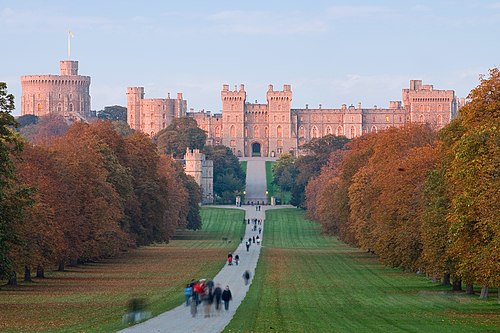 Windsor CastleRestored · prime 1820
 Tower of LondonRestored · prime 1285
 Bamburgh CastleRestored · prime 1904
All castles in England → · Strongest castles in England → · Castles of Europe
Play As Your Clan
Hold a real castle against whatever you choose to send at it, take a ship out in her own service years, or stand at the shoulder of someone the record remembers. The chronicler sets the scene; the deeds are yours.
Notable bearers of the Peters name
- Mike Peters (1959–2025), Welsh musician (The Alarm)
- Tom Peters (b. 1942), American management writer
- Jean Peters (1926–2000), American actress