Phillips
also Philips, Philipps, ap Phylip
Son of Philip, Welsh ap Phylip and Norman patronymic under one spelling.
- Origin
- South West, England
- Famous bearer
- Mark Phillips (b. 1948), British equestrian, Olympic gold medallist
- Register
- English family
The Phillips arms and country

Coat of armsPhillips (of Alverdiscott) ArmsBorne by the Alverdiscott line, one branch of the name rather than all of it.Lobsterthermidor · CC BY-SA 3.0
_Arms.png)
- Coat of arms: Granted to an individual and inherited down that one documented line. These are the arms of particular families of the name, not of everyone who shares the surname.
This name is thick on both sides of the border, so the map shows the whole of Britain and Ireland with every region it touches highlighted. It is a regional pattern for the surname, not proof that your branch lived in each place.
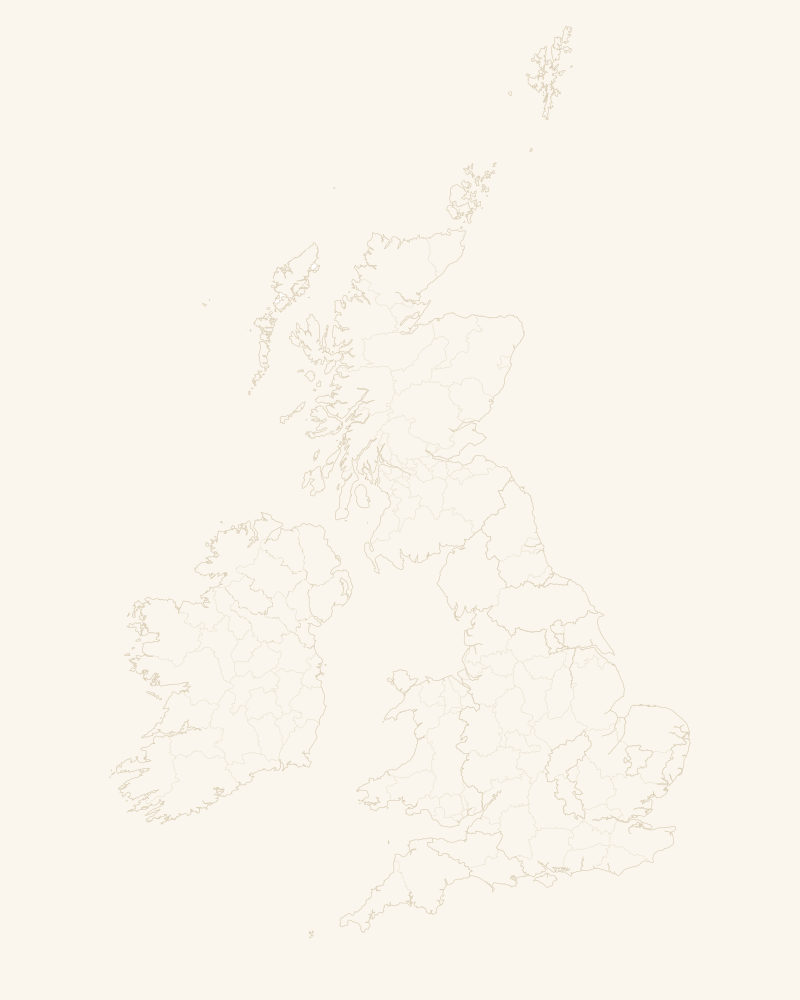
CoreHistoric reach
The seat of Phillips
Seat vacantChief
No one leads the Phillips community yet. When the movement opens, you can stand for its leadership, or help elect whoever does.
Current mission
No shared goal set yet. Once Phillips has leadership, it sets the public focus: a restoration, a gathering, a real-world project that helps its own.
The Phillips clan is being rebuilt. Join the waiting list for the movement today, and you help decide who leads it and what it does.
Help rebuild the Phillips clan →What does the Phillips name mean?
Patronymic, son of Philip (the Greek Philippos, 'horse-lover'). Two distinct compression streams converged in the modern surname spelling. (1) English Phillips: the Norman first name Philip, brought in with the Conquest, with the genitive 's' added in the standard English fashion. (2) Welsh ap Phylip: the Welsh patronymic 'son of Philip', densest in Pembrokeshire and Carmarthenshire where the Norman first names embedded earliest in the Welsh marcher zones. The variant spellings Philipps and Philips are the same surname under different scribal conventions.
The history of Phillips
Philippos the horse-lover, and the scribe's genitive s
The name underneath the surname is Greek: Philippos, horse-lover, carried west by the Church and then by a conquering aristocracy. One of the most obvious effects of 1066 was that names common in France displaced Anglo-Saxon ones: William, Robert and Richard soon became ordinary, the language of official documents shifted from Old English to Latin, and an estimated 8,000 Normans and other continentals settled in England. Philip travelled that road with them, a font-name off the Continent rather than out of the English shires.
Fixed family names in England are generally dated to the preparation of the Domesday Book in 1086, adopted first among the feudal nobility and gentry and spreading slowly downward. The mechanism that turned the font-name Philip into the family name Phillips was the possessive s, the same construction that produced Roberts and Vickers. A Dictionary of English Surnames flags the ambiguity built into it: Roberts could be taken up by either the son or the servant of a man named Robert, and Vickers by the vicar's man. Phillips carries the same double reading, and no amount of pedigree work will separate the two households.
A narrow font of names, and the arithmetic that made the surname
Early modern England used astonishingly few given names. Of the boys born in London in 1510, 24.4 per cent were christened John, 13.3 per cent Thomas and 11.7 per cent William: three names covering almost half the male population, a concentration that held across the whole early modern period. A patronymic drawn from that font could never be rare. Philip was not one of those three, but it was common enough to appear in every sizeable parish, distinct enough that son of Philip actually identified a man in a village where naming four Johns did not.
By the 14th century most English people used a surname, and the patronymic class was the oldest and broadest of the lot. A four-year study led by the University of the West of England, concluded in 2016 and published as the Oxford English Dictionary of Family Names in Britain and Ireland, analysed sources from the 11th to the 19th century across 45,602 surnames; under project leader Richard Coates it found more than 90 per cent native to Britain and Ireland, with Smith, Jones, Williams, Brown, Taylor, Davies and Wilson at the head. Phillips belongs to that structure: a system output, not the descent of one man.
Ap Phylip, and the hinge of 1536
Wales froze its hereditary surnames roughly two centuries after England did, following unification under Henry VIII in 1536. Until then a Welshman's identity was a chain rather than a label: ap, son of, repeated back through the generations. Norman font-names had long since embedded themselves in the marcher zone, so Phylip was an ordinary Welsh given name well before Phillips was a Welsh surname. When the chain froze, ap Phylip collapsed into a single word, leaving Philipps and Phillips as the same surname under two scribal conventions.
The compression ran deepest in Pembrokeshire and Carmarthenshire, where Norman and Flemish settlement had gone furthest in. The Landsker, an unmarked line across Pembrokeshire, has for centuries separated the English areas of the county from the Welsh ones, the English side long known as Little England. A surname built on Philip therefore arrived at that line from both directions at once: English Phillips with the genitive s below it, Welsh ap Phylip compressing to the identical spelling above it. The modern distribution is the fossil of two systems meeting, not of one family spreading.
The Cilsant marriage that carried the name into Picton
Picton stands three miles south of Wiston, on land the Flemish lord Wizo granted to one of his followers as a mesne lord at the end of the 13th century. Within that same century the castle was in Wogan hands, and Sir John Wogan rebuilt it in stone around the turn of the 14th century. With Wiston Castle abandoned, the Wogans simply lived at Picton, and their heirs have lived there ever since, which makes it a house continuously inhabited rather than a ruin with a lineage attached.
The surname reached Picton in the 1490s by marriage rather than by siege, when Sir Henry's daughter Jane married Sir Thomas ap Philipps of Cilsant. The form of his name is this whole page in miniature: a Welsh ap standing in front of a Norman font-name, a generation or two before the ap fell away and left Philipps behind. The estate then stayed with his line for more than three centuries, until the death of Lord Milford in 1823.
Richard Grant, who inherited the name along with the land
When Lord Milford died in 1823 the estate passed to his cousin Richard Grant, who assumed the surname Philipps as the condition of taking it. Nothing in UK law explicitly requires a child to carry a parent's surname, and adding another family's name as a term of inheritance was ordinary gentry practice: a name kept alive by a deed rather than by descent. Grant was created a Baronet in 1828 and Baron Milford in 1847 under the borrowed surname, and the Philipps of Picton continued on paper through a man who had been born a Grant.
The castle itself is of unusual construction and has been remodelled several times. Grade I listed, it is now owned and managed by the Picton Castle Trust, a registered charity, while its gardens and park are designated Grade II* on the Cadw/ICOMOS register of historic parks and gardens in Wales, the family seat converted into a public one without the building ever going empty.
Roch on its rock, from Parliament's fire to a Viscount's steel
Roch was raised around 1200 on a rocky outcrop near Haverfordwest by the Norman knight Adam de Rupe, probably over an earlier wooden structure, roche being the usual French word for rock. Built at the same time as Pill Priory, it probably served as one of the outer defences of Little England, close to that unmarked Landsker border. The de Rupe line died out in the 15th century; by the 17th the castle had come to the Walter family, who declared for Charles I in the Civil War. It changed hands twice, and Parliamentary forces burned it on their second capture in 1644.
It decayed for two and a half centuries before a Philipps put it back together. In 1900 John Philipps, 1st Viscount St Davids, restored the shell with a steel frame and new concrete floors to designs by D. E. Thomas of Haverfordwest, with further works to about 1918–20. That is the family's mark on Pembrokeshire in the industrial age: not a new seat but a burnt Norman tower re-floored in steel. Bought in 2008 by Keith Griffiths and restored again to designs by Griffiths and Acanthus Holden, it reopened in 2013 as an award-winning hotel.
The Philips who dropped a letter: an exile's organ, two poets, a lamp works
Peter Philips (1560–1628) took the single-l spelling out of England altogether: an English composer and organist who entered Catholic orders and spent his working life exiled in Flanders, while the surname at home settled into its Welsh and English forms. Katherine Philips (1631–1664) and Ambrose Philips (1674–1749) put the same spelling into English poetry within eighty years of each other, and Sir George Philips, 1st Baronet (1766–1847), sat in the Commons as did his son Sir George Philips, 2nd Baronet (1789–1874).
The identical spelling built an industrial dynasty in the Netherlands. Gerard Philips (1858–1942) and his brother Anton (1874–1951) co-founded Royal Philips Electronics, as did Frits Philips (1905–2005): a European family whose name became a brand on a light bulb. The Dutch line also produced the engraver Jan Caspar Philips (1690–1775) and the writer and politician Marianne Philips (1886–1951), while Cyril Philips (1912–2005) ran SOAS as historian and academic director.
Bettws to Broadway, Birmingham to the Home Office
Jane Elizabeth Ailwen Phillips was born on 14 May 1933 at Bettws, a Welsh-speaking anthracite village in the upper Amman Valley, the only child of a miner and a primary-school teacher, and was registered at the village school with Welsh as her first language. At eleven she won the BBC Wales children's-radio post on an open audition at the Cardiff studio and ran the Welsh-language Awr y Plant across the next six years. A RADA scholarship at seventeen and the Bancroft Gold Medal at her 1953 graduation took her out of the valley.
As Siân Phillips she played Lady Macbeth at Stratford in 1962 and Goneril opposite Paul Scofield's Lear across the Royal Shakespeare Company seasons, then at forty-three took Livia in the BBC's twelve-part I, Claudius (1976), which won her the 1977 BAFTA Best Actress Television Award. The Reverend Mother Mohiam in David Lynch's Dune (1984), the National Theatre's Threepenny Opera (1987) and the one-woman Marlene, developed from 1996 for the West End and Broadway, filled out a sixty-five-year career in two languages. She was created CBE in 2000 and DBE in 2016.
Jessica Rose Phillips was born at Birmingham on 9 October 1981 to a teacher and trade-union activist and an NHS midwife who had run the Birmingham Women's Aid refuge and counselling service from its founding period. She read Economic and Social History at Leeds, spent her twenties on women's-aid, refugee and immigration advice and Citizens Advice casework, and at twenty-eight became Chief Executive of Black Country Women's Aid in 2010, restructuring it to keep the refuge network open through the post-2010 austerity cuts. She won Birmingham Yardley for Labour in 2015 and has held it through four further general elections, joined the Shadow Cabinet in 2020 as Shadow Minister for Domestic Violence and Safeguarding, and entered the Home Office on 9 July 2024 as Minister for Safeguarding and Violence Against Women and Girls.
Champions of the Phillips name
The bearers whose lives are inseparable from this surname. Each has their own page, biography, achievements, geography, connection to the family.
- Dame Siân Phillips
The Gwaun-Cae-Gurwen miner's daughter whose Welsh was her first language, took RADA at seventeen, played Livia in the BBC's I, Claudius as a landmark of British classical television, and ran a sixty-five-year English-language and Welsh-language acting career.
- Jess Phillips
The Birmingham social-worker's daughter who ran Black Country Women's Aid through the post-austerity funding crisis, won the Labour seat of Birmingham Yardley in 2015, became Shadow Minister for Domestic Violence and Safeguarding, and is the Home Office Minister for Safeguarding and Violence Against Women and Girls.
Also found in
The Phillips name has substantial historical presence beyond England. See it on Wales.
Historic Places, Rebuilt
Explore the streets and seats the Phillips name knew, rebuilt with AI as they stood in history.
Castles the Phillips held
Strongholds this name held for a decade or more, look one up, or rebuild it to explore.
- Picton Castle
Held by the Philipps family from the 1490s marriage of Jane to Sir Thomas ap Philipps of Cilsant; in 1823 a cousin inherited and assumed the surname Philipps.
- Roch Castle
Purchased and restored from 1900 by John Philipps, 1st Viscount St Davids.
The castles of the homeland
The great strongholds of the homeland, look one up, see what it looked like in its prime, and recreate it to explore.
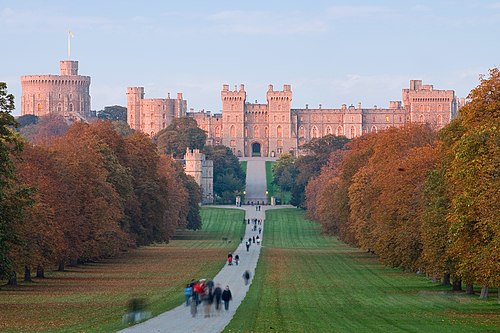 Windsor CastleRestored · prime 1820
 Tower of LondonRestored · prime 1285
 Bamburgh CastleRestored · prime 1904
All castles in England → · Strongest castles in England → · Castles of Europe
Play As Your Clan
Hold a real castle against whatever you choose to send at it, take a ship out in her own service years, or stand at the shoulder of someone the record remembers. The chronicler sets the scene; the deeds are yours.
Notable bearers of the Phillips name
- Mark Phillips (b. 1948), British equestrian, Olympic gold medallist
- Arthur Phillip (1738–1814), founding Governor of New South Wales
- Lou Diamond Phillips (b. 1962), American actor (La Bamba, Stand and Deliver)
- Wendell Phillips (1811–1884), American abolitionist orator
- Captain Richard Phillips (b. 1955), American Merchant Marine captain; held hostage and rescued from the MV Maersk Alabama, April 2009