Reed
The marsh edge, or ruddy jest.
- Origin
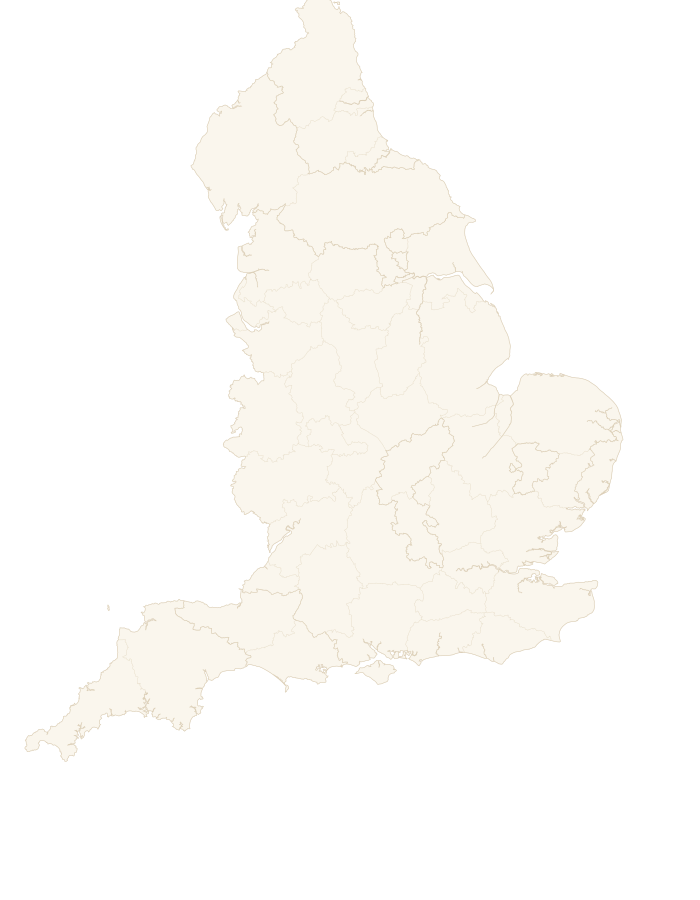
- North East, England
- Famous bearer
- Sir Carol Reed (1906–1976), film director (The Third Man, Oliver!)
- Register
- English family
Where the Reed name comes from
CoreHistoric reach
The seat of Reed
Seat vacantChief
No one leads the Reed community yet. When the movement opens, you can stand for its leadership, or help elect whoever does.
Current mission
No shared goal set yet. Once Reed has leadership, it sets the public focus: a restoration, a gathering, a real-world project that helps its own.
The Reed clan is being rebuilt. Join the waiting list for the movement today, and you help decide who leads it and what it does.
Help rebuild the Reed clan →What does the Reed name mean?
Locative, the reeds; or red-haired nickname Reid/Reed overlap.
The history of Reed
Red hair, wet ground, and a village of Johns
The name carries two readings and both are ordinary. Reed is most often a nickname surname for a man of ruddy complexion or red hair, the literal sense of the colour red, and it is a variant of Reid, which means the same thing. The other reading is locative: the reeds, the belt of soft ground at a marsh edge, land too wet for wheat but good enough for cattle. Parish clerks who set the name down were under no obligation to record which sense they meant, and mostly they did not.
Why a byname like that hardened into a surname at all is a matter of arithmetic. Early English surnames were descriptions of one individual, taken from a trade, a father's name, a birthplace or a physical feature, and they were not necessarily inherited. Nearly a quarter of the London boys baptised in 1510 were named John, with Thomas at 13.3 per cent and William at 11.7. In a parish where one man in four answered to John, the red one and the man from the reed bed were the only Johns anybody could pick out of a crowd.
By 1400 most English families, and those of Lowland Scotland, had settled into hereditary surnames, and the description froze into inheritance whether or not the grandson was red-headed. That is the plain reason there is no single Reed kindred, no founding ancestor and no chief: the name was minted separately in every county that held a red-haired man or a stretch of marsh, which is to say all of them. The Reeds who follow are not one family. They are many families sharing a word.
The Newcastle banker who bought a pele tower
Chipchase Castle stands north of Hadrian's Wall near Wark on Tyne in Northumberland, a 17th-century Jacobean mansion built hard against a substantial 14th-century pele tower. The Herons had held the manor since Walter Heron married the Chipchase heiress, and a survey of 1541 recorded a "fare tower" with a "manor of stone joined thereto" in the hands of John Heron.
John Reed, a banker of Newcastle upon Tyne, bought the estate in 1734. It is the one seat in England the name can be pointed at, and it did not come to the Reeds by descent from the Herons or by any claim on the manor. It was bought, by a Tyneside banking family whose hold on the place rested on the bank rather than on the land, which is what makes the ending of the story inevitable.
The bank failed, and the failure took the castle with it. Reed's descendants sold Chipchase to the Greys of Backworth in 1821 to defray the debts, and the Greys sold on to Hugh Taylor in 1861. The buildings survive: Grade I listed and a Scheduled Ancient Monument, still privately owned, with the grounds open to the public and the castle itself open to visitors on occasion.
A bishop, a Shakespeare editor and the trade in English print
The earliest datable man of the name here is Robert Reed, whose name was also written Reade, a bishop in Ireland and England who died in 1415. After him the record of English Reeds runs strongly through the book trade and the theatre rather than through land. Joseph Reed (1723-1787) was an English playwright and poet; Isaac Reed (1742-1807) was an English editor of Shakespeare.
In the Victorian and Edwardian print trade the name turns up on both sides of the page. Talbot Baines Reed (1852-1893) was an English typefounder who also wrote for The Boy's Own Paper. Albert Edwin Reed (1846-1920) was an English publisher. Sir Charles Reed (1819-1881) combined politics with antiquarian scholarship, and Edward Tennyson Reed (1860-1933) drew for Punch. Langford Reed (1878-1954) wrote scripts for the silent screen and collected limericks.
The literary thread held into the twentieth century with Henry Reed (1914-1986), British poet, translator, radio dramatist and journalist, and with Stanley Reed (1872-1969), the British editor of The Times of India.
Warships, chapels and the Commons
Edward Reed (1830-1906) was a British naval architect and politician. Thomas Reed (1796-1883) rose to general in the British Army. Between them they cover the two ends of Victorian service, the drawing office and the field command.
Two Reeds hold the highest British decorations. Hamilton Lyster Reed (1869-1931), an Irish officer in the British Army, was awarded the Victoria Cross. Henry Herbert Reed (1911-1941), a British sailor, was awarded the George Cross. Arthur Reed, born 1898, became a flying ace of the First World War as an RAF officer, and Basil Reed (1895-1968) served as a Royal Navy officer and played cricket for England. Lionel Reed (1883-1957) competed for Britain at the 1908 Summer Olympics.
Andrew Reed (1787-1862) was a British Congregational minister and philanthropist, working the nonconformist ground where preaching and charitable foundation were the same activity. Henry Reed (1806-1880) took the same combination into commerce as a British merchant, philanthropist and evangelist. A second Andrew Reed (1837-1914) served as an inspector in the Irish police force.
In Parliament the name is a Victorian and interwar presence rather than an aristocratic one. Joseph Haythorne Reed (1828-1858) sat as a British Member of Parliament; Henry Byron Reed (1855-1896) was an English Conservative politician; Arthur Reed (1881-1961) held Exeter from 1931 to 1945.
Carol Reed's Vienna, and the Reeds of stage and screen
Sir Carol Reed (1906-1976), born in London, is the bearer the name is best known by. He took a film crew into postwar Vienna and shot The Third Man there in 1949 on location, producing the foundational British film noir of the Cold War period. He later made Oliver!.
The name has a longer theatrical history behind him. Thomas German Reed (1817-1888) was an English actor, composer and theatrical manager. Maxwell Reed (1919-1974), an Irish actor, worked through the British films of the 1940s and 1950s. Oliver Reed (1938-1999) worked as an English actor, and Les Reed (1935-2019) wrote popular songs. The oddest career of the lot belongs to Dean Reed (1938-1986), an American singer and actor who made his name in East Germany, where he was known as the Red Elvis.
Reeds in the making of the American republic
The name crossed the Atlantic early and turns up at the founding. Joseph Reed (1741-1785) sat in the Continental Congress and served as aide-de-camp to George Washington. James Reed (c. 1723-1807) was a military officer in the American Revolution. John Reed Sr. (1751-1831) represented Massachusetts and left Congress in 1801; his son John Reed Jr. (1781-1860) followed him into politics. Philip Reed (1760-1829) sat as a United States senator for Maryland.
In the nineteenth century the name attaches to money and to office. A miner named John Reed founded the Reed Gold Mine in North Carolina. Luman Reed (1787-1836) was a merchant and patron of the arts. Simeon Gannett Reed (1830-1895) built a transportation business, and his widow Amanda Reed (1832-1904) gave much of it away as a philanthropist. Harrison Reed (1813-1899) went from editor to Governor of Florida. Thomas Brackett Reed (1839-1902) of Maine became Speaker of the House of Representatives.
In the twentieth century the strongest American concentration of the name is medical and scientific. Walter Reed (1851-1902) was a United States Army physician and epidemiologist, and his son Walter L. Reed (1877-1956) rose to general. Dorothy Reed Mendenhall (1874-1964) qualified as a pediatric physician from the Johns Hopkins School of Medicine, and Lowell Reed (1886-1966) became a research scientist and president of Johns Hopkins University. Stanley Forman Reed (1884-1980) sat as a Supreme Court judge, and Irving S. Reed (1923-2012) gave his name to the Reed-Solomon and Reed-Muller codes.
American Express, General Electric and the federal bench
The name reached the top of American corporate life in the same decades. Ralph Reed (1890-1968) was president of the American Express Company and Philip D. Reed (1899-1989) chief executive of the General Electric Company, while John Shedd Reed (1917-2008) chaired Santa Fe Industries and presided over the Shedd Aquarium.
In office and in public science the name kept its footing. David A. Reed (1880-1953) sat as senator for Pennsylvania from 1923 to 1935, and Thomas C. Reed (1934-2024) served as Secretary of the Air Force and worked as a nuclear weapons designer. Henry Thomas Reed (1846-1924) and Edward Cornelius Reed Jr. (1924-2013) both sat as American federal judges, Joseph Verner Reed Jr. (1937-2016) worked as banker and diplomat, and David P. Reed, born 1952, designed the user datagram protocol.
The suffragist, the Orientalist and the ornithologist
A run of North American Reeds made their name in print without office or capital behind them, and a striking number of them were women. Elizabeth Armstrong Reed (1842-1915) was an American author and Orientalist scholar. Anna M. Morrison Reed (1849 or 1850-1921) worked as author, lecturer, poet and suffragist. Myrtle Reed (1874-1911) wrote as author, poet, journalist and philanthropist, and Helen Leah Reed (1861 or 1862-1926) was a Canadian-born American writer.
Others turned their attention outward. Chester Albert Reed (1876-1912) was an American ornithologist, artist and writer. John Reed (1887-1920) reported as an American journalist and became a Communist activist. In Canada, Guilford Bevil Reed (1887-1955) built a career as a medical researcher.
Pioneers, the fur trade and the Little Bighorn
Away from Congress the name follows the moving edge of settlement. David Reed (1747-1824) was a pioneer in Pennsylvania and Orson Reed (1809-c. 1890) a pioneer in Wisconsin. A John Reed working the fur trade died in 1814. Another John Reed (1805-1843) was among the early settlers and landowners of Marin County in California.
Others made their money from a specific resource rather than from land in general. Elijah W. Reed (1827-1888) pioneered the menhaden fishery in Virginia. Byron Reed (1821-1891) dealt in real estate and held political office in Nebraska, on the far side of the same frontier.
The wars of the republic took their share. James Sewall Reed (1832-1864) was a cavalry officer in the American Civil War. Henry Armstrong Reed (1858-1876), a nephew of George Armstrong Custer, was killed at the Battle of the Little Bighorn.
Shelton, Washington: the Reeds who bought a forest
The one American Reed family that built something dynastic began with Thomas M. Reed (1825-1905), a Washington pioneer and government official. His son Mark Edward Reed (1866-1933) had failed as a logger when Sol Simpson hired him in 1897 to manage the Simpson Logging Company and Simpson's family store in the town of Shelton, Washington. Reed married Simpson's daughter Irene in 1901.
Simpson died in 1906 and Reed took over a concern of roughly three hundred men working out of five separate camps. By 1914 he had full control, and he turned a logging outfit into a forest-products corporation. In 1925 the company opened its first sawmill, the Reed Mill, and moved into hemlock lumber manufacture.
The family held on. In 2014 the Reeds bought 600,000 acres of Oregon timberland, and by 2015 their worth was estimated at 1.7 billion dollars. As of 2017 they controlled the Simpson Investment Company, founded in 1890, and its spin-off Green Diamond Resource, and owned 1.37 million acres across California, Washington and Oregon, which made them the fifth-largest private landowners in the United States.
Reeds under the Southern Cross
New Zealand took a strong share of the name. Alfred Hamish Reed (1875-1975) was born in England and emigrated there; Alexander Wyclif Reed (1908-1979) became a New Zealand author, and John Reed (1864-1955) sat as a New Zealand judge.
In Australia the name reaches the bench, the church and the drawing board. Thomas Sadler Reed (1818-1914) left England for South Australia and served there as a public servant. Joseph Reed (c. 1823-1890) worked as an Australian architect. Tom Reed (1902-1995) became Anglican Archbishop of Adelaide, and Sir Geoffrey Reed (1892-1970) was an Australian judge and director-general of ASIO.
The name reaches Australian art through John Reed (1901-1981), critic and art patron, and his wife Sunday Reed (1905-1981), born Baillieu. Ian Reed (1927-2020) threw the discus for Australia at the Olympic Games.
Champions of the Reed name
The bearers whose lives are inseparable from this surname. Each has their own page, biography, achievements, geography, connection to the family.
Historic Places, Rebuilt
Explore the streets and seats the Reed name knew, rebuilt with AI as they stood in history.
Castles the Reed held
Strongholds this name held for a decade or more, look one up, or rebuild it to explore.
- Chipchase Castle
Acquired by Newcastle banker John Reed in 1734; sold by his descendants in 1821 after the family bank failed.
The castles of the homeland
The great strongholds of the homeland, look one up, see what it looked like in its prime, and recreate it to explore.
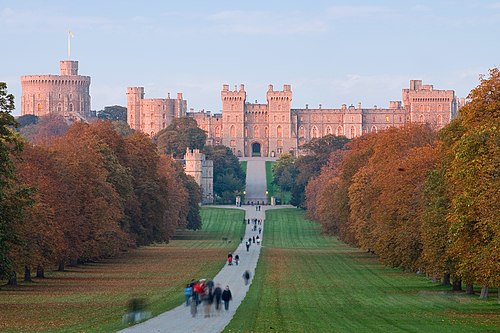 Windsor CastleRestored · prime 1820
 Tower of LondonRestored · prime 1285
 Bamburgh CastleRestored · prime 1904
All castles in England → · Strongest castles in England → · Castles of Europe
Play As Your Clan
Hold a real castle against whatever you choose to send at it, take a ship out in her own service years, or stand at the shoulder of someone the record remembers. The chronicler sets the scene; the deeds are yours.
Notable bearers of the Reed name
- Sir Carol Reed (1906–1976), film director (The Third Man, Oliver!)