Reynolds
Son of Reynold, the counsel-ruler Norman first name.
- Origin
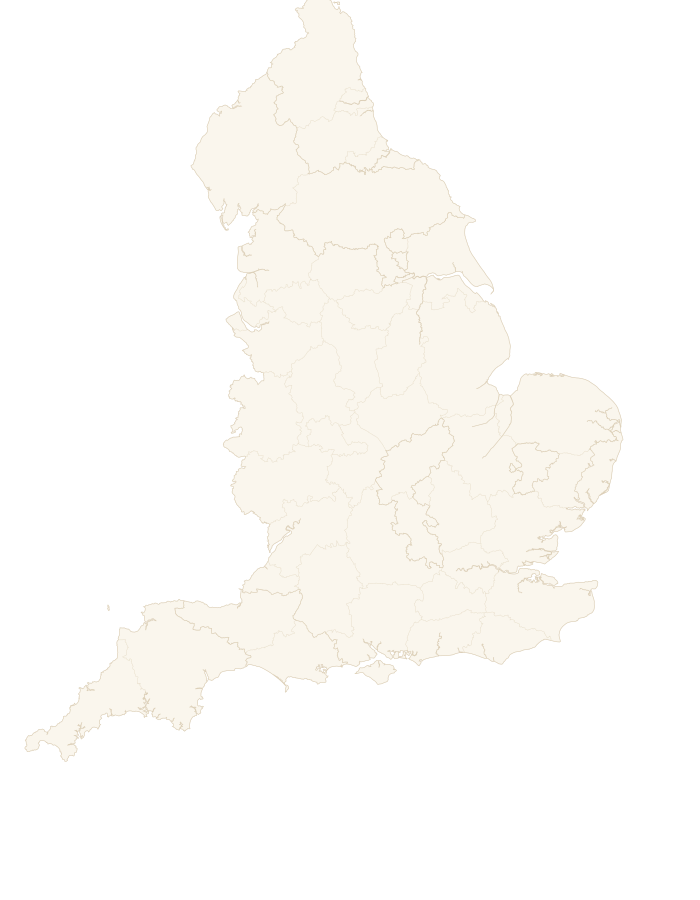
- South West, England
- Famous bearer
- Sir Joshua Reynolds (1723–1792), portraitist, founding President of the Royal Academy
- Register
- English family
Where the Reynolds name comes from
CoreHistoric reach
The seat of Reynolds
Seat vacantChief
No one leads the Reynolds community yet. When the movement opens, you can stand for its leadership, or help elect whoever does.
Current mission
No shared goal set yet. Once Reynolds has leadership, it sets the public focus: a restoration, a gathering, a real-world project that helps its own.
The Reynolds clan is being rebuilt. Join the waiting list for the movement today, and you help decide who leads it and what it does.
Help rebuild the Reynolds clan →What does the Reynolds name mean?
Patronymic, son of Reynold (the Norman first name Reynold, from Germanic ragin + wald, 'counsel-rule'). Reynold was a common Norman first name brought to England with the Conquest, particularly in the south-west where Reynold the Sheriff of Devon and several other senior tenants carried it. The patronymic compressed to Reynolds in the 14th–15th-century surname-fixation era; the variant spellings Rennolds and Reynold persist in the West Country and Ireland.
The history of Reynolds
The Norman name that came ashore in 1066
Reynolds is a patronymic: it means son of Reynold. The given name behind it, written Reynold or Reginald, was Germanic, built from the elements ragin and wald and read as counsel-rule or powerful ruler. It was not an English name. It came with the men who landed at Pevensey in Sussex on 28 September 1066, destroyed Harold Godwinson's army at Hastings on 14 October, and settled in England afterwards: some eight thousand Normans and other continentals in all.
One of the most obvious effects of the Conquest was Anglo-Norman, a northern dialect of Old French, becoming the language of the ruling classes, and with it a wholesale change in what people called their children. Names such as William, Robert and Richard displaced Anglo-Saxon ones, and Reynold travelled in the same wave. By the time the Domesday Book was completed in 1086, Rainaldus was already a common Christian name in England, and the survey records a Willemus filius Raunaldi: William, son of Raunald. That Latin phrase is the earliest recorded shape of what hardened into the surname Reynolds.
An alternative Saxon derivation is occasionally offered, built from words glossed as pure and love, but it is far less commonly cited, and the early chronicles point squarely to a name appearing in England from about 1066. The first name stayed current longest in the south-west, where Reynold the Sheriff of Devon and other senior tenants carried it, which is why Devon and Cornwall hold the densest concentrations of the surname.
From filius Raunaldi to Reynolds: the genitive that stuck
The final s is doing all the work. It is a plain genitive: Reynold's son, shortened until the possessive was all that remained. Other Normans took the rival route, putting de in front of their village or estate back in France. Reynolds records not where a man came from but whose son he was.
Hereditary surnames were slow, patchy and top-down. The introduction of family names in England is generally attributed to the preparation of the Domesday Book in 1086, and they were adopted first among the feudal nobility and gentry, spreading only slowly to everyone else. Christopher Daniell dates what may be the first recorded use of a surname inherited by multiple generations to 1140. By the fourteenth century most English and Scottish people used surnames, and by 1400 most English families, and those of Lowland Scotland, had hereditary ones. Reynolds fixed inside that window.
A patronymic was necessary because the pool of given names was tiny. Of the boys born in London in 1510, 24.4 per cent were named John, 13.3 per cent Thomas and 11.7 per cent William; through the early modern period the three commonest male names covered nearly half the male population. In a village with four Johns you had to say which John, and the cheapest way was to name his father. Once the answer stopped changing each generation, the byname became the surname.
The spelling took centuries to settle. Reynell, Reynalds, Renals and Rennels were all written down for the same family, because scribes recorded the name as it sounded to them: a man could be born under one spelling, married under another and buried under a third, and none of that was irregular. Literacy sat with the clerk, not the family. Rennolds and Reynold persist in the West Country and Ireland, but the form that carried is Reynolds with the s.
The name fixed as the manor broke
The century in which Reynolds hardened into a surname was the century the world that produced it came apart. Most people carrying the name were not knights. They lived on a manor, under a lord and a manorial court that levied their rents and made them work his personal land, the demesne. After 1066 an unfree tenant who held land in return for agricultural service was a villein: he could not leave without his lord's consent, his daughters could not marry without permission, and his children were born into the same status.
The land was worked in common: two or three great fields divided into narrow strips called selions, a household's strips scattered across all of them so everyone drew some good ground and some poor. A survey of 104 thirteenth-century English manors found 45 per cent of landholding tenants with under three acres, and a family needed ten acres to live from the land alone.
Then the Black Death of 1348 to 1350 killed between 30 and 60 per cent of Europe's population, labour turned scarce and expensive, and serfdom began to disappear west of the Rhine. A hereditary surname matters most when a man can leave the manor his grandfather could not: the generations that fixed Reynolds were the first who could move, bargain and be traced from one parish to the next.
Reynell of Pitney and the keys to Exeter and Launceston
The knightly line of the name is recorded in Somerset. Sir Richard Reynell, who died before 1213, was seated at Pitney, and when Richard I left for the Holy Land in 1191 he was given custody of the castles of Exeter and Launceston, the two royal fortresses commanding the approaches to the far south-west. Handing those over for an absent king's crusade was about as far as the Crown's trust went.
The family still had a foot on both sides of the Channel: in 1198 Godfrey, Robert and Torketil Renoldus were registered in Normandy. In England the main line was afterwards forfeited, and Sir Richard's son recovered the lands, the ordinary rhythm of an Anglo-Norman house, where one quarrel with the king could cost everything and one reconciliation win it back. From that West Country stock the family branched across England, mostly under the spelling Reynolds rather than Reynell.
This descent should be read honestly. It comes down largely through surname-history compilations rather than an unbroken series of charters; the Pitney knights are real and dated, but no line of proof connects every later Reynolds family to them. The same caution applies to the wider Norman diffusion, in which many such families moved north into Scotland during the twelfth century in the train of the Earl of Huntingdon, later King David. Where a name is common, its traditions multiply faster than its evidence.
A Windsor baker's son at Canterbury
The most striking Reynolds of the medieval centuries did not come from the knightly line at all. Walter Reynolds, who died in 1327, was the son of a Windsor baker. He became the favourite of Edward II and Archbishop of Canterbury from 1313 until his death, holding the senior see in England for fourteen years.
Set that against what the Conquest had done to English advancement. By 1086 only about 5 per cent of the land in England south of the Tees was still in English hands; after 1075 every earldom was held by a Norman, and after Wulfstan died in 1095 no bishopric in England was held by an Englishman at all.
Two and a half centuries later a tradesman's son from a Thames-side town was primate of the English church. The name had escaped both the castle and the manor and was prospering in the towns, the quiet story behind most Reynolds families alive today: not lordship, but a name portable enough to travel with a trade.
Two Reynolds families in Ireland, and one spelling
Reynolds reached Ireland twice from England. Junior branches of the Anglo-Norman family joined the Earl of Pembroke's invasion, and from those lines came the Earls of Cavan, of Lisburne and of Mountmorris. A second migration followed in the seventeenth century, when settlers known as the Adventurers for land undertook to keep the Protestant faith and were granted estates previously held by the Irish; from that period come the Reynells of Reynell Castle. That is a settlement history, and no honest page can write it as anything else.
The other Irish Reynolds owe nothing whatever to Normandy. In Irish the surname is rendered Mac Raghnaill, formerly Mac Ragnaill and anglicised McRannell, and it belongs to Muintir Eolais, the chief Conmaicne sept of south County Leitrim. Leitrim is still the stronghold: nearly half the people called Reynolds in Ireland come from that area. The Irish name is traced ultimately to the Old Norse Rognvald, so the Leitrim Reynolds carry a Viking-age name that reached them by a wholly different road. Sources on the surname admit it can be hard in individual cases to tell an early Anglo-Norman migrant from a native Irish Reynolds: two unrelated histories collapsed into one modern spelling.
A third thread runs through the same century as the plantations: Reynolds was also a surname of Irish Huguenots, Protestants who came from France in the 1600s to escape religious persecution, and whose original names were Renaud or Renault. Three origins, one modern spelling: for a reader tracing the name, the county matters far more than the letters.
Charles Reynolds, born in 1496 or 1497, was an archdeacon and chaplain who opposed Henry VIII and was branded a traitor for it. James Henry Reynolds (1844–1932) won the Victoria Cross, as did the English Douglas Reynolds (1882–1916). Osborne Reynolds (1842–1912) was an Irish physicist and engineer, and the surname sits permanently in the vocabulary of fluid dynamics as the Reynolds number.
Devon, the Atlantic crossings and the Alentejo
The name went to America early and in numbers. Christopher Reynolds settled in Virginia in 1622; Nathaniel Reynold settled at Salem in 1630, and so did Robert Reynolds, who arrived with his wife Mary and their four children. Others of the name followed to Virginia, and Henry, Samuel and Thomas Reynold joined the colonisation of Barbados in 1688. During the American War of Independence some of these families declared for the Crown and moved north into Canada as United Empire Loyalists, a split still visible in where the surname sits on either side of that border.
Irish Reynolds emigrated on two fronts, and the difference is worth knowing if you are tracing a family. The first wave settled in the north-east before the Revolution and was mostly Anglo-Irish Protestant converts from the north of Ireland. The second came during the Great Hunger of the nineteenth century, when millions of poor Irish crossed to North America; those refugees were largely Roman Catholic and from mainland Ireland. Same surname, two crossings, a century and a world apart.
One branch went the other way, south into Iberia, and prospered on bark. Thomas Johnson William Reynolds, born in 1786 and originally from Maidstone in Kent, was a naval officer who left the service and settled at Chatham importing fruit, wine corks and virgin cork from Spain and Portugal. A liver complaint sent him, on a doctor's advice, on the sea voyage that brought him to Porto, where he saw a chance to expand. His sons Thomas, William and Robert Hunter came with him.
It was Robert who took the family into the Alentejo. He bought cork bark while it was still on the tree, paying in advance and sometimes years ahead (real risk, superb profits), and the family took properties at Estremoz, joined by a nephew, another William Reynolds, born in 1842.
What the name carries now
The most consequential Reynolds of all was born at Plympton in Devon, the county where the first name Reynold had lasted longest. Sir Joshua Reynolds (1723–1792) was a schoolmaster's son who became the most prolific portrait painter in eighteenth-century English society, leaving over 2,000 portraits that capture the entire upper register of Georgian Britain. In December 1768 he became the first President of the Royal Academy of Arts, and over the next twenty-three years delivered the fifteen Discourses on Art that gave British academic painting its institutional vocabulary.
The name has also run through politics, exploration and crime without much regard for tidiness. Albert Reynolds (1932–2014) was the eighth Taoiseach of Ireland and fifth leader of Fianna Fáil, head of government from 1992 to 1995; Patrick J. Reynolds (1920–2003) sat three terms in Dáil Éireann and five in Seanad Éireann, where he was Cathaoirleach for four years. Jeremiah N. Reynolds (1799–1858) was a newspaper editor, lecturer and explorer; R. J. Reynolds (1850–1918) founded the tobacco company that still bears the name; Bruce Reynolds (1931–2013) masterminded the Great Train Robbery of 1963. A common surname collects the whole range, and flattening it would be dishonest.
On screen the name became one of the most recognisable in the English-speaking world. Debbie Reynolds (1932–2016), born in El Paso, played Kathy Selden in Singin' in the Rain; Burt Reynolds (1936–2018), born in Lansing, Michigan, was the highest-grossing American film actor of the late 1970s. Ryan Reynolds, born in Vancouver in 1976, carried the name into the twenty-first century with the Deadpool trilogy, which has grossed over two and a half billion dollars worldwide since 2016. He sold Aviation Gin to Diageo for $610 million in 2020 and Mint Mobile to T-Mobile for $1.35 billion in 2023, and in November 2020 bought Wrexham A.F.C. with Rob McElhenney, taking the fifth-tier Welsh club to three consecutive promotions and the Championship by 2025.
Two mottos are traditionally recorded for the name: Jus meum tuebor, "I will defend my right", and Favente Deo, "with God favouring". For a surname that began as nothing grander than the shortest way of saying whose son a man was, that is a fair summary of how it has been carried: by knights holding royal castles, by a baker's son at Canterbury, by Leitrim farmers with a wholly separate Norse-rooted name, and by families who took it across the Atlantic and down to the cork woods of the Alentejo.
Champions of the Reynolds name
The bearers whose lives are inseparable from this surname. Each has their own page, biography, achievements, geography, connection to the family.
- Sir Joshua Reynolds
The Plympton schoolmaster's son who in December 1768 became the first President of the Royal Academy of Arts and through the next twenty-three years gave the fifteen Discourses on Art that founded the institutional vocabulary of British academic painting.
- Ryan Reynolds
The Vancouver-born Canadian-American actor whose Deadpool trilogy from 2016 grossed over two and a half billion dollars worldwide, whose business career sold Aviation Gin to Diageo for $610 million in 2020 and Mint Mobile to T-Mobile for $1.35 billion in 2023, and whose November 2020 purchase of Wrexham A.F.C. with Rob McElhenney took the fifth-tier Welsh football club to three consecutive promotions and the Championship by 2025.
Historic Places, Rebuilt
Explore the streets and seats the Reynolds name knew, rebuilt with AI as they stood in history.
The castles of the homeland
The great strongholds of the homeland, look one up, see what it looked like in its prime, and recreate it to explore.
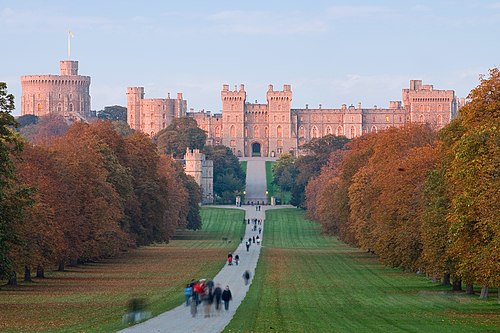 Windsor CastleRestored · prime 1820
 Tower of LondonRestored · prime 1285
 Bamburgh CastleRestored · prime 1904
All castles in England → · Strongest castles in England → · Castles of Europe
Play As Your Clan
Hold a real castle against whatever you choose to send at it, take a ship out in her own service years, or stand at the shoulder of someone the record remembers. The chronicler sets the scene; the deeds are yours.
Notable bearers of the Reynolds name
- Sir Joshua Reynolds (1723–1792), portraitist, founding President of the Royal Academy
- Burt Reynolds (1936–2018), actor
- Ryan Reynolds (b. 1976), actor (Deadpool)
- Debbie Reynolds (1932–2016), actress (Singin' in the Rain)
Stories of Reynolds
Reynolds founds the Royal Academy
1768On the morning of the tenth of December 1768, at a small private audience in the King's Closet at Buckingham House (the precursor of Buckingham Palace), Joshua Reynolds, forty-five years old, the most successful London portrait painter of the previous decade, was presented to George III by Sir William Chambers (the king's architect) and a deputation of twenty-two London artists, with the draft Instrument of Foundation of the Royal Academy of Arts in London. The Instrument established the new academy under the patronage of the Crown, the first state-supported English visual-arts institution, with thirty-six founding members (the Royal Academicians), a teaching schools for young artists, an annual exhibition open to non-members, and the presidency to be elected by the Academicians. The king signed the Instrument the same morning. The Academicians elected Reynolds as the first President at the inaugural meeting at Lambe's Auction Room, Pall Mall, on the fourteenth of December 1768. Reynolds held the office for the remaining twenty-three years of his life. He delivered the fifteen Discourses to the Royal Academy schools on the principles of art over the twenty years of his presidency, the foundational English-language treatise on the theory of painting.
Read the story →
Ryan Reynolds and the Wrexham takeover
2020On the morning of Tuesday the seventeenth of November 2020, in the pandemic-era videoconference-link between the Vancouver-Hollywood-Burrard-Inlet residence of the forty-four-year-old Canadian-American actor Ryan Reynolds and the Philadelphia-Wynnewood residence of the It's-Always-Sunny-in-Philadelphia co-creator Rob McElhenney, the joint-Reynolds-and-McElhenney American-Hollywood ownership-team formally completed the two-million-pound-purchase-acquisition of the British association-football-club Wrexham A.F.C. (the Welsh-language-Cymru-Wrexham football-club, the oldest-Welsh-football-club founded 1864 at the Wrexham Turf Hotel meeting, then competing in the fifth-tier National League at the Racecourse Ground in the North-East-Wales border-town of Wrexham), through the supporters-trust-and-Reynolds-McElhenney-joint-shareholder-purchase from the Wrexham Supporters Trust governance-body that had owned the club since 2011. The Reynolds-and-McElhenney purchase was the foundational-moment of the modern Wrexham-football-club transformation: across the next four-and-a-half years the club won the 2022-23 National League title (promotion to the fourth-tier League Two, ending the fifteen-year non-league Wrexham-tradition), the 2023-24 League Two promotion (to the third-tier League One), and the 2024-25 League One promotion (to the second-tier Championship), the three-consecutive promotions becoming the first English-football-club to achieve three consecutive promotions in succession since 1985. The Welcome to Wrexham FX documentary-series of August 2022 (the twenty-eight-episode joint-Reynolds-McElhenney Welcome-to-Wrexham FX series across the 2022-to-2024 series-run on the FX-Disney-Plus US streaming platform) became the central sports-documentary phenomenon of the modern-Disney-Plus streaming-era, brought the Wrexham-club into the international-popular-sports-recognition, and established the Reynolds-and-McElhenney celebrity-owner public-football-club-management template that has been the foundational model for the subsequent celebrity-investor-football-club-acquisitions across the 2022-to-2024 period.
Read the story →