Richardson
Son of Richard.
- Origin
- North East, England
- Register
- English family
The Richardson arms and country

Coat of armsRichardson (of Honingham, Norfolk) armsBorne by the Honingham line, one branch of the name rather than all of it.Lobsterthermidor · CC BY-SA 3.0
_arms.svg)
- Coat of arms: Granted to an individual and inherited down that one documented line. These are the arms of particular families of the name, not of everyone who shares the surname.
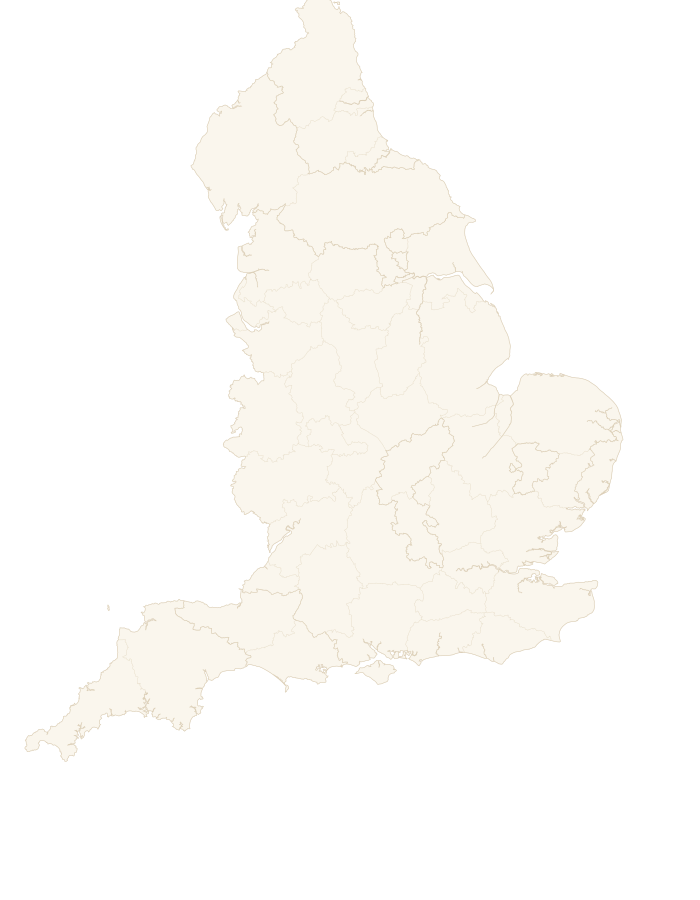
CoreHistoric reach
The seat of Richardson
Seat vacantChief
No one leads the Richardson community yet. When the movement opens, you can stand for its leadership, or help elect whoever does.
Current mission
No shared goal set yet. Once Richardson has leadership, it sets the public focus: a restoration, a gathering, a real-world project that helps its own.
The Richardson clan is being rebuilt. Join the waiting list for the movement today, and you help decide who leads it and what it does.
Help rebuild the Richardson clan →What does the Richardson name mean?
Son of Richard, northern -son patronymic.
The history of Richardson
The Norman font-name that outbred the English ones
Richard is a Germanic compound (ric, "power", and hard, "brave" or "hardy") and it arrived in England in French mouths. The conquest of 1066 installed Anglo-Norman, a northern dialect of Old French, as the language of the ruling class in place of Old English, and the clearest sign of the shift was what people began calling their children: William, Robert and Richard became common where Anglo-Saxon names had stood.
That pool was shallow and stayed shallow. Of the boys born in London in 1510, 24.4 per cent were christened John, 13.3 per cent Thomas and 11.7 per cent William; three names covered close to half the male population through the early modern period. A township holding several Richards needed a way to tell them apart, and the north reached for the genitive: Richard's son, hardened into Richardson. The same font-name threw off surnames that stand as variants beside it, Dickson and Dixon among them, and one built on a pet form: Hickman, "Hick's man", Hick being a pet form of Richard.
Richard and Richardson stand in Yorkshire records by 1381, and by 1400 most English families, and those of Lowland Scotland, carried hereditary surnames. The fixing was not always welcome: in late-medieval England compulsory surnames were resisted, because a permanent name was how the crown found a man for tax. Richardson sits in the patronymic class of English surname, the ones that enshrined the father's name, beside Jackson and Jenkinson. The four-year study led by the University of the West of England, concluded in 2016, found that over 90 per cent of the 45,602 surnames in the Oxford English Dictionary of Family Names in Britain and Ireland are native to Britain and Ireland.
A courtier musician and a Danish officer in Arctic water
The first bearers to leave a trace worked in sound. Ferdinando Richardson (1558–1618) was an English courtier and musician; Vaughan Richardson, who died in 1729, was an English organist and composer.
The -son ending was never only English. Carsten Richardson, a Holsteinian-Danish naval officer and Arctic explorer of the early 17th century, carried the same construction in the Danish crown's service, and the Swedish spelling Richardsson runs parallel to the English one: son of, descendant of, meaning the identical thing in English and in Swedish.
The Mackworth joiner's son, apprenticed at thirteen
Samuel Richardson was born at Mackworth in Derbyshire on 19 August 1689, third of the nine children of a joiner. The family moved to London about 1700, and at thirteen the boy was apprenticed to the printer John Wilde. He served the full seven years, was admitted a freeman of the Stationers' Company in 1715, and when Wilde died in 1722 took over the printing house in his own name.
The press off Fleet Street ran for thirty-nine years under him. It became one of the largest and most reliable in London, held the government contract to print the official Journals of the House of Commons, and turned out standard editions in quantity. By 1740 Richardson was the senior commercial printer of the Fleet Street area, and wholly unknown as a writer.
He was Master of the Stationers' Company in 1754, kept the press going through that decade, and held a long circle of literary correspondents. He died at Parsons Green, Fulham, on 4 July 1761, seventy-one years old, and was buried at St Bride's, Fleet Street, two hundred yards from the press he had run for thirty-nine years.
Pamela, Clarissa and a million words of other people's letters
Pamela began as a commission. Two booksellers had asked Richardson for a volume of model letters; in the writing he drifted into a continuous epistolary narrative of a servant girl's resistance to her master, and by the middle of 1740 he had a novel on his hands. Pamela; or, Virtue Rewarded was published at his own press in November 1740, the publishing event of the eighteenth-century English novel, and effectively founded the form.
It ran to five editions across 1741 and was translated into French, German and Italian by 1745. What it handed the English novel was the epistolary model: a long narrative carried entirely from inside the characters' consciousness. Clarissa, or, The History of a Young Lady followed in seven volumes in 1747 and 1748: a million words, the longest novel in the English language, and the source-text from which the psychological-novel tradition running through Austen, the Brontës, Eliot and James descends.
The History of Sir Charles Grandison, in 1753 and 1754, closed the trio. A joiner's third son out of Mackworth in Derbyshire had carried the northern genitive of Richard into the foundation of the English novel, alongside Henry Fielding and Daniel Defoe.
The Carse of Gowrie house built for John Richardson
Pitfour Castle sits on the southeast edge of St Madoes in the Carse of Gowrie, an eighteenth-century country house raised about 1784 for John Richardson, its design traditionally attributed to Robert Adam; William Burn enlarged it in 1825. Its centrepiece is the stair, set down in the 1967 sale particulars as a fine circular wrought iron staircase rising through the house to a cupola, with figure panels by Zucchi, the Italian who worked with Adam. Before subdivision it held twelve principal bedrooms and five reception rooms.
By the 1860s Pitfour belonged to Sir John Stewart-Richardson and his family, the patronymic compounded into a Scottish landed name. Lord Field acquired it in the late twentieth century and put the principal rooms and grounds through an extensive restoration; the Category A listed building is now private apartments, closed to the public. The same hyphenated form belonged to Constance Stewart-Richardson (1883–1932), a British dancer and author.
Physicians, physicists and a man who trained dogs for the army
The name ran heavily to the laboratory bench. Sir Benjamin Ward Richardson (1828–1896) was a British physician and Linsdall Richardson (1881–1967) a British geologist. Owen Willans Richardson (1879–1959) worked as an English physicist and Lewis Fry Richardson (1881–1953) as an English mathematician. Edwin Hautenville Richardson (1863–1948) was a British Army officer and a specialist in the training of service dogs.
Letters took others. Charlotte Caroline Richardson (1796–1854) was a British poet and writer, Dorothy Richardson (1873–1957) an English writer, and Marion Richardson (1892–1946) a British educator and author. Frances Mary Richardson Currer (1785–1861), a British heiress and book collector, carried Richardson in the middle of her name rather than at the end of it.
Richardsons who took ship
New Zealand took a large share. Ralph Richardson (1812–1897) sat as a New Zealand politician and Geordie Richardson (1835–1905) traded there as a merchant and ship owner; Ivor Richardson (1930–2014) was a New Zealand jurist and legal writer, and Ruth Richardson, born 1950, a New Zealand politician.
Australia took another. Arnold Edwin Victor Richardson (1883–1949) was an Australian scientist and administrator, Athol Richardson (1897–1982) an Australian politician and judge, and Lancelot Richardson (1895–1917) an Australian military pilot.
In North America it reached the frontier and the war alike. Israel Bush Richardson (1815–1862) was an American general and Hollon Richardson (1835–1916) a Union Army officer. Johnson William Richardson (1834–1862) rode as the first westbound rider for the Pony Express, Levi Richardson (1851–1879) was a gunman, gambler and buffalo hunter, and Wilds P. Richardson (1861–1929) an American explorer and geographer. Mary Richardson (1882 or 1883–1961) was a Canadian suffragette.
The stage, the crease and the Richardson gang
The twentieth century put the name on playbills. Sir Ralph Richardson (1902–1983) was a British actor; Miranda Richardson, Natasha Richardson (1963–2009) and Joely Richardson are all British actresses. Tom Richardson (1870–1912) was an English cricketer and Mick Richardson (1872–1920) an English footballer.
It also put the name in the dock. Charlie and Eddie Richardson led the Richardson Gang in Britain, and Gerry Richardson (1932–1971) was an English police officer, murdered. Angela Richardson entered the Commons as a British Member of Parliament in 2019: the patronymic of a Norman font-name, fixed by Yorkshire clerks before 1400, still on a division list six centuries later.
Champions of the Richardson name
The bearers whose lives are inseparable from this surname. Each has their own page, biography, achievements, geography, connection to the family.
Historic Places, Rebuilt
Explore the streets and seats the Richardson name knew, rebuilt with AI as they stood in history.
Castles the Richardson held
Strongholds this name held for a decade or more, look one up, or rebuild it to explore.
- Pitfour Castle
Built c.1784 for John Richardson; owned by the 1860s by Sir John Stewart-Richardson and his family.
The castles of the homeland
The great strongholds of the homeland, look one up, see what it looked like in its prime, and recreate it to explore.
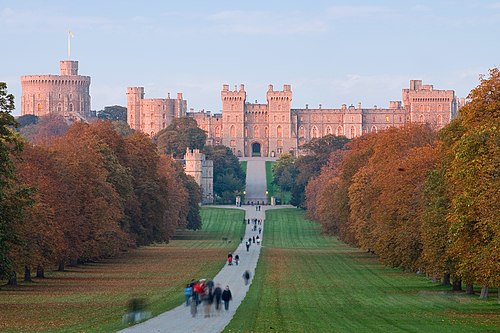 Windsor CastleRestored · prime 1820
 Tower of LondonRestored · prime 1285
 Bamburgh CastleRestored · prime 1904
All castles in England → · Strongest castles in England → · Castles of Europe
Play As Your Clan
Hold a real castle against whatever you choose to send at it, take a ship out in her own service years, or stand at the shoulder of someone the record remembers. The chronicler sets the scene; the deeds are yours.