Saunders
also Sanders, Sandars, Sander
Alexander's son, Cornish and Wessex thick.
- Origin
- South West, England
- Famous bearer
- Dame Cicely Saunders (1918–2005), founder of the modern hospice movement
- Register
- English family
Where the Saunders name comes from
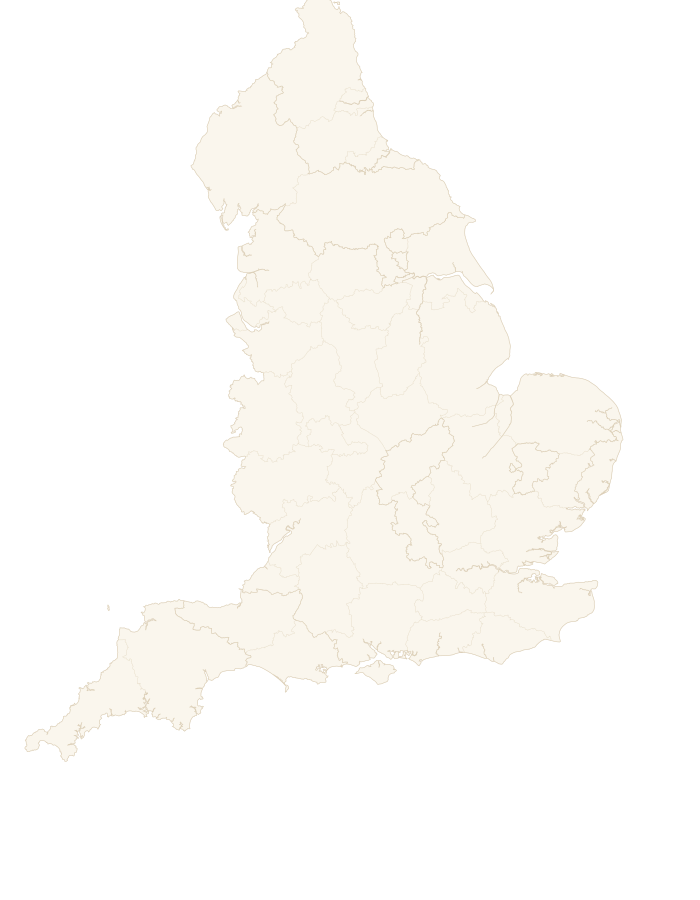
CoreHistoric reach
The seat of Saunders
Seat vacantChief
No one leads the Saunders community yet. When the movement opens, you can stand for its leadership, or help elect whoever does.
Current mission
No shared goal set yet. Once Saunders has leadership, it sets the public focus: a restoration, a gathering, a real-world project that helps its own.
The Saunders clan is being rebuilt. Join the waiting list for the movement today, and you help decide who leads it and what it does.
Help rebuild the Saunders clan →What does the Saunders name mean?
Son of Alexander, Sandres in medieval rolls, compressed to Saunders in the southwest.
The history of Saunders
Sander's son, and sometimes Sander's man
Saunders is what is left of Alexander after English mouths have finished with it. The medieval working form was Sander, written Sandres in the rolls before spelling settled, and the final s is the old genitive. The southwest compressed it hardest, which is why the name lies thickest across Cornwall, Devon, Somerset and Dorset, with the flatter Sanders, Sandars and Sander alongside it, none of them a corruption of the others.
The s did not always mean a son. In England a servant commonly took his employer's name with an s added, which is why Vickers began as the name a vicar's man carried and why Roberts could belong to the son or the servant of a man called Robert. Saunders sits in that ambiguity, and it was coined wherever a Sander had anyone attached to him. Two unconnected Saunders families are the normal case; a shared ancestor has to be proved.
How a Greek king's name got into an English parish register
English given names have never been very English. A medieval parish drew mostly on Hebrew names (Daniel, David, Elizabeth, Susan) and Greek ones (Nicholas, George, Dorothy, Helen); the native stock, Alfred, Edmund, Edward, Harold, Oswald, is a small fraction. The Conquest narrowed things further as Anglo-Norman displaced Old English at the top and William, Robert and Richard replaced Anglo-Saxon names fast.
The pool that resulted was extraordinarily tight. Of boys born in London in 1510, 24.4 per cent were named John, 13.3 per cent Thomas and 11.7 per cent William, and the top three held near half the male population right through the early modern period. Into that narrow field came Alisander, carried by crusader stories and saints rather than by scripture or by any Norman lord's family. When Alexander's glamour finally reached English ploughmen it came in the clipped everyday form, and the surname is the proof.
The century the name stopped moving
Surnames appear in England among the barons of the eleventh century, their introduction generally credited to the making of Domesday Book in 1086. They began with the nobility and gentry, some Norman incomers marking themselves with de and a village name in France, and spread downward slowly. Below that level a byname meant a man's trade, father, birthplace or appearance and was not inherited: a man was Sander's son, and his own son was named for him, not for Sander.
Then it froze. By the fourteenth century most English and most Scottish people used surnames, and by 1400 most English families and those of Lowland Scotland had made them hereditary; Wales waited until 1536. That hardening is the moment Saunders stopped describing a relationship and began describing a family, and it is why the name is English and Scottish both.
The cap-maker of Amersham
The earliest documented member of the Saunders family is William Saunders (c. 1430–1488) of Amersham in Buckinghamshire, a cap-maker and dyer: not a knight, but a man at the finishing end of the cloth trade in a town where that trade paid. The family spread into branches across England, with movement and intermarriage between them, and the name recurs among cap-makers, dyers and cloth merchants.
Cloth money bought land. Members became very wealthy landowners who inherited or purchased manors, and several graduated from Oxford and Cambridge. That is one documented family rather than the origin of the surname: Saunders was being coined in parishes that had never heard of Amersham while the Amersham Saunders were still dyeing caps.
Tobias, and the town called Westerly
The name reaches North America in the seventeenth century with Tobias Saunders (c. 1620–1695), whose Amersham origin is disputed and should be left disputed. What he did in Rhode Island is not. He was a founding settler of Westerly, and sat as a Deputy to the General Assembly in 1669, 1671, 1672, 1680, 1681, 1683 and 1690: the record of a man his neighbours kept sending back. He was also Conservator of the Peace in 1669, 1678 and 1695.
Saunderses went on holding political positions in New England, and the family played an integral part in founding Salem in New Hampshire, Lawrence in Massachusetts and Westerly in Rhode Island. A fourth place carries the name outright: Saunderstown, Rhode Island, named for John Aldrich Saunders, who settled there in 1856.
The mill that turned into a city
Daniel Saunders Sr (20 June 1796 – 8 October 1872) was born at Salem, New Hampshire, and spent his youth between Salem and Canada. He entered textiles as a teenaged apprentice, was foreman at the Abbott Mills in Andover, Massachusetts, then built a small mill of his own there. In 1840 he bought mills at Concord, New Hampshire; in 1843 he sold those and the Andover mill to clear the ground for a new textile mill near Andover, and that mill was the foundation of the city of Lawrence, Massachusetts.
His sons ran the place his mill had created. Daniel Saunders Jr, born at Andover, graduated from Harvard College in 1844 and served as sixth mayor of Lawrence from 1860 to 1861; Caleb Saunders graduated from Bowdoin College in 1859 and was nineteenth mayor in 1877. The Daniel Saunders Elementary School carries their father's name.
In 1874 Daniel Jr and his brother Charles Wesley founded the Grafton County Lumber Company. The office sat in Boston, but the work was at Livermore, New Hampshire: logging, the Sawyer River Railroad, a large sawmill, 30,000 acres of timberland, and every single building in Livermore belonging to the Saunders. Daniel gave up his share in 1880 to his son Charles G., and on Charles G.'s death it passed to his three sisters. Milling ran until 1928, and in 1935 the cut-over land was sold to the United States Forest Service.
The window David Tasma left
Cicely Mary Strode Saunders was born at Barnet in Hertfordshire on 22 June 1918 and left Oxford in September 1939, in her second year, to train as a nurse at the Nightingale School at St Thomas's Hospital. She qualified in 1944, nursed through the V-1 and V-2 attacks of 1944 to 1945, and was forced out of nursing in 1945 by a back injury from the lifting. She finished the Oxford degree, trained as a Lady Almoner and held the almoner's post at St Thomas's from 1948 to 1958.
In 1948 she cared there for David Tasma, a Polish-Jewish refugee from the Warsaw Ghetto with an inoperable cancer, and they talked through long evenings about how the dying were treated. He left her five hundred pounds and a sentence: I'll be a window in your home. By 1951 she had decided the problem was institutional, since hospitals sent dying patients home once treatment stopped and the home could not manage what followed.
To argue the case from inside medicine she entered St Thomas's Medical School in 1951, qualified MB BS in 1957 as the first Almoner ever to retrain as a doctor, and spent 1958 to 1965 as Research Fellow in Terminal Care at St Mary's. There she worked out the two things the specialism still rests on: opioid analgesia given by the clock and by mouth rather than on demand once pain had returned, and the treatment of what she named total pain.
She raised the money, took a lease at Sydenham in south London in 1965, and opened St Christopher's Hospice on 24 July 1967, the first dedicated terminal-care hospital in the world on the modern model: the ward, the chapel and the eight thousand books Tasma's bequest had asked for, research on the pharmacology of terminal pain, and the teaching that trained palliative medicine's first generation. From 1969 its home care service carried the model into patients' own houses. She was created DBE in 1980 and admitted to the Order of Merit in 1989, and died at St Christopher's on 14 July 2005, cared for in the place she had built. Over 2,800 hospices now stand in the United Kingdom and over 8,000 worldwide, all descended from that lease at Sydenham.
A directory, not a lineage
The registers of the name read like a directory rather than a family tree, which is the honest outcome of a patronymic. Howard Saunders was a British ornithologist and Edith Rebecca Saunders a British biologist; Hilary Saint George Saunders a soldier, writer and official historian. Alfred Saunders (1820–1905) sat as a politician in New Zealand and Albert Charles Saunders (1874–1943) in Canada. Not one owes the name to any of the others. Each owes it to some Sander, long since anonymous, whose son or whose servant picked the name up and never put it down.
Champions of the Saunders name
The bearers whose lives are inseparable from this surname. Each has their own page, biography, achievements, geography, connection to the family.
Historic Places, Rebuilt
Explore the streets and seats the Saunders name knew, rebuilt with AI as they stood in history.
The castles of the homeland
The great strongholds of the homeland, look one up, see what it looked like in its prime, and recreate it to explore.
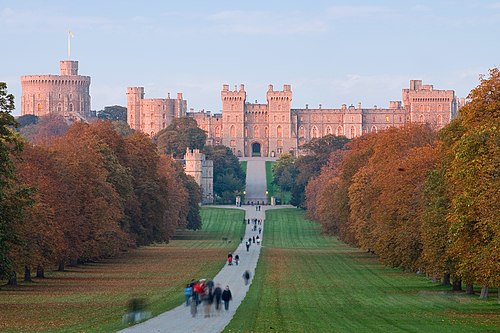 Windsor CastleRestored · prime 1820
 Tower of LondonRestored · prime 1285
 Bamburgh CastleRestored · prime 1904
All castles in England → · Strongest castles in England → · Castles of Europe
Play As Your Clan
Hold a real castle against whatever you choose to send at it, take a ship out in her own service years, or stand at the shoulder of someone the record remembers. The chronicler sets the scene; the deeds are yours.
Notable bearers of the Saunders name
- Dame Cicely Saunders (1918–2005), founder of the modern hospice movement