Sharp
also Sharpe
The keen one, a nickname kept.
- Origin
- Yorkshire & the Humber, England
- Famous bearer
- Granville Sharp (1735–1813), abolitionist
- Register
- English family
The Sharp arms and country
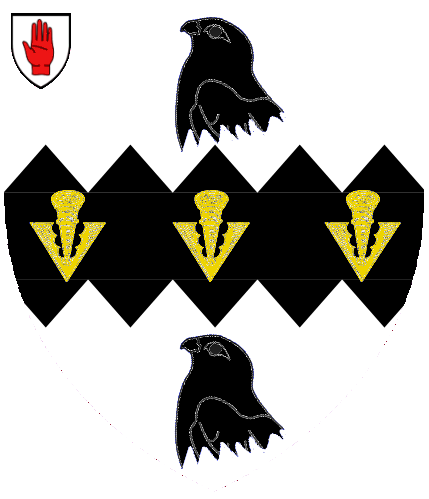
Coat of armsSharp (of Warden Court) EscutcheonBorne by the Warden Court line, one branch of the name rather than all of it.Robin S. Taylor · CC BY-SA 4.0
_Escutcheon.png)
- Coat of arms: Granted to an individual and inherited down that one documented line. These are the arms of particular families of the name, not of everyone who shares the surname.
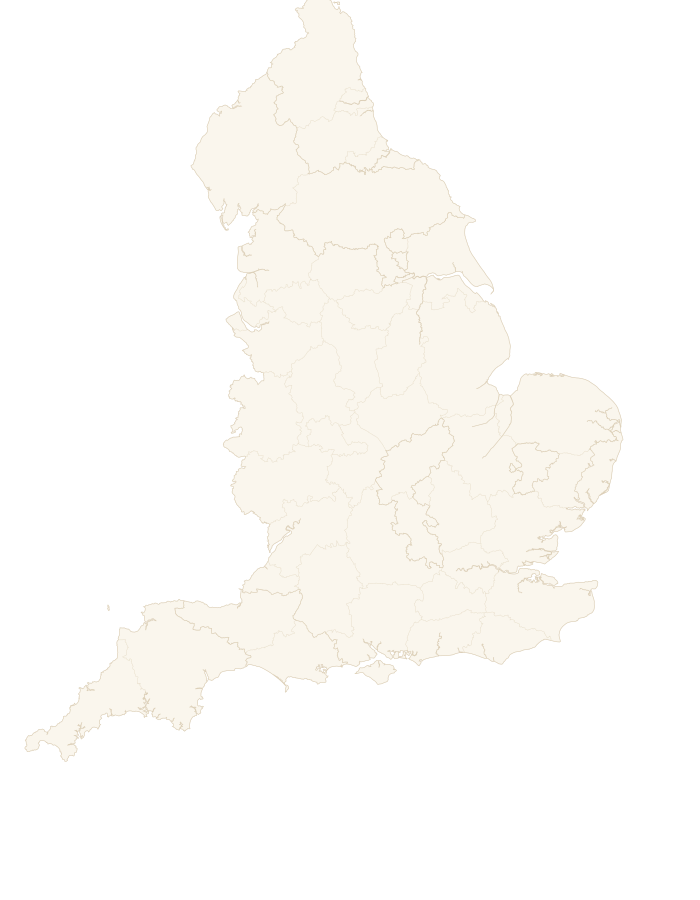
CoreHistoric reach
The seat of Sharp
Seat vacantChief
No one leads the Sharp community yet. When the movement opens, you can stand for its leadership, or help elect whoever does.
Current mission
No shared goal set yet. Once Sharp has leadership, it sets the public focus: a restoration, a gathering, a real-world project that helps its own.
The Sharp clan is being rebuilt. Join the waiting list for the movement today, and you help decide who leads it and what it does.
Help rebuild the Sharp clan →What does the Sharp name mean?
A nickname surname from Old English scearp, 'sharp, keen', applied to a quick-witted, severe or energetic person. It is densest in the north of England, especially Yorkshire, and is freely interchangeable with the spelling Sharpe.
The history of Sharp
Scearp, and the men it was pinned on
The Old English scearp gave the name, and the word kept company with a hard, scraping family of cousins: German scharf, Latin scrobis for a ditch, Russian skresti, to scrape. Pinned on a man, it praised a quick mind or marked a hard edge, and the clerks who wrote it down were not fussy about the shape. Sharp and Sharpe run side by side in the registers, with Shairp, Sharpes and Sharps beside them, and the diminutives Sharpin, Sharplin and Sharpling carrying the same idea in smaller coin. Because a nickname was pinned on whichever man it fitted, the name was coined again and again in separate places: Sharps of one parish need be no kin to Sharps of the next, and what follows is the record of a name rather than the descent of one house.
The same sense was being turned into surnames in other tongues at the same time. When the Domesday commissioners came to Bishopstone in Somerset in 1086 they recorded the castle of Robert, Count of Mortain, as Montagud, Latinised as Mons Acutus, the sharp mountain, and the knight Drogo de Montagud, one of the Count's tenants there and the founder of the English Montagu family that rose to be Earls of Salisbury, carried that name with him; authorities differ over whether he took it from the hill or the hill from him. In Ireland the byname O hAichir, fierce or sharp, was anglicised into O'Hare, a separate family with a separate line. The English name is the one that stayed a plain adjective, and it settled thickest in the northern parishes, above all in Yorkshire.
The barony John Sharpe bought above the Solway
In 1690 John Sharpe purchased the barony and castle of Hoddom, on the River Annan in Dumfries and Galloway, and his family held them until 1878. He was buying into a long descent. The lands had belonged from 1124 to the Herries family, allies of the Bruce Lords of Annandale, then to the Carruthers, then to the Maxwells; the tower house was probably raised for Sir John Maxwell, who acquired Hoddom in the mid-16th century on his marriage to the heiress Agnes, Lady Herries. The following year an English force under Lord Scrope attacked the place and blew up the tower.
Sir Richard Murray of Cockpool bought Hoddom and its watch tower from the sixth Lord Herries around 1627, and the Earl of Southesk held the property from 1653 until the Sharpe purchase. What the family took on was a border command post as much as a house. On Trailtrow Hill above the estate stands Repentance Tower, a very rare survival: a watch tower put up in 1565 by John Maxwell, 4th Lord Herries, and named from the single word carved above its entrance door. Bishop Pococke recorded the tradition that Maxwell, who had committed great ravages against Queen Mary, raised it in a spirit of penance.
A beacon on that hill was old business by then. It had been prescribed in 1448 in a border-defence regulation of William Douglas, 8th Earl of Douglas: "for cuming of ane Inglis oist in Scotland, ther sal ane baill be brynt on Trailtrow hill". The fire pan was kept burning as a signal for as long as English troops remained in Scotland, and from the conical hill, 350 feet up, the watch took in the Solway. Thomas Carlyle lived at the farm nearby with his family from May 1825 to May 1826, during the Sharpe tenure.
Banff, and the end of two Scottish tenures
Further north, bearers of the name held something older still. Banff Castle began in the 12th century as a motte-and-bailey fortress, a royal castle by the town of Banff in Aberdeenshire, in the hands of the Comyns, Earls of Buchan. It came afterwards into the possession of the Sharps, who kept it until 1722, when it was sold to Lord Ogilvy of Deskford and passed on to the Russells. The medieval castle was demolished, an 18th-century mansion stands on the site, and the earthwork remains are protected as a scheduled monument.
The two Scottish holdings tell opposite halves of a story: the Sharps letting go at Banff in 1722, the Sharpes settling in at Hoddom from 1690 for the best part of two centuries. Hoddom itself went in 1877 to the Brook family of Meltham, Huddersfield, who later bought nearby Kinmount House, and the Sharpe hold on the barony ended in 1878. The L-plan tower, with its 17th-century ranges and neo-Jacobean additions of the 19th century, stayed a large country house into the early 20th century; in 2009 planning permission was granted for a redevelopment with a hotel, chalets and a golf course.
A mitre at York, an archdeacon in Northumberland
The name reached the top of the northern church. John Sharp (1643-1714) was Archbishop of York, and James Sharp (1613-1679) was a Scottish bishop of the same century. For a surname whose weight lay in the northern parishes, York was as high as the ladder went.
Another churchman of the name worked in print as much as in the pulpit. Thomas Sharp (1693-1758) was Archdeacon of Northumberland and also a biographer and a writer on theology. The scholarly strand ran on into the following century with Samuel Sharpe (1799-1881), an Egyptologist who also translated the Bible, and Alexander Sharpe (1814-1890), an English philologist.
Granville Sharp, and a question put to an English court
Granville Sharp (1735-1813) was a scholar rooted in County Durham. He took the legal standing of enslaved people in England and forced it into open court, and the judgment of 1772 in the Somerset case answered him: no slave could be forcibly removed from England. It is the founding act of British abolitionism, and Sharp is its founding figure.
He was not the only bearer of the name to take that kind of position. Anthony Sharp (1643-1707) was a Dublin Quaker. The same strand appears later in America, in Waitstill Sharp (1902-1984), a Unitarian minister and humanitarian, and Martha Sharp (1905-1999), an American philanthropist.
Cecil Sharp writing down the tunes before they went
Cecil Sharp (1859-1924) was a music teacher who became the recognised authority on traditional English dance, and in the early years of the 20th century he collected the folk songs and morris dances of the English countryside at the point where they were about to go for good.
Others of the name worked the same ground in other materials. William Sharp (1749-1824) was an engraver; Dorothea Sharp (1874-1955) a British artist; Joseph Henry Sharp (1859-1953) a painter of the Taos art colony. The Scottish writer William Sharp (1855-1905) published his poetry and prose under the name Fiona MacLeod, Anne Sharp (1916-2011) sang as a Scottish soprano, Alan Sharp (1934-2013) was a Scottish author, and Ronald Sharp (1929-2021) built organs in Australia.
In fiction and on screen the name kept working. Margery Sharp (1905-1991) was an English writer; Tom Sharpe (1928-2013) made his reputation as a satirist with Wilt; Dallas Lore Sharp (1870-1929) wrote on the natural world as an American author and university professor. Don Sharp (1922-2011) directed films in Britain, Anthony Sharp (1915-1984) and Lesley Sharp acted on English screens, and Martin Sharp (1942-2013) drew, wrote songs and made films in Australia.
Counters, collectors and classifiers
Abraham Sharp (1651-1742) was an English schoolmaster who turned mathematician and astronomer, the earliest of the name's men of calculation. Later the name was all through natural history: David Sharp (1840-1922), physician and entomologist; Daniel Sharpe (1806-1856), geologist; Richard Bowdler Sharpe (1847-1909), zoologist; Emily Mary Bowdler Sharpe, born in 1868, entomologist and illustrator; and Lester W. Sharp (1887-1961), an American botanist.
The name did as well by the writing of history as by the collecting of beetles. Martin Sharp (1847-1910) worked as an English historian, and the discipline was still being carried by the name in the modern period, in Kevin Sharpe (1949-2011) and Richard Sharpe (1954-2020). Phillip Allen Sharp, born in 1944, made his career as an American geneticist and molecular biologist, and the economist William F. Sharpe, born in 1934, gave his name to the Sharpe ratio, very likely the only piece of this surname in daily use on a trading floor.
Sharps who crossed to the colonies
The name went early to New Jersey. Isaac Sharp (1681-1735) settled in New Jersey and served there as judge, politician and colonel; Joseph Sharp, born about 1709 and dead in 1776, was another of the province's early settlers. Horatio Sharpe (1718-1790) held Maryland as its British royal governor, and William Sharpe (1742-1818) practised law and sat in politics in North Carolina.
Later generations put the name into American law and uniform. George H. Sharpe (1828-1900) was in turn lawyer, soldier, secret service officer, diplomat and politician; Henry Granville Sharpe (1858-1947) rose to Quartermaster General of the United States Army. Edward M. Sharpe (1887-1975) and Nelson Sharpe (1858-1935) both sat as Associate Justices of the Michigan Supreme Court, Henry A. Sharpe (1848-1919) on the Supreme Court of Alabama, and Susie Sharp (1907-1996) served as an American jurist.
Others made their mark in the working country. Walter Benona Sharp (1870-1912) was a pioneer and innovator of oil drilling and a philanthropist with it; Katharine Dooris Sharp (1846-1935) was a botanist and a poet; Zerna Sharp (1889-1981) was an American teacher; and William Graves Sharp (1859-1922) went from law to Congress to the diplomatic service.
Walkers, cricketers and the men who drew the towns
Emma Sharp (1832-1920) made her name as an English race walker. Jack Sharp (1878-1938) was rarer still: an England international at football and a Test cricketer both. The cricketing line ran on through John Sharpe (1866-1936) and Phil Sharpe (1936-2014), the football line through Wilf Sharp (1907-1981) at Airdrieonians and Sheffield Wednesday and Graeme Sharp of Scotland, and Charles Richard Sharpe was an English recipient of the Victoria Cross.
Others of the name shaped the ground the games were played on. Edmund Sharpe (1809-1877) worked as an English architect and engineer, Dennis Sharp (1933-2010) as a British architect, and Thomas Wilfred Sharp (1901-1978) as an English town planner and author.
Historic Places, Rebuilt
Explore the streets and seats the Sharp name knew, rebuilt with AI as they stood in history.
Castles the Sharp held
Strongholds this name held for a decade or more, look one up, or rebuild it to explore.
- Hoddom Castle
Hoddom passed to the Sharpe family in 1690.
- Banff Castle
In the possession of the Sharp family until sold in 1722.
- Repentance Tower
Purchased by John Sharpe in 1690; the family held the barony and castle until 1878.
The castles of the homeland
The great strongholds of the homeland, look one up, see what it looked like in its prime, and recreate it to explore.
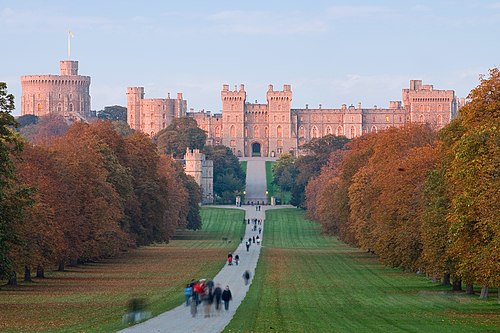 Windsor CastleRestored · prime 1820
 Tower of LondonRestored · prime 1285
 Bamburgh CastleRestored · prime 1904
All castles in England → · Strongest castles in England → · Castles of Europe
Play As Your Clan
Hold a real castle against whatever you choose to send at it, take a ship out in her own service years, or stand at the shoulder of someone the record remembers. The chronicler sets the scene; the deeds are yours.
Notable bearers of the Sharp name
- Granville Sharp (1735–1813), abolitionist
- Cecil Sharp (1859–1924), folk-song and dance collector