Shaw
The copse-edge, Lancashire loves it.
- Origin
- North West, England
- Register
- English family
The Shaw crest badge and country

Crest badgeClan member crest badge Clan ShawCaracal Rooikat · CC BY-SA 4.0

- Crest badge: The chief's crest inside a belt and buckle: the badge a clansman wears to show whose following he is in.
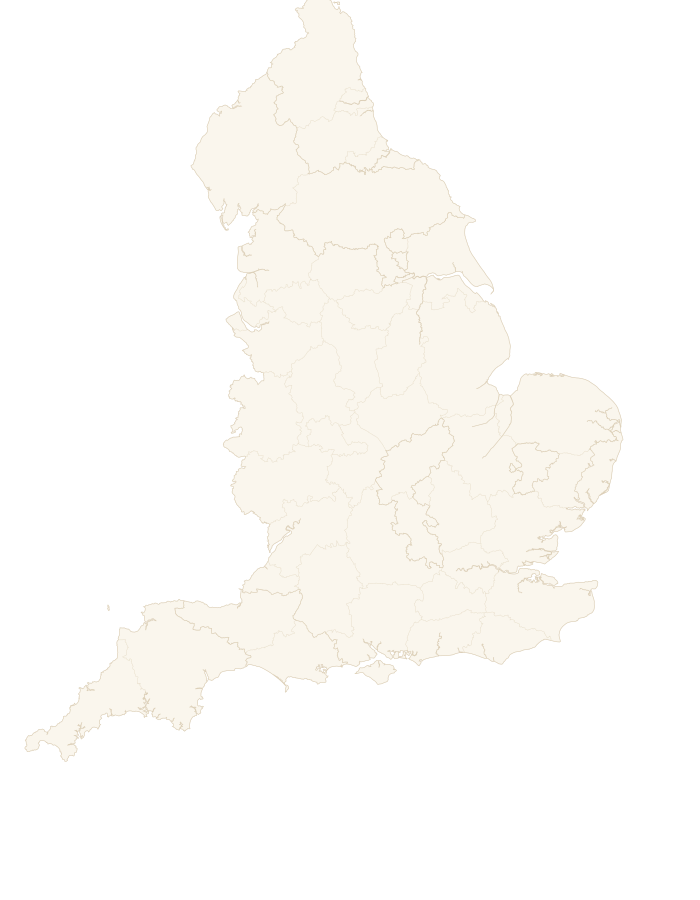
CoreHistoric reach
The seat of Shaw
Seat vacantChief
No one leads the Shaw community yet. When the movement opens, you can stand for its leadership, or help elect whoever does.
Current mission
No shared goal set yet. Once Shaw has leadership, it sets the public focus: a restoration, a gathering, a real-world project that helps its own.
The Shaw clan is being rebuilt. Join the waiting list for the movement today, and you help decide who leads it and what it does.
Help rebuild the Shaw clan →What does the Shaw name mean?
Locative, the shaw (woodland strip). Old English sceaga.
The history of Shaw
The strip of wood a man was known by
Shaw is one of the plainest names in England, and it is a piece of landscape. It comes through the Middle English schage, shage, schawe and shawe from the Old English sceaga, and it labelled the dweller by the wood. A shaw was not deep forest and not open field but the strip between them, woodland riding up a hillside: ground that fattened pigs, sheltered a poacher who knew it in the dark, and marked where one hamlet's land stopped and the next began.
That is why the name is scattered rather than concentrated. Habitation surnames come far more often from hamlets and farmsteads than from cities, because medieval movement ran from the small place to the large one and the new arrival in town needed a name saying where he came from. A shaw identified a man only while his neighbours knew which shaw was meant, so it was minted independently in parish after parish and belonged to none of them. Lancashire and Cheshire families drew a quiet dignity from knowing which shaw went with which hamlet.
Why a man needed a second name at all
The medieval given-name pool was astonishingly narrow. Of the boys born in London in 1510, 24.4 per cent were christened John, 13.3 per cent Thomas and 11.7 per cent William, and through the early modern period the top three male names covered close to half the male population. A village with four Johns had to reach for something else, and it reached for whatever lay nearest: a man's trade, his father, or the ground he lived on. The man by the copse got the copse.
These bynames were not inherited at first. Surnames are documented among the barons of England in the eleventh century, and Christopher Daniell puts what may be the first recorded use of one inherited by several generations at 1140; the habit is credited to the preparation of the Domesday Book, completed by 1086, and worked slowly down from the nobility. By 1400 most English families, and most of Lowland Scotland, carried hereditary surnames. The Conquest had changed who ruled and in what language without changing the words lying on the land: it left English place-names very largely alone, so an Old English word for hillside scrub was still working as a name long after Hastings.
One spelling, more than one name
Shaw is English and Scottish in origin, and those are two separate things rather than two halves of one family. In England and Lowland Scotland it is the topographic name for the man by the copse, made wherever there was a wood and a neighbour who needed to be specific. In Scotland the name also attaches to Clan Shaw, a kindred with a descent of its own and not a branch of the English wood-dwellers. Nothing in the record joins the two: they share a spelling, not an ancestor.
Other routes lead into the same four letters. The English surname was established in Ireland during the seventeenth century and put down deep roots there; Sir Frederick Shaw, third Baronet (1799-1876), sat as an Irish Conservative member of the United Kingdom Parliament. Some American Shaws carry an Americanised form of a similar-sounding Ashkenazi Jewish surname, and in Hong Kong and Taiwan Shaw is a romanisation of an unrelated Chinese surname. The spellings converge; the families do not.
Ballygally, the Shaw house on the Antrim shore
The hardest Shaw landholding in the record stands on the Antrim coast. In 1625 James Shaw, a Scot newly come to the district, rented land from Randal MacDonnell, the Catholic Earl of Antrim, at twenty-four pounds a year, and built Ballygally Castle on it. It is Scottish baronial work: four storeys, walls about a metre and a half thick, four corner turrets, and a flanking tower holding the entrance and a stone spiral stair. Around it stood a bawn with four corner turrets of its own.
Ballygally stayed with the Shaws until 1799, when it passed to William Shaw, the last squire of Ballygally, who sold it in the early 1800s. It served for a time as a coastguard station, and in the 1840s lost the side nearest the sea to make room for the new coast road. Cyril Lord bought it in the early 1950s, and it runs today as a hotel reputed to be one of the most haunted places in Ulster.
The Dublin clerk's son who made the British Museum his university
George Bernard Shaw was born at 3 Upper Synge Street in south Dublin on 26 July 1856 and followed his mother to London in 1876, at twenty. He never lived in Ireland again and never lost the Dublin accent. For nine years he kept himself on journalism, writing as Corno di Bassetto in The Star from 1888 and reviewing drama for The Saturday Review from 1895, while reading in the British Museum reading room, which he treated as the office of his own education. He joined the four-month-old Fabian Society in September 1884, co-wrote Fabian Essays in Socialism (1889) with Sidney Webb, Sydney Olivier and Annie Besant, and with the Webbs and Graham Wallas founded the London School of Economics and Political Science in 1895.
He was forty before the plays paid, and then they paid handsomely. The breakthrough was the Royal Court under Harley Granville-Barker between 1904 and 1907, where John Bull's Other Island, Major Barbara, Caesar and Cleopatra and Man and Superman were staged season by season; by the end of that run he was, at fifty-one, the most-performed English playwright since Sheridan. Pygmalion, with Mrs Patrick Campbell as Eliza Doolittle, was the triumph of 1912, and Saint Joan in 1923 carried him to the Nobel Prize in Literature in 1925. He gave the prize money to found the Anglo-Swedish Literary Foundation, took the Order of Merit, refused a knighthood three times, and left Shaw's Corner in Hertfordshire and his copyrights to the National Trust.
Cat's-eyes, weather charts and the working record
Percy Shaw (1890-1976) invented the cat's-eye, the reflecting stud set into the middle of a road, and hardly a driver in Britain has not been kept on the tarmac by one. Richard Norman Shaw (1831-1912) worked at the other end of the scale as an architect, Napier Shaw (1854-1945) was a British meteorologist, and Herman Shaw (1892-1950) was an English geophysicist and museum director.
The name is as much at home in the archive as the laboratory. William Arthur Shaw (1865-1943) was an English historian and archivist, Charles Thurstan Shaw (1914-2013) an English archaeologist, Anne Gillespie Shaw (1904-1982) a Scottish engineer and businesswoman. The earliest Shaw the record dates by name is a working woman: Hester Shaw, midwife, born about 1580 and living until 1660.
The field, the crease and the stage
Alfred Shaw (1842-1907) was an English cricketer. Football has carried the name hard ever since: Joe Shaw, born 1928, and Graham Shaw (1934-1998) both played for Sheffield United, and Luke Shaw, born 1995, is an English footballer. Simon Shaw, born 1973, is an English rugby union player, and Toni Shaw, born 2003, swims for Britain at Paralympic level.
On stage and screen the name is just as busy. Sandie Shaw, born 1947, is a British singer; Martin Shaw, born 1945, is an English actor; Fiona Shaw, born 1958, is the Irish actress known to a whole generation as Petunia Dursley. Shaw Taylor (1924-2015), the British actor and presenter, carried the name at the front instead, in the old habit of turning a family surname into a given one.
The wood-name overseas
Shaws went out with every wave of emigration and turned up in public life on the far side. Aeneas Shaw (1740-1814) was a soldier and political figure in Canada. In the United States, Lemuel Shaw (1781-1861) sat as a jurist, Aaron Shaw (1811-1887) represented Illinois in Congress, L. M. Shaw (1848-1932) served as Secretary of the Treasury, and Anna Howard Shaw (1847-1919) was an American suffragette.
Others gave money rather than office: Henry Shaw (1800-1889), an English-American philanthropist, and Pauline Agassiz Shaw (1841-1917), social reformer. Henry Wheeler Shaw (1818-1895) made a national reputation as the humorist Josh Billings, Caroline Shaw, born 1982, is an American Pulitzer Prize-winning composer, and Brewster H. Shaw, born 1945, flew as a NASA astronaut after a career as a United States Air Force colonel. For a name that began with a man standing next to a wood, it has travelled a long way from the hillside.
Champions of the Shaw name
The bearers whose lives are inseparable from this surname. Each has their own page, biography, achievements, geography, connection to the family.
Castles the Shaw held
Strongholds this name held for a decade or more, look one up, or rebuild it to explore.
- Ballygally Castle
Built by James Shaw in 1625; held by the Shaws until the last squire, William Shaw, sold it in the early 1800s.
The castles of the homeland
The great strongholds of the homeland, look one up, see what it looked like in its prime, and recreate it to explore.
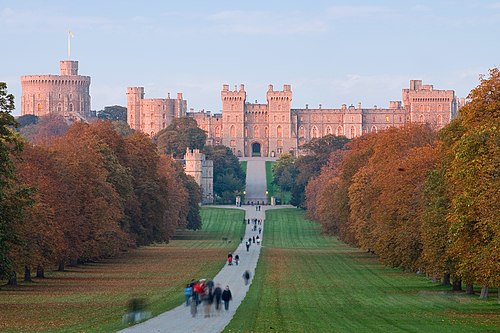 Windsor CastleRestored · prime 1820
 Tower of LondonRestored · prime 1285
 Bamburgh CastleRestored · prime 1904
All castles in England → · Strongest castles in England → · Castles of Europe
Play As Your Clan
Hold a real castle against whatever you choose to send at it, take a ship out in her own service years, or stand at the shoulder of someone the record remembers. The chronicler sets the scene; the deeds are yours.