Simpson
Simon's son, Tyne to Tees, and the Edinburgh obstetrician of chloroform.
- Origin
- North East, England
- Famous bearer
- Sir James Young Simpson, 1st Baronet (1811–1870), obstetrician and discoverer of chloroform anaesthesia
- Register
- English family
Where the Simpson name comes from
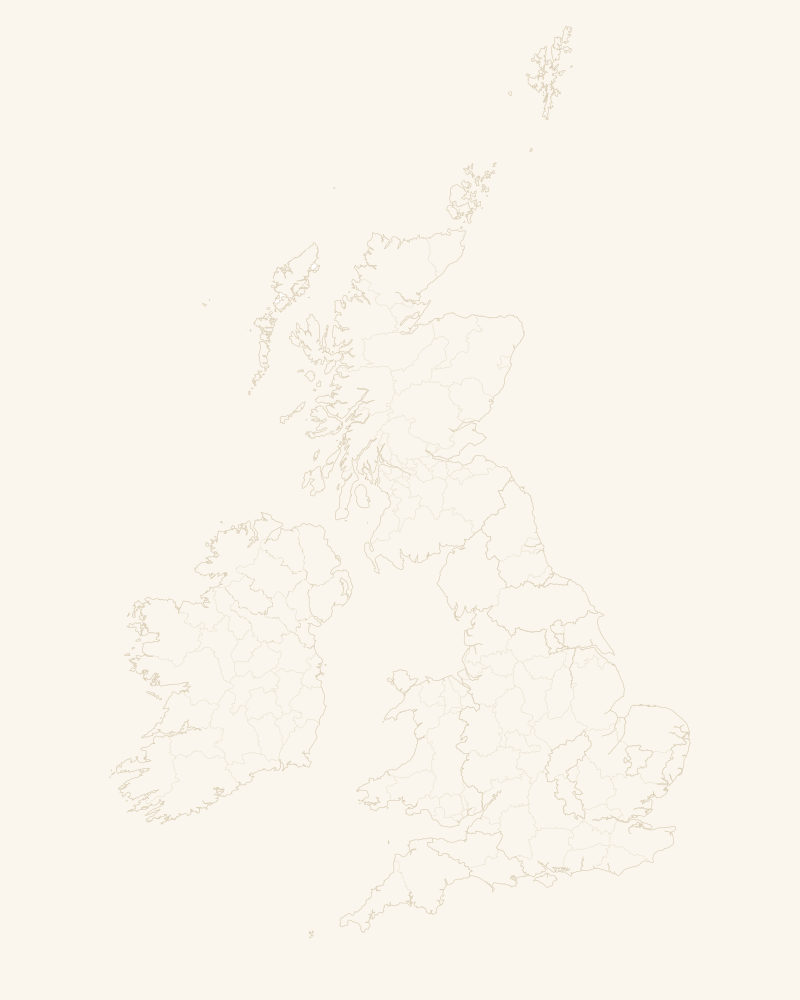
This name is thick on both sides of the border, so the map shows the whole of Britain and Ireland with every region it touches highlighted. It is a regional pattern for the surname, not proof that your branch lived in each place.
CoreHistoric reach
The seat of Simpson
Seat vacantChief
No one leads the Simpson community yet. When the movement opens, you can stand for its leadership, or help elect whoever does.
Current mission
No shared goal set yet. Once Simpson has leadership, it sets the public focus: a restoration, a gathering, a real-world project that helps its own.
The Simpson clan is being rebuilt. Join the waiting list for the movement today, and you help decide who leads it and what it does.
Help rebuild the Simpson clan →What does the Simpson name mean?
Son of Simon, northern -son pool; not to be confused with Scots clan MacSimon. The Scottish-Simpson pool, principally Edinburgh and the Lothians, is the parallel river; the surname is genuinely cross-border, with the nineteenth-century Edinburgh obstetrician Sir James Young Simpson (1811–1870) as the Scottish-Simpson marquee figure.
The history of Simpson
Simon's son, and the font name behind him
Simpson is the son of Simon, a name that did not come out of the old English stock. One of the plainest effects of the Norman Conquest was that English parents began using names common in France in place of Anglo-Saxon ones. William, Robert and Richard became common quickly, and Simon rode the same current, sober in origin and continental in fashion, standing beside Stephen among the font names of the crusading generations.
The second half is the northern half. A -son ending is a flat statement of paternity, and the reference lists of English patronymics put Simpson in one class with Jackson, Wilson, Thompson and Nicholson. The four-year University of the West of England study that concluded in 2016 defined that class exactly: these are the names that originally enshrined the father's. Simpson enshrines Simon's.
The century a byname stopped being yours alone
For a long stretch a byname described a man rather than descending from him. A trade, a father, a birthplace or a face gave him his second word, and it need not pass to his children. Surnames are documented among the barons of England in the 11th century, and the introduction of family names is generally attributed to the preparation of the Domesday Book in 1086, taken up first by the feudal nobility and spreading slowly to everybody else.
Christopher Daniell dates what may be the first recorded surname inherited by more than one generation to 1140. By the 14th century most English and most Scottish people used surnames, and by 1400 most English families, and those of Lowland Scotland, had hereditary ones. Not everybody wanted one: in late medieval England mandatory surnames were resisted because they were associated with taxes. Somewhere in that window a man who was Simon's son stopped being described and started being named.
Why so few given names had to carry so many men
The arithmetic of early modern naming is why the -son pool runs so deep. Of the boys born in London in 1510, 24.4 per cent were christened John, 13.3 per cent Thomas and 11.7 per cent William, and the three commonest male given names accounted for close to half the male population throughout the period. A parish with four Johns in it could not be run on given names alone.
One font name can seed a thicket of surnames: over 90 Italian surnames are thought to derive from Giovanni alone. Simon did the same work in England, and the pool it seeded was a northern one.
The crowding eased only after the names had set: by 1900 the top three given names covered 22.9 per cent of newborn boys in the United Kingdom, and by 1994 only 11 per cent. By then Simpson had long since stopped meaning that anyone's father was called Simon.
The England the Domesday commissioners counted
The England in which these names hardened had just changed owners. William dispossessed English landowners systematically and handed their property to his continental followers; the Domesday Book of 1086 records that only about 5 per cent of the land in England south of the Tees was left in English hands.
Some 8,000 Normans and other continentals settled in the country. Marriages between Norman men and English women were uncommon before 1100, but by the early 1160s Ailred of Rievaulx could write that intermarriage was common at every level of society. Simpson carries both halves of that settlement: a native English suffix wrapped around a given name the conquest had made fashionable.
The Bathgate baker's youngest child
James Young Simpson was born at 8 Main Street, Bathgate, in West Lothian, on the seventh of June 1811, youngest of the eight children of David Simpson, the village baker, and Mary Jarvey. He was schooled at the Bathgate parish school and entered the University of Edinburgh at fourteen, in 1825, on the strength of the family's collective sacrifice to find the matriculation fees.
He took the Arts degree in 1827, qualified as a Licentiate of the Royal College of Surgeons of Edinburgh in 1830 at nineteen, took the MD in February 1832 at twenty, and from 1835 was Senior Resident at the Edinburgh Royal Maternity Hospital. On the fourth of February 1840, in his twenty-eighth year, he was elected Professor of Midwifery in succession to James Hamilton, the second youngest professorial appointment in the history of the medical school. He held the chair for thirty years, founding the Edinburgh Obstetric Society in 1840 and publishing the standard textbook of the subject as Obstetric Memoirs and Contributions in 1855.
The dining room at 52 Queen Street
On the nineteenth of January 1847, following William Morton's demonstration of ether anaesthesia at the Massachusetts General Hospital the previous October, Simpson became the first British obstetrician to use ether against the pain of labour, at a delivery in his Queen Street consulting rooms. He used it for nine months and was not satisfied: the vapour irritated the patient's respiratory tract, induction was slow, and the sedation afterwards ran on.
Through the autumn of 1847 he searched the volatile-vapour candidates systematically, trialling them by inhaling them himself with two assisting physicians, James Matthews Duncan and George Keith. On the evening of the fourth of November, after dinner at 52 Queen Street, he opened a small bottle of chloroform that had reached him that afternoon from the Edinburgh pharmacists Duncan, Flockhart and Company, and the three men inhaled it over their cocktail glasses. All three went under at once and fell forward across the room.
Simpson came round first, by his own later reckoning about three minutes afterwards, revived the others, and they re-inhaled it several times that evening to be sure of it. He used it clinically the next morning, on the fifth of November 1847, for the first deliberately anaesthetised childbirth in medical history, and published it that December in the Edinburgh Medical and Surgical Journal as Account of a New Anaesthetic Agent.
What a Scottish surname put on the world's operating tables
Chloroform anaesthesia was taken up within two years by every leading Anglo-American medical school. John Snow administered it to Queen Victoria for her eighth and ninth confinements, at the births of Prince Leopold in April 1853 and Princess Beatrice in April 1857, and that royal use settled the argument, ending the residual evangelical objection to relieving the pain of childbirth at all.
Simpson was elected President of the Royal College of Physicians of Edinburgh in 1850, created first Baronet of Strathavon and Simpson in 1866, and was the first man knighted in Scotland for services to medicine. He died at Queen Street on the sixth of May 1870, having made Edinburgh the leading English-language centre of obstetric practice of the Victorian period.
Two rivers of the same plain sentence
The English Simpsons sit north on the map: Northumberland, Tyneside, Wearside and Durham, the Tees Valley, York and the Yorkshire ridings, with older weight in Cumbria and Lancashire, across the east Midlands and into London. The Scottish pool runs in parallel, principally in Edinburgh and the Lothians, which makes the surname genuinely cross-border rather than one country's name borrowed by the other.
It is not the Scots clan MacSimon, whatever the shared given name suggests, and it is not one family either. Patronymics multiply wherever a man called Simon had a son who needed telling apart from the next man, so bearers share a naming habit rather than a common ancestor. Over 90 per cent of the 45,602 surnames in the 2016 dictionary are native to Britain and Ireland, and Simpson is one of them, made on both sides of the border out of the same plain sentence about whose son a man was.
Champions of the Simpson name
The bearers whose lives are inseparable from this surname. Each has their own page, biography, achievements, geography, connection to the family.
Also found in
The Simpson name has substantial historical presence beyond England. See it on Scotland.
Historic Places, Rebuilt
Explore the streets and seats the Simpson name knew, rebuilt with AI as they stood in history.
The castles of the homeland
The great strongholds of the homeland, look one up, see what it looked like in its prime, and recreate it to explore.
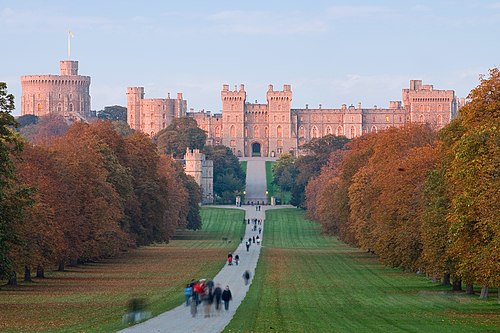 Windsor CastleRestored · prime 1820
 Tower of LondonRestored · prime 1285
 Bamburgh CastleRestored · prime 1904
All castles in England → · Strongest castles in England → · Castles of Europe
Play As Your Clan
Hold a real castle against whatever you choose to send at it, take a ship out in her own service years, or stand at the shoulder of someone the record remembers. The chronicler sets the scene; the deeds are yours.
Notable bearers of the Simpson name
- Sir James Young Simpson, 1st Baronet (1811–1870), obstetrician and discoverer of chloroform anaesthesia