Stevens
Stephen's line, southwestern -ens spelling.
- Origin
- South West, England
- Famous bearer
- Cat Stevens / Yusuf Islam (b. 1948), English singer-songwriter; Tea for the Tillerman (1970), Teaser and the Firecat (1971)
- Register
- English family
The Stevens arms and country
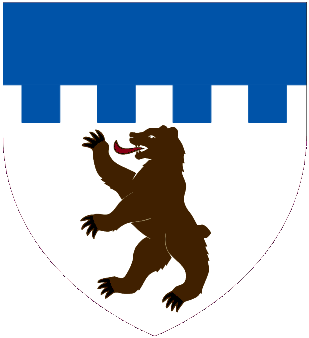
Coat of armsStevens of Ludgate EscutcheonBorne by the Ludgate Escutcheon line, one branch of the name rather than all of it.Robin S. Taylor · CC BY-SA 4.0

- Coat of arms: Granted to an individual and inherited down that one documented line. These are the arms of particular families of the name, not of everyone who shares the surname.
CoreHistoric reach
The seat of Stevens
Seat vacantChief
No one leads the Stevens community yet. When the movement opens, you can stand for its leadership, or help elect whoever does.
Current mission
No shared goal set yet. Once Stevens has leadership, it sets the public focus: a restoration, a gathering, a real-world project that helps its own.
The Stevens clan is being rebuilt. Join the waiting list for the movement today, and you help decide who leads it and what it does.
Help rebuild the Stevens clan →What does the Stevens name mean?
Son of Stephen, genitive Stevens vs Stephenson is scribal and dialect, not theology.
The history of Stevens
Stephen's son, and the clerk who chose the spelling
Stevens entered England as a Norman import, a patronymic meaning simply son of Steven, and it arrived before the machinery existed to fix it. Christopher Daniell dates the first recorded use of a modern surname inherited across generations in England to about 1140, and even then the forms were irregular: the sons of one Robert took FitzGerald, after an earlier relative, rather than anything built from their father's name. A patronymic in that period was a description that might last a lifetime and might not last a generation.
What made it a large surname was the narrowness of the font. Close to half the male population of England answered to one of three given names through the early modern period; among boys born in London in 1510, John took 24.4 per cent, Thomas 13.3 and William 11.7. Stephen was a substantial baptismal name across the whole medieval period and was drawn on nationally, so the difference between Stevens and Stephenson was settled not by the family but by whichever clerk held the pen in whichever parish.
A seventeen-year-old indentured clerk lands in 1699
The best-documented Stevens line is not English but the one that left. John Stevens Sr (1682-1737) came to British America in 1699 at the age of seventeen, bound as an indentured clerk. Indenture was the bottom rung of the passage: a hand for accounts and a term of years to serve. He ended as Port Collector at Perth Amboy, New Jersey, counting other men's cargoes for the Crown.
His son John Stevens Jr (c.1716-1792) served in the American Revolutionary War and then went into politics, and on 18 December 1787 he presided as president of the convention at which New Jersey ratified the United States Constitution. A single generation separates the indenture papers from the chair at a state ratifying convention. That compression, from bound clerk to founding document in under ninety years, is the argument of the American Stevens record, and the next century proved it was not a fluke.
The Hoboken land John Stevens bought in 1784
John Stevens III (1749-1838) was a lawyer and the first Treasurer of New Jersey, and the point at which the family added machines to offices. In 1784 he bought the stretch of New Jersey ground that Stevens Institute of Technology now occupies. He reverse-engineered the British steam locomotive to American standards so it could be manufactured domestically, and he built the first steam locomotive in the United States, the first steam-powered ferry, and the first commercial ferry service the country had.
He also held the first American railroad charter, and he was influential in the creation of United States patent law. That last item matters more than it sounds. An inventor working before a settled patent regime has to build the legal container as well as the engine, or watch the engine copied out from under him; Stevens worked on both at once. Nor were the ferries a stunt: later generations of them still run from Hoboken's piers.
The rail Robert Stevens rolled, and the yacht that named a cup
Robert L. Stevens (1787-1856), one of John's sons, invented the flanged T rail. It is the least visible and most durable thing anyone of the name ever made: the T rail is the form in prevalent use today, so his cross-section is still under the trains, including those running out of the Lackawanna Terminal at Hoboken, whose docks are built in a style Robert designed.
With his brother Edwin A. Stevens (1795-1868) he created America's first commercial railroad. A large portion of that line operates today as Amtrak's Northeast Corridor, so the right of way two Stevens brothers laid out is still carrying trains.
The eldest son, John Cox Stevens (1785-1857), took the same appetite onto the water. He was the first commodore of the New York Yacht Club, and he and Edwin built the yacht America and were aboard her when she won her regatta in England in 1851. That victory was later recognised as the first win of the competition now called the America's Cup: the trophy is named for the Stevens brothers' boat, not for the country. The club held the cup without losing it until 1983.
Edwin's will and Martha Stevens' Hoboken
Edwin died in 1868 and left in his will a bequest for the establishment of an institution of learning, handing his trustees both land and funds to do it with. Stevens Institute of Technology opened at Hoboken in 1870 and took the family name, and it is the reason the Stevenses are remembered collectively as America's First Family of Inventors rather than as five separate careers in steam, rail and sail.
The will was executed by Edwin's surviving wife, Martha Bayard Stevens, who then served as a lifetime trustee of the institute. She also directed most of the family's giving into the town: the Church of the Holy Innocents, founded as a free Episcopal church; a foundling hospital and birthing centre at St Mary's Hospital; the Robert L. Stevens Fund for Municipal Research; manual training schools for boys and for young girls; and the Hoboken Public Library. The family that had invented the ferry, the rail and the racing yacht finished by building a town's civic plant, and the person who saw it done was the widow holding the pen.
The mile to Asylum Avenue, walked twice a day
Wallace Stevens was born at Reading in Berks County, Pennsylvania, on 2 October 1879, second son of Garrett Barcalow Stevens, a small-town attorney and partner in a Reading legal and insurance firm, and of Margaretha Catharine Zeller, a Reading schoolteacher of Pennsylvania-German descent. He was raised Lutheran, schooled at Reading Boys' High School, and took three of the four Harvard undergraduate years as a special student before leaving in 1900 for a reporter's job on the New York Tribune rather than finish the degree. He entered the New York Law School in 1901 and was admitted to the New York bar in 1904.
Thirteen years of small New York legal and insurance firms followed. He married Elsie Viola Kachel of Reading in September 1909, joined the Hartford Accident and Indemnity Company in 1916 and moved that same year to its Connecticut head office, rising to Vice President in 1934 and holding the post until his death. The poems were composed on the walk between his house on Westerly Terrace and the office on Asylum Avenue, roughly a mile each way, dictated to himself as he went and written down at lunch. That walk is the central fact of how the work got made.
He published his first poem in The Trend in November 1914, at thirty-five, an unusually late start for a major career, and his first volume, Harmonium, in September 1923. It carried The Snow Man, Sunday Morning, Thirteen Ways of Looking at a Blackbird and Anecdote of the Jar. Ideas of Order (1936), The Man with the Blue Guitar (1937), Parts of a World (1942), Transport to Summer (1947) and The Auroras of Autumn (1950) followed. Between 1942 and 1951 he gave the essay-lectures at Princeton, Harvard, Yale, Bard, Mount Holyoke and the Chicago Arts Club that he collected in 1951 as The Necessary Angel, among them The Noble Rider and the Sound of Words (1942), the central American statement of the imagination as a defence against reality. The Collected Poems (1954) took the Pulitzer Prize and the National Book Award the following spring; he died at Saint Francis Hospital in Hartford on 2 August 1955.
Thaddeus Stevens, the territories, and a name on the map
While the Hoboken branch was laying rail, another Stevens was working the opposite kind of ground. Thaddeus Stevens (1792-1868) built his reputation as a lawyer defending runaway slaves, then sat as a United States Congressman from Pennsylvania, where he led the Radical Republicans and was among the fiercest opponents of slavery in the House.
The name also went west. Isaac Stevens (1818-1862) was the first governor of Washington Territory and then a brigadier general in the Union Army. John Frank Stevens (1853-1943) took the same trade of large works out of the northeast entirely, engineering on the Great Northern Railway and then on the Panama Canal.
The result is that Stevens stopped being a surname in America and became ordinary geography. There is a Stevens County in Kansas, in Minnesota and in Washington; Stevens Point in Wisconsin; Stevens Pass through the Cascades; Lake Stevens and the city around it; Fort Stevens in Oregon and Fort Stevens in Washington DC, where a battle was fought in 1864. A name that arrived in 1699 on an indenture is now something Americans drive through without noticing.
The English makers, the man on the bicycle, and the passage south
The English record of the same period runs quieter and to a different trade. R. J. S. Stevens (1757-1837) was a composer and organist; Alfred Stevens (1817-1875) worked as a sculptor; Henry Isaac Stevens (1806-1873) practised as an architect. Composer, sculptor, architect: on this side of the Atlantic the record names studio and drawing-board work rather than machinery. Frederick William Stevens (1847-1900) took that building trade abroad as an architectural engineer employed by the British colonial government in India.
The exception is emphatic. Thomas Stevens (1854-1935) was the first person to circle the globe by bicycle, an English bearer with the Hoboken appetite for a new machine. Frank Douglas Stevens (1893-1977) went one machine further and flew as a British ace in the First World War.
The southern emigration produced its own public tier. Ernest James Stevens (1845-1922) sat in both the Queensland Legislative Assembly and the Legislative Council; Bertram Stevens (1889-1973) became the twenty-fifth Premier of New South Wales; Jack Stevens (1896-1969) rose to general in the Australian army. The west-country name a parish clerk had spelled with an s was being spelled the same way in New South Wales and Queensland.
Champions of the Stevens name
The bearers whose lives are inseparable from this surname. Each has their own page, biography, achievements, geography, connection to the family.
Historic Places, Rebuilt
Explore the streets and seats the Stevens name knew, rebuilt with AI as they stood in history.
The castles of the homeland
The great strongholds of the homeland, look one up, see what it looked like in its prime, and recreate it to explore.
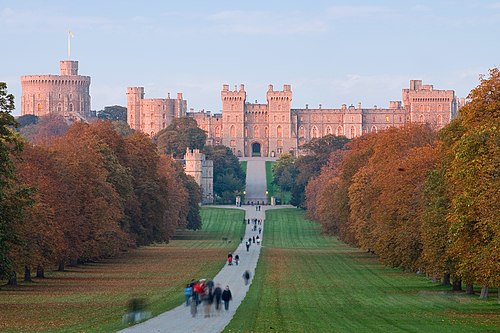 Windsor CastleRestored · prime 1820
 Tower of LondonRestored · prime 1285
 Bamburgh CastleRestored · prime 1904
All castles in England → · Strongest castles in England → · Castles of Europe
Play As Your Clan
Hold a real castle against whatever you choose to send at it, take a ship out in her own service years, or stand at the shoulder of someone the record remembers. The chronicler sets the scene; the deeds are yours.
Notable bearers of the Stevens name
- Cat Stevens / Yusuf Islam (b. 1948), English singer-songwriter; Tea for the Tillerman (1970), Teaser and the Firecat (1971)
- Sir Tom Stevens (b. 1959), British civil servant; Cabinet Secretary 2019–22
- Wallace Stevens (1879–1955), American modernist poet; Harmonium, The Auroras of Autumn
- Siaka Stevens (1905–1988), President of Sierra Leone 1971–85
- Sir John Stevens, Baron Stevens of Kirkwhelpington (b. 1942), Commissioner of the Metropolitan Police 2000–05