Webster
She wove, northern -ster craft name.
- Origin
- Yorkshire & the Humber, England
- Register
- English family
The Webster arms and country

Coat of armsEscutcheon of the Webster Baronets of Copthall (1703)Borne by the Copthall line, one branch of the name rather than all of it.Charles Matthews · CC BY-SA 4.0
.svg)
- Coat of arms: Granted to an individual and inherited down that one documented line. These are the arms of particular families of the name, not of everyone who shares the surname.
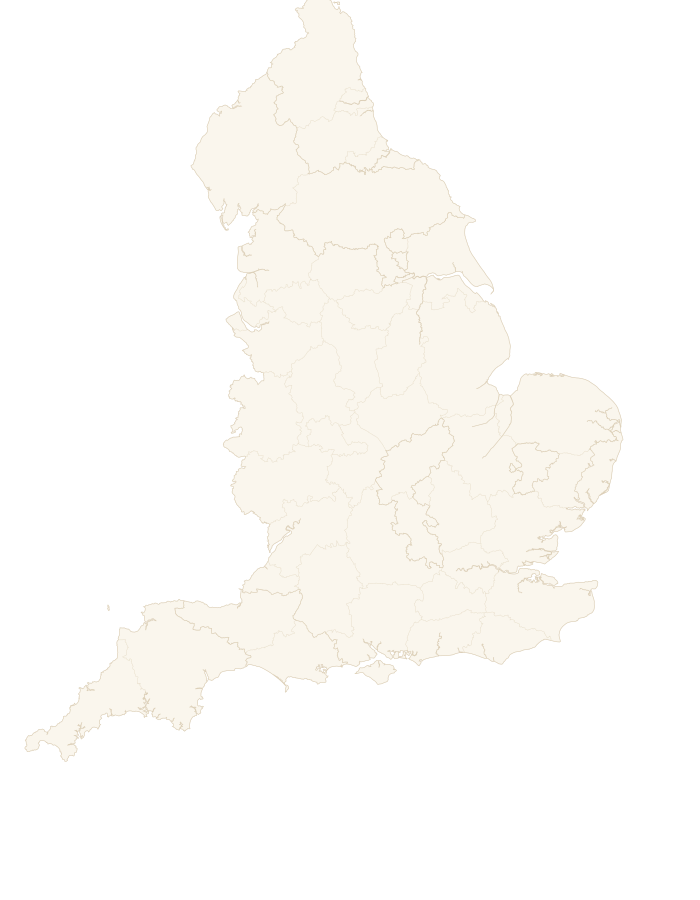
CoreHistoric reach
The seat of Webster
Seat vacantChief
No one leads the Webster community yet. When the movement opens, you can stand for its leadership, or help elect whoever does.
Current mission
No shared goal set yet. Once Webster has leadership, it sets the public focus: a restoration, a gathering, a real-world project that helps its own.
The Webster clan is being rebuilt. Join the waiting list for the movement today, and you help decide who leads it and what it does.
Help rebuild the Webster clan →What does the Webster name mean?
Feminine occupational, she-weaver. -ster suffix as in Baxter / Brewster.
The history of Webster
A weaver's name, in the feminine
Webster is an occupational surname of English origin meaning weaver, and the ending is the point: -ster was the feminine agent suffix of medieval English, the ending that gave Baxter beside Baker and Brewster beside Brewer. English surnames were first formed from a trade, a father's name, a birthplace or a physical feature, and were not at first inherited. Their introduction is generally attributed to the preparation of the Domesday Book in 1086, taken up by the feudal nobility and spreading slowly downward, until by 1400 most English families and those of Lowland Scotland used hereditary names. They were resisted in the late Middle Ages, because people associated compulsory surnames with taxes.
Wool, the home loom, and the merchant who owned the yarn
Wool was the predominant fibre of medieval Europe, with linen and nettlecloth for the poorer sort. Warp-weighted looms were commonplace until horizontal looms arrived in the 10th and 11th centuries, and the weaver worked at home and sold his own cloth at fairs. Output was capped not by the loom but by the thread reaching it, until the spindle gave way to the great wheel and then the treadle-driven spinning wheel.
By the 13th century that independence was gone. Under the putting-out system the cloth merchant bought the wool, handed it to the weaver, and bought the finished produce back at a rate he set himself, which made him economic master of the industry. The money shows in the wool towns of eastern England: Norwich, Bury St Edmunds and Lavenham were built on it. A Webster of that century was a piece-worker in his own front room while the wealth of the trade accumulated elsewhere.
The Black Death of 1346 cut Europe's population by as much as half, and with the labour for arable farming gone, land was put down to sheep pasture while traders from Florence and Bruges came to buy the wool. Sheep-owning landlords began weaving outside the jurisdiction of the city and the trade guilds, first in the weavers' homes and then in purpose-built buildings where hours and output were regulated: a factory system, centuries before the machines usually credited with it.
Who was allowed to call himself a weaver
Weaving became an urban craft, and to regulate it the craftsmen applied to establish guilds. The key privilege was exclusion: only members could sell goods or practise the skill inside the city. Guilds set prices, hours of trading and the number of apprentices a master could keep, on the authority of charters and letters patent granting monopolies on local production. The guild also decided who the word applied to, controlling quality and the training required before an artisan could call himself a weaver, through apprenticeship, journeymanship and mastery.
Around that sat welfare funds for sick and elderly members, support for widows and orphans, and real influence in municipal government. The sibling -ster trades were policed by statute instead: Henry III's Assize of Bread and Ale of 1267 put every commercial baker and brewer under fees, inspection of weights and measures and fixed prices, the ale tasted by sworn ale-conners chosen each year in the manor court leet.
The women the suffix remembers
Medieval guild membership was mostly male, and women typically entered only by marriage or as the widows and daughters of masters, and were kept out of guild office. The exceptions matter. The silkwomen of London could inherit property and run businesses in their own right, and Etienne Boileau's Livre des metiers records several Parisian guilds as outright female monopolies. In Rouen women had sat as full-fledged masters in 7 of the city's 112 guilds since the 13th century, and in Cologne they held full master status in selected trades.
What happened afterwards is still argued over. Alice Clark's study of 1919 set out the decline thesis, that women were pushed to the economic margins in the 17th century, and Merry Wiesner and Sheilagh Ogilvie have documented exactly that in parts of Germany, where guilds increasingly barred women's employment. Against it, Clare Crowston has shown women in linen drapery, the hemp trade and seamstressing forming independent guilds with expanded rights in Paris, Rouen, Dijon and Nantes.
The Smithfield coach-maker's son who wrote The Duchess of Malfi
John Webster was born in the City of London about 1578, son of a coach-maker of substance whose workshop stood near Newgate in the parish of St Sepulchre. He was admitted to the Merchant Taylors' School, went up to the Middle Temple to read law in 1598, and appears in the theatre records by 1602 as a paid contributor to the repertory at the Rose and the Fortune. The early years were collaborative, scenes written to deadline alongside Thomas Dekker, Anthony Munday and Michael Drayton.
He was about thirty when he wrote the first of the two tragedies that carried his name into the canon. The White Devil was performed by Queen Anne's Men at the Red Bull in Clerkenwell about 1612, before an audience that preferred swashbuckling adventure, so it found its full readership only later. He took the next to the King's Men at the indoor Blackfriars, where Burbage's company first performed The Duchess of Malfi about 1613, and that candle-lit room of senior lawyers, courtiers and university men was the right house for a long, claustrophobic tragedy. Both plays share an anatomy: an Italian court, a virtuous woman at the centre, and a poetry that line for line is the densest of any non-Shakespearean playwright of the period.
He was a freeman of the Merchant Taylors' Company by 1615, wrote The Devil's Law-Case in 1617, and by 1634 is called the late Master John Webster. Charles Lamb in 1808 and T. S. Eliot in the twentieth century put him back in the canon. The name he carried is the weaver's marker of the West Riding and the East Anglian cloth trades; he took it from a coach-maker's household into English dramatic poetry for good.
John Kay's shuttle and the last 250,000 handloom weavers
A broad loom was too wide for one man to pass the shuttle through the shed, so the weaver had to pay an assistant, often an apprentice, until John Kay's flying shuttle of 1733 ended the need. The Bridgewater Canal, opened in June 1761, brought cotton into Manchester, a district rich in fast streams that could drive machinery, and once spinning was mechanised by the jenny and the mule the weaver had limitless yarn. In 1784 Edmund Cartwright proposed a weaving machine and was told the process was too nuanced to automate; he built a factory at Doncaster, took patents between 1785 and 1792, and was voted 10,000 pounds by Parliament in 1809.
Power weaving took hold only in the two decades after about 1805, and at that moment there were still 250,000 handloom weavers in the United Kingdom. Richard Guest set the two side by side in 1823: a very good hand weaver of twenty-five or thirty wove two pieces of shirting in a week, where a steam loom weaver of fifteen wove seven, and he reckoned a factory of two hundred looms displaced the work of more than two thousand people. The handloom weavers were left as outworkers on a piece rate competition drove steadily down, and they were among the leaders of both the Luddites and the Chartists.
Four looms, the tackler, and the mee-maw
The loom went semi-automatic in 1842 with Kenworthy and Bullough's Lancashire Loom, and a metal-working industry grew up to build the machines: Howard & Bullough of Accrington, Tweedales and Smalley, Platt Brothers. Most power weaving happened in sheds in the small towns circling Greater Manchester, while wool and worsted belonged to West Yorkshire and above all Bradford, where Lister's and Drummond's ran every process under one roof. That is the map of the Webster name: Lancashire, Greater Manchester, Cheshire and the ridings of Yorkshire.
The power loom weavers were mostly girls and young women, on fixed hours and a wage with a piecework bonus. Each minded four machines and kept them oiled, helped by little tenters, children on a fixed wage who ran errands and learned the job by watching. Half-timers carried a green card the teacher and the overlooker signed to prove they had been at the mill morning and afternoon. Cotton dust took their lungs and the noise took their hearing outright, so weavers mee-mawed at each other because speech was impossible, and kissing the shuttle, sucking thread through its eye, left a taste of oil that was carcinogenic. When mill people emigrated they took the skill to New England, to Pawtucket and Lowell.
Noah Webster, and the name written across the map
Noah Webster (1758-1843) was the American lexicographer who made Webster's Dictionary, and the surname has since become the generic label for any of several dictionaries he edited. The name is written across the American landscape at a density no English weaving village would recognise: towns called Webster in Massachusetts, New York, New Hampshire, Iowa, South Dakota and Texas, Webster City in Iowa, Webster Groves in Missouri with its university, a whole Webster Parish in Louisiana, Mount Webster in the White Mountains, and on the ice, Webster Glacier and the Webster Peaks. Back in the ridings, Webster's Brewery of Yorkshire kept it over a door.
Websters on the stage, the page and the record
Benjamin Nottingham Webster (1797-1882) and Ben Webster (1864-1947) were English actors, and Margaret Webster (1905-1972) an American-born British actress and director. In letters, Augusta Webster (1837-1894) was an English poet, dramatist, essayist and translator, Jean Webster (1876-1916) an American writer, and Alexander Webster (1708-1784) a Scottish writer and clergyman.
Francis Webster (1767-1827) was an English architect and John Dodsley Webster another, working in Sheffield; Thomas Webster was an English painter and a different Thomas Webster a Scottish geologist. Arthur Gordon Webster, an American physicist, founded the American Physical Society. Leslie Webster, born 1943, is the British Anglo-Saxon specialist at the British Museum, and Neil Leslie Webster (1906-1990) a British Army officer who worked in wartime intelligence and radio.
Champions of the Webster name
The bearers whose lives are inseparable from this surname. Each has their own page, biography, achievements, geography, connection to the family.
Historic Places, Rebuilt
Explore the streets and seats the Webster name knew, rebuilt with AI as they stood in history.
The castles of the homeland
The great strongholds of the homeland, look one up, see what it looked like in its prime, and recreate it to explore.
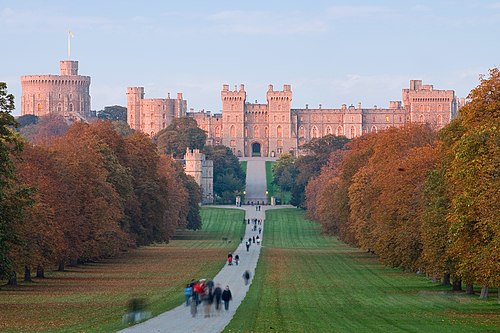 Windsor CastleRestored · prime 1820
 Tower of LondonRestored · prime 1285
 Bamburgh CastleRestored · prime 1904
All castles in England → · Strongest castles in England → · Castles of Europe
Play As Your Clan
Hold a real castle against whatever you choose to send at it, take a ship out in her own service years, or stand at the shoulder of someone the record remembers. The chronicler sets the scene; the deeds are yours.